1 free read left. Create a free account for unlimited reading + AI research.
Create free account
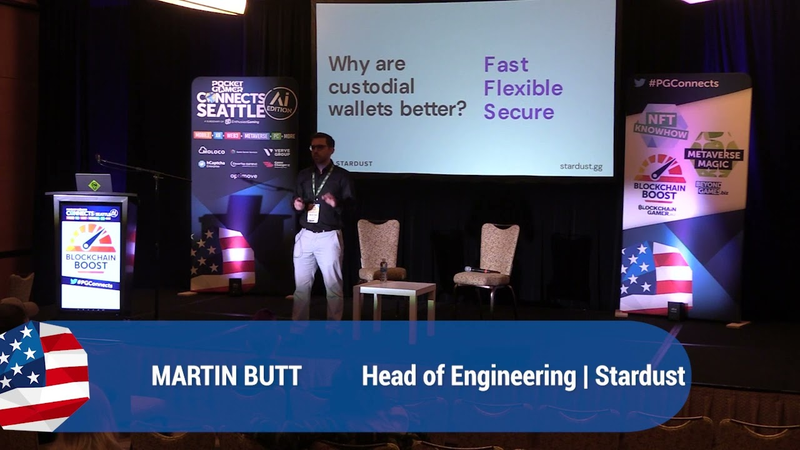
Session: Unlocking 1 Billion Users With Custodial Wallets - Martin Butt, Stardust
Key insights
6 takeaways- 01Custodial wallets remove the barrier of private key and seed phrase management, which is essential for onboarding casual players who lack technical blockchain expertise.
- 02The primary strategic goal of using custodial wallets is to transition from license-based digital content models to true digital asset ownership without sacrificing user experience.
- 03Developers can integrate blockchain functionality like minting and transferring tokens through standard RESTful APIs, mirroring traditional web2 development workflows.
- 04Custodial solutions allow developers to delay the introduction of web3 elements until after a player is engaged, ensuring the value proposition is clear before blockchain complexity is introduced.
- 05Modern custodial architectures utilize zero-knowledge technology to ensure private keys remain inaccessible even to the third-party service provider, maintaining security at high user scales.
- 06Abstracting the blockchain layer protects developers from needing to update their game infrastructure in response to frequent network upgrades.
Ask AI about this video
Transcript
[Music] thank you [Music] so I'd like to welcome to the stage um do we have Martin Buck from Stardust I believe we do wait wait there we are sorry thank you come on up Martin's going to talk about uh unlocking one billion users with custodial wallets so uh over to you there's your clicker thanks very much thank you it's good afternoon everyone in 2021 nfts exploded they were everywhere you couldn't escape news
stories of pictures of monkeys selling for a million dollars or some kind of celebrity scam with an nft at the time I was working as a head of Technology at EA Mobile we could see the utility in nfts we just didn't know exactly how to get them into our games so I set up a research project this project went off to try and answer this question they came back and said this industry is too early the infrastructure is not there yet and if we want to really Drive utility into our games what we will need to do is set up a blockchain team set up some blockchain infrastructure and this is going to be very costly not totally happy with this answer but I said that's fine we'll pack this away we'll come back to it in a few years fast forward just three months and I discovered Stardust Stardust offering was to add nfts to your game with just three lines of code
I went to their website I downloaded the I got their API key I put it into my test app and three lines of code later I had an nft on the blockchain this was amazing I was so blown away by this experience that I actually joined Stardust I'm Martin butt I am the VP of engineering at Stardust I'm here today to talk to you about how blockchain technology can scale to more than a billion users through the use of custodial wallets what I hadn't realized when I used Stardust platform was that I'd actually use a custodial wallet and for me as a developer the thing that made my experience so easy and so friction was just like was that custodial wallet so before I go on to talk more about custodial wallets I want to talk about user experience how do we scale any app to a billion users the answer always has and always will be user experience
I like to think about this in games as four cohorts first cohort is a golden cohort we love the golden couple these are the people that are Googling for your game before you've even conceived building it they're so ready for it that when you launch they're straight in there they're cheap they're easy we love them because they're so sticky they refer their friends the only problem with this cohort is that it's so small as we move into the second cohort this is the tech savvy individuals tech savvy individuals are also great they're a little less turned off by friction if they see an error message if they have to go through a few more Hoops they'll do that they know that they're going to get some utility again problem with the tech savvy group is it's a small cohort the next cohort is what I call the UA sensitive the U.S sensitive individuals are people who can easily be moved from app to app or game to game through a UA campaign
these people have a little bit more disposable income a little bit more free time and during the free-to-play era these are the people that we made the most money from a huge group of people but even if you've conquered this entire Market if you've got all of these people into your game you would still not reach a billion users the only way that you can reach a unicorn status with your game is by attacking the fourth cohort this fourth cohort does not have a lot of disposable income they do not have a lot of free time when you do not have a lot of resources like that available to you you are very careful about what you do spend your time and money on which means as game developers you have to be offering something even better than their current experience remember your competition here for this cohort is going to be Netflix it's going to be Tick Tock it's going to be Instagram you're going to be have to after something even better than that that is quite a challenge
so let's talk a little bit about what web3 means there's a huge amount of confusion over what web3 means this is not surprising considering there's a huge amount of confusion over what web 1 and web 2 are so you may have heard this simplification that web one is read web 2 is read write and web 3 is read write on I think this model undersells what web 2 and web3 and in web 1 actually offer I Pro a different model I prefer saying web one was read write web 2 was read write share and web 3 is read write home and that's share Distinction on web 2 is very important here I'll explain why so let's rewind the clock let's go back to web one web one was a simple A to B communication I would send a request to a server server would send a response I would go to Amazon I would say hey I want to buy a book and they'll say great it's in the mail that was great
web 2 expanded on this with a set of new standards there was restful apis there was RSS there was Ajax these allowed us to do asynchronous communication between client and server but also server to server this massively broadened the range of apps that we could build a really good example of this is Spotify so Spotify essentially at the end of the day it's just an online media player however it has a USP it has an additional feature where you can connect to Facebook download your friends list and see what they're listening to in exchange for that you share what you're listening to that's the share component and this was great when web 2 apps started Rising we were like here are my friends they're all over here they're all online being online is great it's fun all my friends are here then we realized it turned a little bit creepy we realized that these companies were using our data to Target us with
ads and a small number of very large companies had accrued a lot of data we were not happy with this we wanted to get our data back so we fought some legal battles we had some sweeping legal changes gdpr CCPA we've got control of our data back this was great but now we're moving into a new world we're moving into a world where we want control of our data but we also want to get utility from it as well and this is where web3 steps in with a set of Standards around decentralization of data when I say data I'm not really talking about pii for games specifically I'm talking about digital asset ownership your digital assets purchases that you have made for a digital good in a lot of cases you buy things online and you think you own them but you don't let me explain it with an example when you go to Apple and you pay 20 bucks to watch a movie and you buy that movie what you're really buying is a Perpetual
license to watch that movie on any one of their platforms if you want to move that movie over to Amazon or Google or some other platform you can't do that all you've bought is that Perpetual license you don't really own it what web3 says is let's put something on the blockchain to say that you bought that that you own that license and you can take that anywhere because you own it so where do web3 wallets come into this so web3 wallets are really your way of proving that you own a digital asset you have private key or a seed phrase that allows you to prove your ownership but also to approve transactions in and out of your wallet while it's coming two varieties custodial and non-custodial non-custodial wallets you own and you operate so it's on you to store the private key securely when you Google how to store a private
key securely it will tell you to print it out and put a piece of paper into fireproof safe this is a very high friction thing to do this instills fear in individuals we know from user experience that fear is the last thing you want but people are questioning why am I putting this piece of paper in the same place I've got my birth certificate and my passport and everything else and we go back to the say because there are dozens of people who bought Bitcoin in 2011 and then lost their private key and now have hundreds of millions of dollars sitting in a wallet they can no longer access like you keep your private Keys safe custodial wallets offer a better way casoda wallets say let me delegate that responsibility of storing that private key to a third party and they will keep this secure for me let's dive in a bit more about why custodial wallets are better if you use a non-custodial wallet to
unramp players to your game you have to hit them with what we call a wallet wall a wallet wall is just our fancy way of saying connect your wallet connect your meta mask your coinbase whatever it is this is where we see a huge drop-off of individuals getting through your funnel if you don't already have a wallet at this point you're unlikely to set one up custodial wallets allow you to never have to show a wallet wall even if you're being really clever even if you are waiting until the user gets through the fatou and they're super engaged you hit them with a wallet wall there's a very high chance they're going to churn if they don't already have a wallet at this point custodial wallets allow you to make simple API called behind the scenes to create a wallet on their behalf these apis will look very similar to what your software Engineers are used to seeing it's a simple restful API that will allow you to create wallets mint tokens burn tokens transfer them deposit
withdraw Etc yeah so we talk about Stardust Works has been three things fast flexible and secure they're fast because the onboarding experience for your team your engineers is easy it's a web 2 looking restful API that they're going to be used to it's fast for onboarding users because you don't have to hit them with a wallet wall you can hide that all behind the scenes now if you're being clever and I think this is the right approach right now you don't even let your players know that they are playing a web 3 game until much later there's been a lot of bad press about nfts and nft games and a lot of Gamers have said I'm not playing a game that has nfts in it which is kind of ridiculous because they're just pandering to the bad news instead what we're seeing clever game developers do is wait until much later in the funnel
before letting them know that they are playing a web 3 game and they can do this with a custodial wallet because you can transfer all the assets behind the scenes without them even knowing wait until the moment the value proposition for being on a web 3 game is at its absolute highest which is the point that they have assets that they can withdraw and sell this might be months or even years into the process of playing your game we're also flexible our wallets are flexible and I'd say any custodial wallet provider offers this you want to be thinking about making games you're worried about making games you're worried about getting through your UA tests and showing some heat in the market and getting your MVP ready you don't be worrying about blockchain as well a blockchain a custodial wallet provider will abstract all of that away they'll give you a simple set of apis that you can use to interact with a blockchain I think there are like four or five more
major changes planned for ethereum over the next few years you don't want to have to be updating your games and your interactions with a blockchain for every one of those changes so if you use a custodial wallet provider you just get one set of apis and that never changes finally there's security probably the most important part is security so starter well I can't really talk about other custodial wallet providers I'll just talk about Stardust here but Stardust has a product called Stardust faults status Faults Are our proprietary solution where we have a zero knowledge architecture to store private keys when private key goes into the Vault it can never come back out even me with full privileges to the system I can't see the private keys in there we use the volts to ingest transactions to sign them and send them to blockchain manageable is what we live and die by so the other aspect of security is again
back to as game developers I know from building games for years that the last thing you're thinking about is security when you're building a game and trying to get it out there and trying to see if there's any value to it any kind of security issues will be de-prioritized it's just the way that it is eventually one of these games hits and the UA money comes in and you you get your hundred thousand plus Dau and your developers start screaming saying there's all those security issues we didn't deal with before we need to go and deal with them now that is a luxury Stardust does not have every single decision we make every ticket we file every time we have a meeting we have to ask a question is this going to lower security the answer is yes we cannot do it it's absolutely Paramount for us so in summary custodial wallets they're fast they're flexible they're secure they allow you to onboard users in a way
that eliminates the wallet wall which is most certainly the clunkiest and hardest part of the user experience right now you still need to go and build great games but that's all on you thank you [Applause] got a few minutes yet so if there's any questions we've got a few minutes or we can always always talk after okay go ahead absolutely hey great talk um thanks just you're welcome uh just curious just curious about um how what's the process of getting uh the assets like the nfts or whatever that are in the wallet into their uh non-custodial wallet when they decide to do that yeah essentially there is an API code for withdrawal function so what we see a lot of our developers building on
the platform doing is allowing users to whitelist wallets to withdraw to and then you just make one single API call and we post that transaction to blockchain it goes to their wallet simple now uh currently we support uh polygon Avalanche and Solano any more questions I'll gladly take the mic just to add in I'm head of BD for Stardust we also support any evm and arbitrum full of support is coming in a few weeks uh hey so I'm curious about um your guys's plans on uh expanding to different types of games
um or just throughout the game Market specifically um because I mean there's thousands of games um and I mean like what's going to dictate where you expand to um because I mean it sounds great to like Implement to anything but what's your plan on expansion um stylus platform can be used for any kind of game and technically not even limited to games we just focus on games that's where we have the most experience um but yeah we we have people building desktop first person shooters we have people building mobile games there's the full gamut so there's nothing really restricting on what kind of game you're going for with it yeah I guess I'm curious like why I would want to have that in there my game specifically um because I mean there's so many different types of games I mean why would I want um this type of currency transaction in a first person shooter um if I'm going for a game where I just want to shoot people yeah so
how you design a web through game economy is a whole another conversation we can have a whole other talk um but you know what we're seeing is that blockchains are getting more scalable they can handle higher throughput um you know we're going through another wave right now of web free game development with the better tools that are out there what we saw previously was people built blockchain games the blockchains couldn't handle it it kind of crumbled under them we're seeing a new wave now and we've got the the ZK Roll-Ups on the horizon as well that can handle like huge amounts of volume so do we want to get to a world where you're playing a first person shooter in every single bullet is an nft I'm not sure we do I'm not sure there's a lot of value in that to players because that's what it all really comes back to is how can you derive value to players like if are you really gonna withdraw one bullet out and try and sell it on an exchange you know
so coming out next uh we have a star-studded panel uh which is going to be talking about uh the metaverse and distinguishing the buzz from the Real Deals so I'd like to invite Jason fazri David Linda and Andy to the stage and uh they can take it away thank you
Summary
The primary objective of integrating custodial wallets into gaming is to overcome the significant user experience barriers that currently hinder the mass adoption of blockchain technology. By abstracting the complexities of private key management and wallet connectivity, developers can reach a broader audience, including the critical cohort of casual players who lack the technical expertise or interest in managing decentralized assets. The core thesis posits that user experience is the ultimate determinant of scale, and that removing the friction of the traditional wallet wall is essential for onboarding the next billion users into web3 gaming.
Custodial wallets function by delegating the storage of private keys to a third-party provider, which eliminates the need for players to manage seed phrases or navigate complex security protocols. This approach allows developers to integrate blockchain functionality—such as minting, transferring, and burning tokens—via simple, restful APIs that mirror standard web2 development practices. This methodology enables a seamless onboarding process where players can engage with digital assets without needing to understand the underlying blockchain infrastructure, effectively delaying the introduction of web3 elements until the user is sufficiently engaged and the value proposition is clear.
Security remains a paramount concern, particularly as games scale to high daily active user counts. Modern custodial solutions utilize zero-knowledge architectures to ensure that private keys remain inaccessible even to the service providers themselves. By abstracting the blockchain layer, developers are also shielded from the need to update their games in response to frequent network upgrades. Ultimately, the transition to custodial wallets allows developers to focus on creating compelling gameplay while leveraging blockchain technology to provide true digital asset ownership, which serves as a significant differentiator from traditional, license-based digital content models.












Comments