Mobile reports and market data
Documents

Playmob's Parker Crockford on combining charitable giving and IAPs
Cause marketing platforms serve as a bridge between the gaming industry and charitable organizations by integrating philanthropic in-app purchases (IAPs) into mobile games.
- Cause marketing platforms integrate philanthropic in-app purchases (IAPs) into mobile games to boost user engagement, retention, and the conversion of non-spending players into first-time purchasers.
- Historical data from a Farmville earthquake relief campaign demonstrated the model's effectiveness, raising $1.5 million in one week with 80 percent of contributors being first-time buyers.
- Charitable IAPs serve as a strategic tool to improve the industry's public image by providing a transparent, structured alternative to perceptions of aggressive free-to-play monetization.

HasOffers' Justin Vanning on measuring the value of your ad campaigns
Effective mobile user acquisition requires a shift from bulk traffic purchasing toward data-driven, targeted advertising strategies.
- Mobile user acquisition must shift from bulk traffic purchasing to data-driven strategies that prioritize high-value users over low-cost volume to improve return on investment and lifetime value.
- Third-party attribution tools are essential for measuring campaign performance across diverse platforms, including major players like Facebook and Google, as well as hundreds of specialized ad networks.
- Advertisers should prioritize third-party tracking providers that do not operate their own ad networks or resell client data to ensure data sovereignty and prevent competitors from accessing proprietary campaign insights.

PopAppStore's Magnus Lindgren on merchandising your mobile game
Mobile game merchandising serves as a strategic tool for developers to extend brand engagement and foster deeper connections with their player base.
- Mobile game merchandising functions as a strategic tool to extend game lifecycles and deepen player engagement rather than serving solely as a revenue stream.
- Developers can implement browser-based storefronts directly within the game interface to sell physical goods like apparel, phone covers, and figurines.
- The operational model utilizes a simple in-game icon to redirect users to a curated store that manages global logistics and fulfillment.

StartApp's Marina Nissim on the challenges of mobile advertising
The mobile advertising landscape has undergone a significant evolution, shifting away from ineffective web-based banner formats toward more engaging, rich media experiences.
- Mobile advertising success requires a dual-pronged strategy combining 'brains' (data analytics and programmatic targeting) with 'beauty' (creative, rich media ad units) to maximize conversion rates.
- Performance optimization is the primary driver of industry innovation, requiring developers to rapidly test, iterate, and discontinue underperforming ad formats to maintain competitive CPMs.
- Developers must avoid 'one-size-fits-all' monetization and instead align revenue models—such as free-to-play, in-app purchases, or virtual currencies—with their specific app architecture.

AppLift's Jean Phillipe-Decka on getting high value users
Mobile game marketing currently centers on the critical challenge of acquiring high-value users rather than simply increasing download volume.
- Only four percent of mobile game players typically engage in in-app purchases, making the acquisition of high-value users a critical priority over simple download volume.
- Apple’s evolving policies on attribution and tracking are creating a restrictive environment that threatens traditional third-party tracking services and established acquisition models.
- The industry is shifting away from a reliance on incentivized traffic toward more sustainable, multi-channel marketing strategies that prioritize long-term user retention.

Samsung's Suzanne Nguyen talks the potential of wearables
Wearable technology represents the next major frontier in mobile innovation, shifting the focus from handheld devices to integrated, always-on connectivity.
- Samsung is incentivizing wearable software development through the 'Samsung Gear App Challenge,' which offers a total prize pool of 1.25 million dollars for 200 winners.
- The 2014 strategic vision focuses on the Internet of Things, aiming to integrate mobile and wearable devices into a multi-screen ecosystem that communicates directly with smart appliances and televisions.
- Wearable technology is positioned as the next frontier in mobile innovation, designed to shift user interaction away from handheld devices toward always-on, frictionless connectivity.

Oscar Clark on the potential of Games-as-a-Service
Games-as-a-Service represents a fundamental shift in game development, moving away from a fire-and-forget mentality toward a model defined by long-term player engagement and relationship building.
- Games-as-a-Service shifts development from a 'fire-and-forget' model to a long-term strategy focused on continuous player engagement and relationship building.
- Rising user acquisition costs in mobile gaming, now reaching approximately six dollars per install, make player retention economically essential for a title's viability.
- Successful titles such as Candy Crush, Clash of Clans, and Hay Day prove that consistent delivery of utility and value over time encourages sustained player investment.
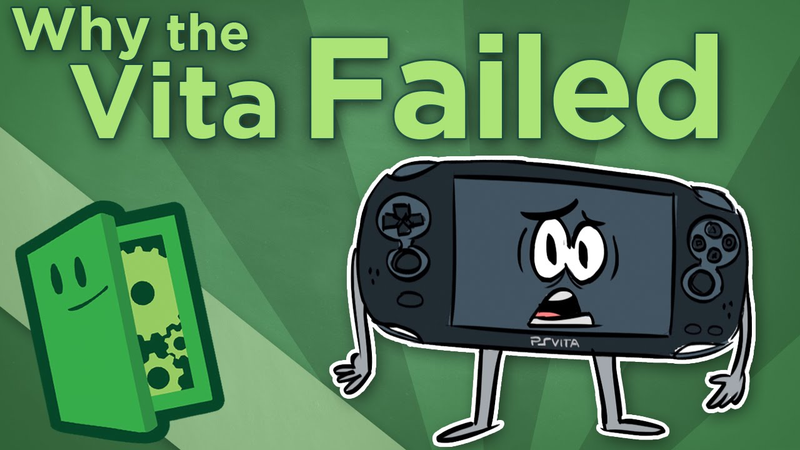
Why the Vita Failed - PlayStation's Lost Gamble - Extra Credits
The PlayStation Vita serves as a primary case study in the failure of overambition within the handheld gaming market.
- The PlayStation Vita failed to achieve market viability, selling only 4 million units compared to the 43 million units sold by its primary competitor, the Nintendo 3DS.
- The Vita’s core failure stemmed from prioritizing high-end, console-quality graphics, which necessitated development budgets that were unsustainable for the handheld market.
- High production costs created a significant barrier to entry, discouraging third-party developers from creating software and leading to a self-perpetuating cycle of low hardware adoption.

Grand Cru on making Supernauts (twice)
The development of the mobile title Supernauts represents a significant investment in creative iteration, spanning a three-year production cycle.
- Grand Cru committed to a three-year production cycle for the mobile title Supernauts, which included a radical decision to discard the entire first year of development and restart from scratch.
- The development team prioritized iterative quality and long-term brand identity over external industry pressure to replicate the success of other major Finnish mobile gaming studios.
- The game’s core concept blends ecological themes with sandbox-style construction, centered on a narrative of rescuing citizens from a drowning Earth to relocate them to space.

Frogmind's Teemu Maki-Patola on promoting the Badland brand
The success of the mobile title Badland serves as a case study for the challenges and strategic pivots facing independent game developers in the mid-2010s.
- The shift from premium to free-to-play models is driven by the need for scale, evidenced by Badland achieving 7.5 million downloads in one week when featured as a free app during Apple's fifth-anniversary promotion.
- Premium mobile games face declining long-term revenue potential, even for titles that reach the top 30 rankings.
- Transitioning a premium game to a free-to-play model requires significant development effort and risks compromising the integrity of a cohesive, non-consumable design.

Rovio Stars' Matthew Wilson on sourcing great games to publish
Rovio Stars operates as a selective publishing label focused on identifying and scaling high-potential mobile titles.
- Rovio Stars limits its publishing portfolio to 5–10 titles per year to provide intensive support for refining game economies, monetization, and viral mechanics.
- The label leverages a massive distribution network of over 200 million monthly active users to help partner developers scale their titles.
- A primary selection criterion for potential partners is the ability to create a 'universe pivot,' where a game's concept can easily expand into animations and merchandise.

App Annie breakdowns the Korean mobile game market
The South Korean mobile gaming market represents a highly mature, high-revenue ecosystem characterized by a dominant preference for the Google Play platform.
- South Korea ranks seventh globally in game downloads but third in total revenue, driven by exceptionally high average revenue per user (ARPU).
- The country is the second-largest market globally for Google Play revenue, reflecting a mature ecosystem where growth is driven by monetization efficiency rather than download volume.
- The mobile market is bifurcated by platform: Google Play is dominated by domestic publishers and the Kakao platform, while the iOS App Store is more receptive to foreign titles from companies like King, Supercell, and GungHo.