1 free read left. Create a free account for unlimited reading + AI research.
Create free account
Oscar Clark on the potential of Games-as-a-Service
Key insights
6 takeaways- 01Games-as-a-Service shifts development from a 'fire-and-forget' model to a long-term strategy focused on continuous player engagement and relationship building.
- 02Successful titles such as Candy Crush, Clash of Clans, and Hay Day prove that consistent delivery of utility and value over time encourages sustained player investment.
- 03The long-term sustainability of a product depends on the developer's commitment to nurturing the player experience after the initial purchase.
- 04Rising user acquisition costs in mobile gaming, now reaching approximately six dollars per install, make player retention economically essential for a title's viability.
- 05Developers should launch the smallest viable version of a game quickly to prioritize iterative development based on actual player behavior rather than just stated feedback.
- 06Post-release updates must be treated as an extension of the development cycle to ensure the game remains a living entity that evolves with its community.
Ask AI about this video
Transcript
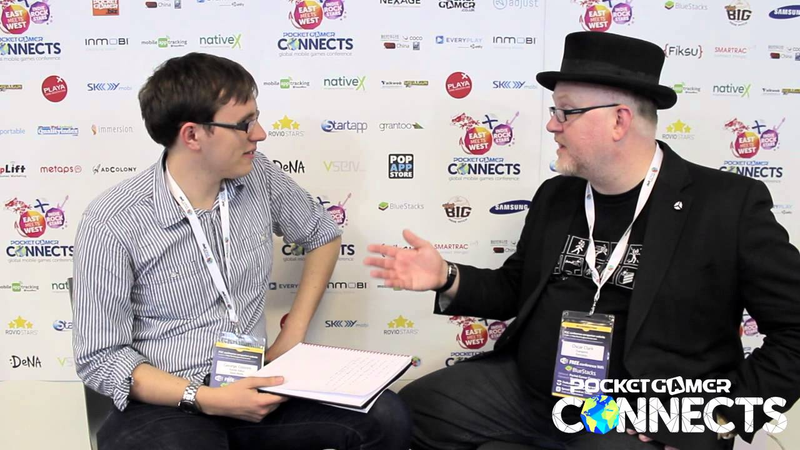
i'm oscar clark i'm every play evangelist i work for unity and acquired apple fire in march just before gdc uh i'm also author of games of the service how free to play design can make better games uh i've been doing um game services etc for about 16 years now okay so basically what they say is old um and still here so that means to me to move veteran apparently well exactly surviving troops so games has just surfaced yeah can you tell us what exactly games service is all about even in a short term i'm notorious for my ability to talk for days um the short answer is actually caring what happens to the player after purchase as simple as that because at the opportunity to be able to retain and actually engage in an audience with
something they already love it's enormous it's not just a revenue thing it's all the interesting it's uh it's just a way of telling stories and the thing i've learned a long time ago is that if you create something that people love and you invest in it it becomes something you want to nurture i've never quite got the fire and forget mentality if i'm going to invest in creating something which i know is brilliant because i wouldn't make it otherwise then i'd want it to be something that players love that means i want to have a dialogue with them and if i have a dialogue a list of that to say and make it better yeah so it sounds like to me the games of service it's not about these the short-term mentality it's about this long-term relationship do you see this as a trend within mobile games do you see companies moving towards this and if so why do you think that's the case i think i think trends probably the wrong answer it's understanding it's a possibility it's a strategy and there is a trend and i think you can look at the free to play games i mean look at the the app chart in you know last year it was like 12 months of candy
crush and clash of clans and heyday and and that's not a bad thing that's just recognizing that there are people who genuinely love their content and want to invest in it the cost of acquisition of a new customer is huge when i've heard people quoting like six pounds for i should say six dollars dollars for a um a museum now and obviously these stats vary in different companies and various other things um there's sort of a custom advert that's just kind of contributing but it's still a lot of money you've got to get a lot of money for somebody if it's not for your game can't do that but if i can retain users i want to continue investing and i can deliver them this is the really important one the utility yeah so that's value of value i can i can understand from the game then why wouldn't you spend money well exactly that's exactly it's a very interesting point and i think as one final little question to tie all of these things up what would be your advice to someone looking to create games to service do you have say some oscar top tips to give out i think
simple stuff is have something that not only you're passionate about but you know that as an audience is interested creating and quickly smallest thing you can getting in front of people as quickly as possible and listening to what they say not necessarily what everything is saying because you've got to be aware of what they actually do they're never quite the same thing so really it's just iterate iterate iterate just like we do in development anyway but we do it post release too by listening to players by investing in your time and and showing that we're creating something that's worthwhile then you'll get an audience so games as a service a loving relationship seriously yeah if you know the game players will see and they'll hopefully like it too exactly well that sounds like some fantastic advice thank you very much for joining us
Summary
Games-as-a-Service represents a fundamental shift in game development, moving away from a fire-and-forget mentality toward a model defined by long-term player engagement and relationship building. The core philosophy centers on caring for the player experience after the initial purchase, treating the game as a living entity that requires ongoing investment and nurturing. By establishing a continuous dialogue with the audience, developers can refine their content, improve retention, and ultimately create a more sustainable product that players genuinely value.
This strategic approach is increasingly vital in the mobile gaming sector, where the cost of acquiring a new user has risen significantly, with estimates reaching approximately six dollars per install. Given these high acquisition costs, the economic viability of a title relies heavily on retaining existing players rather than constantly chasing new ones. Successful titles like Candy Crush, Clash of Clans, and Hay Day demonstrate that players are willing to invest in content they love, provided the developer consistently delivers utility and value over time.
For developers looking to implement this model, success hinges on passion, agility, and responsiveness. The recommended strategy involves launching the smallest viable version of a game to an audience as quickly as possible, then prioritizing iterative development based on actual player behavior rather than just stated feedback. By treating post-release updates as an extension of the development cycle, studios can foster a loyal community and ensure the game remains a worthwhile experience. Ultimately, Games-as-a-Service is defined by the commitment to treat the game as a long-term relationship, ensuring that the effort invested by the developer is mirrored by the sustained interest and engagement of the player base.













Comments