1 free read left. Create a free account for unlimited reading + AI research.
Create free account
Rovio Stars' Matthew Wilson on sourcing great games to publish
Key insights
6 takeaways- 01Rovio Stars limits its publishing portfolio to 5–10 titles per year to provide intensive support for refining game economies, monetization, and viral mechanics.
- 02The label leverages a massive distribution network of over 200 million monthly active users to help partner developers scale their titles.
- 03A primary selection criterion for potential partners is the ability to create a 'universe pivot,' where a game's concept can easily expand into animations and merchandise.
- 04Publishing partnerships are most effective for developers who have already achieved strong retention and conversion metrics but lack the capital for aggressive user acquisition.
- 05While brand building is a competitive advantage, developers must prioritize core gameplay quality and mechanics before attempting to expand into a broader franchise.
- 06Developers of premium titles are advised to manage their own distribution and platform relationships rather than seeking a publishing partner.
Ask AI about this video
Transcript
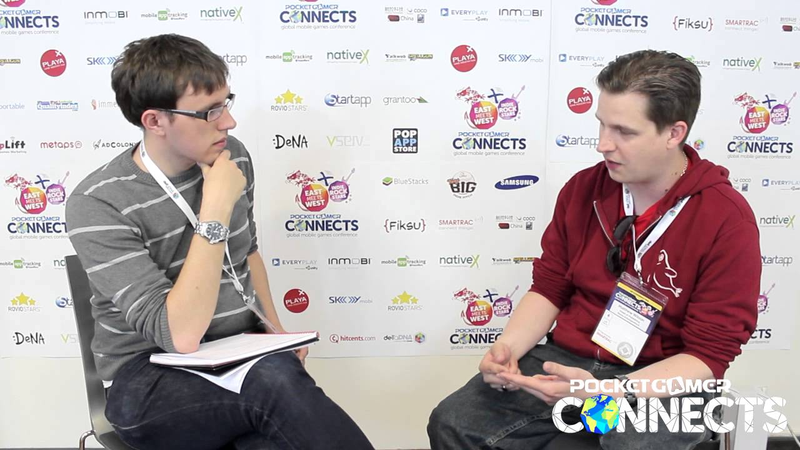
so I'm Matthew Wilson i work at rovio I run Rovio stars are publishing label and what I cut all the deals and help find all the content for the unit and that I bring in our producers and our pms to to make those products beautiful and regular to the world so how exactly does the publishing work at radio obviously Rovio stars is I don't know how knew I would describe it but it's still relatively new I mean how do you go out and sort of these games what kind of things are you looking for so we go out to a lot of conferences we go at two while we get tons of submissions through our email boxes we scout websites like yours and your competitors to try to find up-and-coming titles so far most the games have come from we found our for conferences but you know when we get those titles in we offer the developers all full marketing support so they get
to go add to our 200-plus million mau plus they they get a dedicated producer in p.m. on the title so we get to polish the title sub put in all the viral hooks and then the p.m. will help optimize the game economy in the title and and make sure that that's the best monetization and retention possible yeah so I mean you've outlined there some of the probes that you saw that if they're getting a publisher I mean there's going to be people out there looking for a publisher now I mean obviously you're trying to position yourself with that but in your past obviously rodeo used to work with chillingo and there's a pre most kind of relationships what only important element is that a company or developer who's looking to get published what things that should they be looking out for what are those important element well to work with Romeo right now for our publishing unit we're looking exclusively at free to play games we're probably going to only put out five to ten games a year for being super selective I hope that it's more like five rather than ten just small amount of games that we can build businesses
around with every deal we signed we we put in an ancillary products components of the game gets really big we can make plush toys we can do animations so if you want to work with us what you really need is canceled strong characters and a good narrative you know and so I think that's an interesting point because you published a number of games but I think so far tiny thief perhaps be the name that's really stood out a lot of people and I guess I think one of the things this is that it can be quite challenging to create one of these games to create a truly memorable character what kind of advice would you give to developers who are looking to go out and perhaps build that catchy character that really captures people's imagination I think it's not about building the character so much it's about building the universe pivots so and you think about it like Lord of the Rings everything revolves around the ring the matrix everything the major so it's not so much the characters great beautiful characters is a good step up but it's about having the right universe pivot so you can build a brand around it if the game succeeds
yeah in Angry Birds the pivot is very simple bird steals pigs eggs our Pig steals birdies and cakes and then the birds get revenge and that was where the whole world based off yeah if you have that pivot from from moment one that's understandable to the whole audience then you can build a brand pretty easily out of what you have and but you still need to have beautiful art cool looking characters and well if you start the game in a game that has a big news yeah so I mean this it's quite a difficult thing to do that but do you see that building these brands and building these carrots is this the future of mobile in terms of mobile gaming because companies are looking at ways of basically making the most from a market that's increasingly maturing and obviously rocio have spent a lot of time constructing a brand you look these games that have these components this is the most important trend that you're seeing in the industry or is there something more important I think I mean if building brands is obviously very important it helps you when you launch your second and third in but
realistically a good core game mechanic is the most important thing in this industry you could build a brand and consumer products and bring that two games much easier than you could build a brand in the game space I mean I would say there's Austin only maybe two other companies that have successfully done that so so we of course you know we're trying to find cool brands in games to expand them but it doesn't happen often yeah so it sounds to me this so just to summarize just before we finish up that these developers should be looking to build a great game of fantastic mechanic get themselves that hitherto hold the whole universe around and then perhaps look for a publisher if that's what's right for them yeah I don't think a publisher's right for everyone if i was i was doing premium games i would go out by myself by the cool game with art I've talked with platform bowlers but if you've got a game with good retention and Google conversion rates high LTV but you don't have money support user acquisition go out and find a publisher
that can get you to where you want to be quick rather than slowly building the business out of your game because maybe maybe ten other clones will come out while you're still a building that business and you'll miss your opportunity okay well thanks very much for joining us and thanks for the advice all right very nice to meet you cheers Oh
Summary
Rovio Stars operates as a selective publishing label focused on identifying and scaling high-potential mobile titles. The primary objective of the initiative is to partner with developers to transform promising games into long-term brands. By maintaining a highly curated portfolio of only five to ten titles per year, the label provides developers with comprehensive marketing support, access to a massive user base exceeding 200 million monthly active users, and dedicated production and project management resources. These internal teams focus on refining game economies, optimizing monetization, and implementing viral mechanics to maximize retention and lifetime value.
The selection process prioritizes free-to-play titles that feature strong narrative foundations and compelling character designs. A critical requirement for potential partners is the presence of a clear universe pivot—a central, easily understandable concept that allows for brand expansion into ancillary products such as animations and merchandise. While building a recognizable brand is a significant competitive advantage in a maturing mobile market, the core game mechanic remains the most vital element of success. Developers are encouraged to prioritize gameplay quality before attempting to build a broader franchise.
Publishing partnerships are recommended specifically for developers who possess games with strong retention and conversion metrics but lack the capital for aggressive user acquisition. In a crowded market where clones can quickly erode a game's market share, a publisher serves as a catalyst to accelerate growth and secure a competitive foothold. Conversely, developers of premium titles may find more success managing their own distribution and platform relationships. Ultimately, the strategy emphasizes that while branding is a powerful tool for longevity, it must be built upon the foundation of a robust, engaging, and well-optimized game.















Comments