Mobile reports and market data
Documents
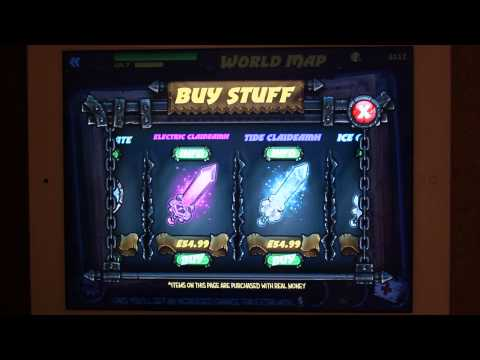
Monetizer: Backflip Studios' Spellfall
Spellfall, a match-3 RPG hybrid developed by Backflip Studios, serves as a case study in aggressive and multifaceted mobile monetization strategies.
- Backflip Studios' Spellfall demonstrates that aggressive, multifaceted monetization cannot sustain a game if it lacks long-term player retention.
- The game shifted monetization focus from abstract soft currency bundles—capped at $50—to high-value, direct-purchase permanent gear costing over $100.
- Monetization architecture included a variety of secondary revenue drivers, such as consumable pre-level boosts, revive-based energy gates, and randomized store inventory refreshes.
Nordic Game Sales 2014
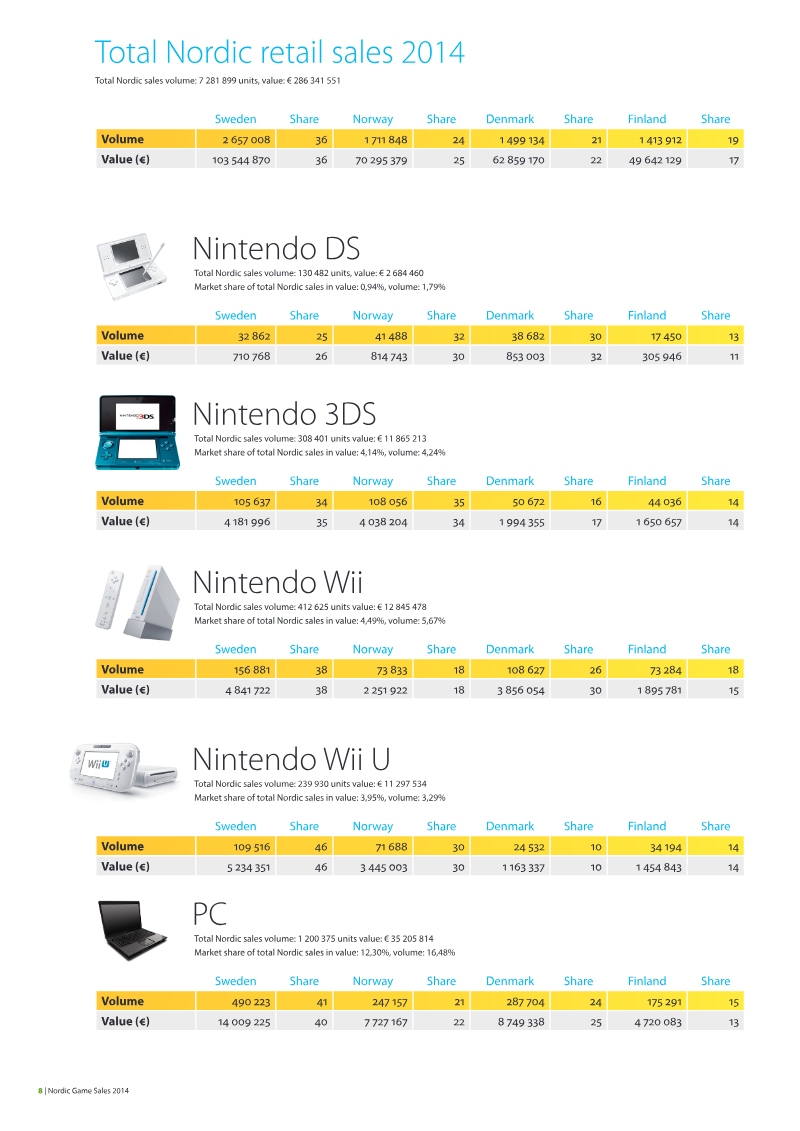
The Nordic video game market underwent a significant structural transformation in 2014, characterized by an 18 percent decline in physical retail value.
- The Nordic video game market experienced an 18 percent decline in physical retail value in 2014, driven by a structural shift toward digital distribution and service-oriented revenue models.
- Market performance was heavily concentrated in major multi-platform franchises, with action titles capturing 25 percent of the market and sports games accounting for 16 percent.
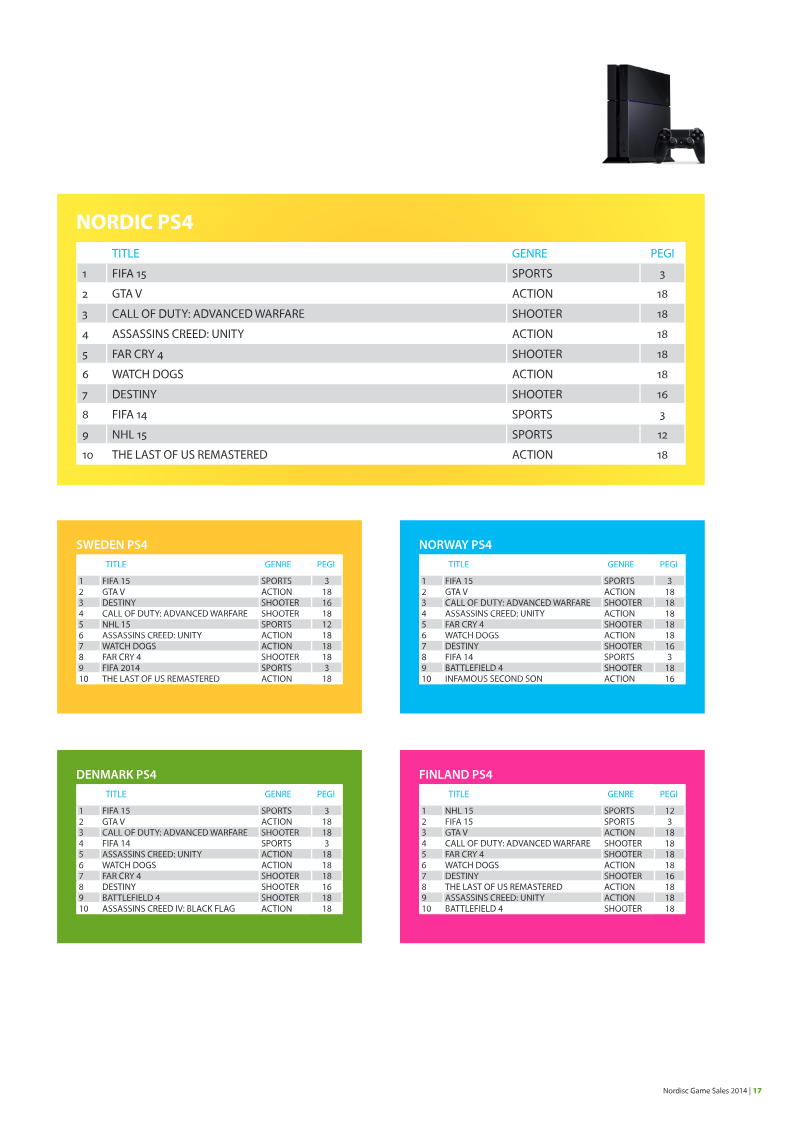
- Top-selling titles across the region in 2014 included FIFA 15, Grand Theft Auto V, and Call of Duty: Advanced Warfare.

F2P's soul, Glu's financials, and the even hotter Helsinki scene
The mobile gaming industry in late 2014 reflects a period of significant financial transition, characterized by the dominance of established franchises and the volatility of free-to-play (F2P) business models.
- Glu Mobile achieved profitability in late 2014 by leveraging the Kim Kardashian brand, which generated $43 million in its first full quarter and accounted for 52% of the company's total revenue.
- Despite strong earnings, Glu Mobile's share price dropped 20% in a single day as investors reacted to performance falling short of high market expectations.
- Traditional console giants are successfully capturing mobile market share by migrating core franchises, with EA reporting a 64% year-over-year increase in mobile revenue to $123 million and Ubisoft reporting a 45% increase in mobile sales.

Unity, the Riccitiello riddle, and mobile gaming's $40B future
The mobile gaming industry is experiencing rapid, sustained expansion, with market projections indicating a significant shift in the global gaming landscape.
- Mobile gaming is projected to reach $41 billion in revenue by 2017, positioning it to surpass both the console and PC sectors as the largest segment of the global games market.
- Newzoo increased its 2014 mobile gaming revenue forecast from $21.7 billion to $25 billion, reflecting faster-than-anticipated industry expansion.
- Growth is fueled by steady performance in mature markets like North America and Western Europe, alongside rapid expansion in China, which is experiencing growth rates of 85 to 90 percent.

The Lithuanian mobile scene, power of merchandising, and 5 types of iPad
The Lithuanian mobile gaming sector is emerging as a significant regional hub, driven by favorable economic conditions and strategic infrastructure investments.
- Apple has shifted its iPad strategy from a singular product focus to a segmented model featuring five distinct hardware tiers to capture diverse market segments and manage inventory across different price points.
- Lithuania is emerging as a mobile gaming hub, attracting major firms like Game Insight due to competitive corporate tax rates, lower labor costs, and EU membership status.
- Effective merchandising in mobile gaming requires a minimum threshold of 10 million monthly active players to ensure a brand is sufficiently recognizable to support revenue growth.

Fiksu on overcoming the dangers of discoverability
The primary challenge for mobile application developers is overcoming discoverability hurdles in a saturated market where users typically engage with only a fraction of their installed apps.
- Prioritize 'cost-per-loyal-user' over 'cost-per-install' as the primary metric, defining a loyal user as someone who engages at least three times and completes a value-added action like a purchase or registration.
- Focus acquisition efforts on retention, as over 20% of mobile app downloads are currently used only once.
- Target the top 25 apps in store rankings, as 88% of users limit their browsing exclusively to this group.
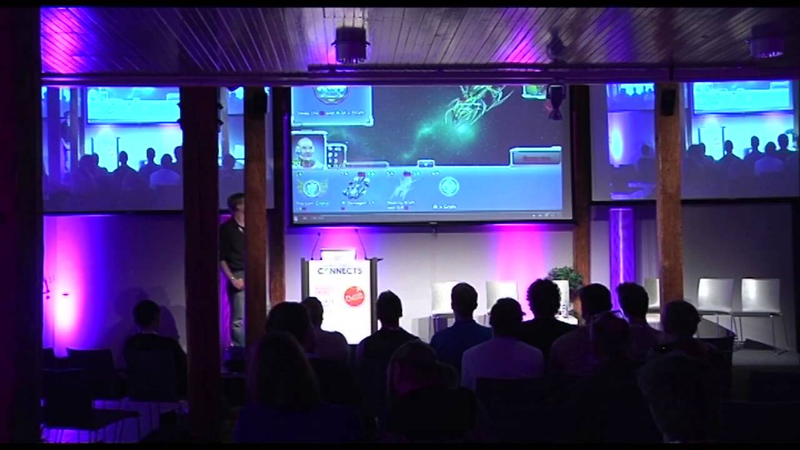
PGC Helsinki 2014: Demo Time!
The 2014 PGC Helsinki showcase highlights three distinct mobile game titles, emphasizing the diversity of development strategies within the indie sector.
- Indie developers are increasingly using soft launches in select regions to validate retention and engagement metrics before committing to global releases.
- Two Men and a Dog’s 'Zombie Catchers' achieved a 44% content completion rate during its soft launch, validating the market demand for high-quality mobile platformer-base-building hybrids.
- Hardcore Games is targeting the mobile CCG market with 'Star Admiral,' a 3D-modeled title currently in soft launch across Austria, Switzerland, and Canada that incorporates complex mechanics like energy sacrifice and tactical strike tracking.

Are we in an M&A bubble, iOS 8 rates plateau and World of Tanks Blitz
The gaming industry experienced a record-breaking third quarter in 2014 regarding mergers and acquisitions, driven by five major deals including Microsoft’s acquisition of Minecraft for $2.5 billion and Amazon’s purchase of Twitch for nearly $1 billion.
- Q3 2014 saw record-breaking M&A activity in the gaming industry, headlined by Microsoft’s $2.5 billion acquisition of Minecraft and Amazon’s nearly $1 billion purchase of Twitch.
- Consolidation is extending beyond major game studios into industry infrastructure, evidenced by RNTS Media’s $190 million acquisition of user-acquisition firm Fyber.
- iOS 8 adoption rates have plateaued and are currently trailing the update speeds observed for iOS 6 and 7, signaling a shift toward increased fragmentation for mobile developers.

Why the lucrative Korean mobile games market is an uphill battle
The South Korean mobile gaming market represents a significant global opportunity, characterized by a population that views gaming as a lifestyle and a mature understanding of the free-to-play model.
- The South Korean market is dominated by local developers who excel at high-intensity 'games as a service' operations, including 24/7 engagement cycles and frequent daily events.
- Success in the region requires a 'digital-first' mindset where players treat virtual assets with the same gravity and value as physical property.
- Google Play is the primary distribution channel, while once-essential platforms like KakaoGame have seen their effectiveness decline due to overcrowding and discoverability issues.

Hitcents on how it defeated the pirates and built a business in China
Hitcents, a US-based creative agency and game developer, entered the Chinese market to address widespread piracy of its flagship title, Draw Stickman.
- The Chinese mobile gaming market is highly fragmented, featuring over 100 Android app stores categorized into carrier-specific, third-party, and hardware-based channels.
- Successful entry into China requires deep 'culturalization' beyond simple localization, including adjusting art styles, incorporating local themes, and redesigning tutorials to be significantly more prescriptive and directive than Western versions.
- Carrier billing is essential for monetization in China because it allows for transactions without internet access, with typical purchase sizes ranging from 1 to 30 RNB.
Shovelware - The Causes and Consequences of Bad Licensed Games - Extra Credits
Shovelware, defined as poorly executed licensed titles or shoddy ports, remains a persistent issue in the video game industry.
- Shovelware is a business model that prioritizes exploiting brand recognition over product quality, often forcing developers to meet inflexible release deadlines tied to movie or toy launches.
- The reliance on low-budget outsourcing and work-for-hire arrangements incentivizes developers to cut corners, resulting in poorly executed titles that lack meaningful gameplay.
- Publishers specifically target uninformed consumers, such as parents buying for children, which risks alienating new players and damaging the long-term reputation of the gaming medium.

Is Minecraft worth $2.5B, iOS 8's slow uptake and why do gamers and journalists hate each other?
This analysis examines key developments in the gaming and mobile technology sectors as of mid-September 2014, focusing on high-profile acquisitions, hardware shifts, and industry cultural tensions.
- Microsoft acquired Minecraft for $2.5 billion, a valuation that analysts consider significantly higher than comparable industry deals like those involving Supercell or King.
- Minecraft creator Markus 'Notch' Persson exited the company following the acquisition, citing a desire to move away from the business side of the industry to maintain personal autonomy.
- Apple's iOS 8 adoption rates are slower than previous versions, primarily due to the high storage requirements needed for the installation process.