1 free read left. Create a free account for unlimited reading + AI research.
Create free account
Monetizer: Backflip Studios' Spellfall
Key insights
6 takeaways- 01Backflip Studios' Spellfall demonstrates that aggressive, multifaceted monetization cannot sustain a game if it lacks long-term player retention.
- 02The monetization model was integrated into a core gameplay loop centered on RPG-style character progression and elemental weaknesses.
- 03The game shifted monetization focus from abstract soft currency bundles—capped at $50—to high-value, direct-purchase permanent gear costing over $100.
- 04Monetization architecture included a variety of secondary revenue drivers, such as consumable pre-level boosts, revive-based energy gates, and randomized store inventory refreshes.
- 05The title utilized mystery boxes, a mechanic popularized in the Japanese market, to offer players percentage-based chances at unique items for real-world currency.
- 06Despite briefly entering the top 100 grossing charts on the US iPhone App Store, the game failed to maintain long-term commercial momentum.
Ask AI about this video
Transcript
hello welcome to pocketgamer.biz monetizer feature this is where we look at free-to-play games and have a look at some of the um monetization techniques they're using So today we're going to look at a game from back flip Studios called spell fall so let's fire it up this game uh came out in in August it's a kind of match three with RPG element so it loads very fast we like to see that it's actually one of the fastest loading games um I've got on my iPad so we see nice kind of uh take this in so I've been playing this for a while um so it's taking me into the world map you can see I've completed some elements plenty more elements to go so um but before we kind of go into some of the gameplay stuff can look at some of the monetization techniques so obviously as in most games we can buy stuff so there's an ingame economy this is quite a nice
little scroll through so it's just showing me I can spend a certain amount of money so this is kind of Fairly standard so a small inapp purchase so that's um £149 or $2 and as we go up to bigger spending bigger amounts we actually get more gold per per pound or dollar spent that's fairly standard actually the ratio if you work it out is 1.4 so compared the cheapest in that purchase bundle to the most expensive you get 1.4 effec 40% more for the most expensive one but what's interesting here is the most expensive bundle here is showing um $34.99 so that's $50 um as we all know within um the App Store you're actually allowed to to um the most the most expensive you're allowed to to charge in apple rules is $100 so interestingly they've chosen um not the a kind of a not as expensive in that
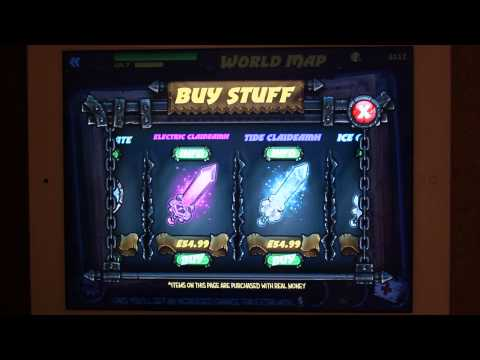
purchase for the currency as as most games would do pretty much standard now for most games to give people the option of spending $100 even though not many of them do okay but we as we go on we can see here there's other things to buy and this is kind of a little bit non-standard really now it used to happen more I would suggest so there's this is these are um items we can buy there's an area bundle here we can get a random weapon and a rune useful for whichever area we're in so this is uh £7 or or $10 you can also buy some some of these these runes there a stun Rune toxin room rejuvenate room so you can see here if we equip this we charge it with cold tiles um which you'll see is kind of part of the the match 3 so it kind of gives a bit of information so that's going to cost us again these are all $10 we can actually um buy them in the game with this gold currency but um this is another option if we go further along we can suddenly get um these swords so they look very nice they so um you can see it's got
some sockets and just getting an idea about how um this value here 21 hit points effectively um it's a water based um an elemental um asum with most match three games but you see here this is this is 55 so that's um probably about kind of 80 $80 so we got a different got different ones of here we got an electric one we got a tide one an ice one uh this is Toxin one earn one so Earth kind of fire usual kind of elements these are all £55 let me get to these ones here this is £70 so that's this is 99 this is $100 for the Lucient um sword and this one here the corrupt one is actually you see here this is this is £90 so that's this is even bigger I'm not quite sure how how they can charge this they must charge it in two Ina purchases this is this is this is more than than the $100
limit so it's kind of interesting that that within within even though we were looking at the currency no I'm not going to do that not going to buy that one um so when we looking at the currency it was there was a lower uh kind of a lower level than most games would have but then actually you can actually buy these kind of one-off items and um it's kind of an an interesting uh kind of philosophy really that uh they know most people aren't going to do this there going to be very few people but I guess it's the idea is most people aren't going to going to do it so why offer $100 for for just for currency and and currency is is actually when you buy is kind of a bit useless it's I think a lot of the freeto playay games they fail to give you an idea when you buy currency what you're actually going to do with it you can obviously you tend to kind of Fritter it away a little bit but this is in a sense a bit more as we kind of expect from not really from console but but you're buying something you're paying the money and you're getting like a very high-end item clearly I guess we kind of see that in in in in games like League of Legends where you're buying you're buying Hero characters and and that's that's the monetization and you
know you're getting something for it you're not just getting speeding up time or something I think this is a kind of interesting monetization technique that that perhaps we'll see more of as more kind of cool gameplay starts to come in so anyway so we had a look at the map um so um this is my backpack we kind of see get an idea so this is my little chap here um these are the runes he's got kind of um so he's got a skull here and some armor um I can unlock I can add a socket so this is 3,000 gold I've actually got 6,000 gold so I could add add I could unlock a rune space and then I'd have to then buy a rune to put in there so it's kind of interesting monetization technique so we go to the store here so this is the store I mean I don't really like this store it's quite confusing I find so these are all the things I have these different kind of costumes and things my bio armor my simp how startle simple clothes Bandit cow um but going to the store see the things I can buy now this is something that's interesting reset the store all the items in the store are random reset set the store to get new
items so effect I'm spending reasonable not massive sums of money but um that would be you know more than the sixth of my of that what I have just to see what other items are there it's interesting technique um and there's this one here this is used quite a lot now so this is these are mystery boxes so I can buy a bronze box I have a chance for a rare item actually this one's free so there we go tap that get this once a day a frozen mantle it's kind of pretty rubbish actually not much use to me but it's Freez so that's what expected so you can see this one's going to be free again in 24 hours time or I can spend um a dollar again moving up here so Platinum box I can spend it's £13 effectively getting off for $20 to buy that have a 5% chance of a unique gold item um so this is um kind of obviously came out of the particular the Japanese Market called kind OFA randomization of items particularly massive in in card games kind of now fairly standard technique even in Western games um better again interestingly as
it says here items in this page purchased with real money so we're not spending ingame currency we're spending these are these are monetized monetized items with real money um so that's the kind of um you see obviously yeah if I want to um I can buy some stuff with with the ing game currency Okay so we've kind of had a had a look at this some interesting techniques there I would say this is a kind of a kind of a fairly H monetized kind of game um there's no I've not got any friends I've not connected to Facebook B not do that now let's have a quick go into the game there's one more thing before we kind of start so you can see I've been playing this level um like an unlocked things so we're going to go in um so it's just telling me who I'm going to fight it's going to tell me a bit of detail about them their weaknesses Elemental Bas we said go to the fight W really go into too much into this but we can see um there's a grid screen and there's a little guy I'm going to fight but equally here so we got these potions so this is this is how much money I've got 6112 and I can spend money um so I can
convert three tiles into symbols I can enhance which is basically kind of a power up and I can H so you can get through at the moment I've got four moves I'm going to have four moves and he's going to have a go um but I could I could spend um 1150 um to get some extra moves and and this is this is just for this this kind of Battle Set so it's kind of like this is kind of pre-level um pre-level boost so it's kind of like consumable um um so obviously in most in most free to playay games you have permanent you're spending money on um as in those massive swords and then and then kind of consumables so um can't actually get out of this I don't think um so I'm going to leave it there with with spell for I think it's an interesting an interesting example of of lots of different techniques it's actually not been that that successful um so um it's kind of downloaded kind of quite well um but didn't really kind of break any records and and and in terms of in terms of um kind of uh top grossing status didn't really didn't really do um that well it kind of did go in the top 100 in America
in the US on the iPhone but kind of fell out fairly quickly um and that's and that kind of always goes an example of you can have a game with quite High monetization techniques in um but it doesn't necessarily mean that that's going to game's going to be successful because I think what a lot of um kind of freet to-play designers now are realizing is is kind of retention is the main thing if you get people playing over and over again then in the end um they'll probably get to a stage where where they may spend money if they're enjoying the game perhaps more um so I I think kind of spell has perhaps got some really interesting techniques but perhaps not totally IM balance with the game but there we go um spell for check it out
Summary
Spellfall, a match-3 RPG hybrid developed by Backflip Studios, serves as a case study in aggressive and multifaceted mobile monetization strategies. The game employs a diverse array of revenue-generating mechanics, ranging from standard soft currency bundles to high-end, direct-purchase permanent items. While the game’s soft currency bundles are capped at a relatively modest $50—below the industry-standard $100 limit—it compensates by offering premium weapons and gear that can cost upwards of $100. This approach shifts the focus from abstract currency to tangible, high-value assets, mirroring the direct-purchase models seen in competitive titles like League of Legends.
The monetization architecture includes several secondary systems designed to drive spending. These include consumable pre-level boosts, a revive system that functions as an energy gate, and a randomized store mechanic that allows players to spend currency to refresh available inventory. Furthermore, the game utilizes mystery boxes, a technique popularized in the Japanese market, which offers players a percentage-based chance to acquire unique items for real-world currency. These systems are integrated into a core gameplay loop that emphasizes elemental weaknesses and RPG-style character progression.
Despite the inclusion of these sophisticated monetization techniques, Spellfall experienced limited commercial success. While it achieved initial downloads and briefly entered the top 100 grossing charts on the US iPhone App Store, it failed to maintain long-term momentum. The performance of the title highlights a critical industry realization: high-intensity monetization strategies cannot compensate for a lack of player retention. Ultimately, the game serves as an example of how complex revenue models, when not perfectly balanced with engaging, long-term gameplay, may fail to secure sustained financial performance.