1 free read left. Create a free account for unlimited reading + AI research.
Create free account
Fiksu on overcoming the dangers of discoverability
Key insights
6 takeaways- 01Focus acquisition efforts on retention, as over 20% of mobile app downloads are currently used only once.
- 02Utilize Facebook for high-performance acquisition, as its superior targeting capabilities yield significantly higher conversion and purchasing rates compared to traditional display networks.
- 03Prioritize 'cost-per-loyal-user' over 'cost-per-install' as the primary metric, defining a loyal user as someone who engages at least three times and completes a value-added action like a purchase or registration.
- 04Target the top 25 apps in store rankings, as 88% of users limit their browsing exclusively to this group.
- 05Incorporate incentivized networks into the broader media mix to effectively drive download volume and boost app store rankings, which are critical for discoverability.
- 06Maintain a diversified, network-agnostic acquisition strategy to mitigate the high volatility of advertising performance and shifting seasonal costs on platforms like Android.
Ask AI about this video
Transcript
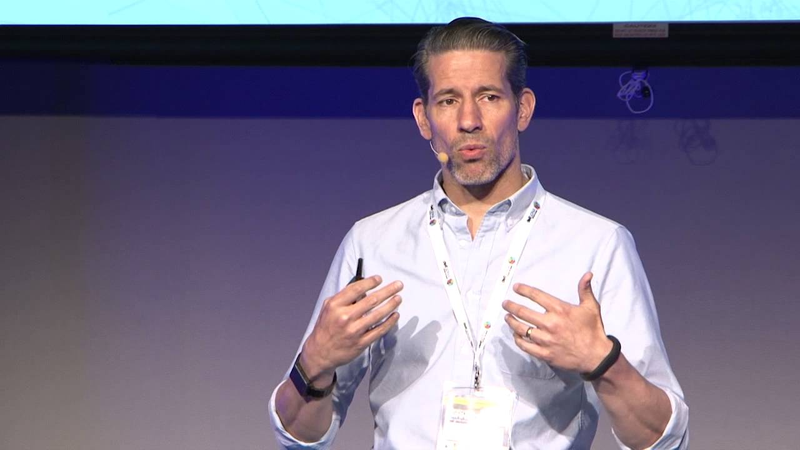
so I'm Keen to be able to take people through what are the uh foundations for some of the big costs that people see within user acquisition we' heard already that there are lots of different channels that people can use we know that discoverability is a challenge so I'll take you through some of the key sources that we've seen as being useful uh and some of the costs that are associated with them uh to give you some bit of a background on from fxu we are a cohesive uh map uh app uh promotion platform we have run 2,400 different uh app campaigns for over 800 clients and we're proud to say that 40 of the top 50 grossing titles in last year uh for 2013 uh were worked on with us so so that's who we are if I take you through this slide one that many many people have seen already there are very many uh apps it's hard to be found so what are the choices that you have when being discovered when acquiring new users
we know the apps in themselves we talked a little bit in some of the previous presentations about that movement from sort of console onto onto mobile Facebook onto mobile um apps are going to continue to be one of the most important uh platforms for delivering content we think it's going to be very very large indeed and if we take why is that is because people use their mobile devices very frequently they they they touch the things 1550 times a day um but the part of the challenge with all of this is that actually people don't necessarily engage with many of their apps they have on their device particularly frequently um the average user has got 40 apps but will only regular only you use 15 there are just over 20% of all app downloads are only ever used once so the challenges is real challenges there how do you find users how do you get them how do you get them engaged at a price
afford I'll take you through what some of those prices are from what we've seen we tend to we publish indexes based upon the average costs per installation that we see from all the different campaigns that we run we've got very good visibility across many of these campaigns so you can see that what this slide is showing you is that iOS is more mature than Android at the moment why is it more mature it's because iOS is a fairly flat line it's somewhere around about a dollar to acquire a user on iOS but with Android it's been moving up and down a little bit we think that's because some of the Android only development development community and Publishers are struggling to work out what's the right time to buy and what's not that's shown um that that's there's not a big difference what we're seeing particularly globally between uh the cost to acquire someone in East Asia in Amia or in North America although air appears to be less expensive interest also monetizes particularly well here we are in the
East me Hall but by OS you can see some of these differences playing out again what I find most interesting about this particular trend is that we can see that uh people escaped Android when it came up to Christmas it looks like those people that had a choice between spending money on Android or spending money on iOS were choosing to spend it at the Christmas period of a busy holiday season on iOS that's why it is that the iOS Peaks up in December where andro goes down in comparison but as Jean M had said before me costs for installation are really a rather crude metric and the industry needs to be able to find a way to move beyond that to actually understand what is the cost of acquiring a loyal user by whatever metric you would measure loyalty um in this instance to be able to provide a consistent measure we look at a loyal user of being a user who um engages in an app uh three or more times and performs some form of loyalty event registration or a purchase or a share or
or that sort of thing the good news about this is that this is an area which is actually starting to mature we're starting to see the prices of acquiring oil users reducing over time I'll take you through in the next phase of this presentation some of the reasons why we think that's happening and some of the traffic sources that are driving that most effectively the first is Facebook now Facebook everyone knows is is is particularly good because they've got a very very rich uh and very wide user base uh where they know a lot of the information about different Vehicles so it means that you're able to Target people much more effectively it does mean however that the cost per click on Facebook is extraordinarily expensive it's 10 times more expensive than a traditional bad display ad network but it performance is significantly better so you can see here that you know the conversion rates are 11 times better purchasing rates are significantly High you know that 1.4 times Improvement in purchasing rate is vast in terms of that can actually do for for for producing an
Roi for your for your game um and so as a consequence it's actually 28% lower 28 reduction cost per purchasing user on Facebook than we would see on traditional uh display networks um it's also better than video networks marginally they're they're a little bit closer so so start to think about those social networks as being areas where you may want to refocus a lot of your attention I'm sure many people are doing that already another area to consider is um is down to incentivized and non-incentivized networks um incentivized networks are always a controversial contentious um and a Hot Topic and possibly rightly so because they perform particularly well so so you know in fixing we are network agnostic we go to wherever the performance is um and we see of a lot of our clients the reason
actually there are some broad similarities between some of the things that I'm describing here and some of the things that JV had been describing his presentation is because both of us in our companies see app developers and app promoters and G developers making similar mistakes time and time again um we actually happen to think that incentivized networks work particularly well if we look at the way that um uh if we look at the way that they deliver users quality at a price then actually they're particularly good so I guess the message here is is not to Discount incentivized networks but to consider to be part of a portfolio of activity you undertake to add more depth to that if you actually compare the cost if you compare the effectiveness of £10,000 spent on user acquisition distributed between a traditional non-incentivized Network and an incentivized Network certainly you will have fewer a smaller proportion of quality users obtained for
that $10,000 spending only 24% will be of high quality purchasing loyal users versus I think it's 7 uh 57% on an non-incentivized network but for the money that you're spending you actually end up with significantly more um LW users and a much lower cost per loyal user so that's another traffic area that I think that you should sort take into count and something we wanted to highlight um that should be part of everyone's portfolio to to my mind why people use these things well of course it's to be able to look at how does the acquisition of organic or natural users change depending upon the uh rank that you would you would have in an app store we've done some correlation on this we've chosen Flappy Bird of course because it's it's the uh title everyone uh holds up as being the master of growth and we can that there is sort of correlation between the number of
downloads the rank in the charts and the extent to which Flappy Birds comes up in in a search query the thing to bear in mind from here which isn't actually on this slide but but but is demonstrated by it is that you know I think it's something in the reion of 88% of people when they are browsing for apps will only browse the top 25 they won't go beyond there so below that it's a bit of a challenge the other way that people look for by searching and what I find particular interesting about the chart behind me is that you can see that the search results change depending upon the App Store rank if you type because all all this is measuring is what is the search position of the search query F bird depending upon how does that change over time depending upon the title's rank so clearly if you want to be found not just by browsing also by by being searched it's important to achieve a threshold level of rank in order to get
discoverability up incentivized networks of course particularly good at helping that kind of activity point I'd like to leave all of you with is for the trends that I've shown you in the past you can see how there's some fluctuations in the costs for installation you can see how the cost per loyal user is starting to come down as the overall app advertising Market starts to mature um but the chart behind me shows the distribution of f advertising spend the spend that it has placed on behalf of his clients for advertising over time I think the far the far left of the screen is showing the um the uh 2010 it's going right the way through to January this year you can see that time is that the um distribution of our is very volatile because we go we're a network agnostic we go where the performance is these are the things that you will need to take into account everything I've sh you all the trends will continue to change you
need to keep on top of these in order to be able to make the right decisions in the future and that's it we have a wealth of information if you would like to pick up on that from our website but I'd like to thank you for your time and great luck acquiring users thanks [Applause]
Summary
The primary challenge for mobile application developers is overcoming discoverability hurdles in a saturated market where users typically engage with only a fraction of their installed apps. With over 20% of downloads used only once, the focus of user acquisition must shift from simple installation metrics to the identification and retention of loyal users. A loyal user is defined as one who engages with an application at least three times and performs a specific value-added action, such as a registration, purchase, or social share.
Data derived from 2,400 campaigns across 800 clients reveals that while iOS remains a more mature and stable platform for acquisition, Android costs fluctuate significantly based on seasonal trends and developer behavior. Although cost-per-install remains a standard industry metric, it is increasingly viewed as insufficient. Instead, developers should prioritize cost-per-loyal-user, a metric that has shown a downward trend as the advertising market matures.
Strategic channel selection is critical for optimizing return on investment. Facebook serves as a high-performance channel, offering superior targeting capabilities that result in conversion and purchasing rates significantly higher than traditional display networks, despite higher initial costs. Furthermore, incentivized networks should not be dismissed; when integrated into a diversified portfolio, they effectively drive volume and improve app store rankings. Achieving a high rank is essential for discoverability, as approximately 88% of users limit their browsing to the top 25 apps. Ultimately, because the advertising landscape is highly volatile and performance varies by network, developers must remain agile, adopting a network-agnostic approach to ensure their acquisition strategies evolve alongside shifting market trends.