Mobile reports and market data
Documents

The Chinese PS Vita? The iReadyGo Much i5
Snail Games, a prominent Chinese PC MMOG publisher, is expanding its footprint into the mobile sector by introducing the iReadyGo Much i5, a dedicated gaming smartphone.
- Snail Games is vertically integrating its business model by acting as a hardware manufacturer, mobile service provider, and software publisher through the launch of the iReadyGo Much i5 smartphone.
- The iReadyGo Much i5 is a dedicated gaming device featuring physical controls, dual joysticks, and a curated Android app store managed by Snail Games.
- Snail Games is leveraging its status as a virtual network operator in China to bundle the device with proprietary SIM cards, offering incentives like free game downloads to drive ecosystem adoption.

Mobile moguls on why consumer connections are key to brand success
The mobile gaming industry is undergoing a strategic shift from a primary focus on user acquisition to the development of long-term, globally recognized brands.
- Mobile gaming strategy is shifting from a primary focus on user acquisition toward building long-term, globally recognized entertainment franchises.
- Developers are prioritizing the creation of deep, authentic player connections through nuanced storytelling, consistent visual identities, and high-quality gameplay.
- Sustainable growth is increasingly achieved by focusing on fewer, high-quality titles rather than releasing numerous games in hopes of finding a hit.

RedLynx on taking Trials from console to mobile
RedLynx, a developer with over 14 years of experience and a portfolio of more than 100 titles, successfully transitioned its established Trials motorbike franchise from console to mobile with the release of Trials Frontier.
- RedLynx successfully adapted the Trials franchise for mobile by shortening track lengths to approximately 30 seconds, enabling the one-to-five-minute play sessions preferred by mobile users.
- Trials Frontier achieved 12 million downloads within two months of its launch by transitioning from a premium console model to a free-to-play mobile environment.
- The development strategy prioritized a robust metagame—focused on bike upgrades and character progression—to satisfy mobile players who prioritize meta-progression over the pure mechanical mastery favored by console audiences.

Console devs are going mobile and mobile devs are going triple-A
The gaming industry is currently experiencing a significant convergence as triple-A console developers expand into mobile markets while mobile developers increasingly adopt high-end production values and leverage major entertainment intellectual property (IP).
- The gaming industry is undergoing a convergence where triple-A console developers are expanding into mobile markets while mobile developers are adopting high-end production values and major intellectual property.
- Mobile platforms have evolved into a mass-market medium with computing power now approaching the capabilities of previous-generation consoles, enabling more complex gaming experiences.
- Industry strategy is shifting toward 'midcore' and 'hardcore' titles that prioritize high visual fidelity, deep storytelling, and sophisticated monetization models over simple casual games.
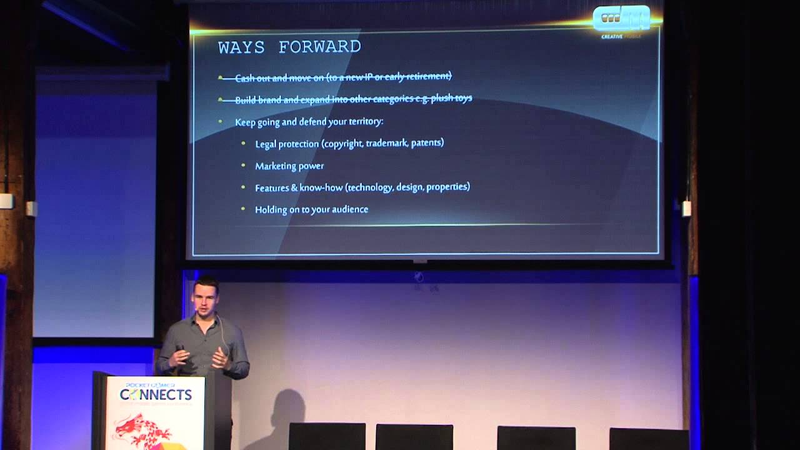
Build a brand or throw in the towel, says Creative Mobile's Vladimir Funtikov
The mobile gaming industry has shifted from a landscape where initial launch success guarantees longevity to a highly competitive, oversaturated market where developers must actively build a brand to survive.
- The mobile gaming market has shifted from a launch-success model to an oversaturated environment where brand identity is the primary defense against rapid cloning by competitors.
- Developers must transition from speculative development to a long-term business model by focusing on deep, iterative engagement with a core, loyal audience.
- When a game lacks strong intellectual property or recognizable characters, active community feedback loops via social media and forums are essential to drive product evolution.

ARM's Nizar Romandhane on making money in R&D
ARM operates as a design-only company, focusing on the research and development of CPU and GPU architectures that power a vast majority of the world’s mobile and consumer electronic devices.
- ARM operates on a dual-revenue model consisting of upfront licensing fees and per-unit royalty payments, which provides the company with granular, real-time data on global device shipments.
- ARM technology currently holds a dominant market share, powering over 95% of smartphones, tablets, and portable gaming consoles, and more than 70% of smart TVs.
- The global market for connected screens is projected to exceed four billion units by 2017, with significant growth expected in the entry-level smartphone segment.

IQzone on why ads could be your missing puzzle piece
Mobile game developers can significantly improve their revenue by diversifying monetization strategies beyond a singular focus on free-to-play models.
- Integrating native ad formats that respect the user journey can increase average revenue per user (ARPU) by 20% to 30%.
- Developers should segment users to ensure high-value spenders remain ad-free while monetizing the remaining majority through banner, interstitial, and video ad units.
- Strategic ad placement is critical for retention, with end-of-session ads performing better than intrusive ads displayed immediately upon app launch.

TrailPlay on engaging fresh audiences
The primary thesis of this analysis is that developers can overcome the saturation and high user acquisition costs of the mobile market by adopting a cross-platform strategy that includes desktop and web-based platforms like Facebook, Steam, and Kongregate.
- Adopting a cross-platform strategy across desktop and web channels serves as a low-cost user acquisition alternative to the saturated and expensive mobile market.
- King reported a 50% increase in average play time and a 100% increase in user engagement after porting their titles to additional platforms.
- PopCap successfully utilized Facebook Connect to enable cross-platform play, resulting in 20% of their monthly active users engaging with these connectivity features.

What role does the games media play in the modern mobile era?
The role of games media in the modern mobile era centers on the critical function of curation.
- Word-of-mouth is the primary discovery driver for 60% of mobile game consumers, with media coverage acting as a critical catalyst to initiate this process.
- Games media serves as a vital curation filter in a saturated market, providing the initial validation that influences both the public and platform curators like Apple when selecting store features.
- The value of media outreach is determined by the monetization model: premium paid titles benefit significantly from editorial reviews, while free-to-play games rely more on immediate, short-term user engagement.

How Oink can help F2P developers tap into the young adult market
The monetization of the under-18 gaming demographic presents significant challenges for free-to-play developers, primarily due to regulatory compliance, parental concerns regarding unauthorized spending, and the lack of accessible payment methods for minors.
- The under-18 gaming demographic represents a massive market with an annual spending power of £3 billion in the UK and $200 billion in the US.
- Free-to-play developers struggle to monetize minors due to regulatory compliance like COPPA, the lack of traditional payment methods for children, and high rates of 'friendly fraud' chargebacks.
- Oink functions as a secure intermediary by allowing parents to fund digital wallets with monthly allowances, removing the need for minors to store credit card data or personal information.

Getting inside the heads of F2P players who pay $50 per month
This analysis examines the behavioral patterns and motivations of high-spending players, commonly referred to as whales, within the free-to-play (F2P) mobile gaming market.
- High-spending players, defined as those spending $10 to $50 monthly, are highly social and competitive, contradicting the stereotype of the isolated whale.
- YouTube is a critical discovery and engagement hub for heavy spenders, rivaling Facebook in importance for this demographic.
- Heavy spenders are significantly more likely than non-payers to discover games through online word-of-mouth, social media, blogs, and video content.

10 trends shaping the global mobile games industry
The global mobile games industry is currently navigating a period of significant structural evolution, characterized by shifting publishing models, changing platform dynamics, and the maturation of emerging markets.
- Free-to-play remains the dominant revenue model for mobile gaming, accounting for 70% to 94% of total App Store revenue.
- The industry is shifting from traditional publishing toward comprehensive 'publishing services' that integrate data analytics, cloud infrastructure, and monetization strategies.
- Rising costs-per-install (CPI) on iOS and Android are forcing developers to rely more heavily on aggressive user acquisition budgets and direct platform-holder support to overcome discoverability challenges.