1 free read left. Create a free account for unlimited reading + AI research.
Create free accountReport Dataspelsbranschen
1 free read left. Create a free account for unlimited reading + AI research.
Create free accountReportDataspelsbranschen
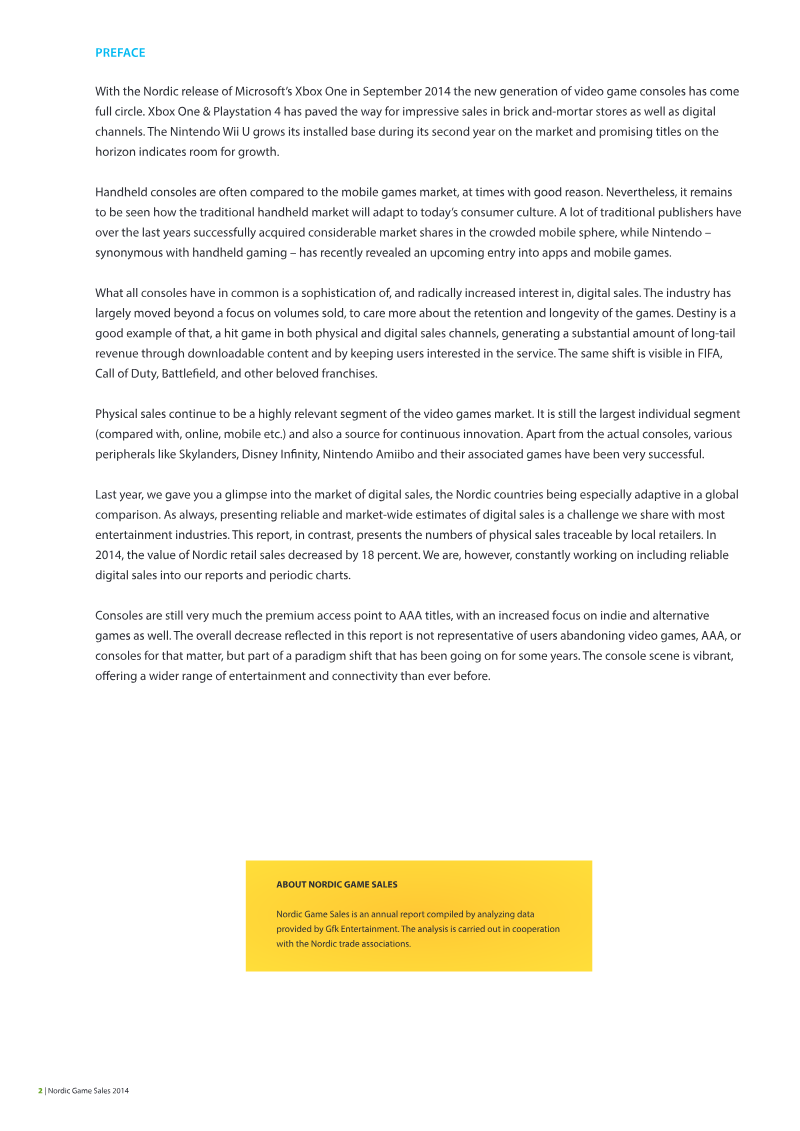
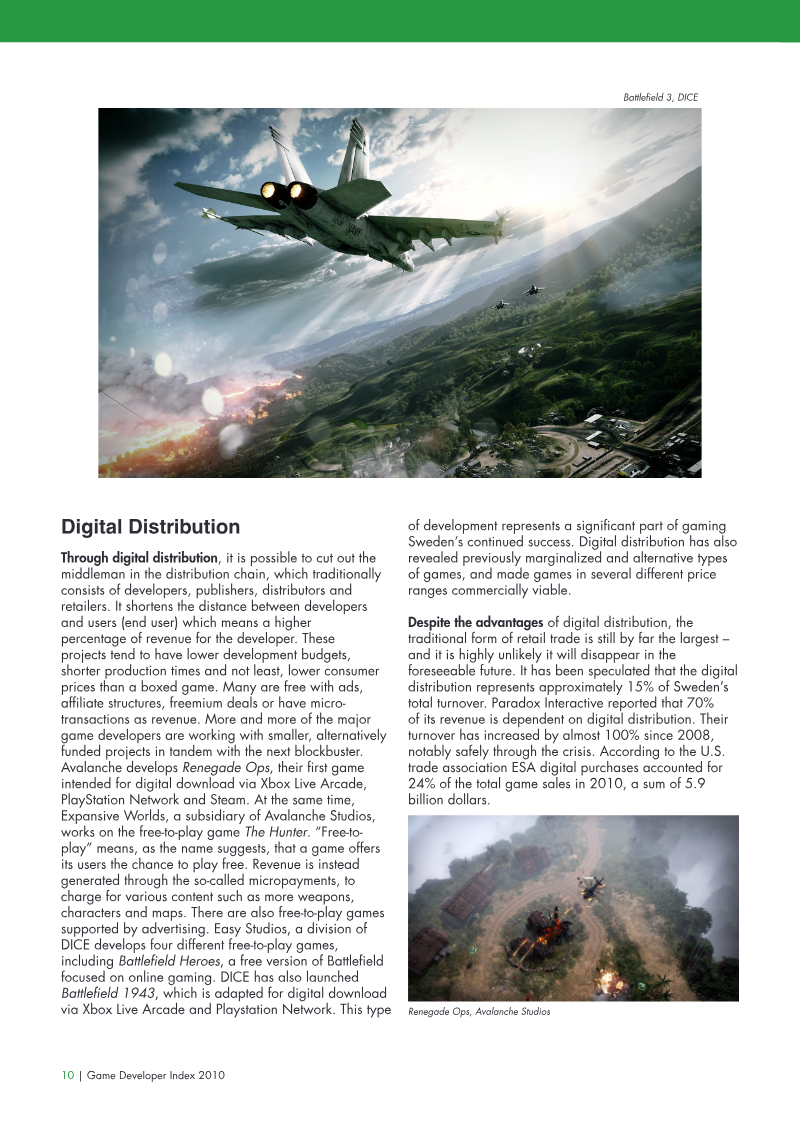
This decline was driven by a structural shift towards digital distribution and service-oriented revenue models. Consumer behavior is increasingly favoring digital content.
The Nordic video game market underwent a significant structural transformation in 2014, characterized by an 18 percent decline in physical retail value. This downturn reflects a broader industry shift away from traditional volume-based sales toward digital distribution, persistent connectivity, and service-oriented revenue models. While physical retail continues to hold a notable position within the regional landscape, consumer behavior is increasingly favoring digital content, signaling a long-term transition in how gaming products are consumed and monetized across Sweden, Norway, Denmark, and Finland.
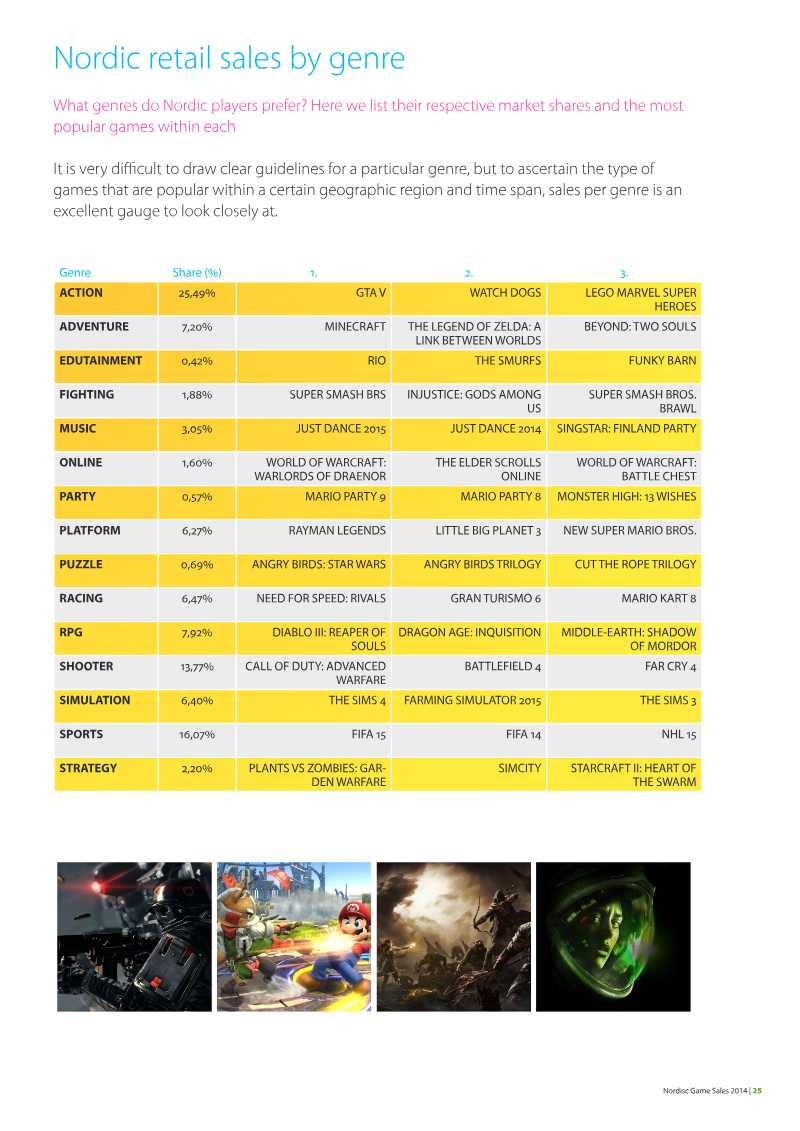
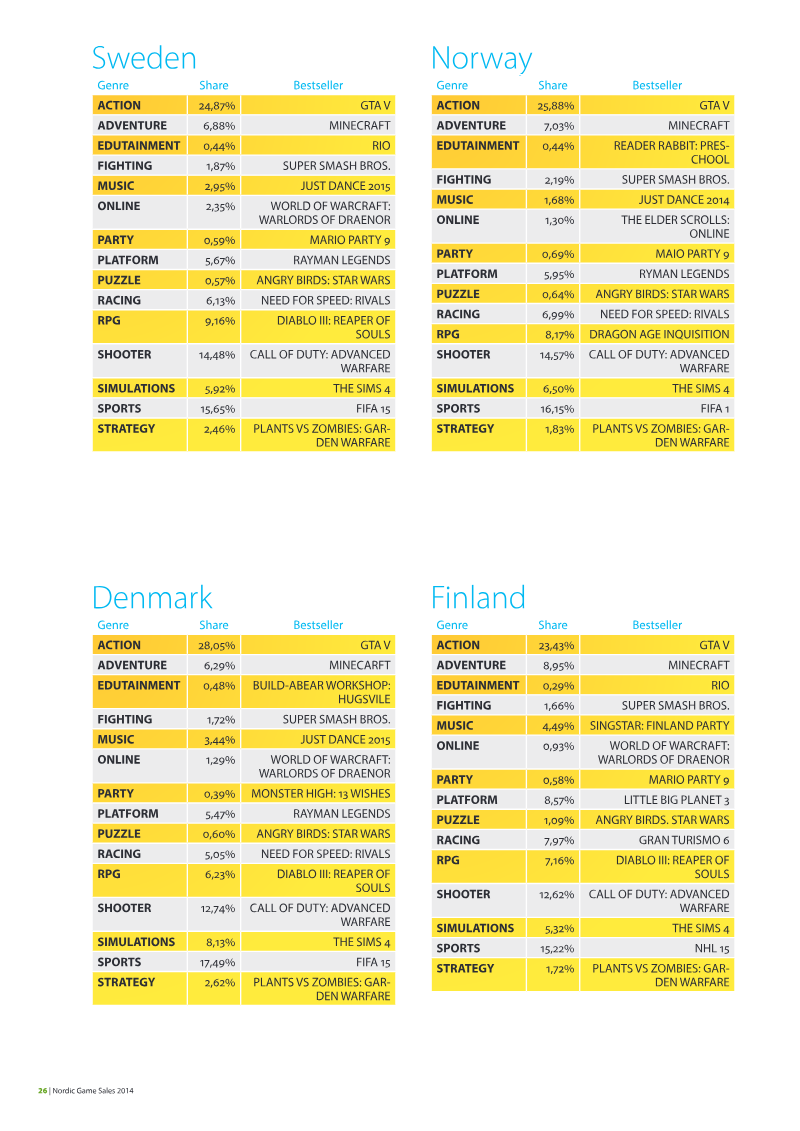
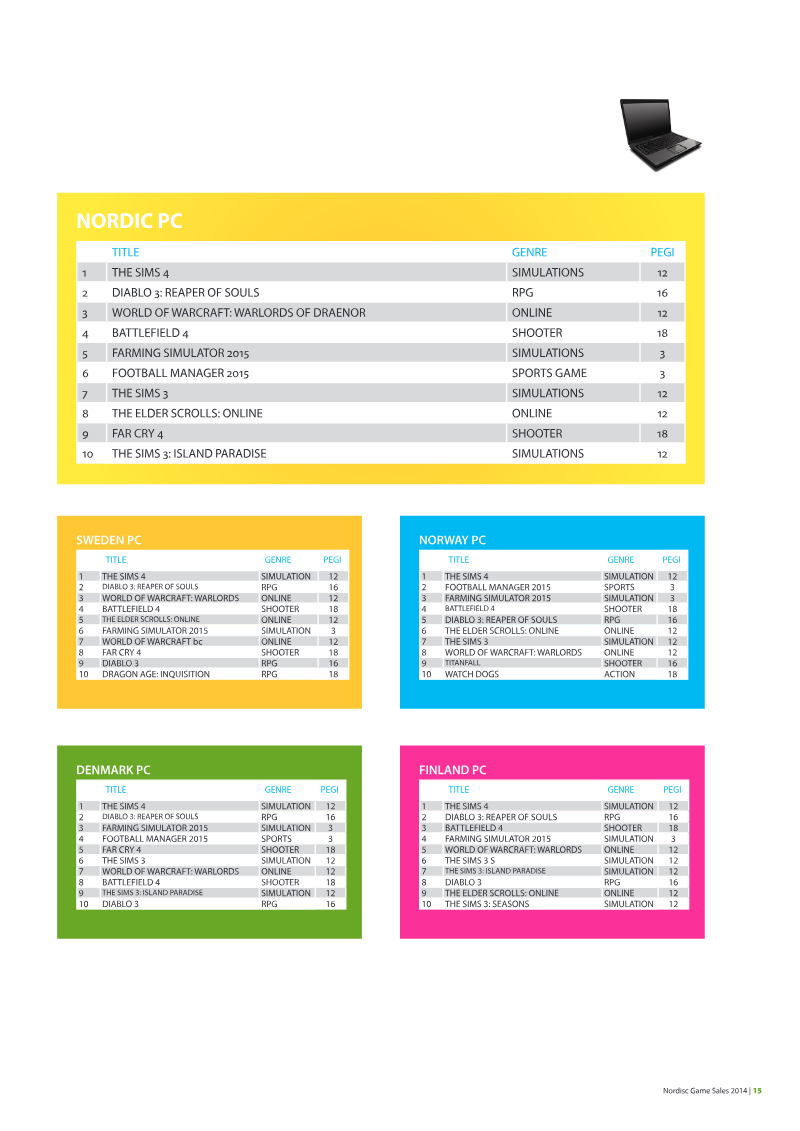
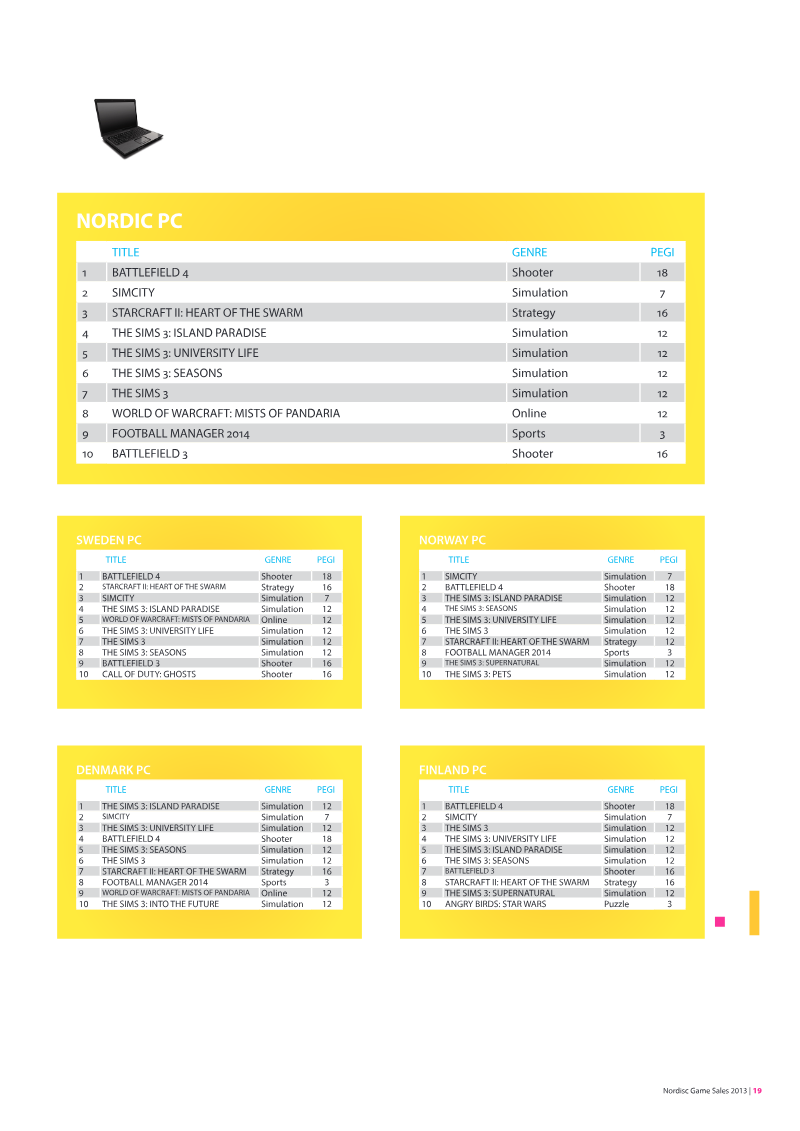
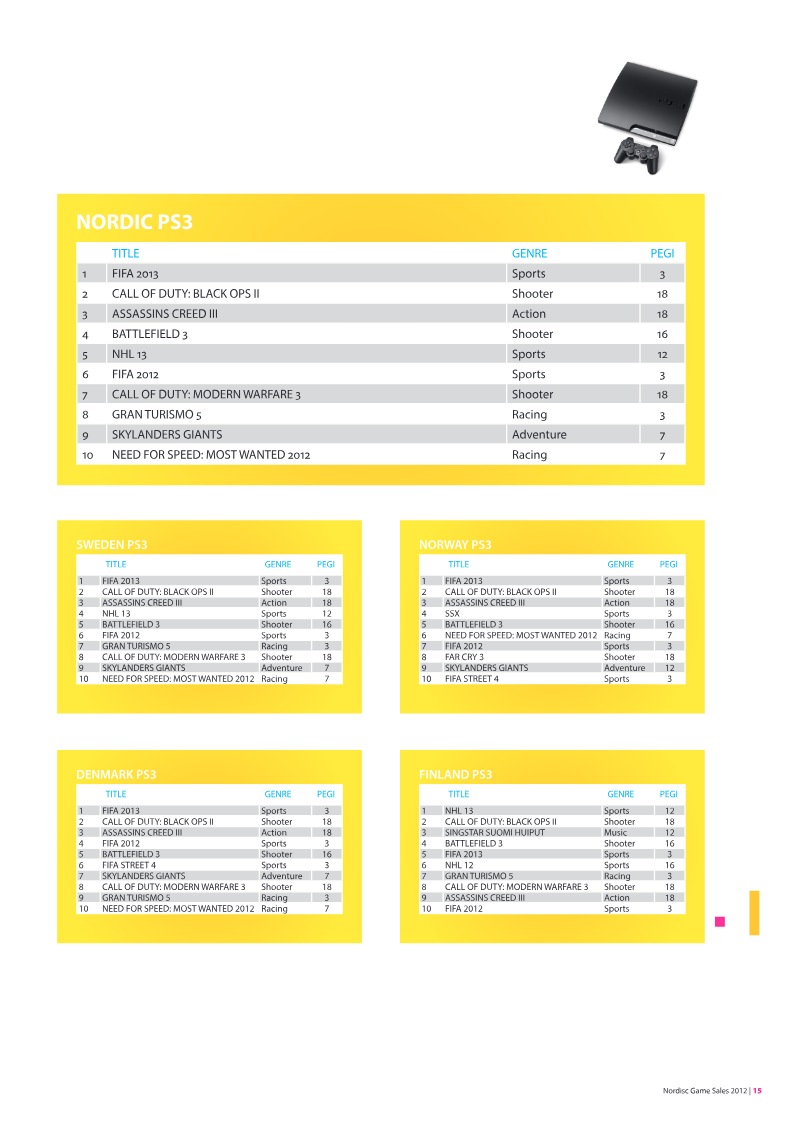
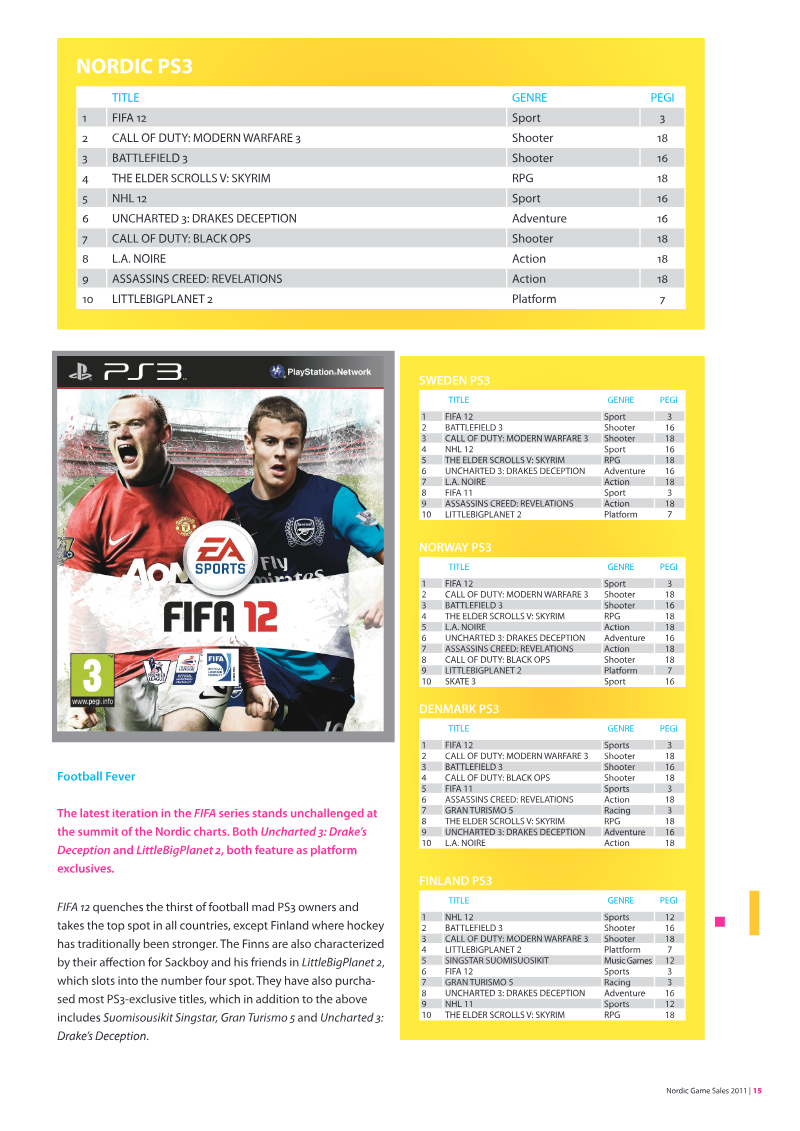
Market performance during this period was heavily concentrated among major multi-platform franchises. Action titles accounted for approximately 25 percent of the market, while sports games comprised roughly 16 percent. Blockbuster releases such as FIFA 15, Grand Theft Auto V, and Call of Duty: Advanced Warfare consistently dominated sales charts across the region. Despite these shared trends, specific regional preferences emerged, most notably in Finland, where the NHL series maintained a stronger foothold than in neighboring countries. The PC sector also displayed unique characteristics, with simulation and strategy games like The Sims 4 and Diablo 3: Reaper of Souls capturing significant consumer interest.
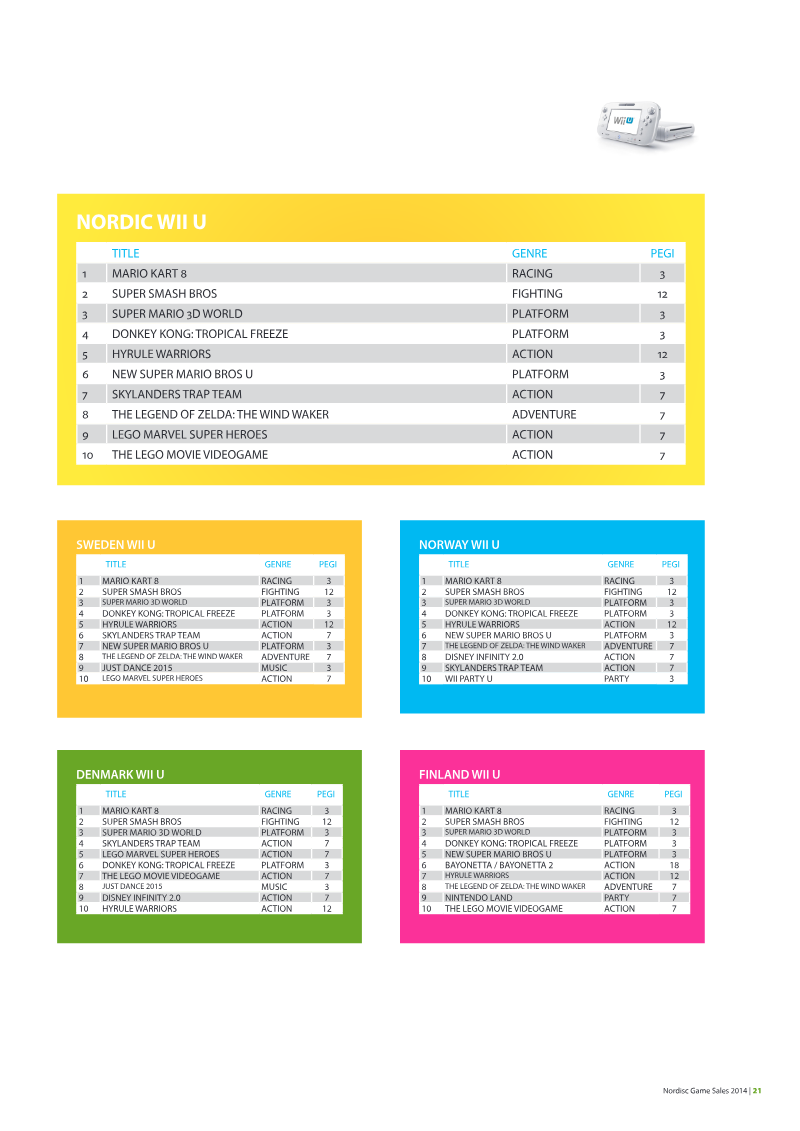
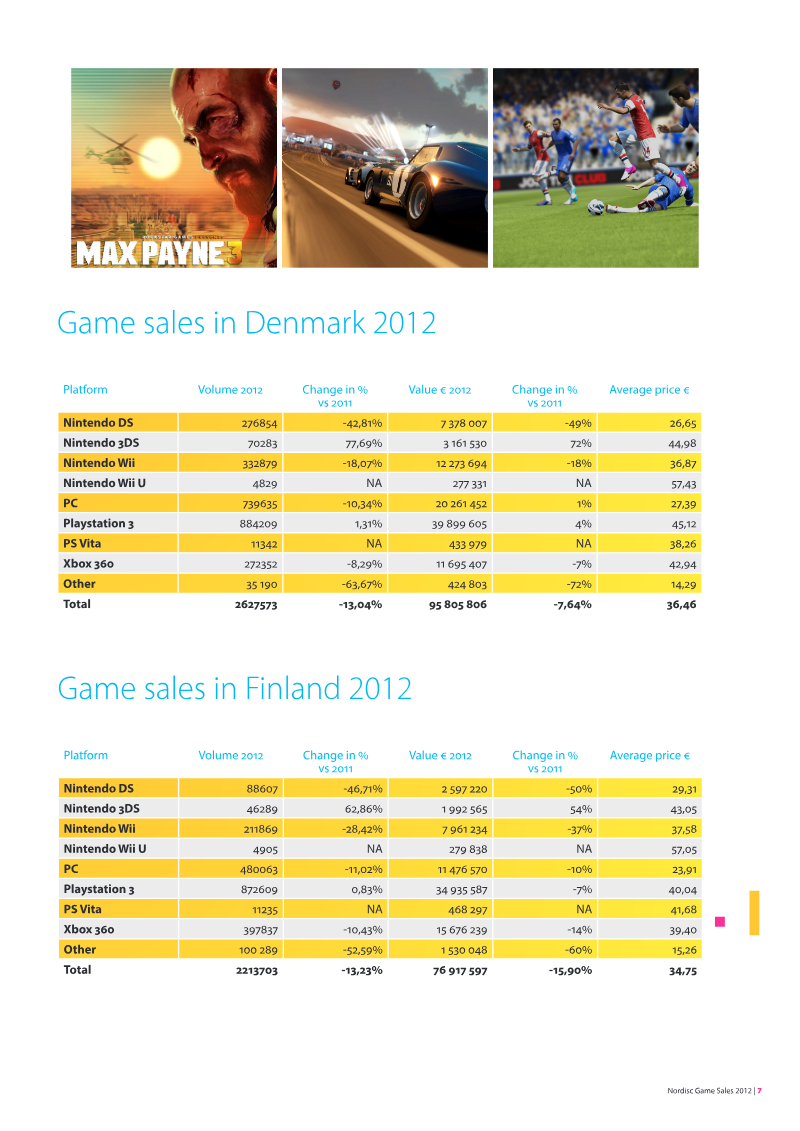
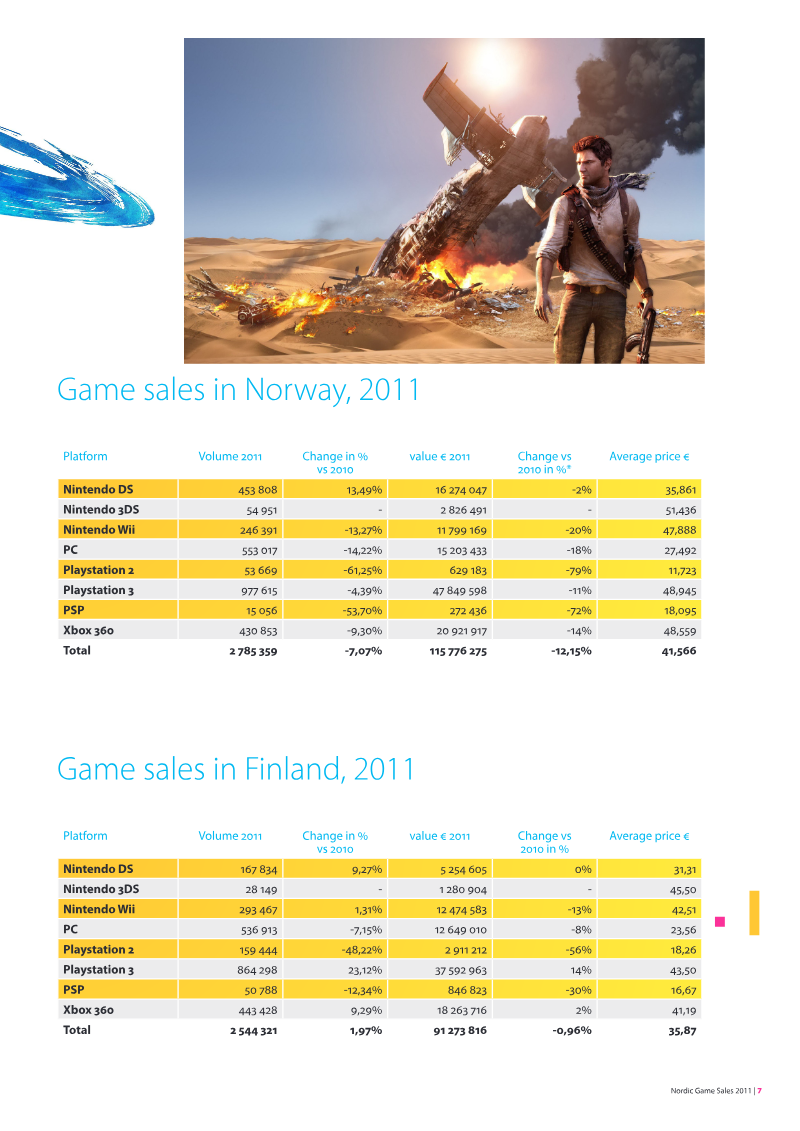
Platform-specific data further illustrates a nuanced market landscape, as Nintendo hardware—including the Wii U, DS, and 3DS—retained a dedicated following. Established franchises such as Pokémon and Lego remained consistent performers, providing a stable counterpoint to the volatility seen in the broader retail sector. Ultimately, the 2014 data underscores a market in flux, where the enduring popularity of major action and sports intellectual properties is being balanced against a fundamental migration toward digital ecosystems and evolving platform preferences.
Dataspelsbranschen · 2025
Dataspelsbranschen · 2025

Dataspelsbranschen · 2025
Dataspelsbranschen · 2025
Dataspelsbranschen · 2025
Dataspelsbranschen · 2025

Dataspelsbranschen · 2024


Dataspelsbranschen · 2024



Swedish Games Industry · 2024



Swedish Games Industry · 2024

Dataspelsbranschen · 2024

Dataspelsbranschen · 2024
Dataspelsbranschen · 2015