1 free read left. Create a free account for unlimited reading + AI research.
Create free account
Shovelware - The Causes and Consequences of Bad Licensed Games - Extra Credits
Key insights
6 takeaways- 01Shovelware is a business model that prioritizes exploiting brand recognition over product quality, often forcing developers to meet inflexible release deadlines tied to movie or toy launches.
- 02The reliance on low-budget outsourcing and work-for-hire arrangements incentivizes developers to cut corners, resulting in poorly executed titles that lack meaningful gameplay.
- 03Publishers specifically target uninformed consumers, such as parents buying for children, which risks alienating new players and damaging the long-term reputation of the gaming medium.
- 04Mobile gaming has become a primary hub for shovelware due to low barriers to entry and the prevalence of exploitative free-to-play monetization strategies.
- 05License holders are shifting their strategy from viewing games as simple merchandise to recognizing that high-quality interactive experiences provide greater long-term brand value.
- 06As the consumer base becomes more discerning and games solidify their status as a primary form of mass media, the industry is expected to move away from low-quality licensed products.
Ask AI about this video
Transcript
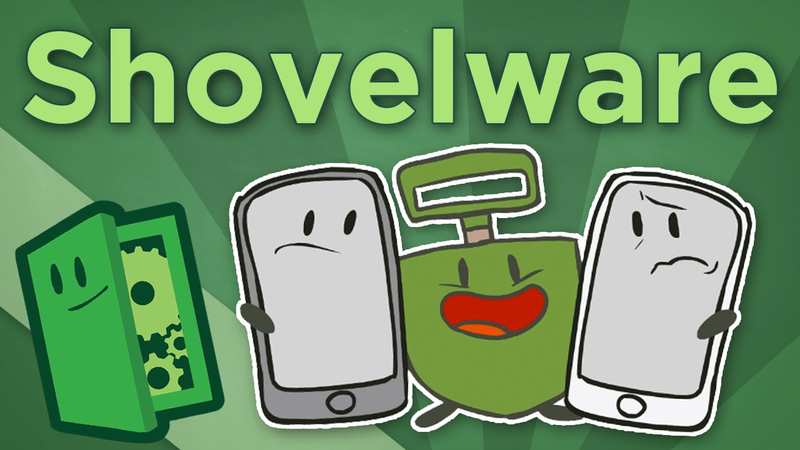
All right, this episode really should have happened by now. Scott, thank you for your patience. Your generosity years ago was downright inspiring. Today, we are going to talk about shovelware, one of the banes of the industry. It's one of the most soul-crushing things to work on and just terrible for consumers, and yet it may be more common today than ever before. So, today we are going to delve into why. First, let's define shovelware, since I've seen a number of different definitions out there. When I talk about shovelware, I'm talking exclusively about poorly done license titles or shoddy ports. I'm not talking about the plethora of bug-filled games, amateur games, or incomplete games out there. I think that in a lot of cases, those games began with the best intentions and still have some value to the industry, often serving as a lesson for the people making them. True shovelware does not have that value. We sort of touched on this in our designing for youth episode, but the fundamental reason shovelware is so terrible is that most of it is created off the idea that just being associated with the licensed property they're working with will sell the game. When you see a terrible Barbie
game or a lousy movie tie-in, it's a pretty safe bet that buying the rights to create that tie-in cost the company more money than they put into the actual development of the game. You see, these publishers are willing to wager that most of their sales will come from brand recognition rather than the actual quality of the game itself. Therefore, making a quality game is not their priority at all. Instead, these companies try to get the game made and out the door as cheaply as possible in order to maximize the profit margin they make from simply having the license to whatever brand it is they bought the rights to. This, in turn, leads to miserable working conditions at whatever poor developer gets stuck actually making the thing. The developers end up having to work on a franchise they probably don't want to be working on, and even if they do care enough to try to make it awesome, they usually don't get the resources they need to do anything interesting or even of high quality with the title. Remember, the publishers aren't paying for something good. They're paying for something that is technically a game that can go in a store with a picture of Iron Man on the front. This often leads to a great deal of outsourcing on the project, which, as most people in the industry will tell you, is a nightmare when you're working with something as complicated as a video game. It can be really tough, even if
you're working with a top-tier outsourcing firm where everybody's really good at what they do, which, of course, none of these companies probably are, because, again, minimal budget. To compound this issue, the publisher or company who actually licensed the game generally has a tight deadline for when it has to be out. You see, companies usually pick up property licenses when they think that they're going to get some extraordinary benefit from releasing a game based on that property in the near-term future, over and above the average day-to-day value of the property itself. This means that they usually pick them up knowing that a new movie in the franchise or some new line of toys is going to be coming out. In order for them to get the most of marketing value out of their license, they need to have a product on the shelves as soon as that movie or toy hits, because that's when that franchise is going to be on everybody's mind. Of course, even big companies don't usually know about these sorts of events years in advance, which means that these licensed games often end up being put on incredibly tight production schedules with huge financial penalties for the developer if they don't deliver on time. And as these projects are often work for hire, the developers will see little to none of the royalties. So, not only are they motivated to deliver the game even
more cheaply than what the publisher is paying them, they're also incentivized to kick the thing out the door when the deadline comes, no matter what condition it's in. They literally can't afford to care about quality. And in the end, all of this leads to a negative experience for the end consumer. Nobody likes a bad game, and nobody likes to be swindled, but for the most part, that's exactly what these games are and what they're trying to do. They're specifically targeting the uninformed consumer. In the past, these games largely targeted parents, who they assumed were not game savvy and thus would simply buy whatever they recognized when looking for a gift for their kids. This practice is bad for everybody involved, including the industry at large. I mean, all of you watching this, we all love games, right? A lot of us grew up loving them, specifically because we weren't raised on shovelware like this. We grew up on games like Mario and Final Fantasy and Halo and Civilization and The Sims and Minecraft. These are the games that got us has dedicate so much time to the medium. The kids whose parents bought them that Barbie game or the GI Joe games were much more likely to lose interest and take up other pastimes because they never got to see all the incredible things this medium had to
offer. This industry lost potential lifelong consumers so that a few companies could make a quick buck. But that's often how it works. When there's an enticing short-term gain staring at you in the face, sometimes it's hard to see the long-term damage you're doing, even if it's to yourself. And this phenomenon is far from over. There was a time we would have associated this type of terrible product with the bygone NES days or of the Atari collapse, or maybe with the market dominance of the PlayStation 1 and 2. But the trend seemed to be slowing down over time. As games got to be more expensive to make and modern systems became harder to build for, it became impossible to simply rush out a product with an inexpensive team. Unfortunately, that perspective is only true if you think of the industry as just the big PC and console players because shovelware moved to mobile, and it moved there hard. Shovelware is more profitable than ever, and it might be causing more damage than ever before, too. Mobile platforms are generally far easier to develop for than our major AAA platforms, which makes them the perfect marketplace for shovelware. Games are cheaper to make and take less time to crank out, which makes it way easier to hit those crazy
deadlines. And perhaps most importantly, mobile presents a whole new customer base to sell to, one that isn't necessarily as up to speed on games as the core AAA audience. You see, over the last few decades, those of us who grew up with games started to be the ones to buy games for their kids or to be the ones to make recommendations for friends. And so, as a whole, the consumer base became less gullible, making shovelware harder to sell. But that's not the case yet in the mobile space. Tablets and phones have reached well beyond traditional users, and often they serve as the first gaming machine for children that might not otherwise have gotten a game system at all. To add to this, at the time mobile really became a thing, many existing video game license deals didn't apply to the mobile space. So, licenses once locked up by major publishers were picked up cheaply by the emerging mobile giants. And when you throw in some of the exploitative free-to-play practices that these companies are using to squeeze every available dollar out of these games, we find that shovelware is actually bigger than it has ever been and as such is turning off an entire generation of new players and setting up the mobile market not for a crash but certainly for a contraction. So, how do we stop this?
Well, the best remedies are education and time. The mobile market is going to go through the same shovelware cycle consoles and PCs did but we can accelerate that process by helping our younger siblings or friends kids get games that won't try to take advantage of them. But the real solution, unfortunately, lays with the license holders. For years, many of the companies licensing properties like James Bond or Transformers really didn't know very much about the video game world. They saw games as just another way to exploit their license for cash and because they saw it as a niche market, they didn't really think of it as affecting their brand or at least they didn't see the games quality as a major brand concern. License holders have always had huge books full of specifications on how to treat their licenses and how to display their logos and heaps and heaps of rules that make creating a licensed game all that much more difficult for developers who already don't have the resources to develop a proper game in the first place. So, while these license holders would make absolutely sure that the developers were meticulous in applying the exact shade of red to their cars or making sure that their hero never shoots an enemy below the belt or something, they really didn't understand or care about quality or how the game played.
They didn't see games as having the potential to turn a new audience onto their product or to dampen the enthusiasm of their existing audience. This is starting to change though as license holders start to perceive games less as mere merchandise and more on the level of a mass media like a TV show or comic book, they're starting to really understand the long-term value that games have. As more people who grew up on games are now the ones working on these deals and as some of the companies controlling these licenses see the benefit of breakout successes like Batman: Arkham Asylum, their policies on who they license to and what they expect from a licensed game will change. A shovelware may never disappear but when this mindset shift happens, the volume of shovelware titles will change from a flood to a trickle and more of our favorite licenses will start getting the good games they really deserve. I'll see you next week.
Summary
Shovelware, defined as poorly executed licensed titles or shoddy ports, remains a persistent issue in the video game industry. The primary thesis is that these products are designed to exploit brand recognition rather than provide quality entertainment. Publishers often prioritize the acquisition of a popular license over development resources, resulting in games produced on tight, inflexible schedules to coincide with movie or toy releases. This business model incentivizes developers to cut corners, frequently relying on low-budget outsourcing and work-for-hire arrangements that prioritize meeting deadlines over gameplay quality.
The consequences of this practice extend beyond the immediate disappointment of consumers. By targeting uninformed buyers—particularly parents purchasing games for children—publishers risk alienating a new generation of potential players who may abandon the medium after negative experiences. While the prevalence of shovelware on traditional PC and console platforms has historically fluctuated, the rise of mobile gaming has provided a new, highly profitable environment for these products. The accessibility of mobile development, combined with a broader, less experienced user base, has allowed shovelware to proliferate, often exacerbated by exploitative free-to-play monetization strategies.
The industry’s path toward improvement relies on a shift in perspective among license holders. Historically, these entities viewed games as mere merchandise, enforcing strict aesthetic guidelines while ignoring the quality of the interactive experience. However, as games gain status as a primary form of mass media, license holders are increasingly recognizing the long-term brand value of high-quality titles. As the industry matures and the consumer base becomes more discerning, the expectation is that the volume of shovelware will eventually diminish, replaced by a greater focus on delivering meaningful, high-quality gaming experiences.