Market Analysis reports and market data
Documents
Console Games in the Age of Convergence
Console gaming's history since the 1980s, as this analysis traces it, has moved through a repeating cycle of convergence, divergence, and convergence again, with each phase shaped as much by institutional strategy as by raw technical capability.
- Console gaming has cycled through repeated phases of convergence and divergence since the 1980s, with each phase shaped by institutional strategy as much as by technical capability.
- Nintendo held over 80 percent of the US console market and about 90 percent of Japan's in 1989, before Sony's CD-ROM-based PlayStation entered in 1995 and captured over 20 percent of the games market by 1996 through aggressive pricing and a larger software library.
- Sega withdrew from hardware after the Dreamcast's online strategy failed amid slow modem speeds and weak uptake of its service, while Sony's PlayStation came to dominate the late-1990s and early-2000s market.



La Industria del Videojuego en España en 2021: Anuario 2021
The AEVI Anuario 2021 provides a comprehensive annual assessment of Spain's video game industry, positioning the sector as a significant economic, cultural, and educational force.
- Spain's video game sector generated €1.795 billion in 2021, up nearly 3% from 2020, with physical sales rising to €882 million while online sales (€913 million) declined 4.59% year-on-year.
- Spain counted more than 18 million videogamers in 2021, roughly 47–48% of whom were women, yet women make up under 20% of developers.
- Roughly two-thirds of Spanish developers' revenue comes from abroad, making internationalization a central strategic priority for the sector.

Vietnam Mobile Gaming Industry Report Q3 2026
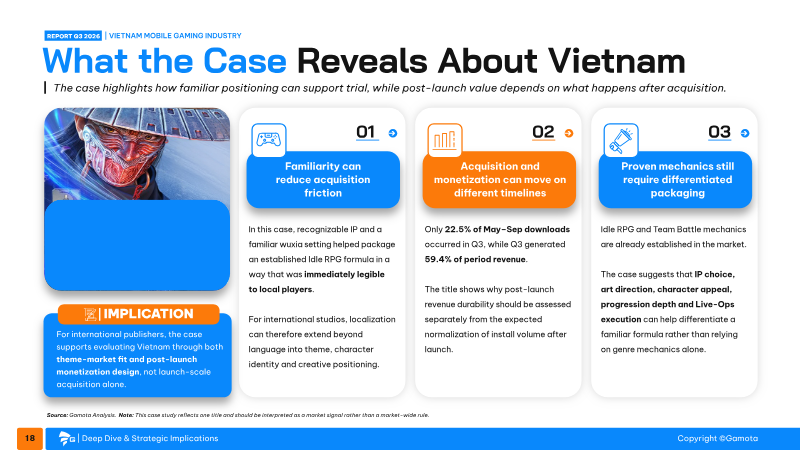
Gamota's Q3 2026 Vietnam mobile gaming report finds that the market moderated in the third quarter, with revenue down 7.9% and downloads down 8.1% quarter over quarter, both falling in parallel.
- Vietnam's mobile gaming market moderated in Q3 2026, with revenue down 7.9% and downloads down 8.1% quarter over quarter, both falling in parallel with the softness concentrated in September.
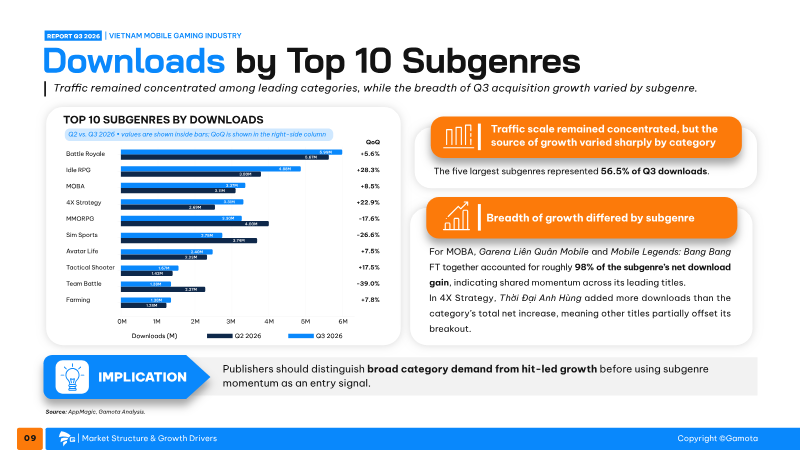
- Performance diverged sharply by subgenre: MMORPG remained the largest revenue category despite declines, while Idle RPG, MOBA, Avatar Life and Farming grew on both revenue and downloads, and several categories gained traffic even as revenue fell.
- The Top 10 games captured 34.8% of Q3 revenue and 42.7% of downloads, leaving the majority of activity spread across titles outside the leaders.
Australian Game Development Survey 2024
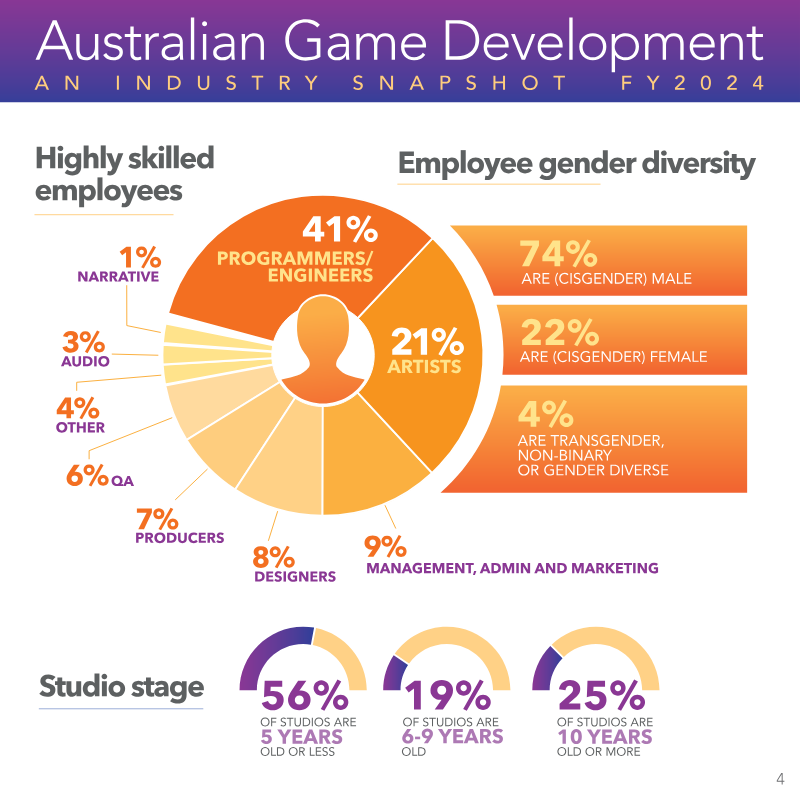
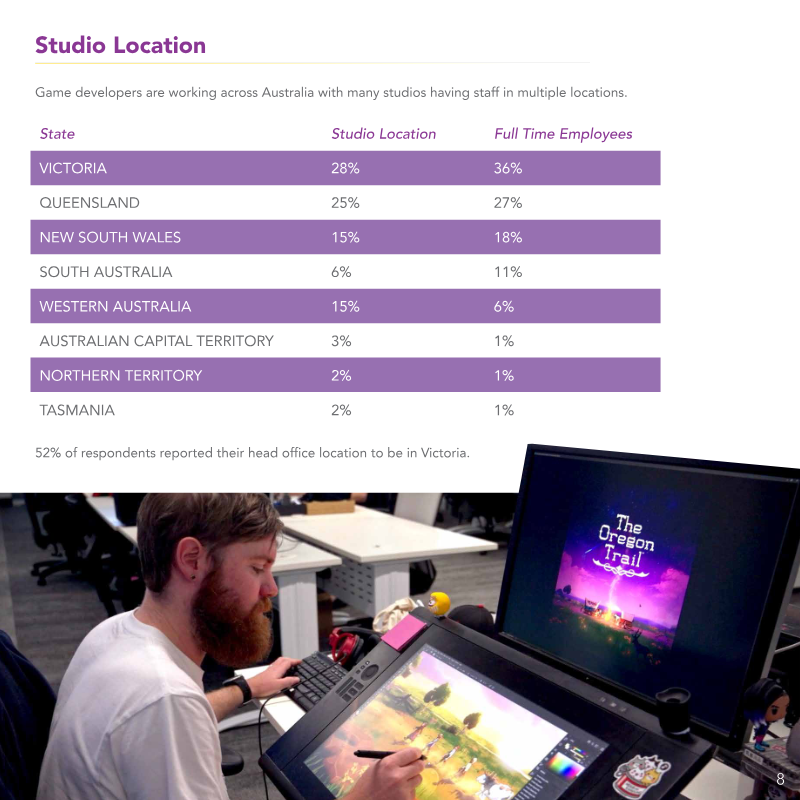
The Australian Game Development Survey 2024 provides an annual snapshot of the country's game development sector for the financial year running from 1 July 2023 to 30 June 2024.
- Australian game development revenue dipped 1.9% to $339.1 million in FY2024 (1 July 2023 to 30 June 2024), while employment held roughly steady at 2,465 people, signalling stability amid global headwinds.
- The sector is heavily export-oriented, with 93% of revenue generated outside Australia.
- Eighty-five percent of studios develop their own intellectual property, pointing to a sector with strong original content capability.
Costa Rica Exporta: Videogames and Animation
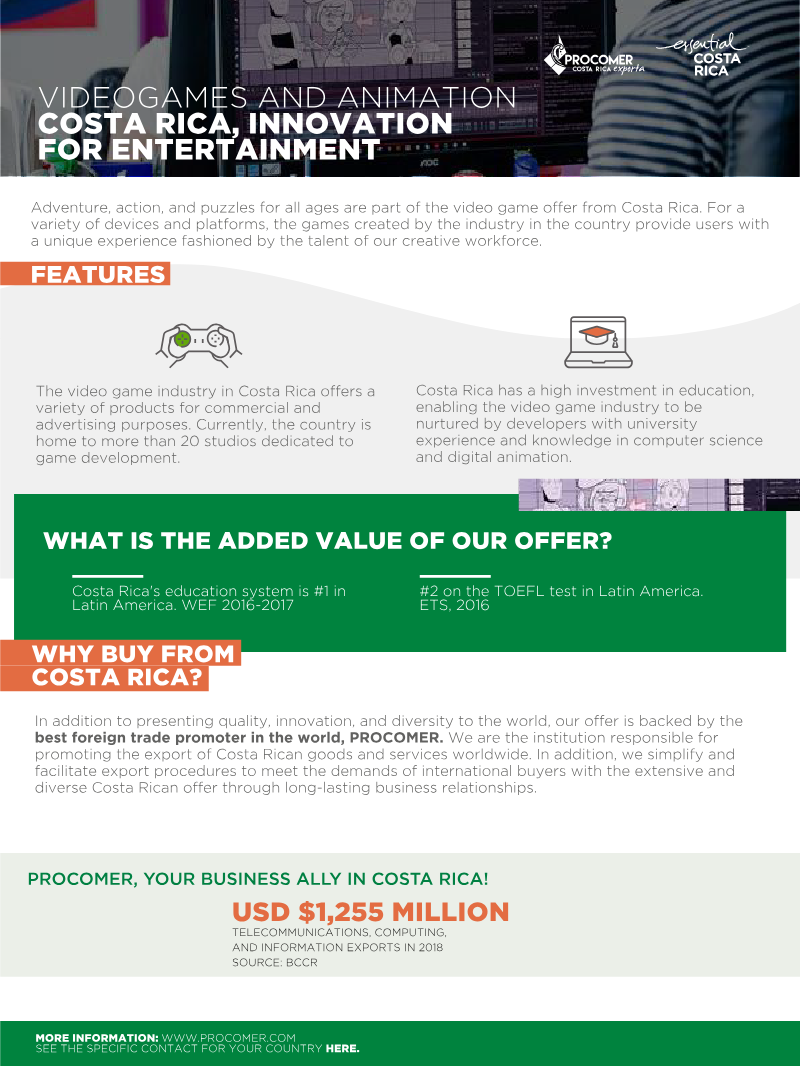
This promotional document from PROCOMER, Costa Rica's national export promotion agency, presents the country's video game and animation industry as a competitive export offering for international buyers.
- Costa Rica's video game and animation sector is promoted by PROCOMER, the national export promotion agency, as a competitive export offering for international buyers.
- The country is described as home to more than 20 studios focused on game development and digital animation.
- Costa Rica is ranked first in Latin America on the TOEFL English proficiency test and first in education in the region per World Economic Forum data for 2016–2017, which the document presents as a key differentiator.



2019 Year in Review: Digital Games and Interactive Media
This report, published by SuperData (a Nielsen company) as a 2019 year-in-review, surveys the global digital games and interactive media market, covering mobile, PC, console, gaming video content (GVC), and extended reality (XR) segments.
- Digital games revenue reached $109.4 billion in 2019, up 3% year over year, while the broader interactive media sector grew about 4%.
- Free-to-play titles drove growth, accounting for roughly 80% of digital games revenue, with mobile contributing $64.4 billion, about three-fifths of total spending.
- Premium game revenue fell 5% to $18.9 billion, reflecting a year with fewer blockbuster releases than 2018.

2025 Overseas Korean Game User Survey
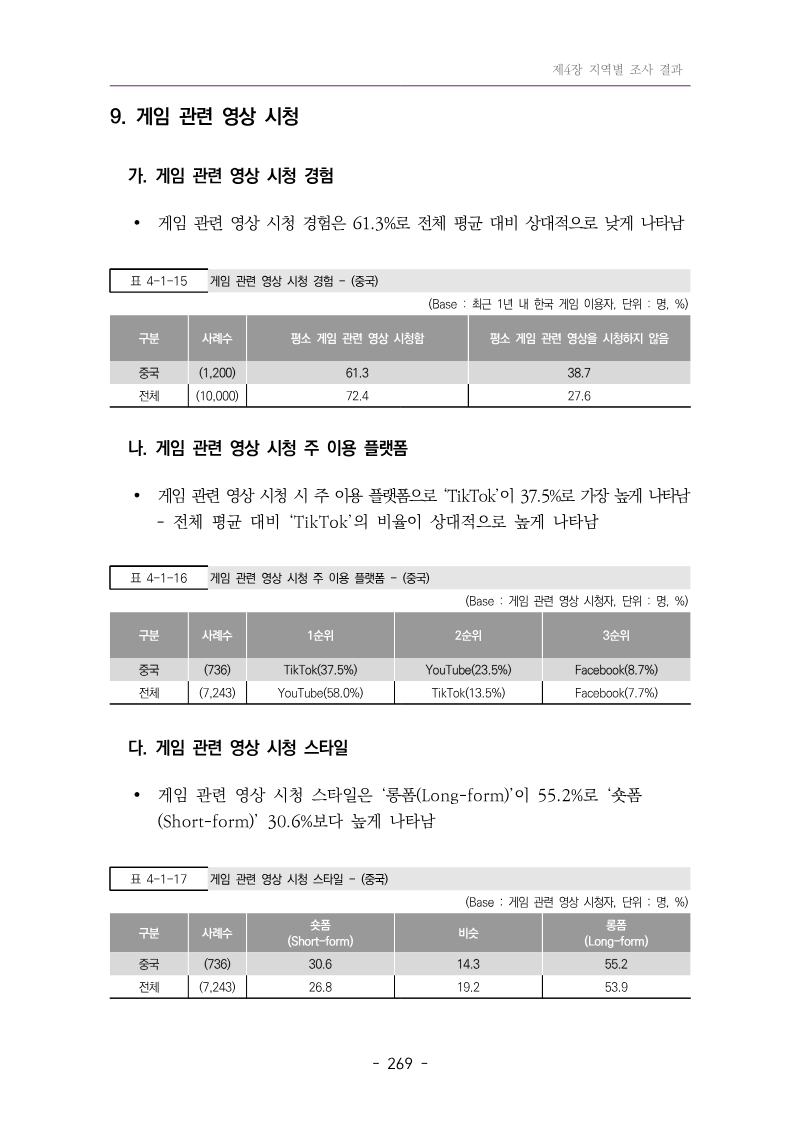
The 2025 Overseas Korean Game User Survey examines how internet users aged 15 and older who played Korean games in the past year engage with those titles across ten markets: China, Japan, Taiwan, India, Vietnam, the United States, Brazil, Germany, France, and the UAE.
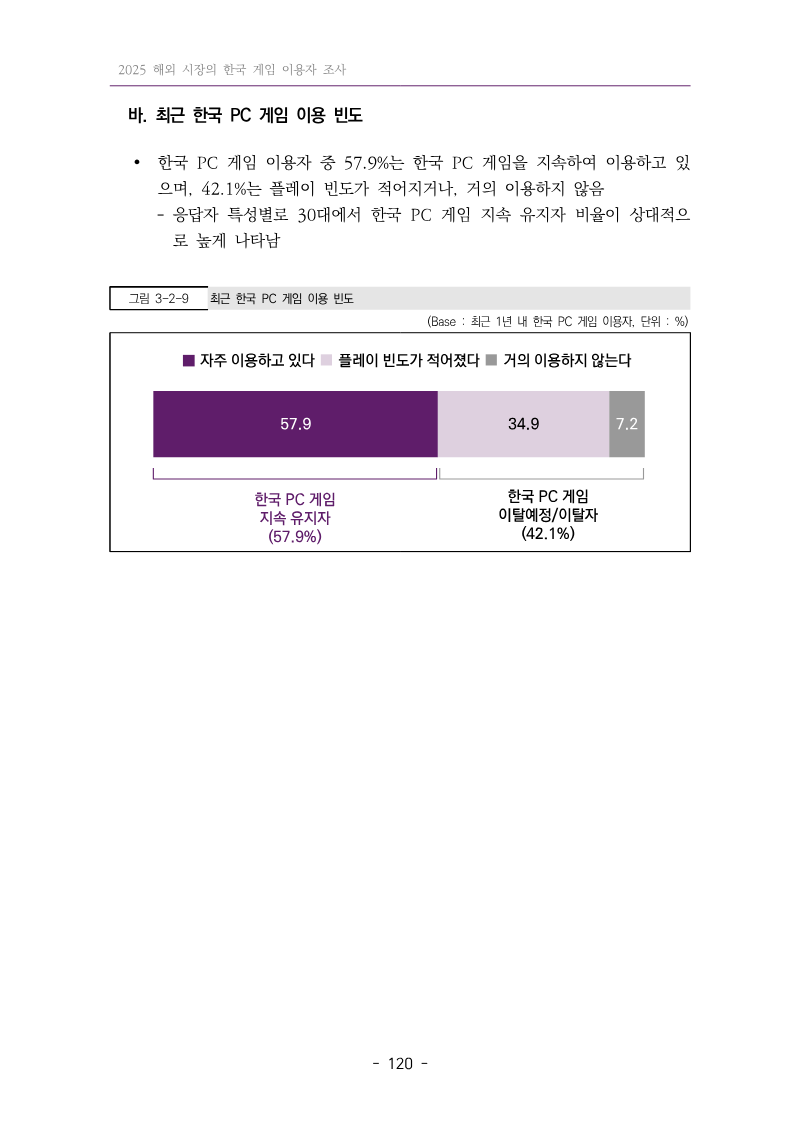
- Mobile is the most widely used platform among overseas Korean game users (76.8%), ahead of PC (68.4%) and console (48.3%), though PC leads in both time spent and per-user annual spending.
- Overseas exports account for roughly 48% of Korean game industry revenue, which the report uses to argue for continued overseas user research.
- Emotional atmosphere and play structure are the strongest reasons users enjoy Korean games, while poor growth systems, unstable performance, and weak play convenience are the most common reasons for disengagement.

2025 Game User Survey
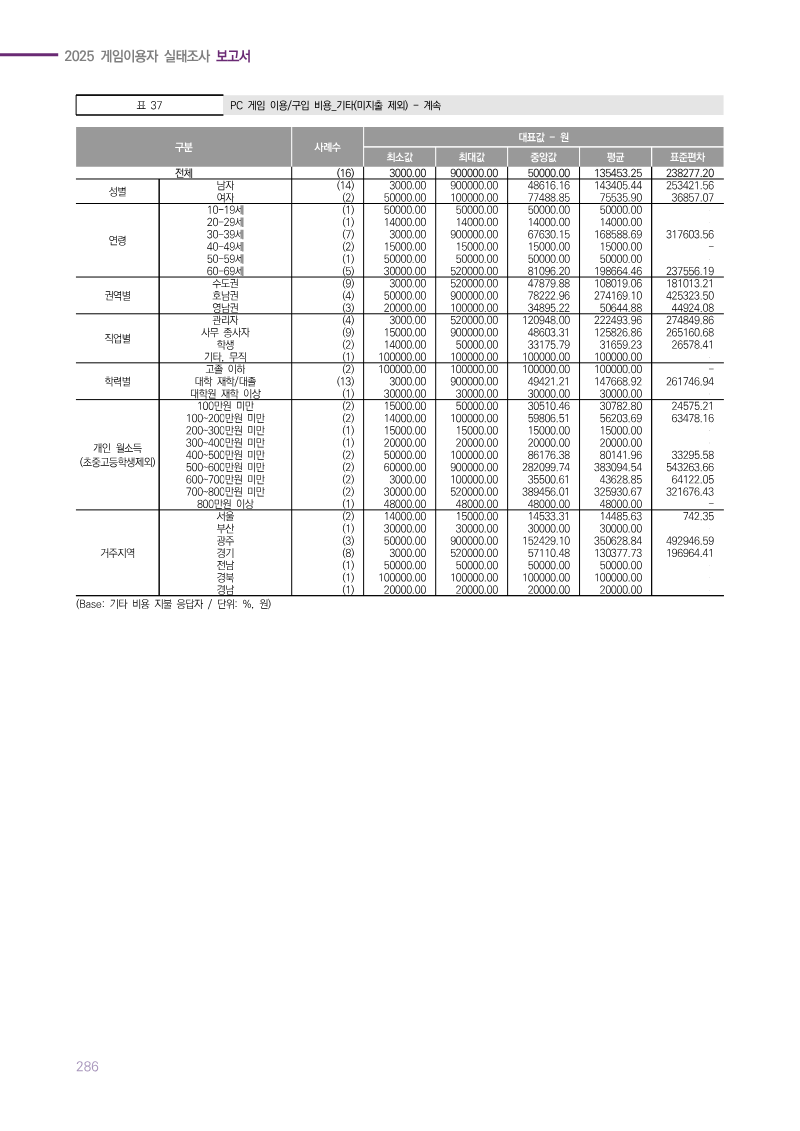
The 2025 Game User Survey, conducted by Korea's Creative Content Agency, examines the state of game usage, spending, and attitudes among the South Korean general population aged 10 to 69.
- The overall game usage rate in South Korea fell to 50.2% in 2025, down 9.7 percentage points from the prior year and more than 10 points below pre-pandemic levels, with usage dropping steeply by age from 80.9% among teens to 23.1% among those in their 60s.
- Mobile remains the dominant platform, with 89.1% of gamers playing on mobile and 62.0% ranking it as their primary platform, while PC participation stands at 58.1%.
- Among non-players, video-watching substitution (86.3%) and time constraints (44.0%) are the most cited reasons for quitting games.

2025 Game Industry White Paper
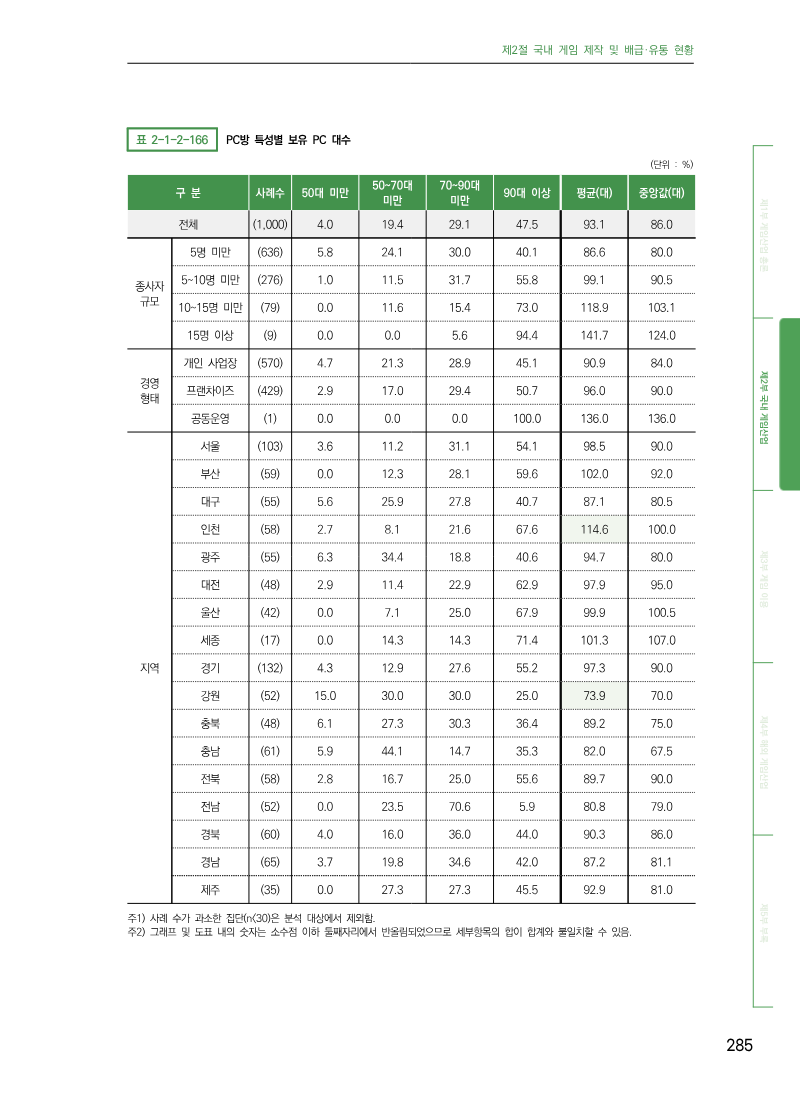
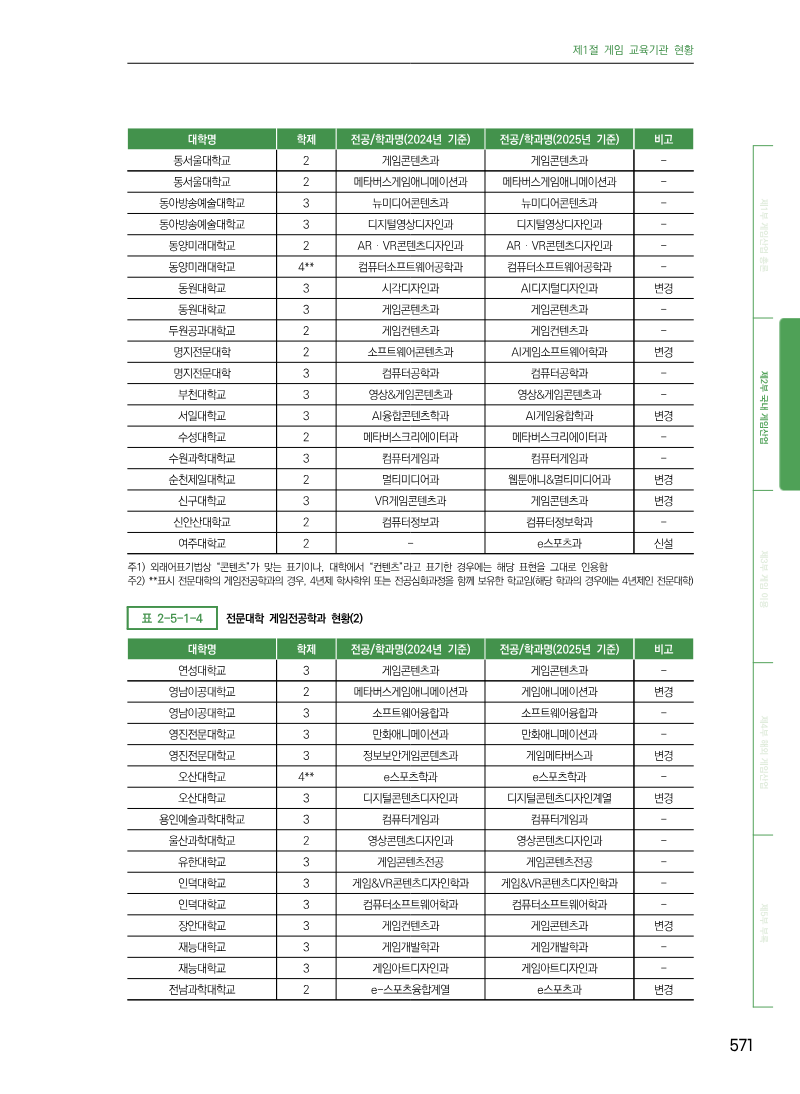
The 2025 Game Industry White Paper, produced by the Korea Creative Content Agency (KOCCA), offers a comprehensive, data-driven assessment of South Korea's game sector in 2024, with forward-looking indicators for 2025.
- Korea's domestic game market grew 3.9% to ₩23.85 trillion in 2024, with mobile games accounting for roughly 59% of revenue, while exports reached $8.5 billion (up 1.3%).
- Global game market growth stalled at 0.7% to about $220 billion, while the share of surveyed Koreans who use games fell from 74.4% in 2022 to 50.2% in 2025, a decline the report treats as a central concern.
- Most Korean game firms are small, with a median capital of only ₩104 million, and 52% report operating losses, with wide gaps between large and small firms in finances and labor conditions.
Argentinean Video Game Industry: 2020 Relevant Data Report
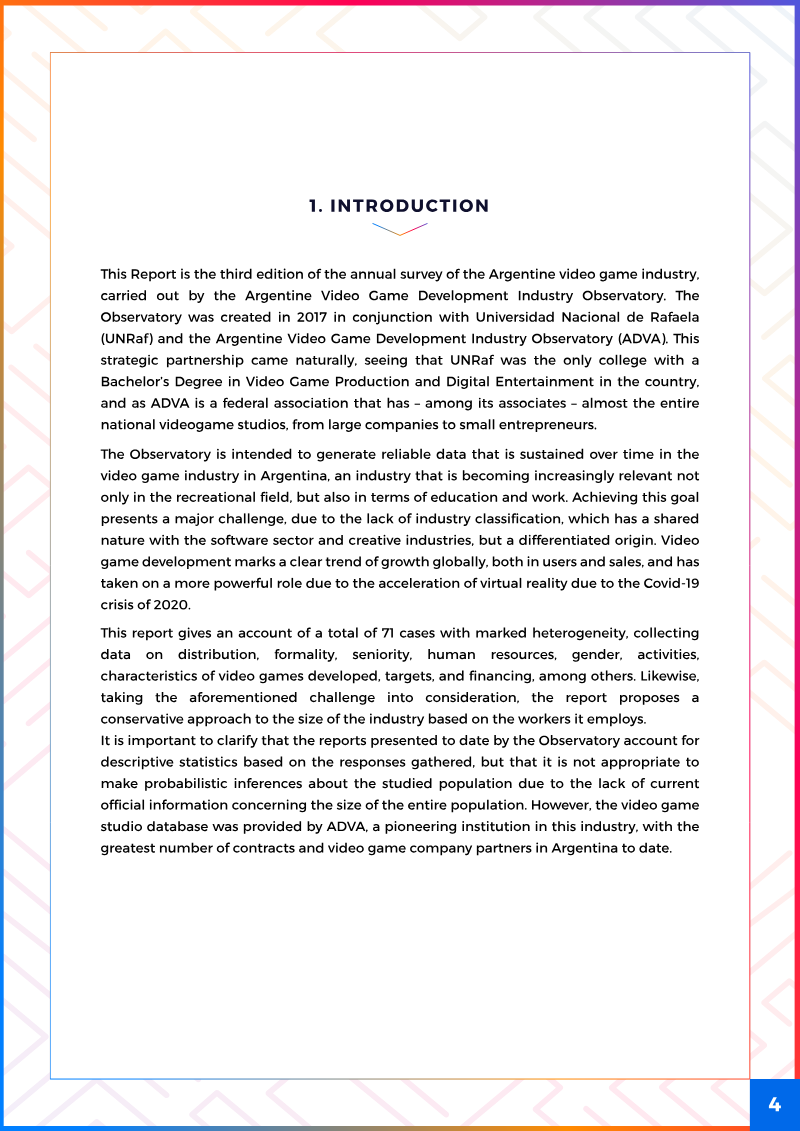
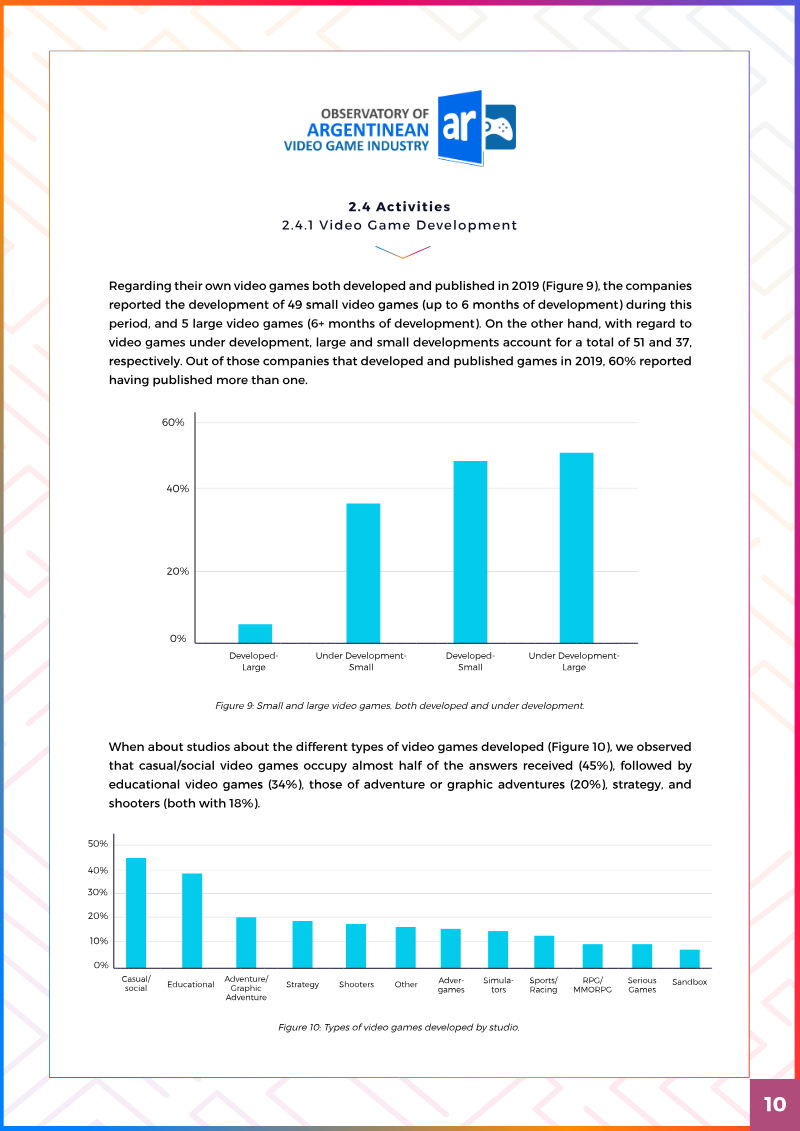
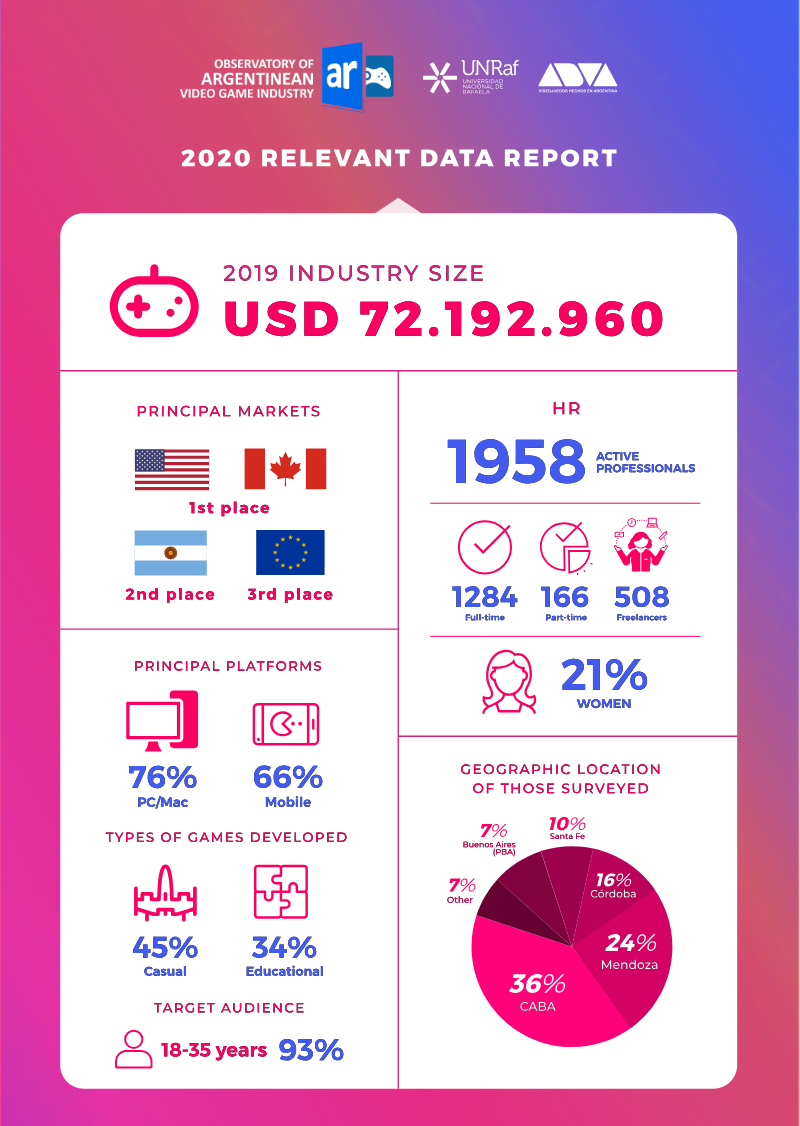
The Observatory of the Argentinean Video Game Industry's 2020 Relevant Data Report, the third annual edition of a survey conducted with Universidad Nacional de Rafaela and the industry association ADVA, presents descriptive statistics on the country's video game sector.
- The Argentinean video game sector is young and geographically concentrated: 36% of the 71 surveyed studios are in Buenos Aires City, followed by Mendoza (24%), Córdoba (16%), Santa Fe (10%), and Buenos Aires Province (7%), and about 60% were incorporated between 2015 and 2020.
- The sector's estimated size for 2019 is at least USD 72,192,960, calculated conservatively from employment figures and average hourly costs, and it employed roughly 1,450 formal workers (1,284 full-time, 166 part-time) plus 508 freelancers.
- Gender gaps are pronounced: women average 21% of employee-status workers but only 6% of company partners, and 18% of studios report no female employees.


Digital New Zealand 2020: The Power of Games
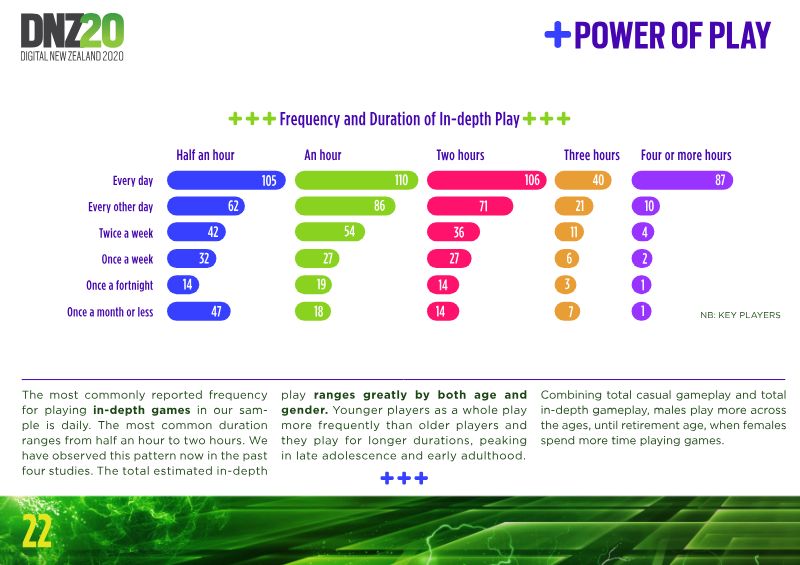
Digital New Zealand 2020: The Power of Games presents a comprehensive picture of how New Zealanders play video games and what they believe games contribute to society.
- Nine in ten New Zealand households own a device capable of playing games, a level unchanged since 2010, and roughly two-thirds of the population plays, averaging 88 minutes of daily play.
- Retail game sales grew from $118 million to $548 million between 2013 and 2018, a compound annual growth rate of 15 percent.
- The average New Zealand player is 34 years old, and women make up 46 percent of players, showing games are a mainstream part of everyday culture rather than a niche pastime.

Digital Australia 2020: The Power of Games
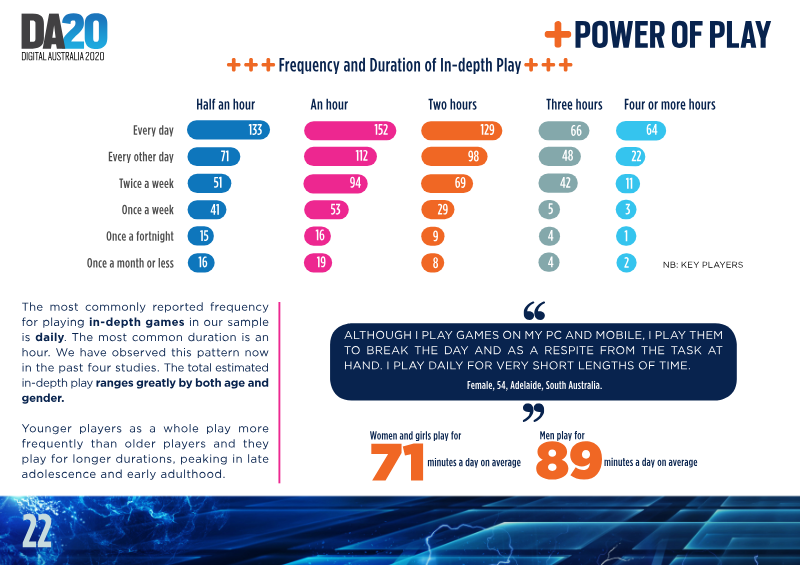
Digital Australia 2020: The Power of Games, produced by Bond University and the Interactive Games and Entertainment Association (IGEA), establishes that video gaming has become a normalised feature of everyday Australian life.
- Roughly two-thirds of Australians play video games, nine in ten households have owned a game device since 2009, and the average adult player has been gaming for about twelve years, according to the Bond University and IGEA study based on a February 2019 survey of 1,210 households and 3,228 individuals.
- Australian video game retail sales reached $4.03 billion in 2018, a compound annual growth rate of 15 percent since 2013, and nearly three-quarters of adults believe game development adds value to the economy.
- The player base is maturing and diversifying: the average player's age has risen to around 34, and women make up 47 percent of players.