Key insights
8 slides
Key number
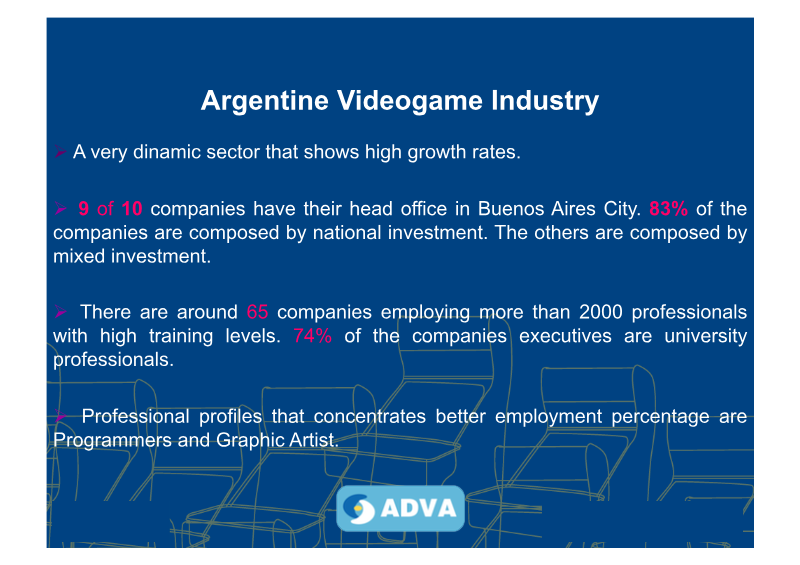
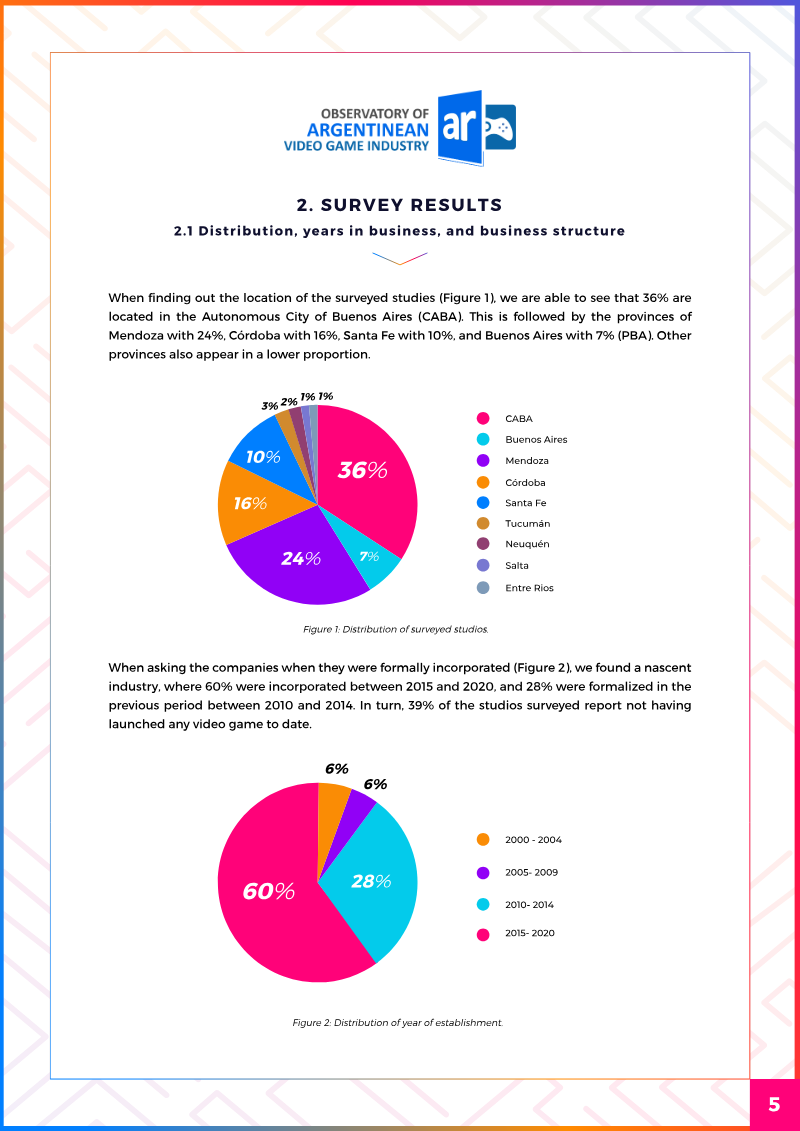
Buenos Aires City hosts 36% of the surveyed studios.
Of the 71 studios surveyed, 36% are based in Buenos Aires City, followed by Mendoza (24%), Córdoba (16%), Santa Fe (10%), and Buenos Aires Province (7%).
1 / 8
- 01The Argentinean video game sector is young and geographically concentrated: 36% of the 71 surveyed studios are in Buenos Aires City, followed by Mendoza (24%), Córdoba (16%), Santa Fe (10%), and Buenos Aires Province (7%), and about 60% were incorporated between 2015 and 2020.See it on page 6
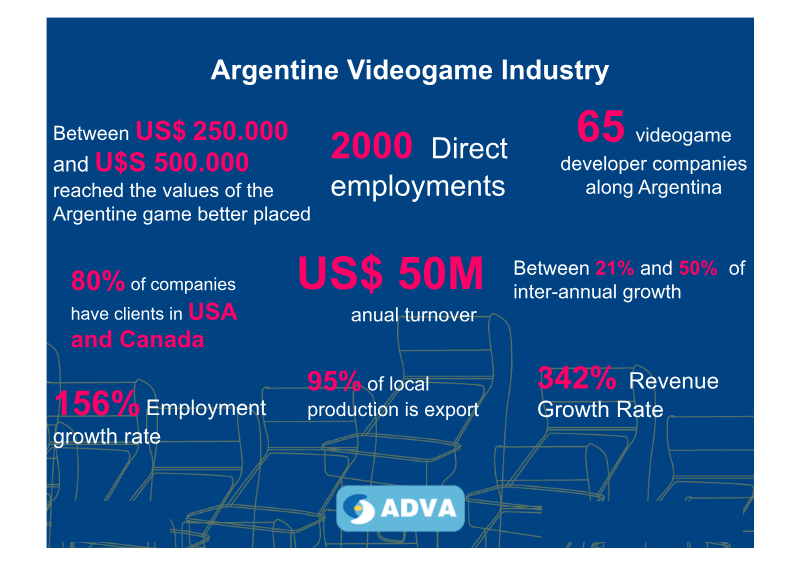
- 02The sector's estimated size for 2019 is at least USD 72,192,960, calculated conservatively from employment figures and average hourly costs, and it employed roughly 1,450 formal workers (1,284 full-time, 166 part-time) plus 508 freelancers.See it on page 7
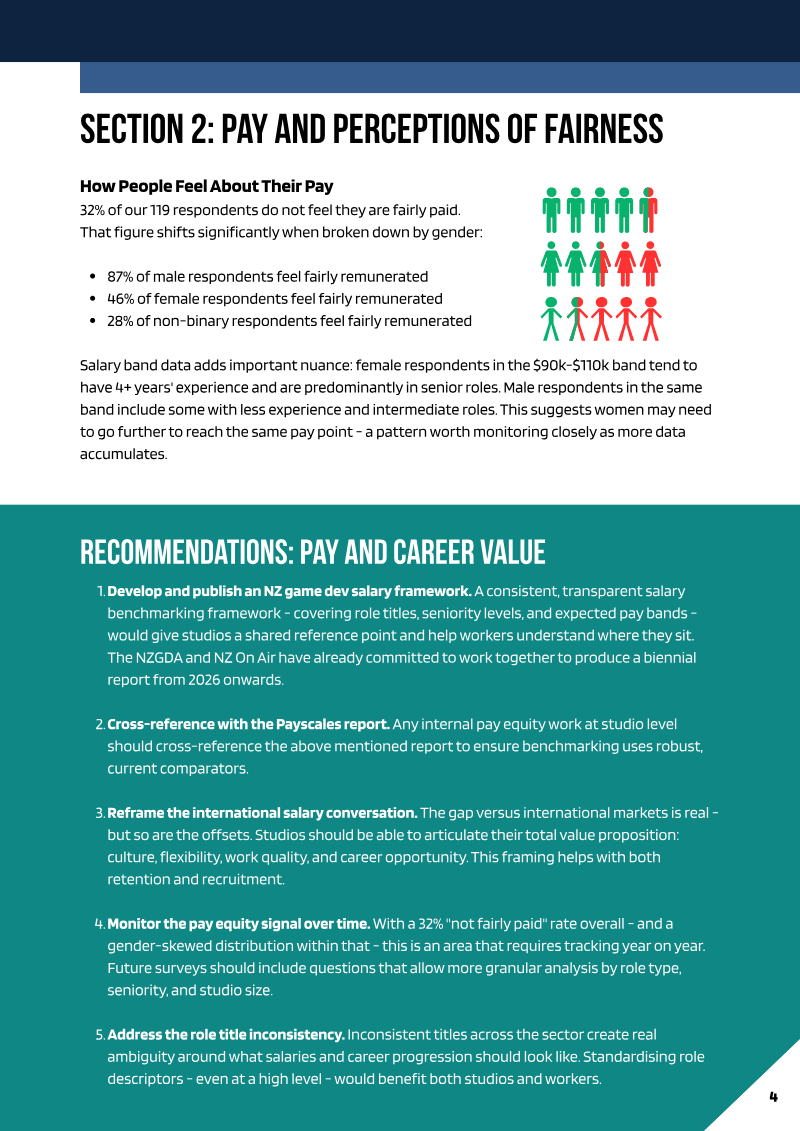
- 03Gender gaps are pronounced: women average 21% of employee-status workers but only 6% of company partners, and 18% of studios report no female employees.See it on page 8
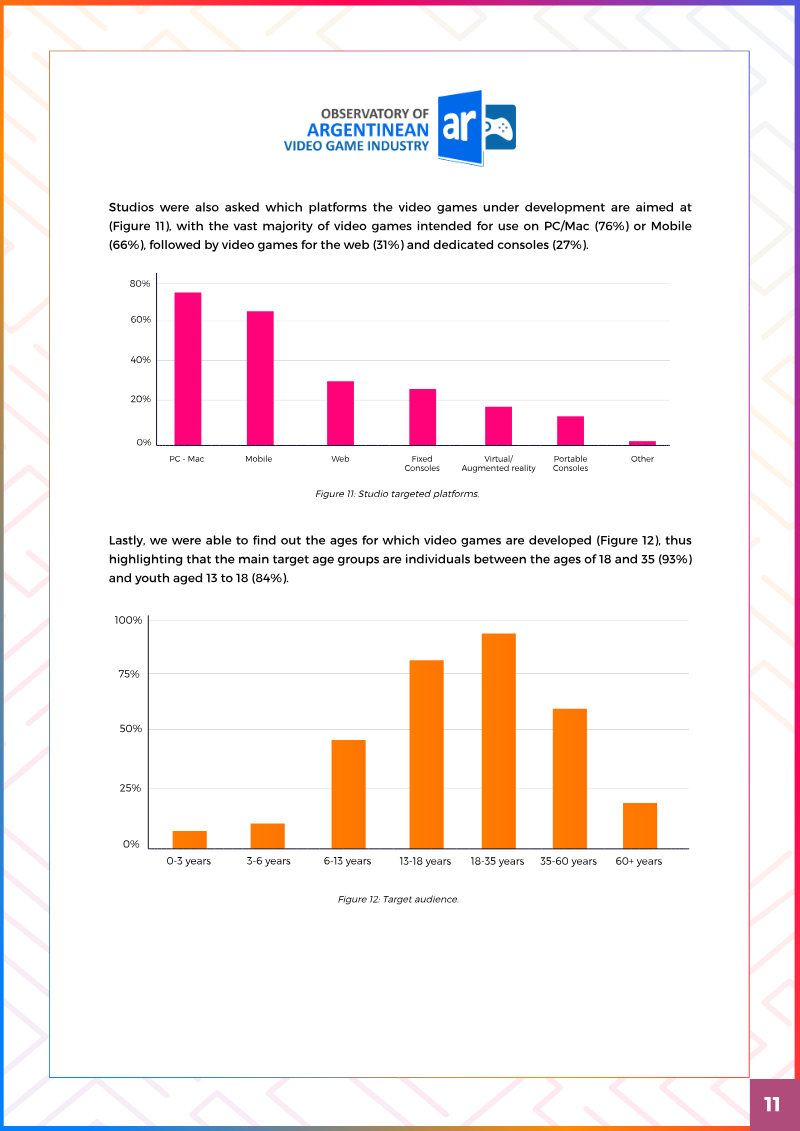
- 04Output is dominated by casual (45%) and educational (34%) games, mainly for PC/Mac and mobile and aimed at audiences aged 18 to 35, while companies spend on average 51% of their activity on their own games, 30% on services for other companies, and 19% on unrelated work.See it on page 12
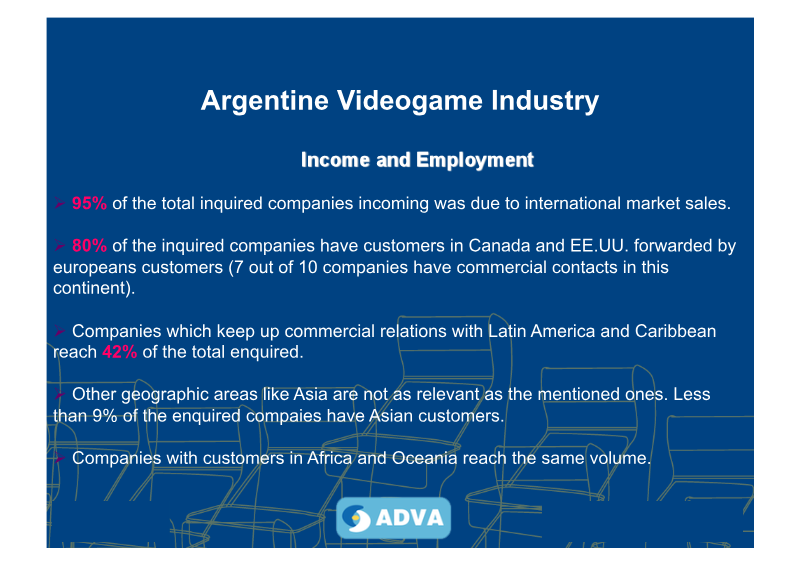
- 05The United States and Canada are the leading export market at 43%, but access to financing is the principal challenge cited by studios (48%), even though 93% took no bank credit in 2019.See it on page 17
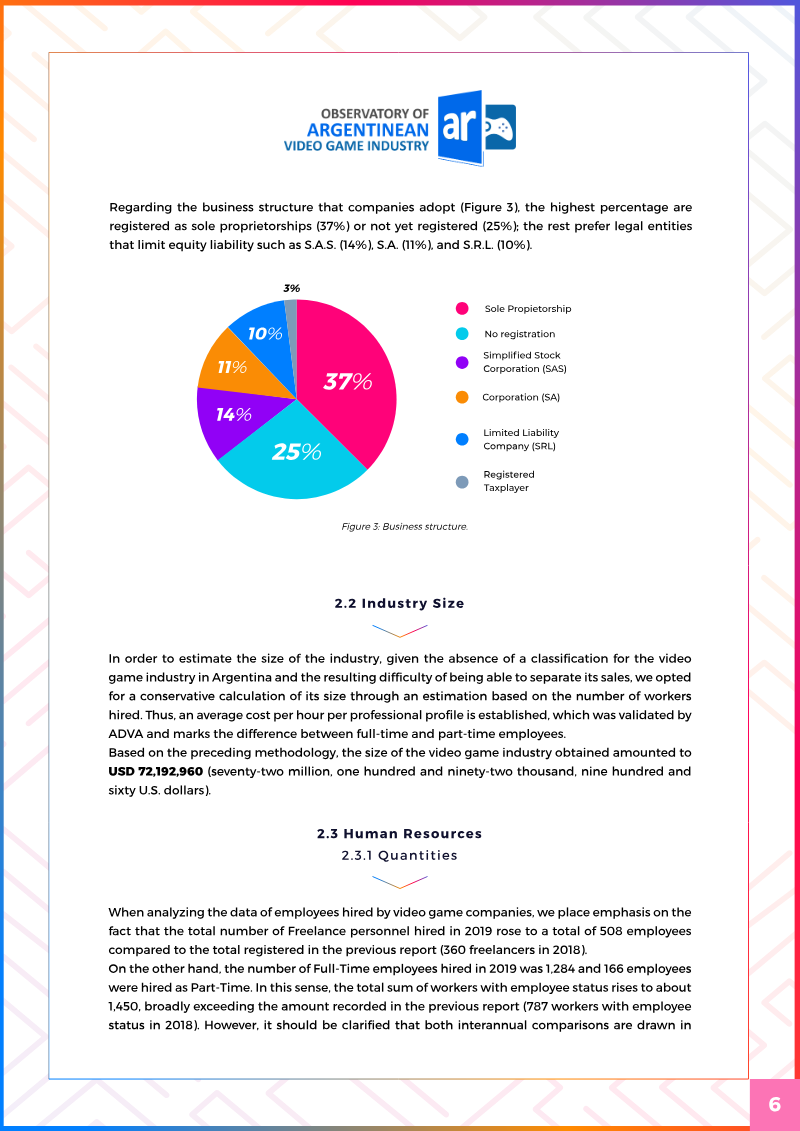
- 06Business structures are informal in part: sole proprietorships (37%) and unregistered operations (25%) are the most common forms, and 39% of studios have not yet released a game.See it on page 7
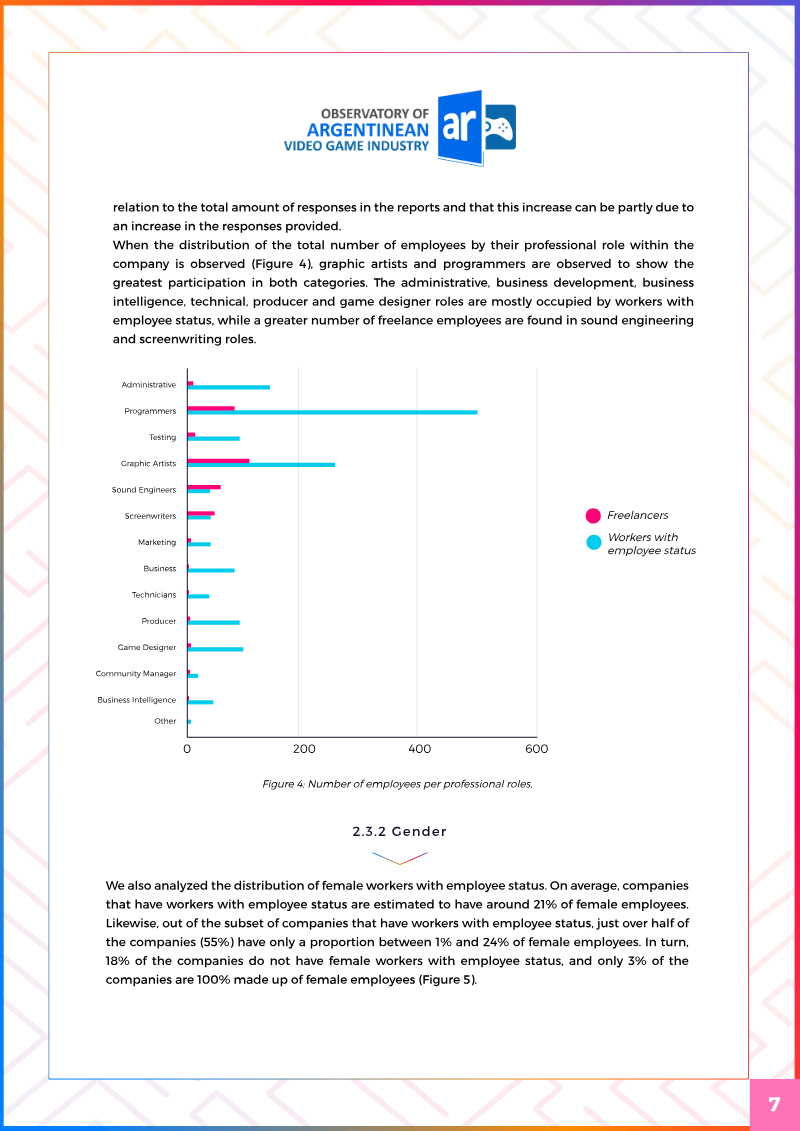
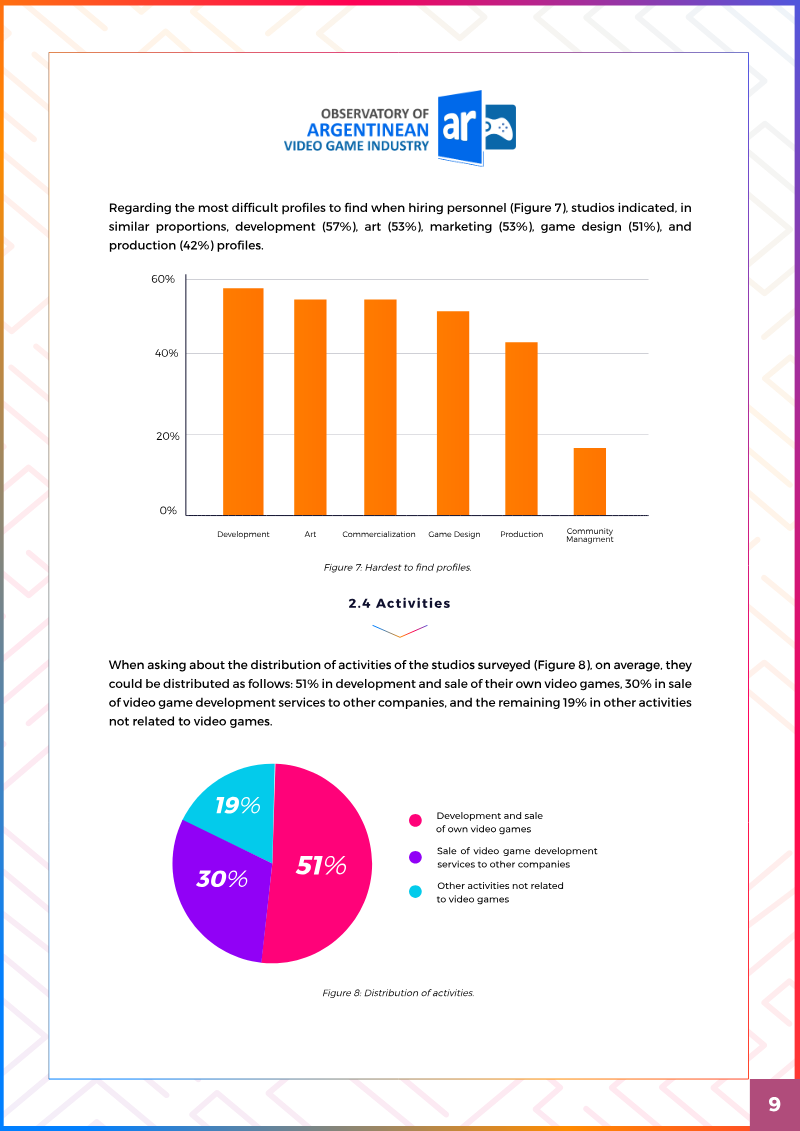
- 07Programmers and graphic artists are the most prevalent roles, development profiles are the hardest to recruit, and English proficiency (85%) is the skill studios consider most necessary.See it on page 10
Ask AI about this report
Summary
The Observatory of the Argentinean Video Game Industry's 2020 Relevant Data Report, the third annual edition of a survey conducted with Universidad Nacional de Rafaela and the industry association ADVA, presents descriptive statistics on the country's video game sector. The survey gathered responses from 71 studios and explicitly avoids probabilistic inference about the wider population, given the absence of official classification data for the industry. Its central aim is to build reliable, longitudinal data on a sector that is growing in economic, educational, and employment relevance.
The industry is young and geographically concentrated yet partly federal: 36% of surveyed studios are based in Buenos Aires City, followed by Mendoza (24%), Córdoba (16%), Santa Fe (10%), and Buenos Aires Province (7%). Roughly 60% were incorporated between 2015 and 2020, and 39% have not yet released a game. Business structures vary, with sole proprietorships (37%) and unregistered operations (25%) most common. The sector's estimated size for 2019 is at least USD 72,192,960, calculated conservatively from employment figures and average hourly costs by professional profile. Staffing included about 1,450 employees with formal status (1,284 full-time and 166 part-time) and 508 freelancers.
Women make up an average of 21% of employee-status workers, and only 6% of company partners, with 18% of studios reporting no female employees. Programmers and graphic artists are the most prevalent roles, while development profiles are reported as the hardest to recruit. Studios emphasize English proficiency (85%) as the most necessary skill. Operationally, companies allocate on average 51% of activity to developing their own games, 30% to services for other companies, and 19% to unrelated work. Casual (45%) and educational (34%) games dominate output, primarily targeting PC/Mac and mobile platforms and audiences aged 18 to 35. Exports are substantial, with the United States and Canada as the leading market (43%), and the sector shows limited reliance on bank credit (93% of studios took none in 2019), with access to financing cited as the principal challenge (48%).