Loading the document
1 free read left. Create a free account for unlimited reading + AI research.
Create free accountReport Korea Creative Content Agency
1 free read left. Create a free account for unlimited reading + AI research.
Create free accountReportKorea Creative Content Agency
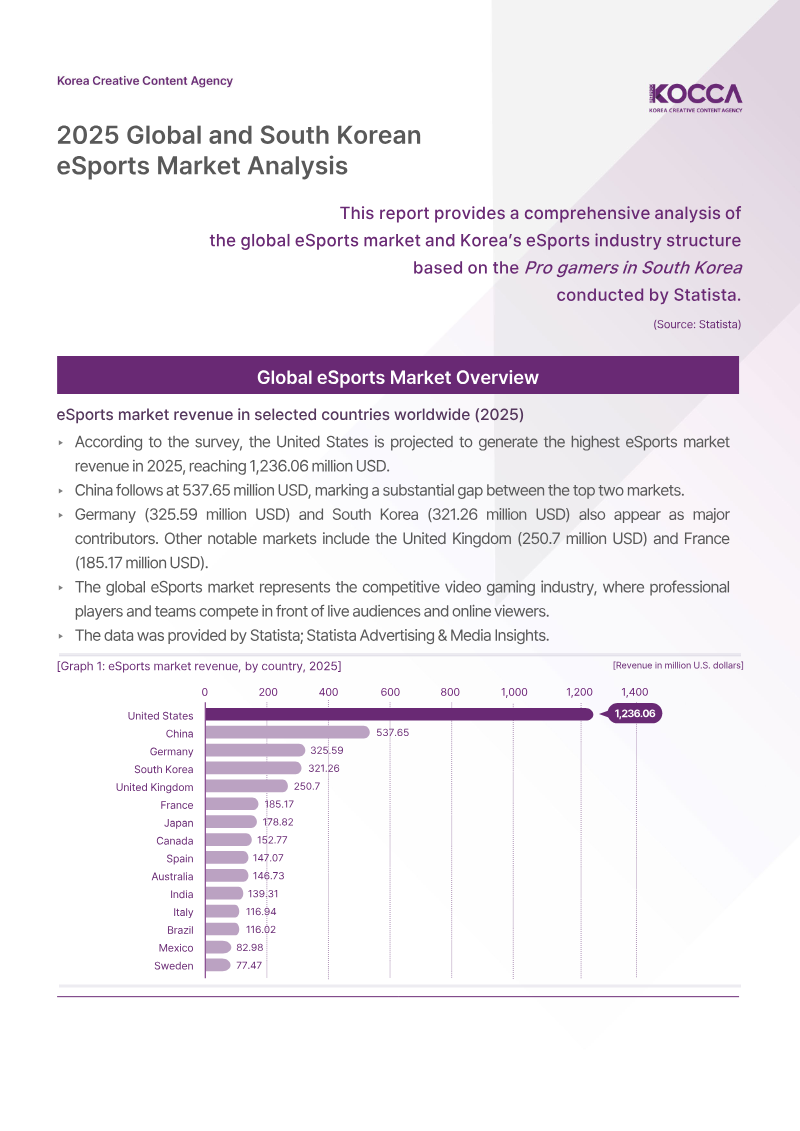
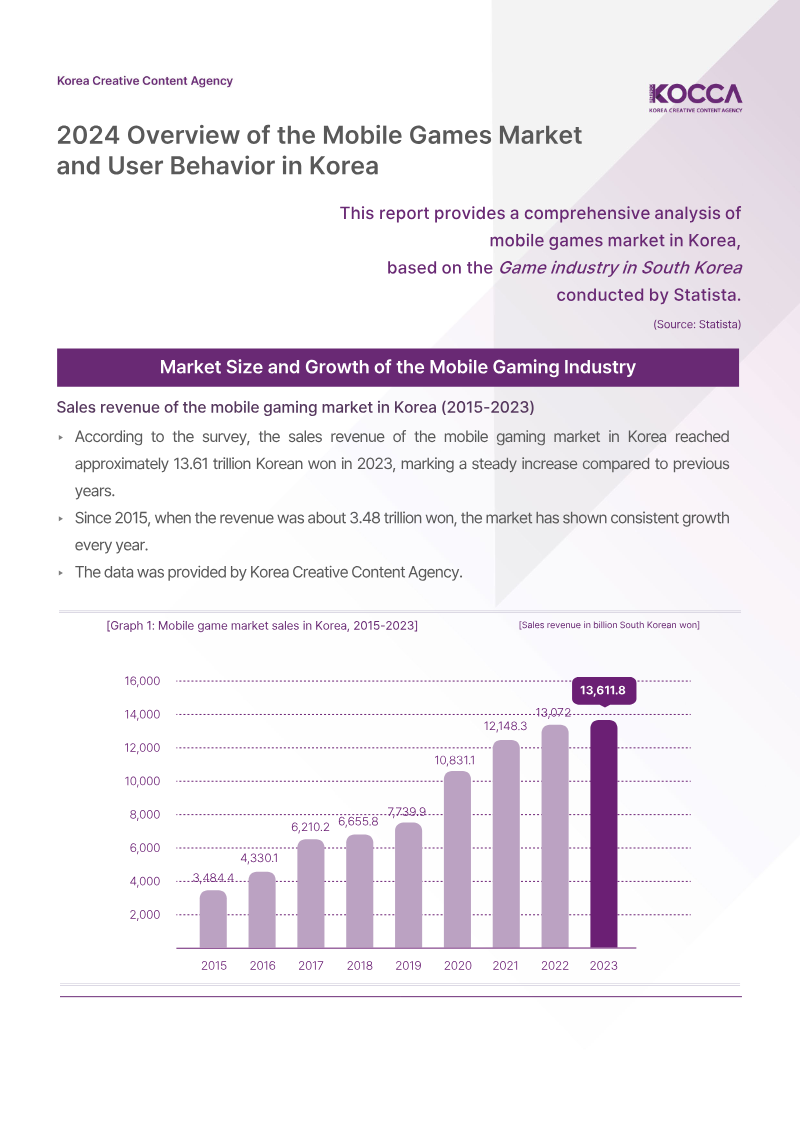
Mobile games accounted for roughly 59% of domestic game market revenue. Exports reached $8.5 billion, up 1.3%.
The "2025 Game Industry White Paper" provides a comprehensive overview of the South Korean game industry in 2024, with projections for 2025, alongside global market trends. Its main purpose is to detail the industry's economic performance, market structure, operational characteristics of various segments, human resources, educational landscape, and user behavior. The central thesis highlights the continued dominance of mobile gaming, the increasing influence of foreign titles, and the industry's efforts to adapt to technological shifts like AI, while navigating regulatory challenges and evolving consumer preferences.
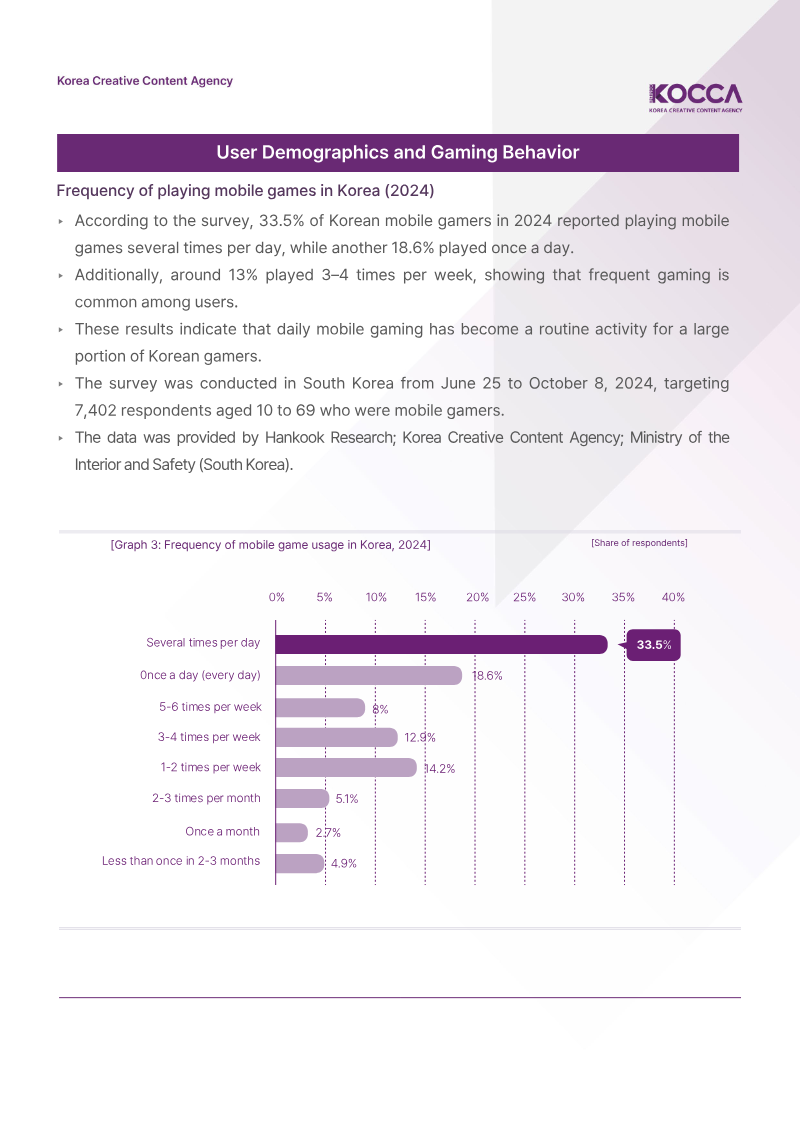
In 2024, the South Korean game market grew 3.9% to 23.85 trillion KRW, with mobile games accounting for 59.0% of the domestic market and 14.07 trillion KRW in revenue. Exports increased by 1.3% to $8.50 billion, primarily to China (29.7%), while imports decreased by 3.2%. Globally, the game market reached $220.07 billion, a modest 0.7% increase, with mobile games holding a 49.3% share. The report notes a significant restructuring within the Korean industry, including layoffs at major companies and rapid AI adoption, raising concerns about job displacement. Legislative changes in 2024 focused on consumer protection, particularly regarding probability-based items.
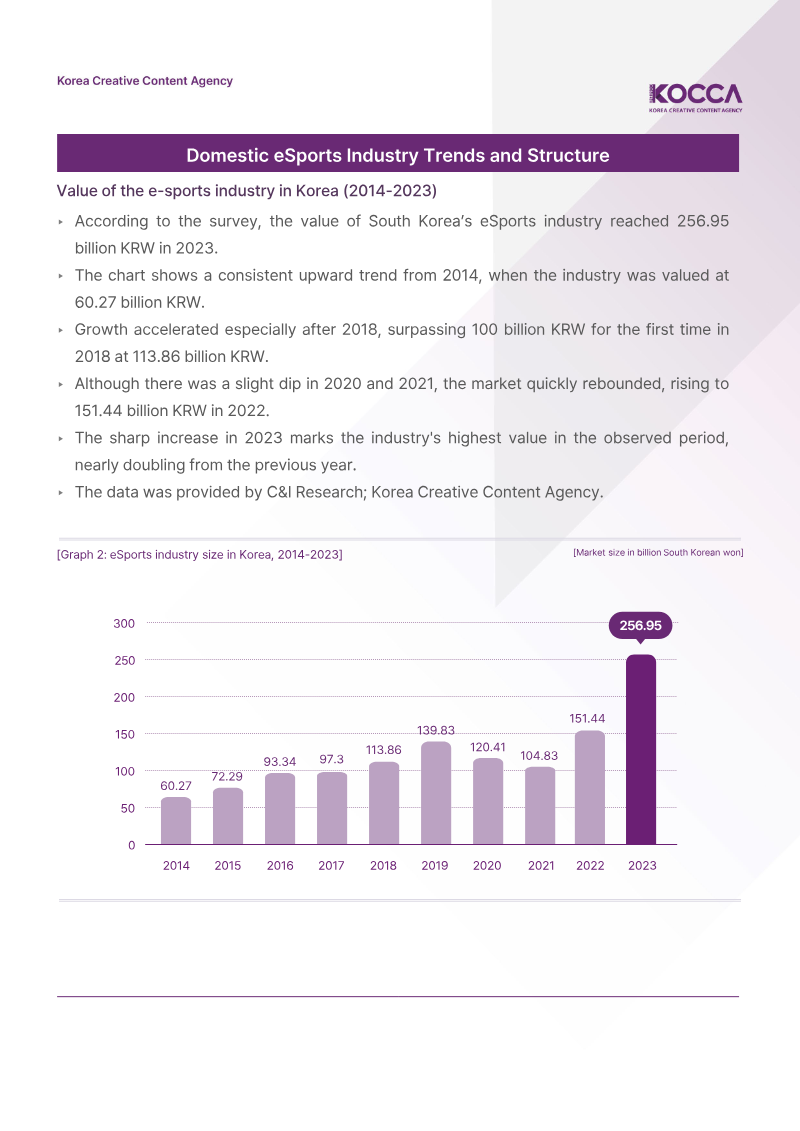
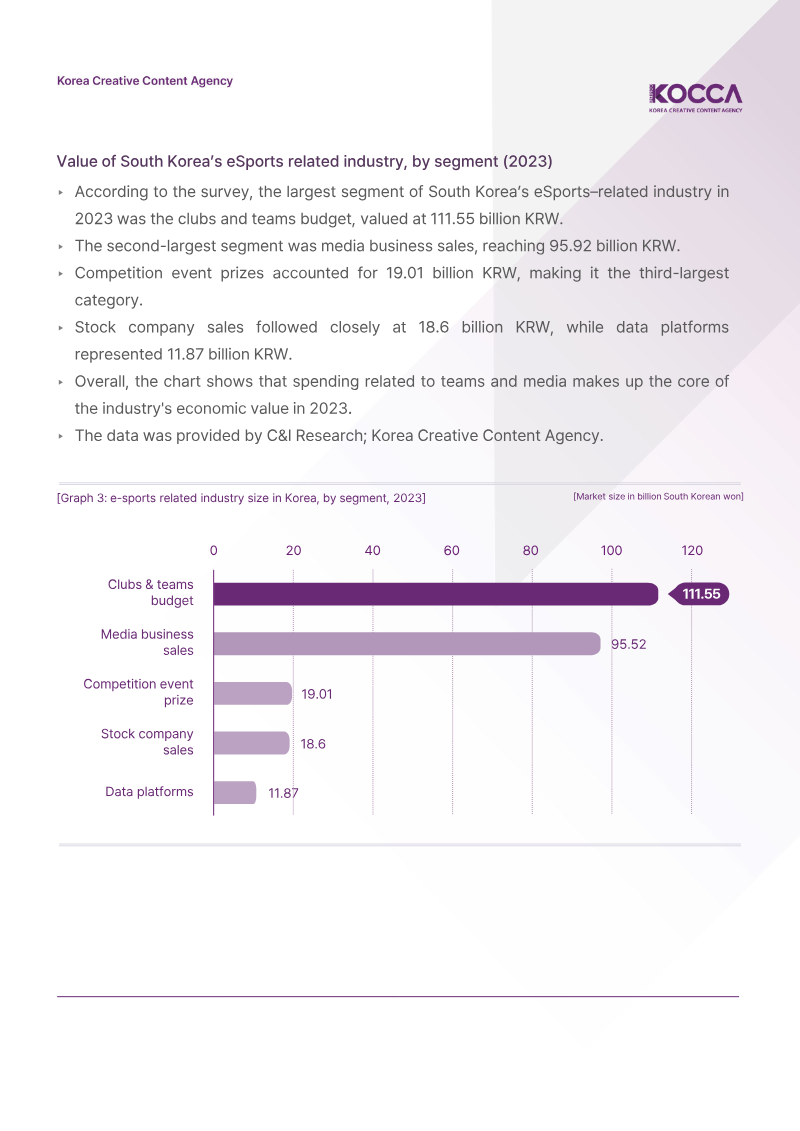
The document details the operational landscape of 1,398 game development and publishing companies, predominantly mobile-focused and located in Seoul and Gyeonggi. It also covers the declining PC bang sector (7,243 establishments) and the growing arcade game market (515 centers), which saw a 12.0% revenue increase to 55.97 billion KRW. User behavior analysis reveals a 50.2% game utilization rate in Korea, with mobile games being the most popular. PC game users spend an average of 188,000 KRW annually, while mobile users spend 90,000 KRW. The esports industry is projected to reach 289.54 billion KRW in 2024, driven by team budgets and publisher revenue. Educational institutions are expanding game-related programs, though they face challenges in securing experienced faculty and updated equipment.
Key challenges for the industry include securing funding amidst economic downturns, navigating international expansion hurdles, and addressing cyberviolence, which affected nearly half of game users. PC bang operators face rising fixed costs, changing customer preferences, and regulatory burdens like the Youth Curfew Law. The arcade sector is exploring new game formats to revitalize. Government and industry initiatives focus on production and distribution support, fostering a healthy game culture, and promoting esports, alongside efforts to standardize contracts and combat copyright infringement. The report concludes with a glossary of industry terms and emerging technologies, underscoring the dynamic nature of the game industry.
Korea Creative Content Agency · 2025
Korea Creative Content Agency · 2025
Korea Creative Content Agency · 2025
Korea Creative Content Agency · 2025
Korea Creative Content Agency · 2025

Korea Creative Content Agency · 2025
Korea Creative Content Agency · 2025
Korea Creative Content Agency · 2025
KOCCA – Korea Creative Content Agency · 2025
KOCCA – Korea Creative Content Agency · 2025
KOCCA – Korea Creative Content Agency · 2025
KOCCA – Korea Creative Content Agency · 2025
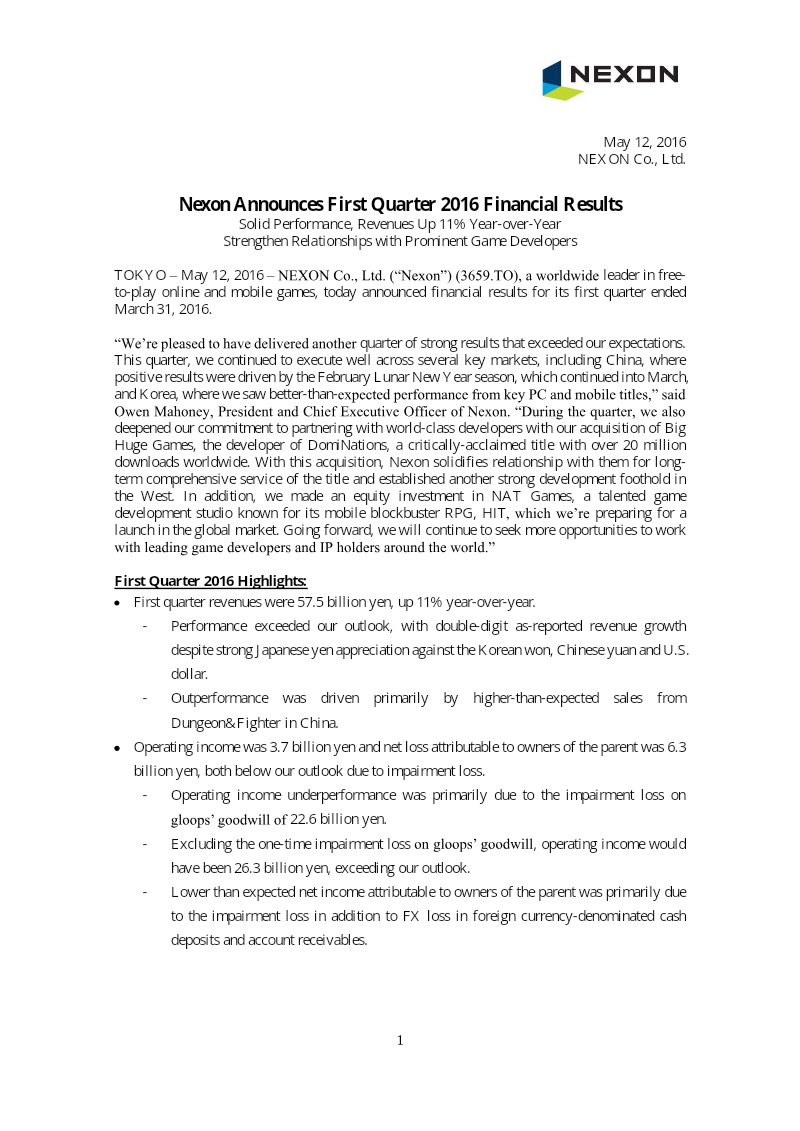
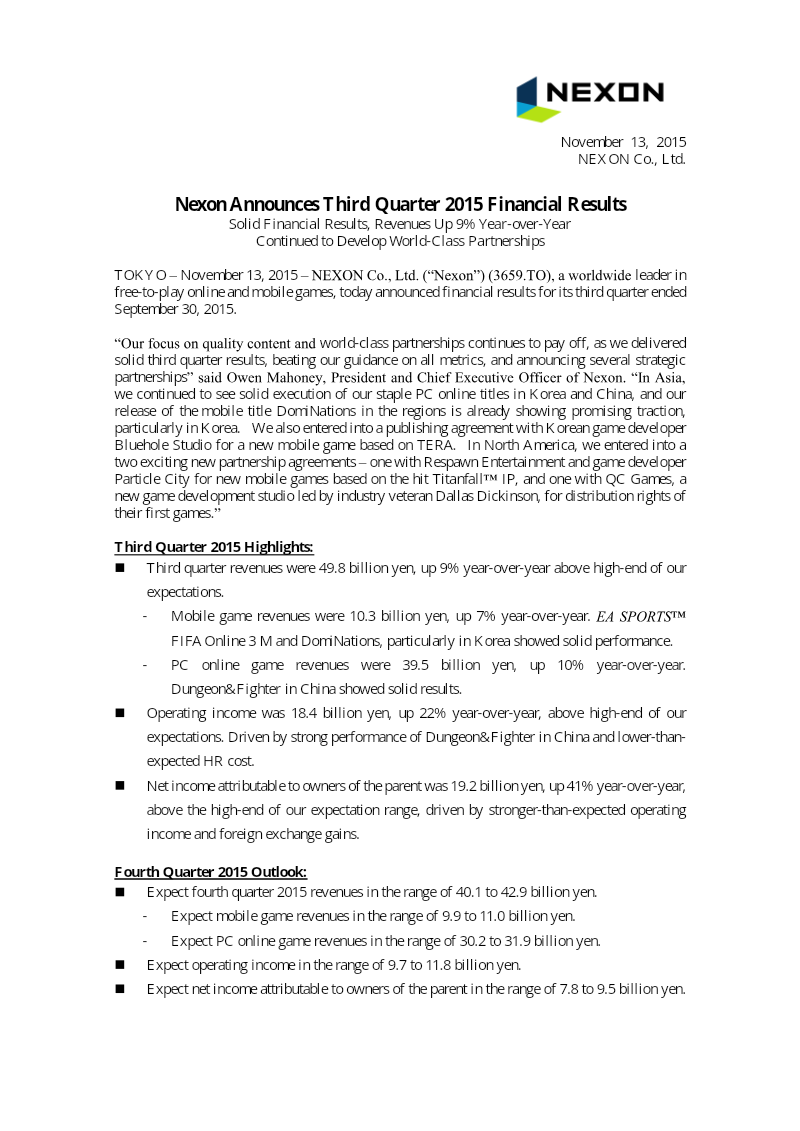
NEXON Co. · 2016