Loading the document
1 free read left. Create a free account for unlimited reading + AI research.
Create free accountReport AEVI
1 free read left. Create a free account for unlimited reading + AI research.
Create free accountReportAEVI
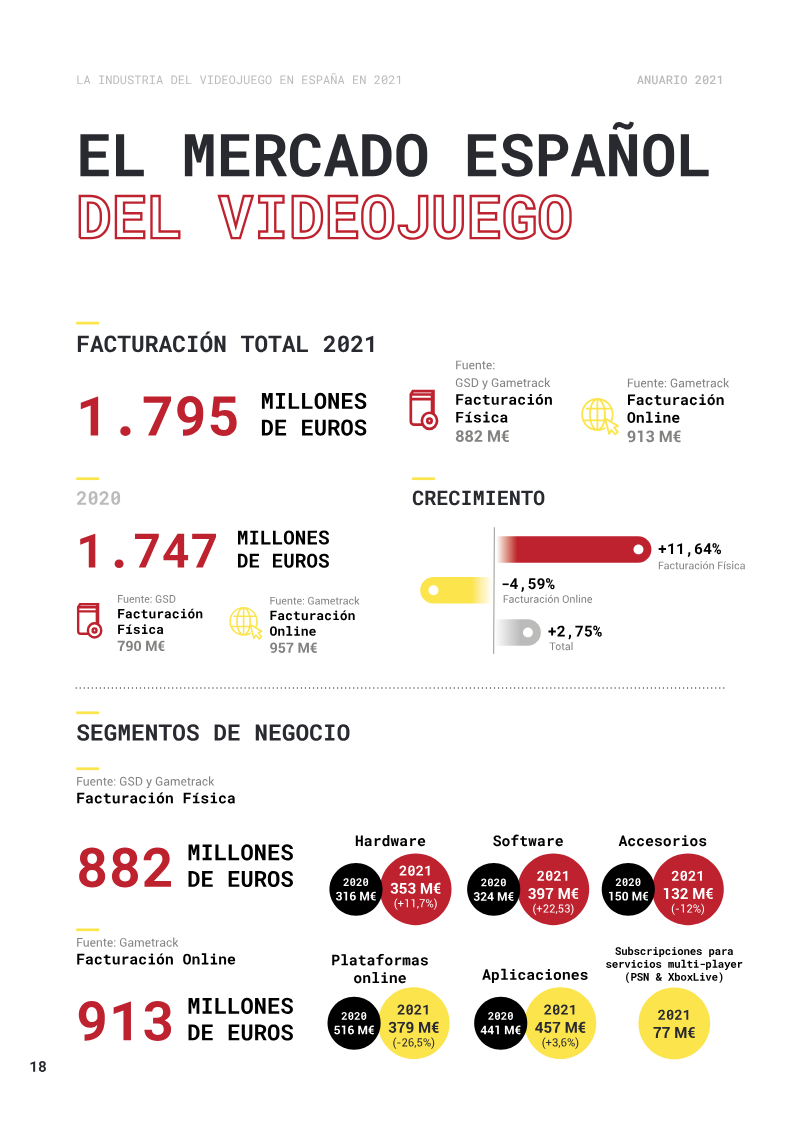
The sector grew nearly 3% from 2020, with physical sales rising to €882 million. Online sales reached €913 million.
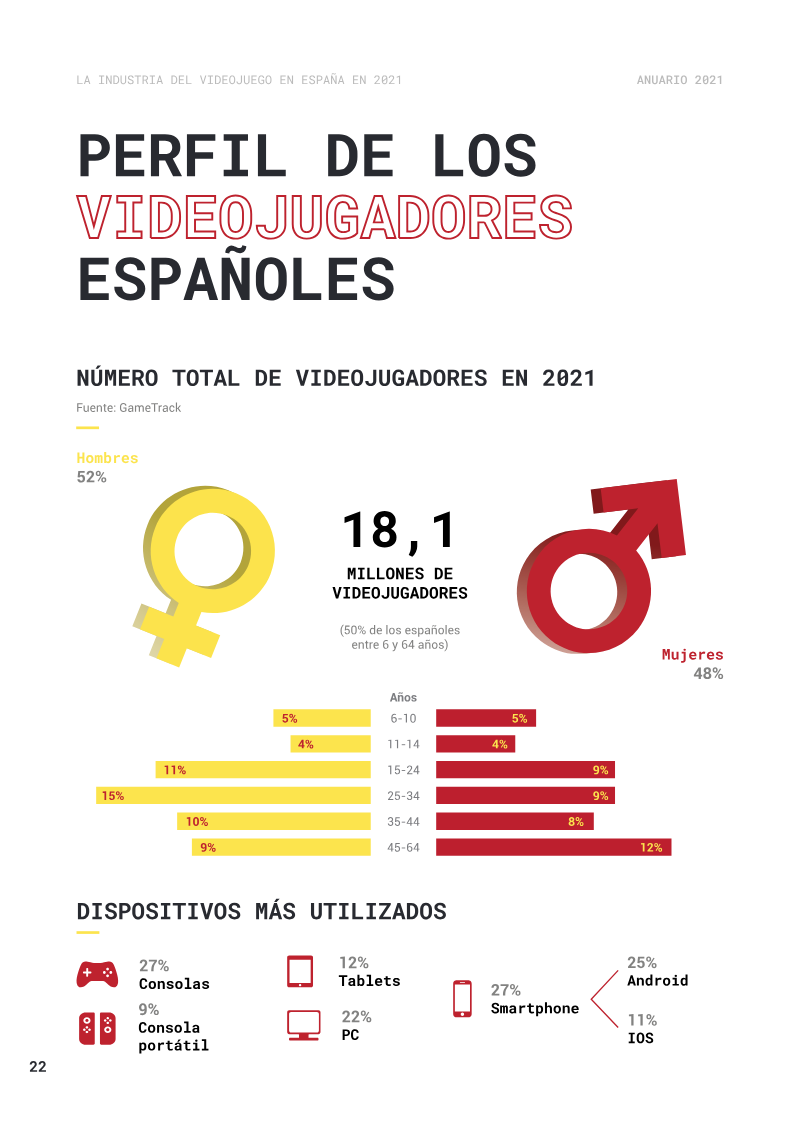
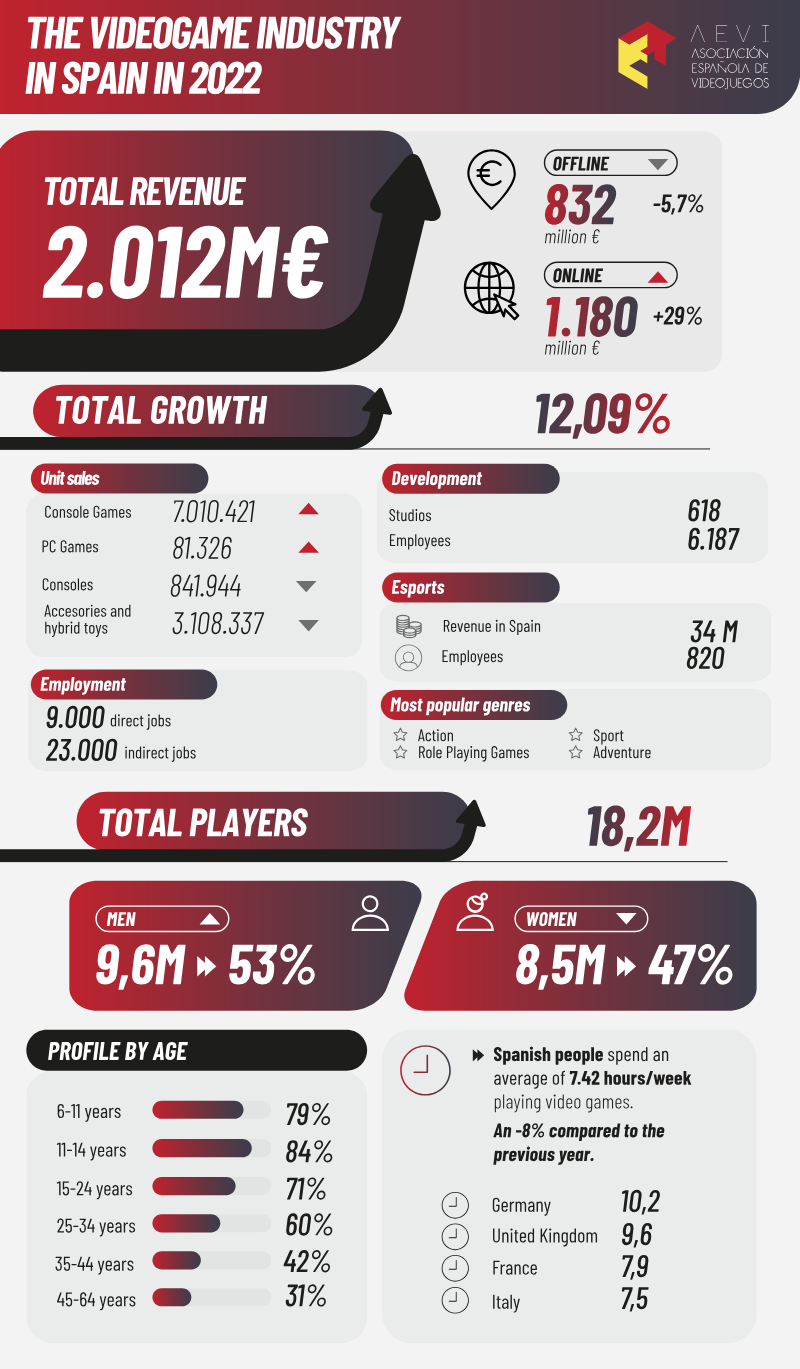
The Spanish video game industry demonstrated significant growth and resilience in 2021, generating €1.795 billion, a 2.75% increase from the previous year. This revenue was split between €882 million from physical sales, which saw an 11.64% rise, and €913 million from online sales, which experienced a 4.59% decrease. The sector engaged over 18 million players, with women constituting 47.5% of this demographic, and half of all players being over 35 years old, underscoring its broad societal reach. Players dedicated an average of 8.1 hours per week to gaming, primarily on consoles and mobile devices.
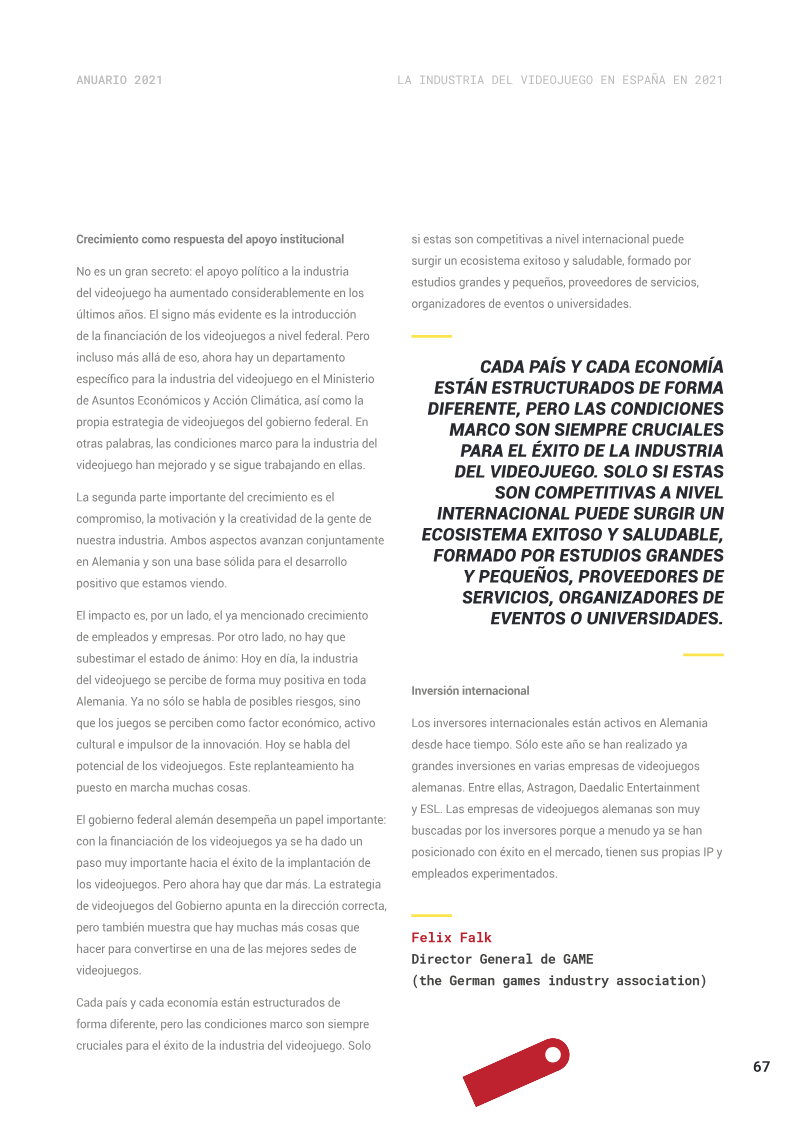
The Spanish government is actively supporting the industry through initiatives like "España, Hub Audiovisual de Europa" and "Spain AVS Hub," backed by over €1.6 billion, to strengthen the ecosystem, attract investment, and promote internationalization. Specific investments include €8 million for development and digital creation and €850,000 for internationalization in 2022. The importance of tax incentives, similar to those successfully implemented in Canada and Germany, is emphasized as crucial for industry consolidation and international competitiveness. Efforts are also underway to address gender inequality within the tech sector.
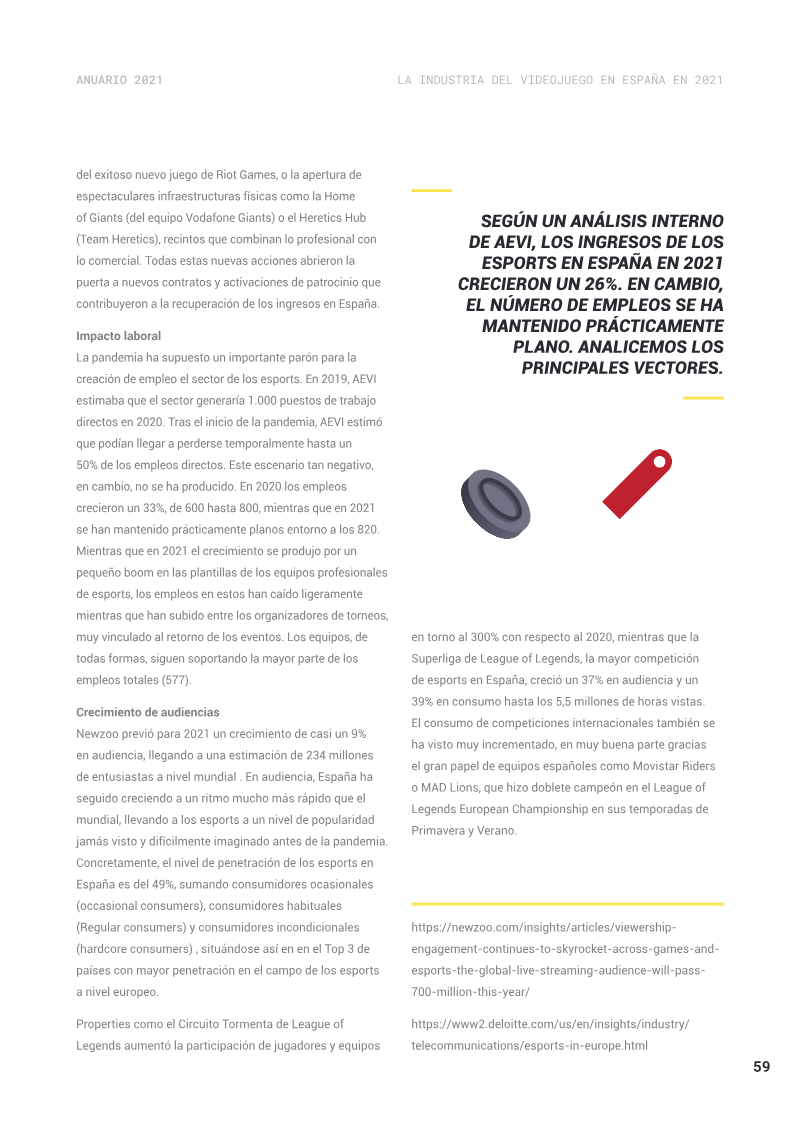
The esports segment contributed €34 million in revenue, a 26% increase, and employed approximately 820 professionals, positioning Spain among the top three European countries for esports penetration. Key industry players like GGTech Entertainment and LVP achieved global expansion and record audiences, while Nintendo sold over two million Switch consoles in Spain. The industry also saw significant innovation from Spanish companies in areas like haptic feedback and NFTs, alongside increased investment in professional training and education through specialized university degrees and private institutions. The "The Good Gamer" initiative promotes responsible gaming through parental controls and the PEGI age rating system, while also highlighting the growing number of M&A operations driven by confidence in national developers, though these transactions face complex legal challenges related to intellectual property.
Each row is a game or company this document names, each column a document, oldest first. A mark means that document names it. Select a row to see those documents.
AEVI · 2025
AEVI · 2025
AEVI · 2025
AEVI · 2025
AEVI · 2025
AEVI · 2025
AEVI · 2025

AEVI · 2025
AEVI · 2025

AEVI · 2025

AEVI · 2025


AEVI · 2025