Market Analysis reports and market data
Documents

The Prosperous Society
Artificial intelligence functions as a transformative coordination infrastructure that shifts the primary economic constraint from production capacity to the distribution of goods and services.
- AI shifts the primary economic constraint from production to distribution, enabling a personalized economy where digital advertising acts as the essential coordination infrastructure.
- Digital advertising economics are defined by 'fat-tailed' value distributions, where a small cohort of high-value users dictates the profitability of campaigns, necessitating precise, AI-driven matching over mass-market persuasion.
- AI lowers the barrier to entry for small and local businesses by automating creative production and campaign management, allowing them to bid on niche impressions that were previously undervalued or ignored by e-commerce giants.
Farming Sims: Cultivating Long-term Engagement
Farming simulation games have established themselves as a dominant and enduring genre within the global mobile gaming market.
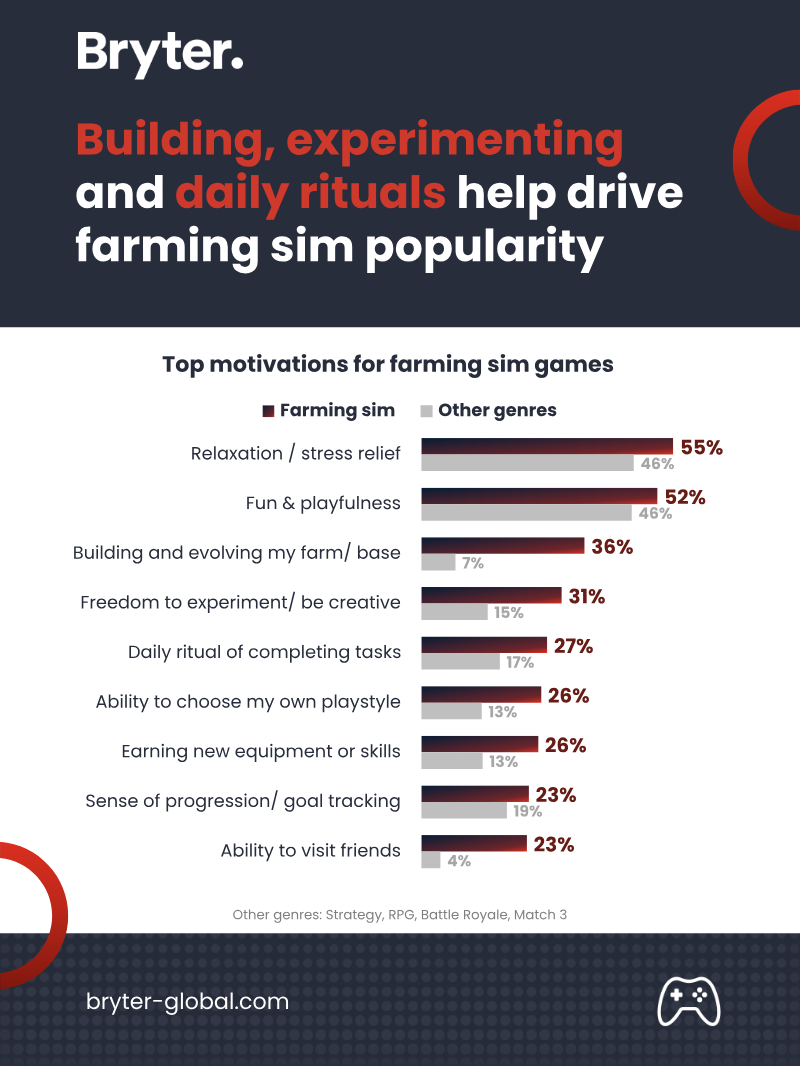
- Farming simulation games maintain high long-term engagement by satisfying core human motivations defined by Self-Determination Theory: autonomy, competence, and relatedness.
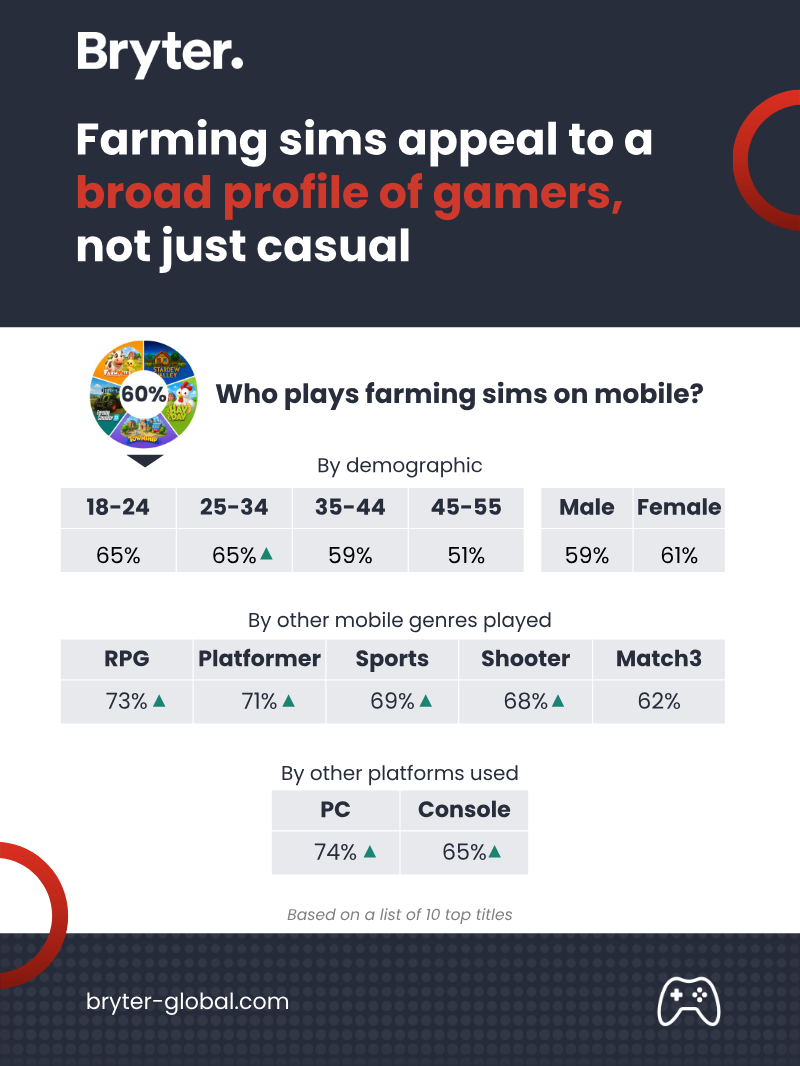
- The genre appeals to a broad demographic, with 60% of mobile gamers having played a top farming title, including 73% of RPG players and 65% of console gamers.
- Farming sims demonstrate exceptional longevity, as evidenced by titles like Township, Hay Day, and FarmVille 2, which were released in 2012 and continue to command massive player bases with over 100 million to 500 million downloads each.

Playstation Done Disking Around, Krafton Cash & The KIDS Act is Awful | Games For Breakfast
The gaming industry is undergoing a fundamental transition toward a digital-only ecosystem, marked by Sony’s decision to phase out physical game disc production by 2028.
- Sony plans to phase out physical game disc production by 2028, signaling a transition to a digital-only ecosystem that eliminates secondary markets and true consumer ownership.
- The shift to digital-only distribution creates risks for long-term game preservation, as users face potential loss of access due to licensing expirations and arbitrary content removal.
- Legislative proposals like the Kids Internet and Digital Safety (KIDS) Act are facing criticism for potentially compromising user privacy through mandatory age-verification requirements.

🚨📢 BREAKING NEWS: Stillfront's CEO Steps Down + AdColony Sold for Under $5M + Meowdoku Hits 1.7M DAU
The mobile gaming industry is currently experiencing a period of rapid structural shifts, characterized by the decline of aggressive roll-up business models and the emergence of new, high-growth casual titles.
- Stillfront's CEO is stepping down following a period of declining revenue, downloads, and share price, signaling the risks of roll-up business models that rely on high valuations for acquisitions.
- The casual puzzle game Meowdoku scaled from 15,000 to 1.7 million DAU since mid-May by combining Sudoku mechanics with cat-themed aesthetics, generating estimated daily ad revenues of $70,000 to $120,000.
- Affle acquired the AdColony brand and technology assets from Digital Turbine for less than $5 million, gaining access to approximately 80,000 existing app integrations.

🎮 Full Steam Ahead: The Q1 Steam games that should hit mobile
Mobile gaming currently suffers from a stagnation of creative concepts, relying heavily on the adaptation of successful mechanics pioneered on the Steam platform.
- The deck-building genre represents a massive growth opportunity, evidenced by Slay the Spire increasing its revenue from $53 million to $140 million in a single quarter, with projections reaching $250 million by year-end.
- High-performing Q1 Steam titles demonstrate that unique gameplay loops—such as physics-based puzzles, room-cleaning simulations, and roguelike variations of traditional gambling games—are prime candidates for mobile adaptation.
- Mobile gaming currently relies on adapting successful Steam mechanics to overcome creative stagnation and drive user acquisition.

TWIG #390: Destiny Ends, Xbox's Biggest Layoff Ever, and Google Play's New Fee Chaos
The global video game industry is currently undergoing a painful period of structural realignment, characterized by the collapse of overly ambitious acquisition strategies and a pivot toward extreme fiscal conservatism.
- Sony’s $3.6 billion acquisition of Bungie has resulted in $766 million in impairment charges and the loss of over 600 jobs, highlighting the failure of the strategy to integrate independent studios into live-service operations.
- Microsoft is pivoting the Xbox division toward a 'fewer, bigger, better' strategy, prioritizing high-performing blockbuster franchises over niche titles to satisfy investor demands for immediate financial sustainability.
- The Xbox Series X has seen its pricing rise to $800, a move that effectively cedes competitive advantage to the PlayStation 5 as Microsoft shifts toward a digital-first, high-margin model.

Xbox divided over its future, and do people even buy physical PlayStation games?
The gaming industry is currently undergoing a structural transformation characterized by a transition toward digital-first distribution and a move away from traditional, rigid publishing models.
- Sony plans to cease physical disc production by 2028, marking a definitive shift toward a digital-only distribution model.
- Publishers are moving away from fixed, long-term headcount toward decentralized, scalable partnerships to improve operational agility and reduce costs.
- The industry is pivoting toward a middle-market model that prioritizes realistic, genre-specific budgeting over the pursuit of unpredictable, high-budget outlier successes.

eFootball vs EA FC, Apple Arcade stats, Stillfront, Queen, alt app stores, payments, more
The mobile games industry is currently experiencing significant shifts in monetization, platform accessibility, and regulatory oversight.
- Konami’s eFootball has achieved a highly effective monetization model in Japan, generating $915 million in lifetime revenue from 12 million downloads, resulting in a revenue-per-download figure exceeding $75.
- Regulatory pressure is mounting globally, with the UK’s Competition and Markets Authority expected to force Apple and Google to remove steering restrictions on payment systems by the end of the year.
- Apple Arcade functions primarily as a family-oriented platform, as data since its 2019 launch shows top-performing titles like Sneaky Sasquatch and Hello Kitty Island Adventure are non-hardcore, while titles targeting traditional gamers see minimal engagement.

Why co-publishing might be your best option for entering the Chinese market
China represents a significant growth opportunity for global game developers, accounting for approximately 30% of worldwide gaming revenue.
- China represents approximately 30% of global gaming revenue, yet the market remains largely untapped by overseas developers.
- The co-publishing model allows developers to retain control over their IP and game operations, mitigating the risks associated with handing over source code to third-party publishers.
- Successful entry into the Chinese market requires a long-term commitment, with partnerships ideally spanning 5 to 20 years rather than short-term cycles.



Mobile Matters: The Impact of Mobile Games for Europe
The European mobile games sector functions as a critical pillar of the continent’s digital and creative economy, serving as a primary driver of both technological innovation and employment.
- In 2025, the global video games industry generated €167.26 billion, with mobile games accounting for over half of that total at €91.25 billion.
- European mobile games studios contributed an estimated €5.89 billion in Gross Value Added (GVA) and supported 63,340 full-time equivalent jobs in 2025.
- Mobile games are the most common way to experience video games in Europe, with over 300 million players and 61% of monthly active users playing on smartphones or tablets.
Session: Game Data for All: How AI Is Reinventing Game Analytics - Orly Shoavi, ClarityQ.
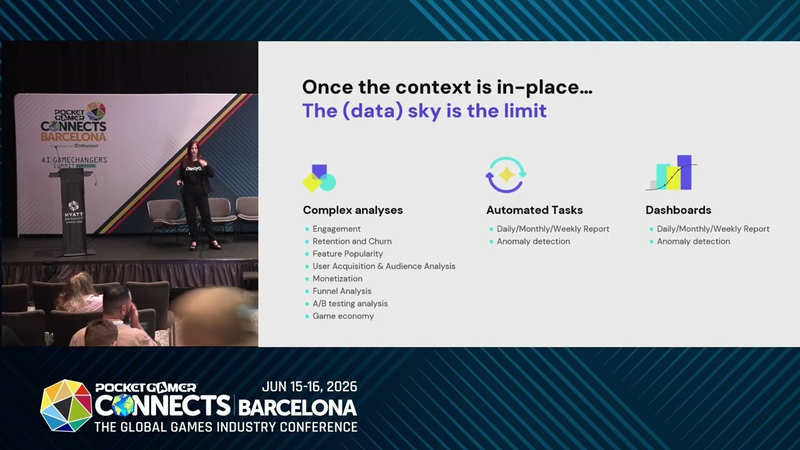
The integration of generative AI into game analytics aims to democratize data access by enabling non-technical stakeholders to query complex datasets using natural language.
- Effective AI-driven game analytics requires a 'context builder' layer that integrates data from warehouses, BI tools, and internal documentation to accurately interpret game-specific terminology, such as mapping 'missions' to 'levels' or defining unique metric calculations like ARPU and churn.
- The primary bottleneck in game analytics is the reliance on human analysts to manually query petabytes of data, a process that can be automated by AI agents capable of generating accurate SQL queries based on a company's specific semantic layer.
- AI analytics platforms must incorporate 'skills' and 'memory' to be effective, allowing teams to automate recurring tasks like release performance analysis and to maintain persistent preferences, such as excluding specific countries from data sets.

Should devs center their plans on Next Fest?
The gaming industry is currently navigating a transition characterized by rising hardware costs and a shift away from subsidized pricing models.
- Steam Next Fest has shifted from a leaderboard-driven event to a personalized algorithm, making it unlikely that a game can achieve success solely by announcing or launching during the festival without prior momentum.
- Valve has restricted the use of banner cross-promotion on game details pages to prevent 'guerrilla' sale tactics, forcing developers to move away from ad-hoc publisher sales toward more structured, Valve-approved promotional events.
- Physical retail sales for video games are in significant decline, exacerbated by big-box retailers locking products in cabinets, which creates a poor shopping experience and further pushes consumers toward digital-only purchases.