VideoThe Game Business
Xbox divided over its future, and do people even buy physical PlayStation games?
2 Jul 202660 min video

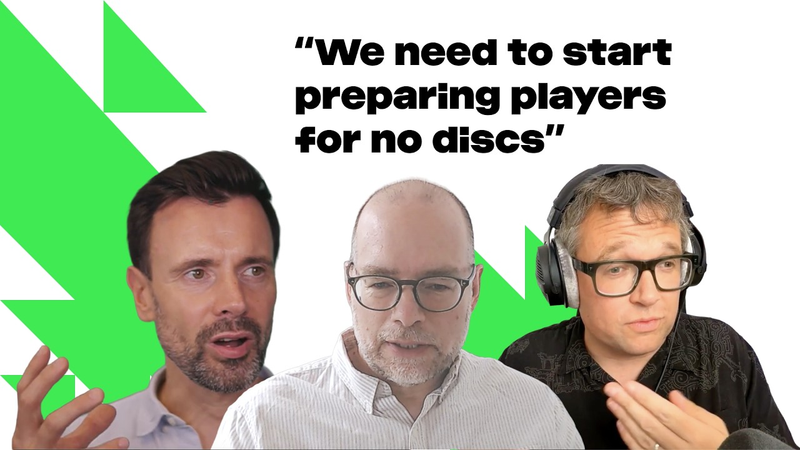
This week, PlayStation kills the disc. There is division inside of Xbox, and we are joined by Midwest Game CEO Ben Cavallo, who's on a mission to transform the video game industry.
[music]
Hello and welcome to the Game Business Show. Now, before I welcome our guest, Ben Cavallo, I have a couple of topics I'd like to chat about, and let's begin with the shock news, shall we? Sony will no longer produce physical discs for PlayStation consoles from January 2028. This isn't just first-party PlayStation games. This is all PlayStation titles. PlayStation said in a statement, "This is a natural direction for Sony Interactive Entertainment to adapt to consumer trends as a general preference for digital media significantly outpaces physical discs. This transition will enable us to align more closely with how most of our community prefers to access and play games today." Obviously, there's a few folk upset about this news. There are preservationists who will be concerned that, you know, servers might be turned off in the
future, and games just won't be accessible at that point. Um it's potentially harder to share games, to sell games, to trade in games. It impacts the collector's market. But, what about the business side? Does it make sense? Well, obviously, digital is more lucrative than physical. The margins are clearly better. Digital is becoming an increasingly dominant part of the business uh globally. But, lots of people do still buy physical goods. Um we are halfway through the point in the year, and in the UK alone, over 1 million physical video games have been sold in the UK. This is Nielsen IQ data, by the way. If we take Europe and use a specific example, a recent specific example, let's talk about 007 First Light. For the first 3 weeks on sale, that game sold just over 1 million units across Europe. Great result. Well done, Bond. Now, nearly 230,000 of those games were sold in a physical box. 230,000. That may be only 22% of sales, but that's still a lot of people. That's a lot of games.
In the US for the 12 months ending May 2026, this is Sakana data, 1.6 billion dollars were spent on physical video games. That's a big drop, right? In 2009, the high was 11.5 billion dollars for the 12 months ending May. But, that's still 1.6 billion dollars. And actually, according to Sakana, that's a 3% rise on the previous 12-month period. That's still a lot of money. I I do you what? I'll have that 1.6 million billion dollars, thank you. Of course, it's not that PlayStation is moving away from physical entirely. They're just moving away physical discs, I think, with it. And the PlayStation say they will continue to prioritize resources to drive innovation, and our players can access games and provide choices as to where players prefer to purchase new games, whether that's at retailers or PlayStation Store. Now, they kind of have to say that. They're currently facing some class action lawsuits, including in the UK and the Netherlands. Now, I've been relatively cynical of these cases. I felt they're basically lawyers they've seen what happened in
the Epic versus Google and the Epic versus Apple cases, and they've seen a bit of easy money here. Can we get a load of PlayStation gamers to sue Sony and accuse them of overcharging for their games? The idea is that because PlayStation games could only be bought by the PlayStation Store, PlayStation can start charge a high fee on these games, that 30% fee, and that's uh ripping off customers. I don't really go along with that. Consoles are different. PlayStation and Xbox charge high fees on games sold by their store. Sure, but that's because they subsidize the hardware, they market the hardware. The ecosystem is different, and I think the question is is the 30% fee justifiable? I think on mobile, probably not, but on console, certainly more justifiable, anyway. Now, where these cases might have some merit is this idea that the only place you can buy PlayStation games is via the PlayStation Store. PlayStation argue that's not true. Most of the games you can get on PlayStation are on Xbox, they are on Nintendo, they are on PC, and they're also available from retailers. Of course, those other digital stores require customers own the respective
hardware. It's not like you just pop into another shop. You have to drop hundreds upon hundreds of dollars buying another console in order to access these games. So, for me, it's important that PlayStation keep working with other means to give players access to their games, because otherwise, they can face this accusation of being a monopoly. We want to be able to buy games from other stores. I I think it's a potentially an interesting opportunity though for retailers. Maybe play we get physical retailers, traditional retailers can get involved in the digital market more. PlayStation hasn't been allowing that much lately. We'll just have to see. Overall, I have to say the news surprises me. I guess GTA has somewhat shown the way here. The second thing I wanted to talk about is, surprise, surprise, Xbox. Over the past few weeks, I've been speaking to various leaders within the Xbox business, plus some of the consultants they've hired on the direction of the company and what they're planning to do. And as we're on the brink of what might prove to be a very dark day for the video games industry, I wanted to share with you what I've been hearing. Now, this isn't
some exposé or revelation of what's being cut and what isn't, but rather a sense of how people are feeling within the business about the new strategy that being adopted by the new Xbox leadership team. I actually had a cup of tea with one of the most senior PR leaders in video games just a week ago. We discussed the fact that there are these big cuts coming. We had this sort of motivational sapping email from Xbox boss Asad Qizilbash, which he sent to staff. And my this PR person's view was they've sort of done it backwards. You start with the bad news, take a pause, and you give people the good stuff. But that isn't what's happened here. Qizilbash's first 100 days was a triumph, really, a triumph in community management. The skepticism that greeted her appointment was rapidly turned around by a series of fan-pleasing announcements. There were small things like, you know, changing the logo, altering the company name, those sort of things. And then more significant shifts such as cutting the price of Game Pass, which happened in May, or making some first-party games console exclusive, which obviously was announced during their showcase. To Xbox's let's call them enthusiastic fans,
Sharma was the second coming. You know, Phil Spencer, who? Now, throwing the critical and commercial success of Forza Horizon 6, which also happened during this period, and there was strong positivity around Xbox for the first time in years. That's both outside the business, more importantly inside the organization as well. Um one Xbox manager told me at the time, "Ashley has really brought hope back to Xbox." Unsurprisingly, the mood is different today. Xbox is looking to reallocate where it spends money. The company wants to invest in its big franchises like Halo and Gears and Fallout and all that sort of stuff. And to do that, it needs to cut from elsewhere. So, studios such as Compulsion, Ninja Theory, Double Fine, Obsidian, Undead Labs, a few of the Bethesda studios as well, are deep in negotiations with Microsoft to avoid closure. The impact of this will have an effect across the whole business. It will reverberate across the industry. Now, there is frustration and even division within the Xbox ranks. Sharma has brought in a a startup mentality into Xbox. Speed is a priority. Teams
that are used to weeks of meticulous planning and yes, countless meetings, are being asked to turn things around in days, even hours. It's reactive. It gets the business moving. It is useful, but it's also messy and chaotic. And not all of the leadership is behind every call. This is particularly true on the development side, where certain studio heads feel Sharma is listening too much to consultants and analysts, and not enough to the people actually building the games. What's more, Sharma's love of speed will run head-on into the time it takes to build hit games. You can adapt business models and distribution strategies quickly, but you can't just rush out an industry-defining Elder Scrolls. Whatever plans gets put in place by Sharma's new leadership team will take 4 or 5 years to deliver. We're not going to see these changes take effect overnight. Now, the studio frustration, it comes partially from the belief that things have been improving, that the teams were getting stronger game by game. And if we take the Xbox Game Studios business for a moment, which is the division most
under threat, by the way, it actually delivered a broadly decent years. Not everything worked, but then that's how portfolios works. Some games hit, some games don't. And ultimately, overall, things should be going in the right direction. And that's what the studios leaders, that's what they feel. There's a real sense amongst them that they've been punished for the poor performance of Call of Duty. But that is the reality. Even if Obsidian had delivered an incredible year with Avowed and The Outer Worlds 2, even if those games performed five times the numbers that they did, it wouldn't have offset the drop on Call of Duty. A game like that, and Candy Crush, and Minecraft, and Warcraft, all those big Xbox games, they make a lot of those smaller titles just seem completely insignificant. And that's why some people think that getting rid of studios like Double Fine is a pointless exercise. This is a quote from someone who's brought in to consult on the business, who was quite critical of the plan. If they think they can take that budget, stick it on Halo, and suddenly turn it into a 95 Metacritic smash hit, they're delusional. But, of course, it's not all about budget.
As one other Xbox leader told me, we're spread across too many projects, platforms, and business models. We need to focus. Xbox says it's pushing back towards the console. The return of Xbox, they call it. And they're putting more resources behind its biggest brands. It's what we know how to do, so let's go for that. But this is where there's a real split in opinion. Numerous people I've spoken to at Xbox feel there's too much listening to Twitter. With the component crisis and the overall market decline in console players, why is Xbox choosing to reinvest in console? Why is that the focus? The people I spoke to have low expectations that Gears of War is going to have any real impact on hardware sales. They point out that Xbox has tried this before. They've tried to rejuvenate Halo. They've tried to rejuvenate Gears. And they tried to develop a mega game in Perfect Dark 2. So, what's going to be different this time? This is a a quote from one studio boss. We're chasing a declining market with franchises that are past their prime. But the idea, of course, is to rejuvenate those franchises. And that's
partly going to come down to who they can bring in. Can Xbox attract the talent that can turn Halo into a world beater once again? It was once a world beater. That's the objective for the company now. Now, I suspect there will be dissent whatever route Xbox chose to go down. There are those that happy it's gone down to a console-first approach. And there are those that feel the third-party publisher route was the right one a plan that all bought into 2 years ago. The question is, what does the leadership of Microsoft want out of Xbox? I asked another Xbox studio boss how he felt about the decisions. And he simply shrugged and said, "After Activision, this is Amy Hood and Satya Nadella's Xbox now." Of course, emotions are running high. Sharma said the current Xbox couldn't continue as it was. Change was needed. And it's hard to disagree with that. And that change was inevitably going to let some people down. Xbox had told its studios it was behind them. It promised they could build what they were passionate about and they'd support it. It told them they were different to all those other tech companies. But as Asad Sharma famously said, "The
plan's the plan until it's not the plan." And that's simply not the plan anymore. Right. Shall we get our guest on? Um Ben Corolla is the CEO of Midwest Games, a publisher that offers all sorts of services depending on what the developers need. Uh they call themselves a shadow publisher. But Ben isn't actually here really to promote Midwest, but rather to discuss uh one vision for where the video game industry is headed in a world that may prove more sustainable for game makers globally. It actually ties in quite nicely with our Xbox conversation we just had, and I'm sure Ben has views on that, too. And he's here with me now, so let's hear them. Hello, Ben. Welcome to the show.
It's great to be here, of course. I'm really excited to chat. Uh a lot to chat about.
There's certainly been a lot to chat about. It's interesting. I did my research. Do you want a lot of podcasts? So, I did a lot of podcast listening. Um and um one of the big topics of this um This wasn't I wasn't going to start with this, but one of the big topics of this last couple of weeks, you may have seen it, was all about Xbox, right? And I had a chat with a bunch of people who work
at Xbox Game Studios. And they were talking to me about how they've had this They were they were a bit stunned by all this cuz they've had a relatively in their mind they've had a good year. Cuz they're very much particularly that game studios part, I'm not talking Bethesda, I'm not talking about Activision. They released something like 20 games. 10 of them did okay. Five of them did incredibly well. Five of them didn't do well at all. But overall as a portfolio business, that's really good. But then Call of Duty comes along and misses. And suddenly up to relevant. Doesn't matter. Obsidian could have sold 10 times as many copies of The Outer Worlds, too. Wouldn't have made a blind bit of difference.
So, there's a lot of this conversation around the fact they need the big companies having to focus in and focusing on the bigger brands and the bigger established ones and the riskier things. And then I'm watching a podcast I think you did with Game Developer. And this is months before any of this has come out, and you're literally talking about
scale.
This reality where ultimately for the big companies this doesn't That side of the business doesn't seem to make sense. That um these indie-ish, double A, whatever you want to call them like this It feels
wrong to call them double A, but I guess budget-wise, maybe. It doesn't really fit. And then there there isn't really anywhere else for them to go because the middle doesn't it's sort of forming. It seems very similar to what your thesis is really about where the business is going.
Yeah, I've been fortunate a couple times in my career to see how based on where your largest thing is, your largest whether it be franchise, you know, in the case of Microsoft with Call of Duty and some of the other giant franchises they have. In my case, my first exposure to this idea was with Rockstar and GTA. Because Take-Two has to manage the fact that they really GTA drives everything. And then everything that's smaller than that starts to be less of a priority. And so you look at something like Civilization and and XCOM, you know, under Firaxis. They're under the same umbrella, but in comparison, you know, what is Civilization going to
make versus GTA? And so it's all how do you manage your limited resources when you have a big big big priority like GTA versus something that's so much smaller. And then I saw that at Netflix as well where how do you create the most impactful moments possible for the largest titles, knowing that other titles will benefit from that. But you have to put your resources towards the thing that matters the most.
I think the vision at the time, the reason why Double Fine and stuff of the world were even interesting to Microsoft was because of this Game Pass model. And you were at Netflix. And actually even Netflix you're saying to me it didn't even make sense on the subscription TV side. Like even if Game Pass had worked out maybe. I think what's interesting though with 2K is that they, you know, they put they got rid of Private Division, right? And I think that was part of it. Just I'm sure Private Division was a was fine. It's just it didn't
Yeah.
It wasn't worth the
It was small in scale compared to 2K. They didn't have established. I think
with the benefit 2K had, having been there in kind of the like early like good moving from the startup days to like the franchise building days, I think the benefit 2K had was NBA 2K's growth made it such a giant in the industry that the rest of everything else going on within 2K was okay. Like because NBA 2K led the mantle. And then Private Division really never got that like big franchise that could really be the pillar of what their what their label is. And you know, Take-Two, I think people forget they've done a lot of experiments. They had a comic label at one point as well. You know, they tried to build IP in these smaller spaces, but unless there's one big established thing that comes forward, it's really hard to continue you to support that over time.
But equally, if you do have a big established thing, that helps you justify that. And then over time that thing struggles for whatever
reason, suddenly the thing that gets cut isn't the thing that's struggling, it's the thing that, you know, at the back end that is doing put my in be growing. I just think my own was at gamesindustry.biz during the pandemic. It had an amazing year. Well, we had an amazing year. But we were owned by ReedPop, which run events. Yep. And the events business collapsed because it was COVID. So, something had to change and we lost staff. We got we got cuts against us and it wasn't because we were doing a bad job, quite the opposite, we were doing a fantastic job. But ultimately, there was a problem with the thing that allowed us to do whatever we wanted to do anything like that. So,
Understanding the ecosystem you're operating within is such a huge key to understanding where you rank on things, what needs to succeed for you to be able to continue to do what you're doing. Like it's something I'm always just thinking about because I think we're seeing it from an industry perspective as well on, you know, why some of the things are happening at the in the larger bigger picture, but also like how it's affecting everybody
throughout the industry and how my belief is we have to operate way more flexibly, way more nimbly moving forward because the risk element, the ability for a lot of these 16 a lot of these publishers to take the levels of risk that they used to take just doesn't exist anymore. And it's because they can't you know, even count on Steam to make sure that they're going to get a certain amount of units so that their risk margin is reduced down so much. They just can't take it. And so they're doubling down on what they know will make them money. And that's why they're really good at what they do is because even in these like uncertain times, they know how to make money. And the ones that don't are really struggling because they don't have something to fall back on.
Yeah. Back when Microsoft was making the acquisitions in the first place, I actually got excited. I was excited cuz I always think about them as a big scale business. They're a triple-A publisher. And they signed Obsidian. And I'm like, "Oh, cool. Maybe they'll turn Obsidian
into a Bethesda-like juggernaut." And then they buy Bethesda. And then I'm immediately worried cuz I'm like, "I don't know if the going gets tough." And that's what we're in now. If you're going to need that team. I I've got a list of questions in front of me. And it's like, I'm just going to jump to like question nine now. Which is the Which is this this idea you've been talking about quite a lot, which is what we're seeing in the development space. This idea of co-development freelancers. It's not just one studio makes a game anymore. There's multiple different things and sources. But you're talking about that from the publishing side of things and the investment decoupling it maybe from the investment side.
Yeah.
Is that a solution to being able to take more risk? What's Or is that on my on my on my not connecting those right?
No, you're connecting those exactly. My theory, my working theory, and like and I'm we're learning a lot constantly. And I get to live in this like experimental space where we get to see what works, what doesn't. But what I'm seeing is if we can improve the margin in how how people are operating. And we can do that by where they're operating or or who
they're operating with. I think that it it allows for them to get to a place from a margin perspective that they can put like inject risk back into some of the things that they're doing. And it allows them to take risk on games that maybe they wouldn't have without that margin. Like if if you have to know something's going to work, you're going to go tried and true. Like every time. Uh but if you're like, "Okay, we can take a risk here or there because we have operated more flexibly. We know we can bring in a whole publishing team for 50% of our cost. And so that margin allows us to do a lot more with the money that we have." Uh I believe that you can take more bets then in in different ways and lean in a little bit. Not on everything. It's not going to come back overnight. But it allows them to start to move into that space where they have the the risk margin to be able to lean in.
When I talk to publishers, which I do quite a lot and might be an indie team or might not, I always say, "What are you looking for?" And they go, "Oh, everyone's really into black try at the moment. We're looking for black try likes. We're looking for We're looking for Souls likes. We're looking for this, that, and the other." And then they'll then they'll say at the end, "But we're open to anything."
Yeah.
And the reality is, we know this, is that the things that break out are not the things that are in the genre of the thing that's popular at the moment. That those are reacting to something else that's broken out. And it's not always a new thing. It could be an old thing that um has gone away for a while. Or it might be an established thing that we thought was niche but actually turned out it could be bigger. I'm thinking of recently an interview with the Dispatch developers. That that jumps to mind, right? And that requires risk. Taking a punt on a on a genre that actually the numbers don't suggest this is going to sell 5 million copies or whatever. When you're looking at games and partners you're working with, do you have sort of a genre checklist? Or is that something you just you just have to push away?
Uh I think you have to always acknowledge it. Mhm. You have [clears throat] to acknowledge
what the market opportunity is. Um and know that we're in a bit of a lottery system where you could do every single thing right imaginable and it doesn't blow up into something huge. And so you have to know what the potential blow up factor is though. And I think even with something like with dispatch or clear obscure like still like it blew up in a way right? But in compared to like a triple A way
I know.
Not really right? They still would have been a moderate to maybe not even success from a commercial level but in the indie space obviously a huge hit. So it's all relative to the amount you spend. You know, we put out a game called Tomb Raider and relative to what we spent is incredible success. But if we spent a lot more on it it would not have been a success. And so it you have to take that into account
and I think a lot of publishers are looking at it right now thinking about well, making sure that they're spending at the right levels for what the success could be and then sometimes something breaks out into something much larger but expecting that everything's going to break out like you know, we see during pitches from game developers like the oh yeah, here's the comp title. Here's something that broke out. Here's another thing that broke out. Here's another thing that broke out. I want to see like what is it what what's the median like what what in that genre is doing terrible. What didn't break out? What struggled? When did that break out? Because comparing something to 2018 makes zero sense. So we use some tooling to a kind of evaluate what is essentially the the world map of potential of a of a title and then we we evaluate if that title really has the pathway to kind of get there or not and then you have to take bets.
Interestingly and Simon Byron at
Yogscast he's he's he he used to say to me, "A sign of a good publisher is not the how many hits they've had, it's what happens when the games don't hit." It's what do they do then? Do they abandon it and walk away, or do they fight for every sale? And I and that was always I think that's sort of a bit of a a version of what you were just saying there.
Yeah.
Ages ago I was doing having a chat with people at Ubisoft. That's when I was doing Splinter Cell. And at the time there hadn't been a stealth game in ages. I said, "This game might break out. You might find yourself you've got a hit here by doing your Splinter Cell. But don't budget for for that. You've got to budget you've got to budget for the size of the stealth genre." And I guess that's what you're saying is that you've still got to be realistic.
You do, especially right now where it's hard to get dollars, you want to see traction first before you start to lean [clears throat] into something. You want to know that there's an audience interest there. And then even then, how do you read through the lines there? Because wish lists might say, "Oh, wow, a lot of people interested." But it might not convert. Um and you can
actually see if you see where the wish lists are coming from, how did somebody got them, when somebody got them, you actually can read through lines and say, "Okay, I get it. This seems like it will be a big hit, but actually it likely won't cut through."
When you say when, do you mean if they got them early? Um that's probably not cuz I we just put on an event at the Game Business Live in Los Angeles. And we did loads of tickets in the first couple of weeks putting tickets on sale. That made me anxious cuz I thought by the time the event comes around they've all got they've all got their own schedules and things. So we over subscribed it by quite a bit cuz in my mind I was like there'll be loads of those early people that are when it comes down to actually going they can't because something else has come up or it's other things. Yeah. Meanwhile the people that bought tickets I think in the week of the event almost probably all came.
Yeah. Yeah, I mean there's so much going on, right?
Yeah.
You you feel it, I feel it. There are endless amount especially as somebody with ADHD like endless amounts of distractions of like what's the new
thing in front of me that I, you know, have to play, have to do, have to see, have to whatever, and it just it's impossible to keep attention.
I never say anything is dead, so this is not I don't really think this, but I I almost argue that hype is dead. In the you know, it's almost really hard to get people excited about something because there's billions of things they're excited out that are out now, right? Or out tomorrow or without last week they haven't even got round to yet. Because like a movie there's a blockbuster movie at the cinema at the moment every week at the moment. And so it's hard for me to get excited for the Odyssey because there's Supergirl it'll coming out in in in the space of a really short period of time and I think it's, you know, you great you got that wish list, but the reality is they probably just thought that's interesting and then they forget about it. I remember when I was a kid waiting for Perfect Dark to come out. Jesus, I had it as my wallpaper, I had a countdown clock. I was waiting every moment for that game um because [laughter] there wasn't a there wasn't a lot for me to get excited about certainly not on that platform platform at the time.
I think that's a big key. That's a big key to like how I think about things and
I learned that lesson while I was outside of games when I was in in film at Netflix and what we saw was we couldn't really build a lot of hype for a Netflix film for example. Uh it's it was really tough. Maybe with like Chris Snyder and his audience you could do a little bit of that, but a lot of the marketing had to be kind of the really quick ramp up and in the moment and then very reactive. And in order to build a reactive system, you have to be flexible in everything that you do.
Yeah.
And so what we ended up doing there to be able to scale, I mean we were putting out over 100 films a year. Uh so the scale is just massive. We had to build a flexible system that took bets, but then also reacted when something else blew up. And I think this is one of the faults of the existing ecosystem that I hope we can fix by having more flexible publishing operations is you know, you might take 20 bets as a portfolio as a traditional publisher.
Uh, and you have to put your resources towards what's showing is going to likely be the biggest hit. Except, you never know what might blow up. And they don't necessarily create flexible systems to be able to then quickly support that thing that is a surprise. Whereas, what we did at Netflix was we did. We knew how to support. You know, something like Bird Box, which has been seen by I think over a billion people at this point, we reacted in the moment. Of course, we took a lot of bets. It was, you know, Sandra Bullock. It was a medium, you know, but it was a medium-level title. It was not the biggest priority in the company. But then we reacted in the moment.
What happens to the thing that that you weren't planning on backing? And that's the thing I'm always, you know, if you've if you've gone right, we're going to put all our resources in this thing, and this thing over here blows up. That Does that mean this thing's going to have to soften out cuz you're going to have to put everything on the
No, it's about allocating resources to be able to react. Uh, like we we created a system that ultimately allowed us to
always react to what it is. And it might be the big title that we have to react to even more or lean into. Like and those resources goes towards that big title at the at the time.
There's a fun anecdote here then. I was sitting down with the old Free Radical Design lot. This is about 6 months ago. And they were telling me this story that with TimeSplitters 3, they went to EA, right? So, they they took the game to EA. And EA for some reason had two games out that Christmas. TimeSplitters 3 or TimeSplitters Future Perfect and GoldenEye Rogue Agent, I think it was, which obviously those two games are connected in some ways cuz of the development team behind. TimeSplitters were originally the GoldenEye devs. But anyway, EA took it out to market, took it out to to test. And the the mock preview scores, whatever it is, they got back. The feedback they I Time Splitters was really positive. But the feedback I got to GoldenEye was really negative. And so they decided to move This is the opposite thing to what you're saying here. They decided to move their budget off Time Splitters onto GoldenEye because they thought Time Splitters will do well anyway because the critics love
it. Yeah. But we need to market GoldenEye because it's not it's going to struggle. And Time Splitters was obviously very uh very upset about that.
Yeah. Well, it depends on your business, right? If you need everything to succeed, then you spread your resources
Mhm.
ultimately across like whatever's the weakest, you try to lift up. If something doesn't need the help, you don't help it. And I think it depends on your business. In the current era of games when it's so important that you hit whatever you hit on, you maximize to the largest extent. Like you have to have like flexible resource to be able to lean in, you know, to be able to add more community support, to be able to add whatever you need in that moment. And I don't think that a lot of companies are built towards that flexibility of getting what you need when you need it. And it's going to come from the outside. It's likely not going to come from inside.
So that flexibility is the ability of oh, we need some more community support on this and it's not we have to have
staff that we can move onto it. It's we have a great community management company or partner or whatever, PR team, whatever design agency, trailer company that we can go into and say, "Hey, we need to bring you in because we're having this success." That's what you're talking about, isn't
Yeah. elasticity. Like it is is the ability to really lean in, get what you need when you need it, but then not have the burden on the back end. I think that's one of the one of the things that folks worry about and what we're trying to challenge is that you don't have to make all these long-term fixed costs that are head count or things like that. You can get what you need when you need it. And I think one of the best examples is something like release management. If you're not releasing enough titles every year, you don't need a large release management team. Some companies don't need a release manager full-time at all. But you do absolutely need it. You just need it as like a rentable piece of things, somebody that you can bring in, help support and grow what you're doing, and then ramp off, and yet
still be able to access that support whenever you need it.
I'm going to ask the first question I was supposed to ask. Um
[laughter]
Um you've raised a bunch of money lately. I think it's $2 million last year, was that right? Yes. And then $3 million a few years before that. I mean, the press release says it's to redefine game publishing support, which we've been talking about, I guess. Um but what are you actually spending that money on?
So, a lot of it is spent on, you know, on just being able to give us the runway to experiment within this lane. You know, there's a lot of obviously uncertainty within the games industry right now. And so, part of that is making sure that we have the ability to test out new ways of working, and we're seeing new models. So, like, for me, I want to risk mitigate against models of publishing rather than portfolios of titles. Now, within the models, there are portfolios of titles, but something
like shadow publishing, which is a work-for-hire type model, the benefit of it is there's low risk. The downside is that there is low ceiling in what you can do because you have an established price, you do the work, but it allows us to drive more titles in. And I think the great one of the greatest values we've unlocked with that is we are always in market. We always know what's happening in market. We know what is changing in market. We because we're there more often. We're driving a larger scale than most of the other publishers in the industry. And that allows us and unlocks an ability that we have that nobody else has. And then it allows us to lean into other areas that we are experimenting within to see well how could this whole business be done differently. So part of the what the money is going towards is the fact that we have the runway to be able to experiment during what I think is a disruption moment within the industry.
You're talking about scale you're
talking about being able to the feel the sight the ceiling cuz I was talking to a former leader of Team 17 you say off to So when Debbie came best way to you know her team 17 and she was she was building that business and she went to the indie publishing and she was taking that route. All she was talking to me at the time was about all we want to build sustainable game companies. We want to help developers be more successful and to the point where they don't need us anymore and that was the whole thing. Because then they went public. And then suddenly that wasn't and even though she'd moved on I guess at this point but then it was like you can't kind of when you go public you need to grow every year. You can't hope the company doesn't need you anymore cuz actually you do need that company. And then it became about IP and it became about owning these things and the whole thing sort of shifted and I guess that's reason why we're talking about the middle here. I guess there's a ceiling on what you can do in terms of where you can go maybe I don't know.
I mean it it may seem like that. I think we are unlocking a layer of information and knowledge that others just don't have and as we know when you have
information or knowledge within this industry you can create a lot of value and I think my goal with the company is that we're continuing continually creating value for our partners and if we're doing that we're able to do a lot more over time. And so that's what we're what we're unlocking right now and we're seeing it in real time where publishers that hire us anywhere from indie publishers to triple A publishers that hire us they bring us in for one thing and we unlock a level of value for them that they haven't had before. And so then they bring us in for a number of other things. And that allows us to get uh a lot of a lot more knowledge into their business to better help them, you know, grow. And then we also are able to look at our own business and look at, well, where else can we support more? What else could we be doing? Cuz we still do some traditional publishing. I'm just not sold that that model is the
most sustainable model over the the long period of time. It's still very successful. Uh a lot of people are going to continue to have tremendous success in that model. But I think even to your Team17 example, uh it there's a lot of challenge. It depends on what your ultimate goal is as a company. And when you run that model, it becomes very hard for it to be beneficial for the developer long-term because you have to extract as much value as you possibly can in the moment, which completely like makes sense. And if if you have a stable predictable market, it works really well. And it does benefit the developer. But when you have an unpredictable market like we're in right now, it's really hard to run that, which is why we want to complement that model and help them run it even better so that they can get back to a more stable or like predictable or at least their margins are in a in a smart place where they can
make it more beneficial for developers.
During the Game Awards, I was sitting there in the and I saw that Star Wars racing game. To be honest, now I know I've known about that game Yeah. for a while. I I I just heard about it's in the UK. We all know about it, right? And and and but I did I last I heard it never published. I didn't know where it was. And then and then suddenly there it is on the screen. And of course, cuz I'm a business journalist and even though I should be very excited about Star Wars racing game, my brain was going, "Who's the publisher?" Right? It was It was the And then Secret Mode's name popped up. I If you'd asked me to predict what the publisher's name, that would not have come to mind. Yes. It completely took me by surprise, and it made me think Is there Of course, Kepler did Kay O Obscure, which I know is was a cheaper game, but it looked it looks it looks pretty high-end, looks pretty triple-A in many ways. So, I was starting to Are we seeing a bit of a return in the middle? And then I And basically, I I don't really have a question cuz it's what you're saying is making me think about this. That Star Wars game has got Disney involved, obviously, and has an investor behind the studio Fuse. And then Secret Mode's on the on the publishing, but I'm I'm certain they're using a PR agency cuz obviously it's a scale of a game
perhaps they've not worked on before. And trailer companies always And when you start going, "Okay, are we already seeing what you're saying come to pass? Are we seeing the return of the middle?"
I think so. I I think the middle, first of all, the middle from like a licensing deal perspective, they're about the only space that can make some of those deals. If you look at the higher end, it's really tough to justify one of the giants doing a big IP play considering the amount it's going to cost them that they can't return, and they aren't going to own the long-term value of that IP. Whereas the mid can play in that space a lot, can experiment in that space, can do something a bit edgy, which we know is what the audience wants right now. They want something that is a big IP they know, but in a very different way. Like something they haven't seen before. And the middle can do that. And you're seeing it. Fireside has been killing it from kind of the the middle publisher level. Hooded Horse has been killing it from the middle publisher layer. Like And so, that is a a really interesting space. Now, you have to be highly
disciplined in that layer. And I think the ones that are succeeding at kind of that middle publisher space are very disciplined in how they operate. They have good structures in place. You know, and they're smart about everything they're doing. And they're not over scaling how they're building their operation. They're keeping it at the right amount of people to operate it. But it also limits the amount that they can do. So, where I see there's even more opportunity for that layer to grow is if they if they operate really smart the way that they are, and then they are also able to take a couple bets outside of it because they have flexible resourcing in to be able to take some of those bets as they become available. Because once you get the name once you have like a hooded horse, for example, you have a lot more coming your way. And you it's really a a matter of you have to turn down some games that you think are going to be really successful, but not to the success level of your other ones that you're already working on. And imagine if you could actually still touch some of those,
and you would prove, you know, your overall like uh margin as a company even more by being able to touch some of the ones that you know are going to succeed, but you just don't have the scale to be able to tackle them.
It's interesting. I it's I do hope we're getting towards a point where you've got this sort of ecosystem where cuz I think it's I think it's potentially healthy for the industry. I know right now there's a lot of cuts and layoffs and it's incredibly miserable, but I think it's potentially healthy for the industry for the big players to focus in on their big brands and leave the rest of the market for everyone else to play in. And ultimately, if, you know, EA does need to expand its portfolio and bring something else in, they can dip into that middle and see what's available to to to acquire or pick up. But you need the ecosystem there for that to even be possible. And then it'll be one of the big guys can obviously play in this space a little bit. We just saw Pragmatic do very well for Capcom. That's Star Wars XCOM game that EA is doing and
Yeah, but it's just what's the scale of success for those? Like they they all get compared, you know, EA gets compared against all their big franchises.
And it's like, you know, from a especially anybody that's publicly traded, you made this point earlier, like there's a difference uh variable that comes into play. And the shareholders are like, why are we wasting, you know, 10% of our time on 1% of 1% revenue growth thing.
Yeah.
It's typically maybe 31 or 2 here and there, but it's never going to be a focus. I've got a friend of mine in the industry who's a big fan of Tony Hawk's, and the last year Tony Hawk's game didn't do that well, and he was a bit worried that, you know, there might not be another one. And I went, I don't it whether there is or isn't it's not it doesn't mean really mean anything to Activision. It could do really well, it could do really badly, it'll make no difference to their business really. And that doesn't mean there won't be another one, but it also doesn't mean they will. Anyway, a bit of an aside thing. Obviously, this is all about trying to build a sustainable industry.
Are we getting there?
When you're in the midst of the chaos, you can't see.
Yeah.
Yeah, you can't see past it. You know, you see all the things swirling around you. And, you know, one of the things I've I've, you know, posted about, talked about a lot is, you know, we have to know we're going to get through this
and that there's a light at the end of the tunnel. And actually that light, I think, is brighter than ever. So, I'm very very optimistic. You know, some would think I'm too optimistic about it. But, ultimately, I think we are going through the necessary chaos to come out the other end with better practices, better ways of operating. I mean, the reason I left Netflix was because I saw from like I'm an operational guy. I'm an operator. I look at internal systems. I help to scale things. I help to make things operate and work better. And I saw from the inside of the industry it's just not was not operating sustainably. And so, part of it was, okay, where could we operate that would improve that? How could we operate that would improve that? And so, those are the two things that we're trying to tackle is we can do things in other places. We proved it during COVID. This like return to office thing is is a
bit ridiculous. I get there's benefits for certain companies, for certain departments, for certain people, but there's also another way you can operate this and it can be highly successful and allow people to live where they want to live. And guess what? A lot of people want to live in lower cost places, which could benefit the company if they allow that ecosystem to actually exist. Because well, people don't want to get paid less if it's in a relative like less market. Like I'm in Wisconsin. Average home is about $300,000. Average salary is about $57,000. So, yeah, 57,000 sounds like nothing for somebody in San Francisco. But when it's the average in Wisconsin and everything's relative around it, it's an incredible place and that saves companies tremendous amounts of money while also making their employee happy. So, the where is such a huge piece of this and then how we operate. And I think what we're going to see coming out
of this chaos like moment is that whether people like it or not, they had to make a change. They had to shift how they were working. And we're going to see the benefit of that over the next 20 years on the back end of this. Uh and then we'll probably hit another wall at some point. Every industry does. Like we're not exempt as an industry. We just hit a pretty significant wall at this point. And uh we saw it in the films industry about what? 40, 50 years into the films industry. They had They hit a wall, too. And then you get the film production model. Uh and they shifted and they've hit a wall recently with streaming and that they've had to shift. Uh and you could always argue, well, was one previously better than the current model? It's like the realities of the environment force like a lot of things to operate in a certain way. And I think we're going to come out of this and we're going to be smarter with how we operate. We're going to realize that like there's a lot of success stories in this industry that were simply successful because of when they
released. You know, if you released in what? 2011 on Steam, there's what? 300 games that came out of that year? The chances of success are pretty high.
Well, yeah.
Even if you didn't have like the best game.
I've got so many things to say about what you just said. Um, the um, one of the things that I arguments on Twitter about is so well, whatever social media, is I'll say, you know, they go, "Oh, well, the the install base was so much higher this time." And I'm like, "Yeah, but launching on Switch one in the first year where no games are in it, right? There's no backwards compatibility. And your Snake Pass
Yeah.
Yes, sure. Your audience is small, but they're looking for games and they're all looking at you. And you can launch it, you know, in the the month after Switch 2, where it's backwards compatible and there's loads more games that launch.
Yes.
The situation's completely different. And you you know, it doesn't matter if one's got a bigger install base than another. It you know, you also find people at the beginning of a beginning of a new platform are more open to try new things as well. And it's all sorts of different reasons. I always think this install base is never a good example of it. That was on the side. That was just
a
No, no, but I agree. Like I and to use a visual example, if this is the platform, ultimately, what if there's 300 games coming into this, okay, cool. But if there's 20,000 games coming into it, it's still you're still going to the same space and you're telling me that like you have a good chance of success in that. Uh the and of course the platforms try to optimize better, try to grow for scale, but I don't think any of them are operating for the level of scale that exists in the games industry today because it grew so rapidly. We grew the the volume of titles outgrew the ability for these platforms to adjust to the titles. And like I feel like I have a unique lens to this because it's it's the thing we had to solve for at Netflix when we were scaling at such a rapid pace. And I don't see that happening with games platforms to be able to truly serve what a player wants when they want it. We
don't have a player curation platform right now, and that's a huge challenge. I think a lot of platforms are trying to solve it, but because it changed so rapidly during COVID, I don't think we've actually come up with a solution, which and then and then we jam even more games through it, and it's not slowing down. I think people keep being like, oh, there's going to be less games at some point. And I'm like, I'm not sure that there is. I think we are going to continue to go up until there's a limiting factor, just like the theater industry has a limiting factor in that there's only so many titles that can go in a theater, right? Like, uh until there's some kind of limit that isn't just $100 to release on Steam, uh there's going to be a massive amount of games coming through that pipeline.
I was going to bring up your involvement in the Wisconsin Game Alliance, and I was going to use that to jump to where you make games. We had um Phil Rogers on from Embracer um last month, and he I talked to him about Warhorse, right? They had this big hit in Kingdom Come:
Deliverance II, did very, very well for them. But obviously, they also operate um Crystal Dynamics, right? And the reality is 5 million for AAA or 6 million, I think it is now, for a AAA game in Kingdom Come: Deliverance II isn't that mega. Like, it's not it's not the biggest thing in the world, but it is if you're talking about the budget of a studio in the Czech Republic, right? Versus, you know, I'm sure if they do 6 million of the new Tomb Raider, it won't be enough, right? So, it's um you're in this sort of reality here. And what I was going to say is, you know, you've hit upon it already, so there's not really much to ask about, but I guess is Wis- Wisconsin then is it is it doing much better than the rest of the US?
It's hit by layoffs of by companies that are are operating elsewhere. So, like Microsoft had a layoff at Zenimax Online Studio in Madison, uh that was working on the new MMO and whatnot, but that's not in relation to Madison, that's in relation to Microsoft, right? Um and so, any of the companies that are from some operate other operating place, Uh yes, uh absolutely the whole region's affected
by that. But if we think about um that the within region, what what folks are able to do in its Wisconsin, it's the larger Midwest, you're able to do so much more. That's why EA has a Respawn studio in Madison. It's why PUBG, like one of their main studios, PUBG Studios, is in Madison, Wisconsin. And And they're both of those studios have new offices there and have are expanding. And so we're seeing uh enormous growth potential within it. And the amount of workers that are from other companies, but operating in Wisconsin, whether it be a little bit secret because they don't want to be the one that like is like, "Oh yeah, I'm here." And then they're like, "Never mind, you have to go back." Um you know, it's it's some of that. Um and then there's just so much of the population within the games industry that is from the region and came back during COVID. Uh and it's it you know, I know you
uniquely notice it because I'm from here, but it also makes sense. We have so much history in the Midwest in Chicago with everything that happened with Midway. Um obviously Iron Galaxy, you have Jackbox, you have NetherRealm, you have so many so many great studios in Chicago. Then Madison with Raven, with Respawn, with PUBG, with Lost Boys, uh with PerBlue. Uh you just have a lot there. And so the minute you have that established base, it's easy for others to come in. And the fact that it's lower cost, like it's people are people want to go there.
There's lots of places in the world where it's cheaper to make games, but you need the talent as well.
Yes, exactly.
So you know, if you're probably making if you're interested in making shooters or Battle Royale games or something like that, you know, actually Wisconsin's a good place to invest in because it's cheaper and they've got the talent there. And And uh RPGs in Eastern Europe, you know, it's like it is there's there's there's there's clearly talent there and and cheaper there to make a game than I've been unconscious of time. So, I'm
going to end with this little what it's not even a question, but I liked what you said about you you're more optimistic than ever. One of the things that someone said on the show last year was we have to believe we'll get through it and we'll have to believe we can grow again as an industry. You know, we're not going to unless we believe we can. And and there's a lot of um conservative thinking going on right now, which makes sense, but I think what you're you're you're you're finding how how can we be conservative and deliver that um and be risk and take risks and try and find the audiences and create breakthroughs. And that's and that's why I think what you're doing is is
I mean, it's just being practical, right? It's just like maybe it's because I have these Midwest roots. I come from like very blue-collar both like the the place. Uh my dad was a mechanical engineer. You know, he saw the world, you know, one way. I don't necessarily agree every with exactly the way he saw it, but he he looked at things
practically. And how do you solve the problems in front of you? How do you bring value to the people around you? I think if we get back to the simplicity of things. It's It's even why I named it my company Midwest Games. What do we do? Where do we operate? It's pretty self-explanatory. Uh and I think it's really key that we start to get back to well, why does a publisher exist? A publisher exists to help bring something to market, to support and provide resources that are vital to uh ensure predictable outcomes in market. And that's what a publisher provides. So, if we can do that, but in just a different model, we should. And I think there's a lot of other companies or or areas within the within the industry that could be thinking about this in similar ways and if they do we're going to come out the other end with a lot of people that have practical solutions for some of the major problems that
exist in the industry and that the risk will be spread across more groups of people and yes, the reward is spread across more groups but that's actually going to make it sustainable and that's going to allow us to operate in a smarter way moving forward.
Brilliant. I did that. Thank you, Ben. I appreciate it.
and then
What's next in your publishing schedule? I know you're a shadow publisher, maybe you're not allowed to say. Um
Yeah, that's the funny thing. We you know, we work with a lot of giant to small companies so we can't talk about a lot of that. Um but uh you know, from a traditional lens, like I said, we we just put out two water. Uh we have the Legend of Babu coming as well that we're supporting from a studio in Turkey. Uh really excited about that title. Um but you know, for us it allows us to like like we're just excited about the fact that we can operate uh around the globe and be able to support and bridge a lot of different publishers, a lot of
different studios and look at things in a completely new lens. So I think you're going to see a couple things coming up, a couple announcements coming up around how we're looking at operating this so differently that's going to challenge kind of some of the norms.
Exciting. All right. Thank you, Ben. Thank you for your time.
Thanks, Chris.
Thank you to Ben there for joining us. We're at the end of our podcast now so all that's left for me to do is go through the big stories of the last week and let's begin with the Circana numbers, US sales numbers. So US game revenue reached $3.8 billion in May 2026, increasing 1% compared to a year ago. The year-to-date game spending remains 3% ahead of 2025 at $20.4 billion. What did the numbers in May was a certain James Bond game 007 first light number one in the month. It's already the fourth best-selling game of the year. Launch month revenue for the game was the highest for a James Bond title in the franchise's history. At number two was Forza Horizon 6. Number three was LEGO Batman Legacy of the Dark Knight. And number four was
Subnautica 2. However, revenue is up 38% over May last year. That's because of Nintendo Switch 2. There was no Nintendo Switch 2 in May last year. So, that's boosted things. We're now over a year though since the Switch 2 came out. So, those numbers, those comparisons are going to start looking weaker, particularly if the PlayStation 5 and Xbox numbers continue with the way they're going. PS5 revenue in May was down 43% over the year before. In fact, PlayStation unit sales had its worst May since May 2000. While Xbox unit sales had its worst May ever. There's a few reasons for this. Partly, obviously, the console prices have gone up quite a bit. PlayStation raised their prices at the end of March. And then that's having a bit of a negative impact on sales at the moment. Sticking with sort of consoles in a way, I want to talk about Project Fantasy. This is the game made by IO Interactive. I just mentioned James Bond doing really well for them. That's That's They're the developer of that game. They're also developing a new multiplayer RPG. That RPG was being funded by Xbox. It no longer is. I understood the game was fairly close to being shown to the public actually. I don't think it's that far from from from being finished. It's now seeking new
partner. I did talk to IO about this back in May. They said that the partnership still going on. But that has changed. It'll be part of those Xbox cuts we talked about earlier in the show. Elsewhere, Sony has announced it'll be closing the PlayStation Vita and PS3 digital stores. The stores were initially planned to close in 2021, but there was a backlash. And Sony changed its mind. I have a couple of Ubisoft stories. Ubisoft Barcelona staff are going on strike over the proposed layoffs that might result in a loss of 51 jobs. The Spanish union La Confederación General del Trabajo, I got that very wrong. I apologize. But they are organizing the strikes which will take place every Tuesday and Thursday until July 17th. Um this is a more positive Ubisoft story. They've just announced that Kristof Hartmann will be general manager of creative house two. If you remember that Ubisoft has merged all their games into different creative houses. Well, creative house two is the one that looks after Tom Clancy's The Division, Ghost Recon, Splinter Cell. It's also looking after March of Giants, which is the forthcoming free-to-play MOBA game that Hartmann signed or was involved in
signing at his previous job at Amazon. Hartmann was VP of Amazon Games before they shifted all their strategy around and closed all those studios. Before that, he ran 2K Games where he oversaw the launch of BioShock, Borderlands, XCOM, Civilization. Those are all good games. I've interviewed Kristof a bunch of times actually and he's a very insightful leader. I think that's a good signing for Ubisoft. This will be relevant to people worried about um PlayStation's move away from discs. A US bill designed to stop premium games being shut down and made unplayable in the future has failed to pass a Senate vote. The Protect Our Games Act, which was proposed by Californian Assemblyman Chris Ward and made it through the California State Assembly, has fallen at the next hurdle. The bill lost the vote at the state Senate. The campaign Stop Killing Games has vowed to try again with more funding. One of the arguments is that games should be made available via private servers after the game has ceased operation, which is rejected by US trade body ESA. The ESA said the provision in CAAB 1921 that proposed these servers as a legitimate alternative to keep games running raises concerns about a publisher's ability to enforce their IP rights. In addition,
private servers operate with no oversight from the publisher and do not uphold the same trust and safety standards. This could create an unsafe environment for players and be counter to the industry's commitment to fostering safe and fun games to play for all players. And they expect this conversation to run and run and run, particularly with the GTA 6 digital move and the PlayStation digital move. The founder of nDreams, that's the UK VR studio, Patrick Allen, has launched a new studio called Atmospheric. The new developer wants to create original IP that crosses the world of video games and Venture capital firm Griffin Gaming Partners has bought a 3.24% equity stake in developer and publisher Tiny Build. Tiny Build is the indie publisher behind Hello Neighbor. And there's also been another investment news. A small publishing team called Auro Interactive. I hadn't heard of them before, but they've received a minority investment from rival publisher Kepler Interactive. Kepler, of course, is best known for Claire Obscure Expedition 33. Auro want to sign games that are fun to play, fun to watch, and fun to talk about. Couple of other small stories. Nintendo's new development building has
been delayed again. This new office covers 49,305 square meters across 10 floors and is designed to be a new hub for software and hardware R&D. It was initially planned to be finished at the end of 2027, but Nintendo wanted to do more with it, so they got delayed into 2028. And now the building won't be expected to be ready until March 2029. The whole project will cost nearly $750 million. This is all from Nintendo trying to scale up because it's taking longer to make games, so they need more people to help make games. And final couple of stories. Kingdom Come Deliverance 2 has now sold 6 million copies worldwide. Woo! And breakout indie hide and seek game Mecha Chameleon has sold 10 million copies. That game only came out June 10th. It costs $6. Woo! Lots of stories, lots of stuff going on in the games industry. But that's it for today's episode of The Game Business Show. So much for a quiet summer, hey? We'll be back with more news, analysis, insight, and interviews in the days and weeks to come, so make sure you don't miss an episode. Head to the gamebusiness.com, stick in your email, and you'll get an alert every time we put out a new episode.
But that's it from us today. Until next time, thank you for tuning in.
Auto-generated captions from YouTube — names and numbers may be misheard.
The gaming industry is currently undergoing a structural transformation characterized by a transition toward digital-first distribution and a move away from traditional, rigid publishing models. Sony’s decision to cease physical disc production by 2028 signals a definitive end to the legacy retail era, while Xbox is simultaneously navigating internal friction by prioritizing established franchises and aggressive cost-cutting. These shifts reflect a broader industry struggle to balance long-term development cycles with the immediate need for operational agility in an increasingly volatile and oversaturated market.
To mitigate risk, publishers are increasingly adopting decentralized, flexible frameworks that mirror the reactive strategies seen in streaming media. By moving away from fixed, long-term headcount toward scalable partnerships for community support and release management, companies are attempting to build more resilient ecosystems. This middle-market model emphasizes realistic budgeting based on genre-specific potential rather than relying on outlier successes, aiming to create a more sustainable environment that can withstand the current trend of industry-wide consolidation and layoffs.
Despite these systemic challenges, including record-low console sales and the failure of legislative efforts to protect digital ownership, the market remains capable of producing significant commercial hits. The success of titles like Kingdom Come: Deliverance II demonstrates that high-quality, focused development can still thrive. Ultimately, the path forward requires a departure from monolithic, console-centric strategies in favor of diverse, regionalized publishing hubs that can better navigate the complexities of a digital-only landscape. This evolution represents a necessary correction, shifting the industry toward a more efficient, albeit leaner, future.

The Game Business · 2026

The Game Business · 2026

The Game Business · 2026

The Game Business · 2026

The Game Business · 2026

The Game Business · 2026

The Game Business · 2026

The Game Business · 2026

The Game Business · 2026

The Game Business · 2026

The Game Business · 2026

The Game Business · 2026

GungHo Online Entertainment

The Game Business · 2026

The Game Business · 2026

Deconstructor of Fun · 2026

The Game Business · 2026

Deconstructor of Fun · 2026

CD Projekt · 2026

CD Projekt · 2026

The Game Business · 2026
The Game Business · 2026

The Game Business · 2026

Deconstructor of Fun · 2026
Comments