Market Analysis reports and market data
Documents
Session: Winning In China: Apple Ads Growth Strategies For Global Mobile Game Publishers.
Entering the Chinese mobile gaming market requires a shift in focus from mere scale to operational readiness.
- Entering the Chinese mobile game market requires rigorous operational readiness, including securing ISBN approvals, establishing local reporting structures, and ensuring App Store metadata is culturally localized rather than simply translated.
- Apple Search Ads remain the primary global media source for iOS gaming, providing visibility across the entire user journey from initial discovery to high-intent downloads.
- Campaign performance is frequently hindered by five common mistakes: direct keyword translation, mixing intent signals (brand vs. category), weak landing page relevance, premature scaling, and lack of a regular reporting cadence.
Session: Winning In China: Market Opportunities, Monetization & Growth Strategies For Global Game...
The Chinese mobile gaming market represents the world’s largest and most highly engaged user base, with over 1 billion monthly mobile internet users averaging 192.2 hours of usage per capita.
- China’s mobile market is a distinct ecosystem with over 1 billion monthly users averaging 192.2 hours of usage per capita, requiring a strategy separate from Western markets.
- Distribution in China is highly fragmented, lacking a unified app store and requiring customized adaptations for the Apple App Store, Harmony OS, and individual manufacturer stores like Huawei, Xiaomi, Oppo, and Vivo.
- The 'CHAM' model defines local player behavior: Connected (social/community-driven), Highly engaged (frequent content updates), Incentive-driven (rewarded video acceptance), and Mobile-first (smartphone-centric).

🚌 Marble Sort Meets Traffic Jam: Bus Traffic Fever Review!
Bus Traffic Fever, a puzzle title developed by the Japanese studio Goodroid, has emerged as a significant market force since its March soft launch.
- Bus Traffic Fever, developed by Goodroid, generates $200,000 to $500,000 in daily revenue, with 75% of earnings coming from rewarded advertisements.
- The game has scaled to 400,000 daily downloads and nearly 2 million daily active users since its March soft launch by combining marble sorting and traffic jam mechanics.
- Retention is driven by intentionally slow-paced, punishing gameplay that forces 30- to 40-minute level durations, leveraging the sunk-cost fallacy to increase revive and multiplier monetization.

The cloud gaming debate, Pokémon Go revenue and Türkiye's $4bn market | Week in Mobile Games podcast
Gamescom serves as a vital indicator of current industry trends, highlighting a transition toward discless hardware and the increasing influence of Asian markets amidst a period of widespread workforce redundancies.
- The Turkish mobile gaming sector has reached a $4 billion valuation, driven by a competitive development ecosystem and government-backed tax and operational incentives.
- Modern Times Group is successfully bypassing traditional app store fees by generating over 50% of its revenue through direct-to-consumer channels, reinvesting the savings into centralized AI tools.
- Pokémon Go experienced a 29% monthly revenue increase in July, generating $141.5 million due to anniversary events and nostalgia-driven engagement.
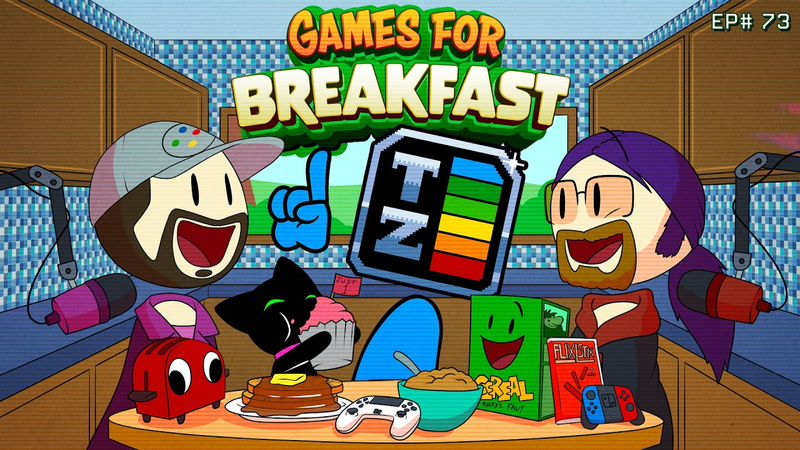
Games For Breakfast Feat. TierZoo | Ep.73 | Gaming News
The modern gaming landscape is defined by a tension between player-driven innovation and the volatility of platform-level control.
- Old School RuneScape is introducing a 'BronzeMan' mode, an official implementation of a previously unofficial community challenge similar to the 'Iron Man' mode.
- The game 'Aliens: Fireteam Elite' on Nintendo Switch has become inaccessible to users because it relied on cloud streaming, and the servers hosting the game have been shut down.
- Hello Games is using the development of 'No Man's Sky' as a technical testing ground for mechanics that will be implemented in their upcoming title, 'Light No Fire'.
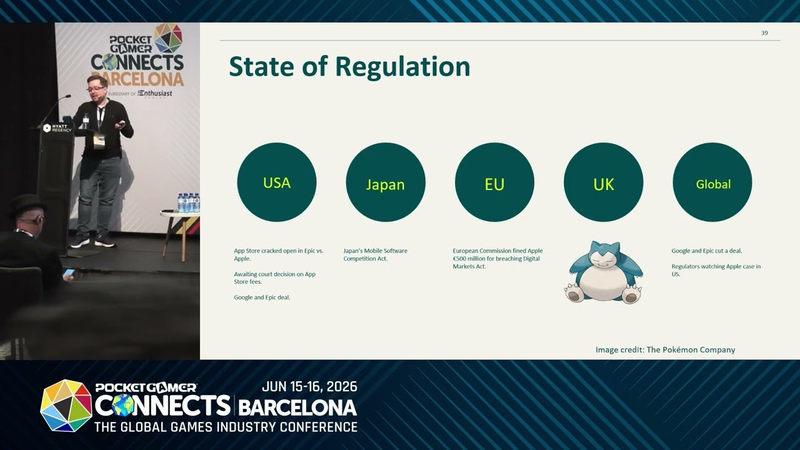
Session: How Much D2C Revenue Are Publishers Actually Making? - Craig Chapple, PocketGamer.biz
This analysis examines the growing prevalence of direct-to-consumer (D2C) web stores within the mobile gaming industry, focusing on how publishers are leveraging these platforms to bypass traditional app store fees and improve profit margins.
- Direct-to-consumer (D2C) channels are becoming a critical strategy for publishers to improve margins in a mature market where overall industry growth has slowed to single digits.
- Major publishers are seeing significant D2C adoption: Playtika reports a $1.2 billion annual run rate from its own platform, while Modern Times Group (MTG) saw D2C revenue grow to 39% of total group sales in Q1, with mid-core titles reaching 49%.
- There is a strong correlation between rising D2C revenue and increased user acquisition (UA) spending, suggesting that savings from avoided platform fees are often being reinvested into marketing to capture growth.

🚨📢 BREAKING NEWS: Rotate Labs Raise + Rival App Store Returns + Gaming Revenue Drops 4.5%?!
The mobile gaming industry is currently defined by a geographic shift in talent and funding, the emergence of alternative app distribution models, and a nuanced interpretation of revenue performance.
- Global mobile gaming revenue's reported 4.5% year-over-year decline in Q2 is misleading, as it fails to account for $9 billion to $12 billion in direct-to-consumer (D2C) revenue occurring outside traditional app store tracking.
- Uncaptured D2C revenue currently represents 15% to 20% of total industry earnings, suggesting the market is more robust than traditional metrics indicate.
- Aptoide has become the first rival app store to return to the US Google Play ecosystem, signaling a shift toward competition and alternatives to the standard 30% commission model.


Czech Game Industry 2026
The Czech game industry has solidified its position as a stable, export-oriented powerhouse, with 178 active studios contributing significantly to the national economy.
- The Czech game industry consists of 178 active studios and maintains a 98 percent export rate, driven by the global success of major titles like Kingdom Come: Deliverance II.
- In 2025, the industry achieved a major policy milestone by integrating video games into the Audiovisual Act and the State Cinematography Fund to provide a formal framework for public investment.
- Industry growth is currently bifurcated, with large-scale developers thriving while smaller studios face increasing pressure and a decline in new startup formation.
TWIG #396: AppLovin's Q2, Unity's Supersonic Fire Sale and GTA VI's Netflix Trailer Drama
The mobile gaming industry is currently navigating a period of significant structural realignment, characterized by aggressive consolidation, shifting monetization strategies, and a cooling of growth expectations for major ad-tech players.
- AppLovin experienced a 29% share price decline despite 53% year-over-year revenue growth, as investors reacted to decelerating AI performance improvements and conservative forward guidance.
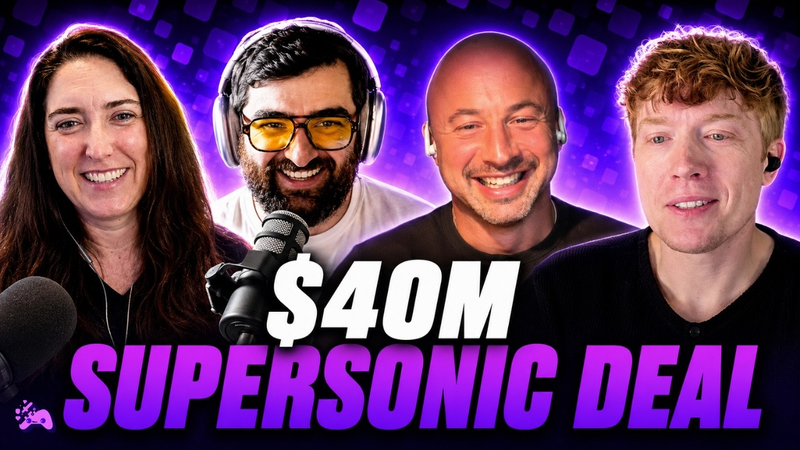
- Unity sold its Supersonic publishing arm to Triple Dot for $40 million, marking a strategic pivot away from direct publishing to focus on its Vector AI ad-tech infrastructure.
- The mobile gaming industry is shifting its primary performance metric from short-term acquisition cycles to 28-day return-on-ad-spend (ROAS) to prioritize sustainable user value.

Sega-Rovio news, Tripledot's Supersonic buy, mobile at Take Two, Playtika shenanigans and more
The mobile games industry is currently navigating a period of strategic consolidation, shifting user acquisition (UA) models, and evolving financial performance across major publishers.
- Tripledot acquired the Supersonic mobile publishing label from Unity for $40 million, marking the company's second major acquisition of unwanted studios from large tech firms in recent years.
- Playtika will slash marketing and user acquisition spend on Disney Solitaire by 70%, citing the game's ability to maintain growth and expand margins despite reduced investment.
- Take-Two reported $739.5 million in mobile bookings for the last quarter, noting that while mobile revenue dipped slightly, direct-to-consumer initiatives have had a positive material effect on margins.
Is the Stop Killing Games Campaign destined to fail?
The Stop Killing Games campaign seeks to establish legal mandates for the preservation of online-only titles, aiming to protect consumers from losing access to purchased software when developers sunset servers.
- The 'Stop Killing Games' campaign faces significant legislative hurdles in the UK, EU, and California due to fundamental conflicts with existing intellectual property and consumer protection laws.
- Technical dependencies in live-service architectures, such as third-party assets, licensed music, and proprietary middleware, often prevent developers from legally releasing or preserving software even when they are willing to do so.
- Industry trade bodies oppose mandatory preservation initiatives, arguing that a one-size-fits-all legislative approach is incompatible with the diverse operational needs of studios ranging from independent developers to major publishers.

⛏️ One Guy, No Ads, No Tutorial, $100K/Day: The Idle Obelisk Miner Story
Idle Obelisk Miner represents a significant departure from contemporary mobile gaming standards, demonstrating that a solo-developed title can achieve exceptional financial performance by rejecting industry-standard monetization and design tropes.
- Idle Obelisk Miner generates approximately $100,000 in daily revenue from only 4,000 to 5,000 daily downloads, resulting in a high revenue-per-download figure of roughly $13.
- The game achieves financial success by rejecting industry-standard monetization, specifically eschewing intrusive advertisements and predatory pop-ups in favor of a player-friendly economic model.
- The title sustains a base of 50,000 daily active users and a Discord community of over 57,000 members by prioritizing deep, complex progression mechanics over mass-market accessibility.