Global reports and market data
Documents
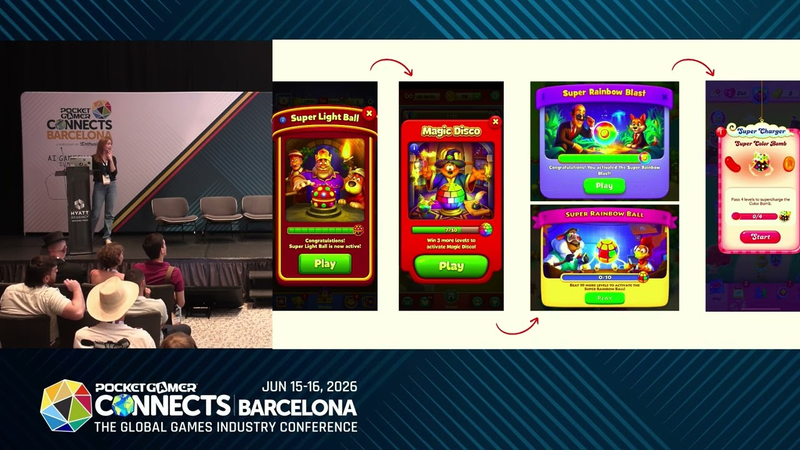
Session: LiveOps Today: When, Why & What’s Next? - Anastasiya Kara, Rovio.
LiveOps has evolved from a supplementary feature into the primary driver of engagement and monetization in the mobile gaming industry.
- LiveOps has evolved from a supplementary feature to the primary driver of progression and revenue, shifting focus away from core gameplay loops in top-grossing titles like Royal Match and Candy Crush.
- The industry is seeing a trend of 'leech LiveOps' where hyper-casual games with simple core mechanics, such as Color Block Jam, are successfully integrating complex meta-features like album collections to drive retention.
- Successful LiveOps strategies now rely heavily on social mechanics that foster community-driven retention, where players return to games specifically to fulfill social obligations like trading cards or completing team-based events.

TWIG #393: GTA 6's Impossible Attach Rate, Playtika's Earn-Out Disaster, and Unity 7's Big Swing
The gaming industry is currently grappling with a disconnect between aggressive financial projections and historical market realities, particularly regarding the highly anticipated launch of Grand Theft Auto 6.
- Analysts project that GTA 6 would require an unprecedented 60% attach rate to meet expectations of 85 million units sold within two months, a figure that significantly exceeds historical AAA benchmarks.
- The gaming market is highly consolidated, with 94% of total console and PC revenue currently generated by a small group of established franchises.
- Playtika has suspended dividends due to severe balance sheet strain caused by poorly negotiated earn-out obligations following its acquisition of Superplay.
Amazon Luna: We’re not trying to replace PlayStation, Xbox and Nintendo (but maybe we could)
Amazon is strategically positioning its Luna cloud gaming service to capture the vast, underserved market of casual and lapsed players by integrating interactive gaming directly into the Prime Video ecosystem.
- Amazon is positioning Luna to capture casual and lapsed gamers by integrating cloud gaming directly into the Prime Video ecosystem, bypassing the need for dedicated console hardware.
- The U.S. gaming market experienced a 21% revenue decline as of June 2026, driven by a cooling in hardware sales following the launch of the Nintendo Switch 2.
- Retail models are shifting away from physical software, evidenced by GameStop’s pivot as software sales now account for less than 12% of its total business.
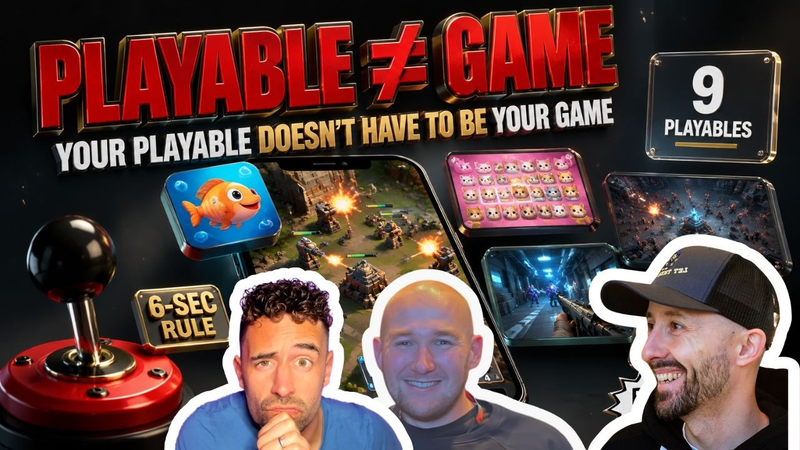
🎮 Which Playable Performs Best? Why There's No Single Answer (Playable Trends June 2026)
The mobile gaming industry has reached a consensus that no single playable ad format guarantees success, necessitating a diversified strategy that targets various user segments through constant experimentation.
- There is no single high-performing playable ad format, necessitating a diversified strategy that relies on constant experimentation across multiple creative variations.
- Developers are increasingly prioritizing non-authentic, exaggerated mechanics over accurate gameplay to maximize immediate user engagement and click-through rates.
- The six-second auto-advance rule is a critical design standard, where the ad automatically initiates moves for inactive users to maintain momentum and minimize friction.
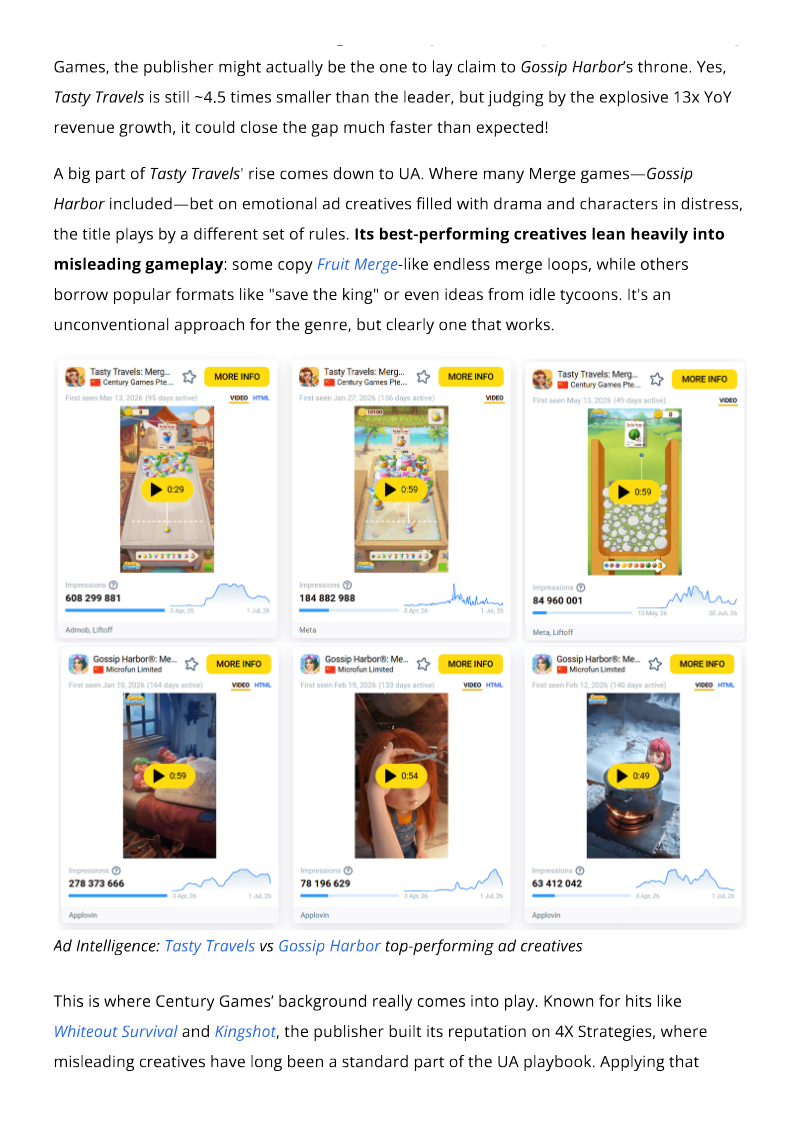
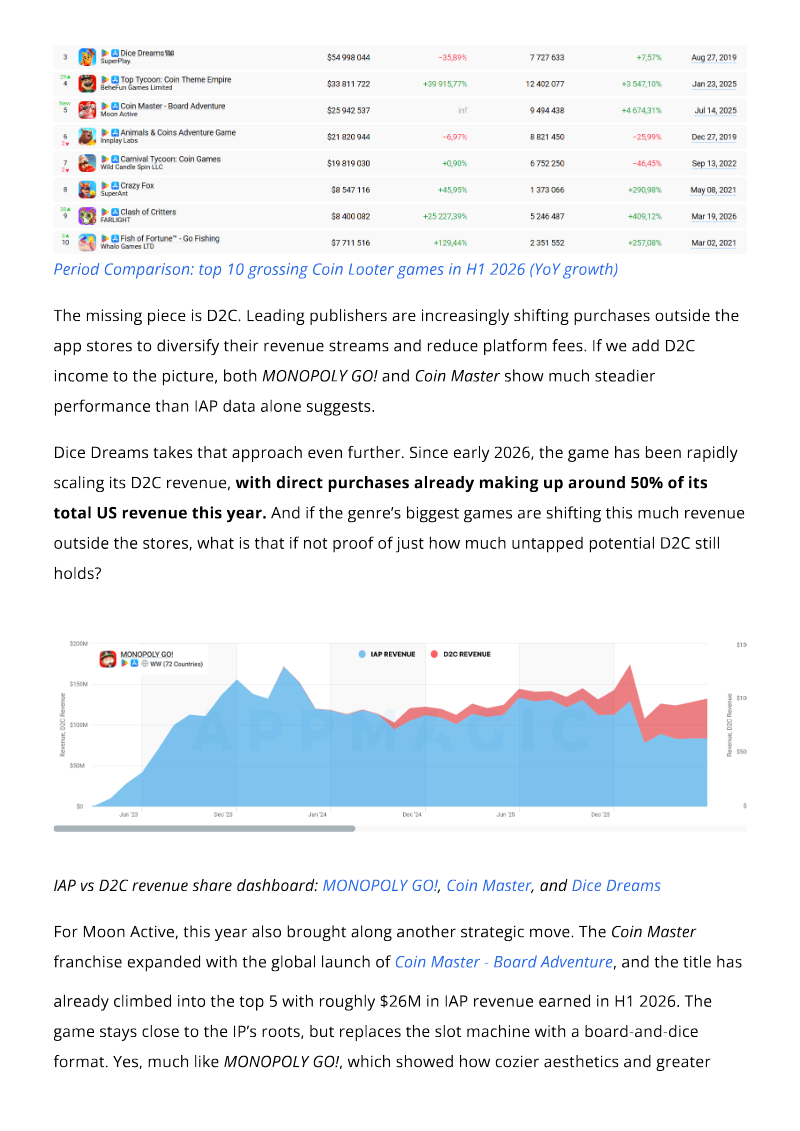
Casual Games Report H1 2026: Growth Beneath the Still Surface
The casual games market, despite appearing stagnant with flat overall revenue of $11 billion in H1 2026, is undergoing significant internal shifts and growth in specific segments.
- The casual games market remained stagnant in H1 2026 with $11B in revenue, mirroring H1 2025 performance despite significant shifts in genre-specific growth.
- Merge-2 is the fastest-growing casual genre, nearly doubling its revenue to $1.2B in H1 2026 with a 20% year-over-year increase in downloads.
- Match-3 remains the largest puzzle subgenre at $2.4B, with Dream Games' 'Royal Kingdom' reaching the #3 market spot through a strategy of scaling limited titles and integrating diverse mini-game events.
Tencent, Playtika and SuperPlay shenanigans, further Google Play changes. Monopoly Go, MTG, more
The mobile games industry is currently navigating significant shifts in corporate ownership, platform accessibility, and market performance.
- Google has dropped its requirement for a 'registered app stores' program, allowing third-party app stores like the Epic Games Store to operate directly within the Google Play Store as of late July 2024.
- Tencent is reportedly in talks to acquire Superplay, the developer of Dice Dreams and Domino Dreams, for up to $1.5 billion following the studio's significant performance growth under Playtika.
- MTG reported Q2 group revenue of $306 million with a 24% profit margin, driven by Raid: Shadow Legends, which earned $111 million, while direct-to-consumer revenue grew to 38% of total group income.
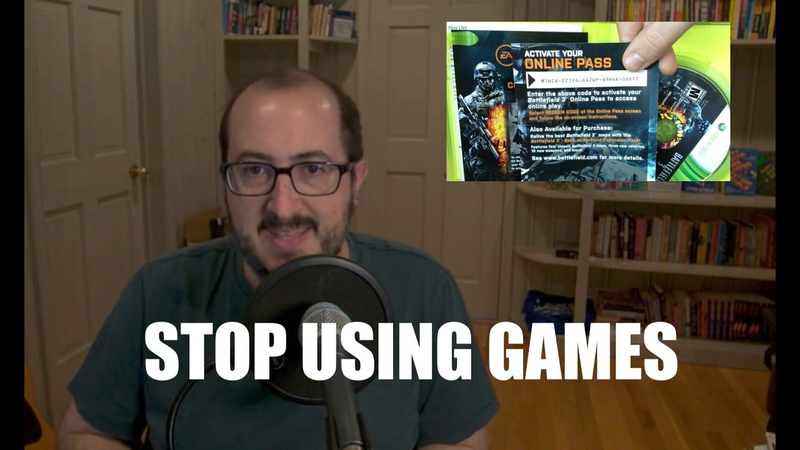
The Death Of PlayStation Discs Was Decades In The Making
The transition toward an all-digital gaming ecosystem, culminating in Sony’s 2028 decision to discontinue PlayStation discs, represents the final stage of a decades-long industry effort to eliminate the used game market.
- Sony’s decision to phase out PlayStation discs by January 2028 marks the final stage of a decades-long industry effort to eliminate the used game market and transition to fully digital distribution.
- In the late 2000s, major publishers like EA implemented 'Project $10' and online passes to capture revenue from used game sales, requiring secondary buyers to pay a $10 fee to unlock online features.
- The industry's attempt to enforce digital rights management (DRM) on physical consoles peaked in 2013, when Microsoft faced significant backlash for plans to restrict used games on the Xbox One, leading to a public reversal.

Google Play's New Era. Here's Why This is Important...
Google Play has introduced a significant restructuring of its service fee model, effective June 30, 2024, in the US, UK, and Europe, with a phased global rollout continuing through 2027.
- Effective June 30, 2024, Google Play is restructuring service fees for games earning over $1 million annually, charging 20% for new installs and 25% for existing installs.
- Developers can reduce these service fees by 5 percentage points by joining the 'Level Up' program, which requires meeting technical benchmarks like cross-screen support and high-performance rendering.
- Alternative billing methods are now formalized, allowing developers to use external links or web shops at a 20% service fee (15% with Level Up), effectively removing the standard 5% Google Play billing fee.

Live Workshop: The Ultimate Guide To Making 3D Indie Games
Successful 3D indie game development hinges on the integration of precise structural fundamentals and iterative design processes.
- Implement a strict grid-based development system using a consistent unit size (such as four) to ensure modular assets fit together perfectly and streamline level construction.
- Prioritize blocking out levels and testing them with external playtesters early in the process to avoid the 'toxic positivity' of internal teams and prevent costly redesigns.
- Optimize performance by manually disabling shadow casting for the majority of meshes and lights, selecting only a few key elements to cast shadows for cinematic effect.
S7, E25: The impact of AI Overviews on outbound clicks (with Ananya Sen and Saharsh Agarwal)
The integration of AI Overviews into search engine results represents a fundamental shift in the digital ecosystem, resulting in a substantial decline in outbound traffic to publishers.
- The integration of AI Overviews into search results has caused a 40% decline in outbound traffic to publisher websites.
- AI-generated summaries capture user attention by resolving queries directly on the search results page, which significantly reduces the incentive for users to click through to external domains.
- Data indicates that AI Overviews do not increase search satisfaction, contradicting claims that these features only filter out low-quality traffic.
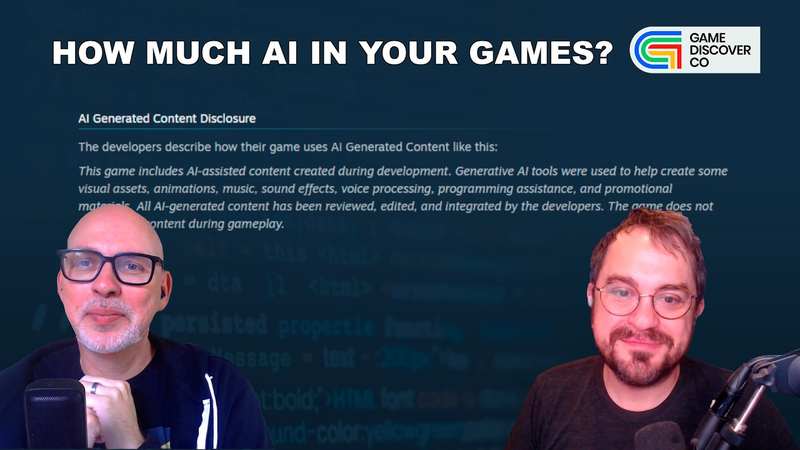
How much AI do players want in their games?
Steam’s refund policy remains a cornerstone of consumer confidence in the PC gaming market, effectively balancing developer risk with player protection despite the volatility inherent in early-access releases.
- A GameDiscoverCo survey indicates that player sentiment toward AI in games is highly divisive, with approximately 43% of respondents expressing openness to AI usage while roughly 31% hold negative views.
- Steam is actively vetting games for AI content, occasionally identifying AI-generated assets in titles where developers were unaware their subcontractors had used such tools.
- Apple Arcade has shifted its strategy to commissioning only 10 to 12 games per year, a significant reduction from its initial launch phase which featured $500 million in 100% commission-based titles.
Shooter Monthly #8: The Bungie Eulogy, Why Destiny Fell Off, and Can Marathon Save the Studio
Bungie’s trajectory serves as a definitive case study in the volatility of the live-service model, illustrating how a studio can pioneer a genre while simultaneously struggling with the sustainability of long-term engagement.
- Bungie generated between $1.5 and $2 billion in revenue by successfully blending high-fidelity gunplay with deep RPG progression.
- The decline of Destiny is attributed to the exhaustion of its ten-year narrative arc and a seasonal content model that made player progress feel temporary.
- Bungie failed to transition Destiny into a smaller, long-term maintenance phase, a strategy that successfully sustained competitors like Rainbow Six Siege.