VideoThe Game Business
Amazon Luna: We’re not trying to replace PlayStation, Xbox and Nintendo (but maybe we could)
23 Jul 202633 min video
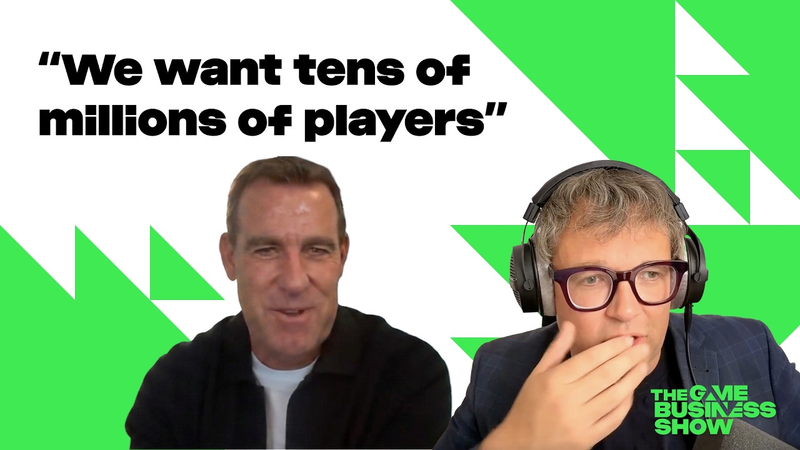
This week, Amazon adds Luna into the Prime Video app. And we are joined by Amazon games boss Jeffrey Gatiffish to discuss whether the company can be a viable alternative to consoles. [music] Hello and welcome to the Game Business Show. This week's edition is sponsored by Keyword Studios. If you're in the industry, you you'll likely know about Keywords, but you might not know all the things that they do. In their words, they work with game studios to build, launch, and support games at a global scale. And that covers game development, art, audio, localization, QA, player support, and marketing. So, whatever studio needs whenever they need it, Keywords connects them with the right specialist expertise in their business. And that's at every stage of the game life cycle from early stages all the way to release and beyond. So, Keywords is a services provider, but they go a bit beyond that. They're more like a long-term strategic partner. They can help a developer scale their production, ensure the quality levels are high, reach new markets, and build a strong relationship with the players. They've
got all the technology and the people who just understand games, how they're made, played, and what players are expecting. To find out more about all the number of things that they do, you can find that on the Keyword Studios website and via the link in the game business newsletter. Now, back to our show, and it's a bit of a sequel show to the one we did last week, sort of. So last week we had a lovely chat with Netflix's Shan Cranle. It was all about their new horror streaming game, Unhinged. And that game was built for an audience that may or may not exist. It's this idea that there are people out there that might be interested in a narrative video game, but aren't necessarily interested in buying a gaming console or PC. Netflix is looking to treat these players directly through its Netflix app via a games tab at the top. And now Amazon is doing the same thing with its Prime Video app. And of course, it's streaming service, Luna. That's their big news they're announcing today. Prime members with a Fire TV in the US and the UK can play Luna games from inside the
app alongside movies and sports and TV and all sorts. The idea is to make Luna games more accessible and easy to find to the widest possible audience. Now, Luna is a slightly different proposition to Netflix as it features AAA games such as Indiana Jones and Fallout and Hogwarts Legacy and EA Sports FC. They've got Tomb Raider, of course, coming out next year, but the goal is similar. win over people who perhaps used to play consoles but don't anymore or people who have been interested in a game here or there but haven't been able to justify the cost or the friction associated with console or PC gaming. I find this really interesting because it's potentially unlocking a new audience for these sort of experiences potentially widens the industry at a time that we need it if such an audience actually exists. Now Amazon has of course undergone some significant changes. It closed a bunch of game developers. It's canceled some games including its MMOs. It ended publishing relationships with thirdparty teams, but it insists it's not backing out of games. In fact, it's merged Amazon Game Studios and Amazon Luna together.
They're not separate teams anymore doing separate things. They're still publishing the new Tomb Raider games and developing bunch of sort of these sort of game night party games as well. It's also looking to sign products and plans to be involved in whatever the next James Bond game will be. And to take me through this news, the vision for Amazon games and the opportunity around streaming in an era of a thousand video game machines, I had the chance to chat with general manager for games at Amazon, Jeffrey Gatis. And he oversees both Luna and Amazon Game Studios. He was really candid in our conversation. And here it is. Enjoy.
Hello, Jeff. Welcome to the show.
Good to see you, Chris. Thank you.
This news, it sounds exciting. How significant is it? How many devices are we looking at here? I mean, it's a pretty big deal for us, you know, in particular, I'm excited, number one, just for more people to be be able to discover the benefit that we've put into Prime. So, as you may know, we relaunched Luna last October. Really just pushing I know close to like 80 to 90 games into the Prime membership. And those are things that range all the way from AAA games like Hogwarts Legacy all
the way down to more casual phone as a controller game. Uh, you know, we had our Snoop Dog Courtroom Chaos game and other things. And we got great reception from the audience. We 5xed our player base, albeit on a modest base, but I think anytime you 5x anything, that's signal that we've found some product market fit with customers. But our bigger problem is that not enough people know about the benefit. And that's just because it's been fairly difficult to discover Luna. You often have to intentionally go download an app or go directly to a website. So being integrated with Prime Video and literally having a games tab at the top of Prime Video, it's just going to give us access to so many more potential players and I think allow so many more people to discover this great benefit. So I'm excited about that. And then I think secondly, I just get excited. I I I've seen for a long time I really really felt that we've seen this continued convergence between video games and television and movies and you know it started where you know you make a game off of a movie or make a movie off of a game and a couple years ago we had the Fallout television show on Prime
Video and we saw this major spike in Fallout players of the video game through Luna and I happened to be at Xbox at the time. we saw a major uptick there and that was a you know relatively dated franchise that sort of had a rebirth if you will kind of all in the backs of this television show. So I do think increasingly we're going to see more and more TV show movie and video game kind of feel like all one entertainment experience and just having it all in one place for customers I think is is good for the industry.
Do you think Luna can be a legitimate replacement for console gaming in this era of very high pricing?
Yeah, I do. But our business isn't predicated on replacing consoles. I think that's part of the clarity we've gotten is, you know, I think as you think about cloud gaming, which we all know has been around for gosh, I think 20 some odd years if you go all the way back. Um, but in some ways, I think historically it's been a little bit of a solution in search of a problem. Uh, consoles for the most part have been relatively inexpensive until now. Uh, so our business is more about reaching more players and expanding the market, not trying to get people to give up their consoles or their gaming PCs. Having
said all that, we've seen the news. You know, we saw the Steam Machine pricing opening at $1,000 US. We hear rumors about consoles because of the RAM crisis, you know, pushing up well over $1,000 in Gen 10. So, I do think you get to a point at which a lot more people will be in the consideration set for a cloud gaming solution just because of the sheer cost of buying dedicated hardware.
I think the thing that excites me about what you're doing and Netflix as well is your press release mentions it. it can appeal to lapsed PC and console players, which is great because there's lots of people my generation that might be interested in a GTA or a Tomb Raider or whatever that, you know, they're not necessarily willing to invest and have the time anymore as this this sort of reduces that need to expensive hardware. But press release also talks about this audience of people that might be interested but have been put off because of the friction of of consoles and PC gaming because of expensive hardware. The question I don't know, does that audience actually exist? Have you got anything that makes you confident that there is this audience of people that would be interested but have you know have been put off by that friction?
Yeah, I think we have a couple things. We have signal since our relaunch of people that have come to us who I think fit that exact category. Um obviously we want to continue to grow that. But I think the sheer numbers of the industry as a whole when you look at three billion people in the world who play video games yet there's only you know depending on how you do the math 300 million to 500 million dedicated hardware devices out in the wild. So you start to do that, you think about gosh, that's a lot of people who have some sort of affinity for video games. Maybe they're playing on mobile, maybe they're playing through a browser, but they're not having the highest fidelity experience. They're not playing in front of a television screen or a bigger monitor. To unpack a little bit why they don't do that, I think we've just talked about hardware is getting increasingly expensive. you know, games can be the, you know, big investments to go buy a $70 game, to go through the download experience, to pair a controller, and then make an investment of, you know, hundreds of hours of time in some cases to complete one of these games. And so, you there's people like me who love that that that's that's how I ch, you know, spend my entertainment time, but I think most people fit into more of a like
curve, you know, just kind of a more normal distribution. They spend some time watching television, they spend some time watching movies, and they like to play video games. And so I think that's where we see an opportunity to serve a group of people who I might argue haven't really been well served because the console and PC companies are mostly focused on those hardcore players. And I think to your point, you know, this is where I think we share a similar vision to Netflix. So I love to see what they're doing in this space because I think we're both kind of going after the same at least have the same thesis about making games more available to more people.
Yeah. It's interesting because I remember this is years and years ago, but I was talking to Pete Hines when Bethesda was still not part of Microsoft and he was talking about how he really believes in streaming because he said, "I'm no longer having to market to PlayStation owners or Xbox owners or or PC game. I can market to everybody. I can target whoever might be interested in it irrespective of what devices they are." There was just the whole appeal. But how are you looking to promote this to reach those people? Obviously, the big thing being it's in the tab. Yeah, I think you know part of it obviously we'll do more of our own marketing. Uh
but you know just distribution as a whole and making you know we talk about meeting players where they are and that's why the Prime Video integration is such a big deal for us because it's just going to be right there in front of people when they log into the Prime Video app. But I think there's more of that we can do across Amazon. You look at all the other properties we have within the company. You know we get good placement on Fire TV where we have lots of people come in and discover Luna for the first time. But we need to do more awareness off the device. So think of, you know, Luna's accessible from any PC desktop. Just click a link and play. And that's sort of the real value proposition of cloud gaming is that there isn't a download required. There isn't a bunch of work to jump in. You can just click and play. So I think for us, it's just getting the word out. Like I said, I've made the joke before, but I can make it again here. You could argue that Luna is the largest paid gaming subscription in the world. The problem is nobody knows about it. They don't know. We think the Prime Video integration will do a bit to address that, but there's a lot more work we can do across different Amazon properties. You know, Twitch, a really big opportunity for us as well.
Yes, of course. Just just that small
thing that you own. And the um I think the only other friction that exists with even with streaming is the need for control. All right. And I know that some of your games courtroom chaos that you know you talk game as well, people play using the phone. How key is it, do you think, having games playable using a phone when it comes to this opportunity? Well, I think it's important in terms of breadth and just reaching a broader group of people. You know, we believe one of our real strengths is just the breadth of our catalog. So, everything from AAA, you know, like I said, Hogwarts or FC26 all the way down to very light casual games, a board game like Ticket to Ride or Clue or Game of Life, things like that that can be played with the phone as a controller.
And I think it's more just about reaching more people and expanding the audience. There are a lot of people who do own controllers. You mentioned laps players. I think there's a lot of those that still have an old, you know, PlayStation or Xbox controller lying around, that's great. But if you're not that type of player and you just want to jump in and play Who Wants to be a Millionaire for 15, 20 minutes, that's where the phone's perfectly suitable. And that's kind of where we see the opportunity to grow the market.
And I think for a lot of people, they
think, "Oh, I can play this game on a phone. I'll give it I might as well play it." And then they play it for a bit and they go, "Actually, I need a controller." That's a journey that you can take them on because that barrier isn't there to begin with. Have you played Unhinged? Have you played that one?
I actually played it last night. I absolutely love what and I really, you know, some people ask us about Netflix as a competitor. Like I said earlier, I think I love what they're doing and this is a great example where I think we want to do more of these things too where you start to push the envelope a little bit more in terms of new types of creative endeavors. And I think back to my real little real little riff about the integration between TV and video and video games, I think there's an opportunity to create a lot of these newer experiences that are sort of not traditional video games, but think of them as almost extensions of the the video viewing process. And this this is just a cool narrative story. So I love
Oh yeah. And I think both of you are at this stage right now where you it's rising tide, right? If you if you can both succeed in bringing people in, that's that will benefit both of you. We spoke about this before, but Amazon games and Amazon Luna, right? Everything's come together now. Is that right?
It is. It's something, you know, I got
here a little over a year ago and say at the time, no fault of anybody, but we had some structural challenges. We really had basically three distinct gaming organizations within Amazon and that's not even counting Twitch. So you had Prime Gaming which was effectively a benefit for Prime members uh where we gave away codes and you go redeem them on other platforms. Great value for players. We had Amazon Game Studios which was making games but mostly MMOs that were you know geared at other platforms not not our own platform. And then we had Luna, which set an entirely different group that had built really impressive cloud gaming technology, but was still really in search of, you know, what's the purpose, who's the audience, who's it for, what are the games. So, we brought all those things together under one roof. And I always say, you're never going to have an org chart solve a customer problem, but I have seen org charts that prevent a solution from being found. And so, this was kind of step one for us in terms of just streamlining. So, we have a single gaming strategy. uh we think about content alongside the platform, what
kind of games do we want to make, etc. So that was the structural problem and then I think second was just a bigger strategic question around where Amazon fits into this space, you know, if at all uh you know why why does Amazon need to be in the video games business and so I think we really like to try to focus on where are the places that we can add some unique value. What we didn't want to do kind of look at the landscape and you looked at PlayStation and Xbox and Steam and what I'll call kind of all the the core platforms. The world doesn't need another one of those. They don't need another a fourth entry kind of selling the same games and competing for the same, you know, pie of players. It really isn't growing. So, can we kind of said let's not do that. But this is where kind of to my point about the broader market, this broader audience that I don't think was really being served, the other two and a half billion players in the world, that's where we saw some fairly unique opportunities where Amazon could add value. And it's kind of looking at all the assets that Amazon has from MGM and all the IP associated that Prime Video and obviously this integration, things like Fire TV, things like Twitch, things like
NFL, NBA rights. You have a lot of assets to work with. And then I think the bow on top is we can do so many things through Amazon Prime with hundreds of millions of customers worldwide. We can push a bunch of value into there. And that's just, you know, a lot of those things are just assets that other companies don't have. So that's what gives us confidence that we're bringing something a little bit unique to the table here and providing a lot of value and not trying to compete head-to-head with the incumbents.
Does Twitch, I mean, you mentioned Twitch twice now. And how does that fit into this? Is it still very much a separate thing that you can tap into? It's a separate thing, but obviously it's a place that serves gamers really, really well today and is is interacting and engaging with gamers, you know, both on the creator side and the viewer side. So, nothing to announce today, but I think we see a ton of opportunity. In fact, right when I finish with you, I have a meeting with the Twitch team. So, that's why it's top of mind for me. But, I think there's a lot of opportunities where we already have a a qualified audience to reach them with some of the things that we're doing with Lunar.
So, you've clearly decided MMOs aren't part of this vision, this strategy, this plan, but Tomb Raider is. So what games
fit with what you're doing? What doesn't fit? I mean, I can guess.
I think everything technically fits. So I don't want to be coming across as as as though we can't, you know, handle those games. We can. I think for us, it's clarity around the audience that we're really targeting. So it doesn't mean we exclude anybody. But when I think of that kind of mainstream audience, which we call midcore all the way down to casual, we found some things, especially on the AAA side that are really resonating. I mean, it's big IP, familiar IP, relatively simple game mechanics that are easy to get into. So, you think of Hogwarts Legacy, you think of Indiana Jones, you think of Tomb Raider coming up. All those games are big known IPs, but they're also relatively easy to jump into. There's obviously levels of complexity you can get in as you go through the game, but that's where we've found a sweet spot since our relaunch in October is those kinds of things and maybe not trying directly to go compete for the hardest of hardcore players who's playing multiplayer competitive shooters. At least not today.
I sort of do understand why those MMOs perhaps don't necessarily make sense for
what you're trying to do. But I have to say I did think cuz I played it at summer gamefest, the Maverick's game, Clutch.
So I I could see how that could fit with what you're doing. But but obviously you you didn't agree with that. So why not that one?
Well, I that decision actually was made before I took over. Um so I can't speak to all the mechanics behind it. I can tell you that I too like the game. [laughter]
We've reached out to them recently and and we're trying to see if maybe it is a fit for Luna. So be a different business relationship than the one we had before, but it's not a case where we don't think the game the game looks great.
Yeah. Yeah. Wow. Definitely looks promising. When it comes to games that you're sort of funding or or publishing yourself, I'm assuming you're still going to be doing some of those. What investment levels are we looking at here? Is it AAA or is it indies? Is it AA? Do you have a strategy around that?
We do. And it's all of those.
Yeah.
Ranging from what we call game night games, which are those phone controller games, which I think of as, you know, single A games that are in the single millions of dollars to develop, all the way up to AAA. We have obviously we've announced the two Tomb Raider titles.
you know, Atlantis comes February 12th of next year and then we'll follow on in 2028 with the next one. Um, so we're excited about those. There are some other, you know, AAA things that are in various stages of discussion right now. So I do think, you know, and we've talked a lot about MGM and Amazon IP and, you know, opportunities to kind of leverage that. I think ultimately we want to build an identity with Luna where we have a content portfolio that resonates with people where they think, oh gosh, that's the place that yeah, that has Tomb Raider and maybe they have Bond and they have these other things. And I think that takes time obviously to go build. But uh I think for us to be the the the platform we we we want to be and the one we believe we can be, you have to have some some original content.
Amazon obviously spent a lot of money on this already and a lot of it has been written off and started again and reset. And this is what I know I've been in this industry long enough to know this happens all the time, but do you have much time to be able to sort of get that identity and explore these areas or is there an element of you need to get this right quickly?
No. Amazon is notorious for taking a very very long view on things and I
think you know Jeff Bezos said it many years ago willing to be misunderstood for long periods of time and does that mean there's infinite timelines for every business? No, of course not. But I think for us it's really like I said for the first time in a long time I feel like we have a single gaming strategy. We understand what we're doing. We understand we're not doing and we're executing against it. And I obviously time will tell how well we can execute and how right we are about our thesis. But but generally it's just about continuing to to show growth. And I think integrating with Prime Video is yet another sign of us moving things forward.
Yeah. I'm a guy in my 40s. I live where I grew up. So I've got a lot of friends around me that aren't in the games industry that aren't from that world. And they used to play games all the time when they were younger. And as they've got older, as they the kids have come along, some of them haven't bought a games console since the PS3. They're all excited for GTA 6, but they actually have no means to play it. And well, I think they're going to come for a bit of a shock when they look at how much it will cost them to do so. Not the game in particular, but obviously the hardware they'll need with it. So, I I do see there's a potential. I know that um with
Matthew B spoken about it before, now he's at Xbox and he's been on the show and he's been a little bit skeptical about it that with these hardware rises and with these players that have been left behind perhaps and the fact that there are more games that are appealing to wider audiences. I think this is really interesting. The thesis makes sense. It was not a question there.
No, no, I I have a followup regardless. Yeah, I think you're right. I said it earlier, but I do think that there had to be some sort of broader movement that would drive people in the direction of cloud gaming. I can squint and see it now. And that's not something I would have said three or four years ago. But I think the broader bit about people who, you know, are lapse gamers really resonates. And I think that's kind of you a lot of times we're out talking with publishers and trying to convince them to bring their games to Luna. And you know, a lot of times the skepticism you'll hear is, well, if I put my games on Luna, particularly if I push it into Prime, I'm going to go cannibalize all my sales on these other platforms. And the reality is, at least the pitch that we keep making, and it it is the truth, is that this is about reaching players that a lot of those games are never going to be able to reach, you know, particularly in a world of thousand
consoles. And so I think if done right, and it's not just what we're doing here at Luna, I think there's other cloud gaming solutions out there. The opportunity is to unlock more players and that's a good thing for the industry as a whole.
7 First Light obviously I'm going to mention this. It's out. It's brilliant. It's the best Bond game I've played and I'm the guy with a signed golden eye poster on my wall. But um owners and obviously strategies have changed and I appreciate you're not going to announce anything on this podcast, but is there anything you've learned from the launch of that game? Has it taken you by surprise? You've had a few moments to digest it, I suspect.
Yeah. Uh, number one, it's an awesome game and so IO did just a tremendous job with the game itself. And I think one of the learnings, I don't think it was a surprise, but just, you know, they did it so well that it just shows that these single player sort of action, adventure, narrative driven games really resonate with a lot of people. And I think that's shown up in in the sales that that we've seen. Um, we're excited about the franchise and and I, you know, I think where where it can go from here and uh, right now it's, you know, the month
game's two months old, so we're kind of going to let it let it breathe for a while before everyone wants to ask about a sequel. Um, I think it's an awesome game. I think those kinds of games, as I were mentioning earlier, really do seem to work on a platform like Luna. Um, so when I think of, you know, Tomb Raider and some of the things we have on the road map, I get excited that that's where we're going to find real audience. See, because they they approached that Hitman trilogy, the world of assassination, which some people now forget was a trilogy. The first game, they had all the cost on it really, and then they made the next the second game, the third game for so much less. So, for me, I'm obviously hoping that it continues because I think there's a uh not only can the games, you know, each each hit Hitman game was better than the previous one, but they cost less as well. And I like their sort of iterative approach to the way they develop games and the way they keep engaging with them. It feels like it could fit, but I guess there's conversations to be had. And and there's lots of different parties involved. MGM as well, of course.
Yeah. But they they made an awesome game and that's that's you know, if there is a sequel, I think all we want is another awesome game.
Yeah. You know, there is an this is not a question I was planning to ask, but um
I don't know if you know about this. I'm sure you do. There's actually a completed HD remake of Golden Eye somewhere that Rare made. I think they made like 20 years ago. Um and it got canned at the 11th hour for some form of licensing issue. That's low hanging fruit for you there. get all those 1997 N64 kids back into games and playing on the
Lon. [laughter] I' I've been dying to get that game on an old console. Um, are there any other IP that Amazon owns that you're eager to explore that you think might be opportunities?
Uh, nothing to share today. I think there's a broad portfolio of things and thought, so I think it's really a matter of kind of obviously working with the teams at at MGM and figuring out what makes sense, where we think we can actually make an interesting fun game. uh not every IP translates into a great game. And so I think it's kind of having that creative eye and sense of of taste to kind of figure out what works and what doesn't. But that's a a massive opportunity as I mentioned earlier for us and a really key part of our content strategy.
Guess how long's a piece of string, but how many of these projects are you able to sort of commission and react? How many how what's your capacity? Obviously
there's partnerships that you had with developers bringing the games to the platform. Then there's sort of the ones that you might publish and handle yourself. What's your capacity? Yeah, we can do pretty much whatever we need to right now. Now, we're working with Crystal Dynamics on the Tomb Raider titles and so those people don't sit sit in our house directly, but we work very closely with them.
Yeah.
And then we have a lot of other things, you know, single AA that are in development internally. Some of those you can take on more of those projects because they're a little bit smaller in nature. So, uh I feel we're well resourced to go do these things. It's a matter really of figuring out what are the right things to make and what aren't.
So, what's the team like now? Because obviously you've had all these cuts and changes. paint me a picture really of how the the structure is like
probably the easiest way to think of it is you I mentioned I came from Xbox it's the same way that Xbox is organized there is I guess they're back to being called Xbox now but it used to be Microsoft gaming and there were really two pillars of that um you know they had Xbox game studios and they have Xbox the platform and that's pretty much what we are you know Amazon gaming is sort of the allup entity but we have two pillars one is Amazon game studios and that's where we're all the relationships with
with Tomb Raider titles that's where we make a lot of these uh game night games they all come out of the studios So that's our game studio and then Luna is our games platform and we're really trying to use AGS to to serve content to Luna. But it that doesn't mean that those titles won't go elsewhere as well.
Okay. I'll ask one final question and it's a question I always end with, which is where would you like to see Amazon games in 5 years?
Yeah. Uh it's big question.
Yeah.
In more places I think you know bring it home here on Prime Video. It's it's making it more accessible to people and easier for them to jump in. That's the benefit of cloud gaming. So how do we get into the places where players are? But ultimately, you know, tens of millions of players. We we believe we can build an at-scale gaming platform that's serving that, you know, as I said, that two and a half billion audience that I think is a little bit underserved today. So, you know, obviously there's a lot of work we have to do to get our content portfolio right, to get our product right, to get our messaging and awareness in the right place. But, you know, things like integrating with Prime Video, things like trying to figure out how to, you know, go deeper with Fire TV. You know,
I I've mentioned Twitch now three times. like there there's opportunities there and so I think those are all the pieces that we have to work with and what I'd love to say five years from now is that you know we much more deeply integrated across the broader Amazon and we're serving you know you know tens of millions of players versus millions of players.
Well I do see a a role for streaming particularly in this cont. We're talking about a discless future now aren't we? And it feels like something that that could work. I know there's people that are skeptical about it because it's a lot more complicated than streaming TV and film and there's obviously the restrictions the controllers but I just think I don't know I think there's perhaps more of a willingness and a drive to try and solve those little issues because the industry kind of needs a new outlet that isn't reliant too much on RAM [laughter] even though I guess you are still reliant on RAM to a degree but I look technology only gets better and so I think you know even in my time you know from excloud coming to Luna and seeing what we have in terms of streaming quality that's gotten so much better just over the course of the last couple years. So, I expect that to continue. Obviously, there'll be
technology breakthroughs that happen over the course of the next decade. And so, I do believe in this as a long-term vehicle, but I think historically the industry maybe has been a little bit off by trying to the messaging and trying to win console players over to the cloud. I don't know that's the right place to start.
No. No. What does success actually look like for you? Is it tens of millions of players or is it Amazon Prime customers engagement? Do you have a metric?
It's all those things. I think you know for me I sequence it as player growth is our number one objective right now and that's we've kind of really leveraged pushing all of our value into prime but we do see long term you know we have a Luna premium subscription that we'll continue to you know invest in and you might be a place where the best content goes first and then it makes its way down into prime over a window period but that standalone subscription is something that we intend to grow and
you know the objective inside of Amazon at the end day we are a business we want to serve customers but we believe this can be a viable standalone business that's interesting for Amazon Brilliant, Jeff. Thank you so much for your time. Good luck with it. I think the industry needs it and um yeah, I hope the launch goes well.
Thanks for having me, Chris. Always good
to see you.
Thank you to Jeffrey there. Good luck to Amazon. I know they've had a really tough year, but I I like the plan if it if if it can work, if the thesis is correct. There's just enough time for me to run through some of the other big stories of the past week. Let's begin with the US sales data. It's not it's not happy sales data, unfortunately. The US games market generated $4.5 billion in June 2026. This is according to Sakana, of course, that tracks these numbers. It's a 21% decrease compared to June last year. For the first 6 months of the year, the games market hit 27.5 billion, which is actually 1% behind 2025 levels. The decline is due to the fact that Nintendo Switch 2 launched in June last year. So, Switch 2 sales naturally aren't as big this month as they were in their launch month. Switch 2 sales are in fact 79% lower than they were this time last year. PS5 sales are also down 19%. Also, it had its big price hike back in April. However, Xbox Series SNX revenue doubled. That's good news for Xbox. Obviously had its big showcase during June with lots of cool game announcements. UFC 6 was the
bestselling game of the month in terms of revenue. Whereas Mecha Chameleon was number two, but Mecha Chameleon cost $6. That's why it's not at the top of the revenue charts, but it sold 4 million units. In fact, I've got some data that suggests Mecha Chameleon may be the biggest selling game of the year already. The only growth area according to Sakana in June was subscription which increased 7% compared to last year. So pretty rough numbers for June. It's a story that's a little bit old now, but we haven't covered it on the news show. Bethesda has moved to reassure fans and the industry that it is working on some major products after that brutal wave of layoffs that hit Xbox earlier in the month. The developer said that Elder Scrolls 6 is progressing well, Starfield remains an important part of its future, and that is remastering classic Fallout games, namely Fallout 3 and Fallout New Vegas. It also confirmed the existence of a new Fallout title from developer Obsidian. Obsidian went for its own wave of layoffs. I understand it was nearly, you know, there was lots of conversation around what it future will be, and they decided its future is to work on Fallout. There will also be a big update
to online game Fallout 76, and Fallout 5 has just entered pre-production. We shouldn't expect that anytime soon, of course. All the focus is on Elder Scrolls 6. A few other things going on at Bethesda. Elder Scrolls Online developer Zenax Online Studios, which was really severely impacted by layoffs, is now working closely with the core Bethesda game studio team. Gamefile reported that Zenax Online Studios head Joseph Berber, producer Sun CF, game director Rich Labbert, and production director Allah Diaz have all left the firm. Some positive event news. Gamescom has completely sold out of exhibition space for the 2026 show. That's never happened before. As a result, the organizers are looking to make the already massive event bigger for 2027. The event runs August 26th to August 30 this year. The opening night live when a bunch of games get announced and shown and new trailers and all sorts are set for August 25th. Opening night live is of course run by Jeff Keley who is the co-founder of the game business. Another event news is London Games Festival. That's going to run April 12th to April 19th next year. So an actual week. Uh it's been longer as 5 weeks before, but
it's now just a week. Most of it's now taking place at a central venue. the new game plus showcase event which has been getting bigger every year and the game finance market plus a few other networking and conferences will take place at a very specific central London venue. Other events including the BA game awards ensemble exhibition and screenplay conference will take place at different venues. So good news there for London Game Festival. I love that event. My former boss Michael French is the head of Games London and he's done incredible work there. I think he got an OBBE as well earlier this year. Director Consumer Commerce specialist Neon has closed a $13 million series A funding round led by Craftton with participation from A16Z, Griffin Gaming Partners, and Renegade Partners. Neon says it has delivered 200% growth year on year for the first half of 2026. Obviously, I don't know what that growth is from. It says that publishers using its infrastructure is generating roughly 70% of monthly revenue through direct channels. The sector has become highly competitive, of course, with the opening up of the Google and Apple app stores. Big names like Exola and stuff are in that space. and now Neon. More news. Joe Ziggler, the director of PlayStation and
Bungie's Marathon, has left the studio four months after the game's launch. He was formerly the game director on Valerant. He's apparently joined another project. Don't know which one that is. And Marathon will now be led by Dell Sherik third, who was previously the assistant game director alongside creative director Julia Nardin. GameStop has sort of shrugged its shoulders at Sony's news that it will be killing disc space games in January 2028. CEO Ryan Cohen said it's irrelevant. It mattered in the past. Software today makes up less than 12% of the business and collectibles make up over half the business. So, it's totally totally irrelevant. They sold that to Bloomberg. Couple of other final stories. Assassin's Creed Black Flag Reync has now sold three million copies worldwide. They did that in its first week. And esports communication agency, the Story Mob is expanding its remit to cover game publishers, consumer brands, and tech companies. It's also launching a consultancy called Playmakers, which will help brands understand gamer culture. That's it from the news this week, and it's that for me today. We'll be back next week, of course, with more news, analysis, and interviews. If you enjoy our news, why not consider becoming a paid subscriber? You'll get a
bonus micro podcast from us every Monday alongside a monthly market report. You can find out how to subscribe by going to the gamebus.com. But that's it for me today. Until next time, thank you for tuning in.
Auto-generated captions from YouTube — names and numbers may be misheard.
Amazon is strategically positioning its Luna cloud gaming service to capture the vast, underserved market of casual and lapsed players by integrating interactive gaming directly into the Prime Video ecosystem. Rather than challenging established console manufacturers like Sony, Microsoft, and Nintendo for the hardcore gaming demographic, the platform leverages Amazon’s existing infrastructure—including Fire TV and Twitch—to lower the barrier to entry. By focusing on accessible, high-profile intellectual property, the service aims to capitalize on the increasing convergence of video entertainment and interactive media, effectively transforming passive viewers into active participants without the need for expensive, dedicated hardware.
This shift in strategy arrives during a period of significant market volatility, highlighted by a 21% decline in U.S. gaming revenue as of June 2026, a downturn largely attributed to the cooling of hardware sales following the previous year’s Nintendo Switch 2 launch. The broader industry landscape reflects this transition away from traditional physical retail models; for instance, GameStop has signaled a pivot away from software sales, which now constitute less than 12% of its business, as the market continues to favor digital and cloud-based distribution.
Simultaneously, the industry is experiencing a period of organizational and financial recalibration. While major titles like the Assassin’s Creed Black Flag Remake demonstrate strong consumer demand with three million opening-week sales, other sectors are seeing significant shifts, such as the $13 million Series A funding for commerce specialist Neon and high-profile leadership changes at major studios like Bungie. These developments underscore a broader industry trend toward consolidation, service-oriented growth, and a move away from the traditional console-centric hardware cycle in favor of more flexible, ecosystem-integrated gaming experiences.

The Game Business · 2026

The Game Business · 2026

The Game Business · 2026

The Game Business · 2026

The Game Business · 2026

The Game Business · 2026

The Game Business · 2026

The Game Business · 2026

The Game Business · 2026

The Game Business · 2026

The Game Business · 2026

The Game Business · 2026
The Game Business · 2026
Deconstructor of Fun · 2026
The Game Business · 2026
The Game Business · 2025
Deconstructor of Fun · 2025
Deconstructor of Fun · 2023
Newzoo · 2022
Newzoo · 2022
Newzoo · 2022
Newzoo · 2021
Game Developers Conference · 2020
SuperData · 2020
Comments