Game Publishing reports and market data
Documents
Ubisoft & Square Enix E3 Press Conference | Games ReCAP Episode 004
Ubisoft maintains a robust and stable development model by leveraging established engines and iterative design across major franchises such as Assassin’s Creed, Watch Dogs, Far Cry, and the Tom Clancy series.
- Ubisoft’s strategy of leveraging established engines and iterative design for franchises like Assassin’s Creed and Far Cry provides a stable production model that minimizes the volatility and mass layoffs seen elsewhere in the industry.
- A two-year development cadence is proposed as the optimal standard for major titles, allowing players sufficient time to master complex gameplay systems before the next iteration is released.
- Square Enix’s modernization efforts show inconsistent results, with the Final Fantasy VII Remake succeeding through real-time combat and high fidelity, while projects like the Avengers title and the Final Fantasy VIII remaster suffer from a lack of comprehensive overhauls.
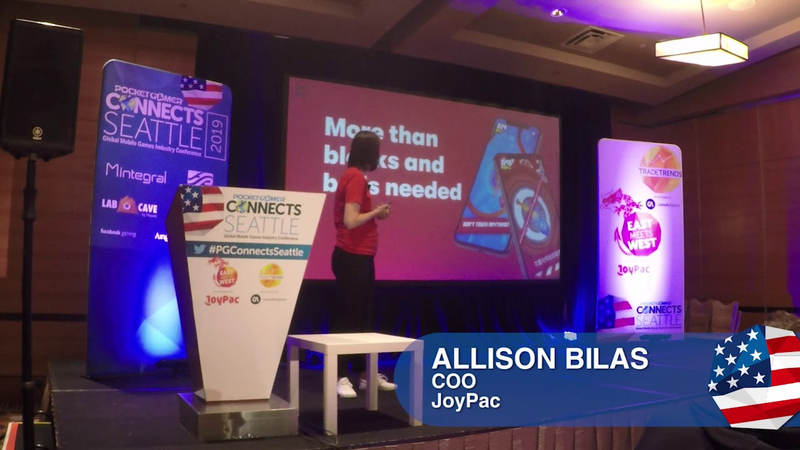
JoyPac's lessons from launching 10-plus hyper-casual games in China
The hyper-casual gaming sector is experiencing a significant expansion into the Chinese market, driven by a maturing advertising ecosystem and a massive, mobile-first user base.
- China represents a massive market opportunity with 800 million mobile users, including 242 million iOS devices, which matches the total device count in the United States.
- Hyper-casual gaming is a growing trend in China, though it is evolving more slowly than in the West, with four of the top ten downloaded games being hyper-casual compared to ten out of ten in Western markets.
- Chinese players exhibit longer average session lengths for hyper-casual games—three to five minutes—compared to the one to three minutes typical in Western markets, necessitating adjustments to gameplay design and ad monetization.
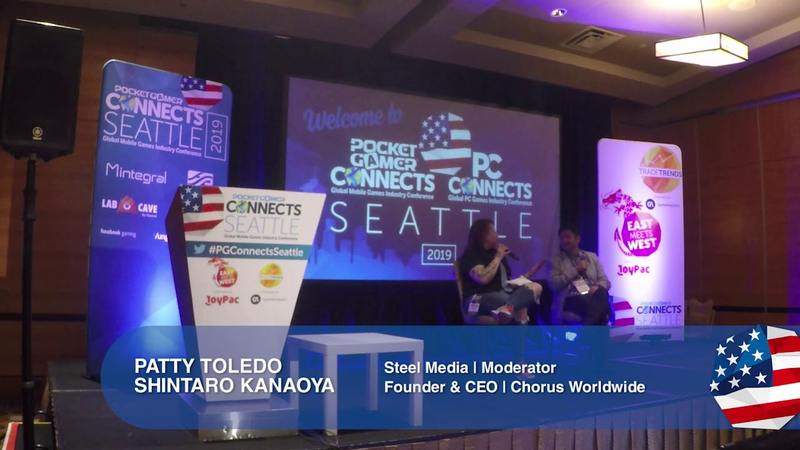
Analysing the Japanese games market
The Japanese games market represents a significant, high-revenue territory that remains distinct from other Asian markets like China and South Korea.
- The Japanese market is highly insular, with top-grossing charts consistently dominated by local publishers who possess the specific cultural expertise required to satisfy domestic consumer preferences.
- Successful market entry requires deep localization that goes beyond translation to include Japanese-specific UX expectations, such as providing 'kind' and highly guided onboarding processes.
- Western developers should avoid creating broad, diluted products for multiple Asian markets and instead focus on audience-specific design tailored exclusively to the Japanese consumer.
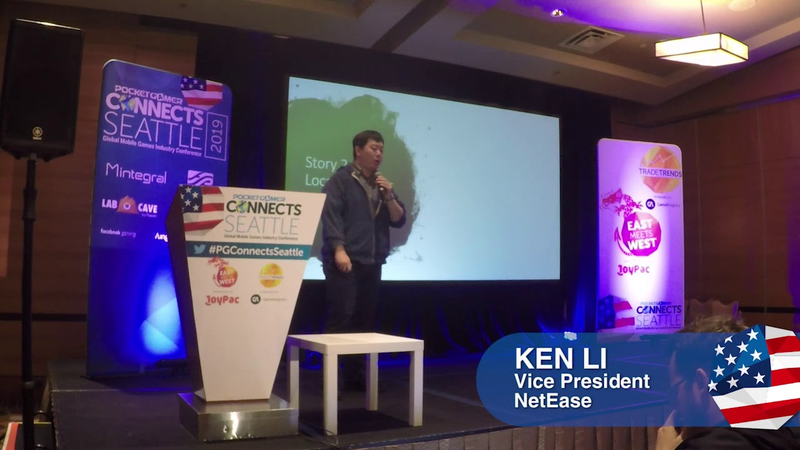
The games industry scenario in China and the value a local publisher can provide
The Chinese gaming market presents a complex landscape characterized by significant scale and high competition, requiring a nuanced approach for foreign developers.
- The Chinese market is the world's largest for mobile gaming revenue, serving over 600 million consumers, yet it is highly saturated with thousands of new titles launching annually.
- Local developers dominate the market, consistently producing seven to eight of the top ten highest-grossing mobile games in the country.
- Relying on unofficial distribution channels like the iOS App Store or Steam carries significant regulatory risk, as evidenced by government-mandated mass removals of apps.
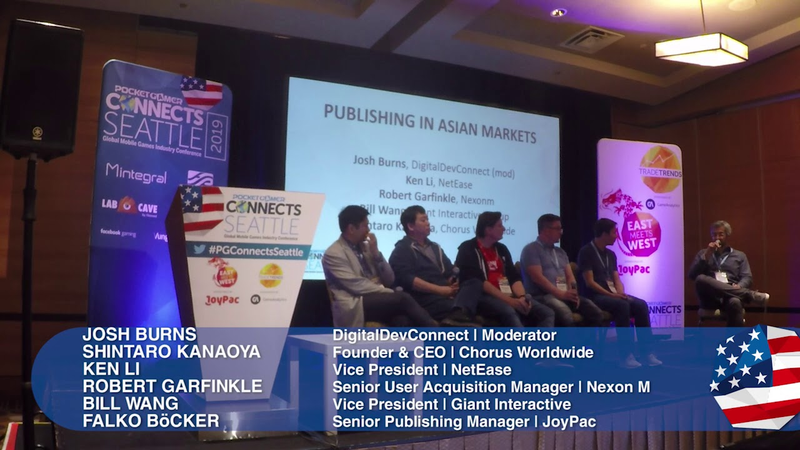
Publishing in Asian Markets
The Asian gaming landscape represents a high-stakes environment defined by intense competition, rigorous regulatory frameworks, and a shift toward premium, high-fidelity experiences.
- The Chinese gaming market is undergoing significant regulatory restructuring, resulting in a reduced number of official game approvals and increased scrutiny from an ethics committee focused on social value, violence, and blood content.
- Successful entry into the Chinese market requires high-quality production, and for mobile developers, leveraging established IP is a critical strategy to secure free traffic.
- Bringing Asian titles to Western markets requires extensive due diligence, with a localization and user experience vetting process that can take six months to a year to complete.

Fantasy games pitching
This session from Pocket Gamer Connects Seattle 2019 explores the creative challenges of game design and the unpredictability of market concepts through an interactive pitching exercise.
- Visual cues are often misinterpreted by observers, highlighting a significant disconnect between a game's initial aesthetic impression and its actual core gameplay mechanics.
- The 2019 Pocket Gamer Connects Seattle session demonstrated that developers frequently project complex, sophisticated systems—such as emotional comfort meters or social simulations—onto obscure titles that may actually feature surreal or simplistic designs.
- Pitching exercises serve as a vital tool for testing creative agility, forcing designers to synthesize disparate visual elements into cohesive narratives under time pressure.
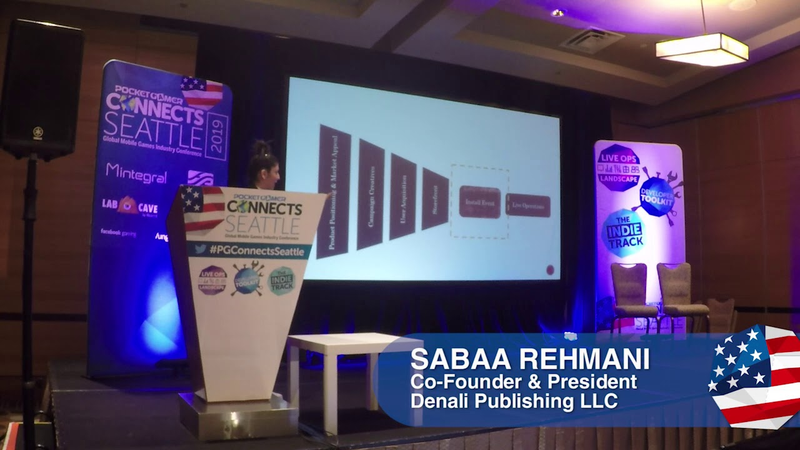
Publishing 101: A crash course in navigating today’s mobile marketplace
The mobile game publishing landscape is characterized by extreme saturation and high competition, requiring developers to adopt a systematic, data-driven approach to achieve scalability.
- Achieving scalability requires maintaining a positive delta where the lifetime value (LTV) of a user consistently exceeds the cost to acquire (CAC) that user.
- Developers must prioritize product stability and retention metrics before scaling acquisition, as poor user experience renders marketing spend ineffective by creating a 'leaky bucket' scenario.
- Success in a saturated market depends on a data-driven, iterative cycle that uses attribution partners and analytics SDKs to distinguish between organic and paid traffic performance.
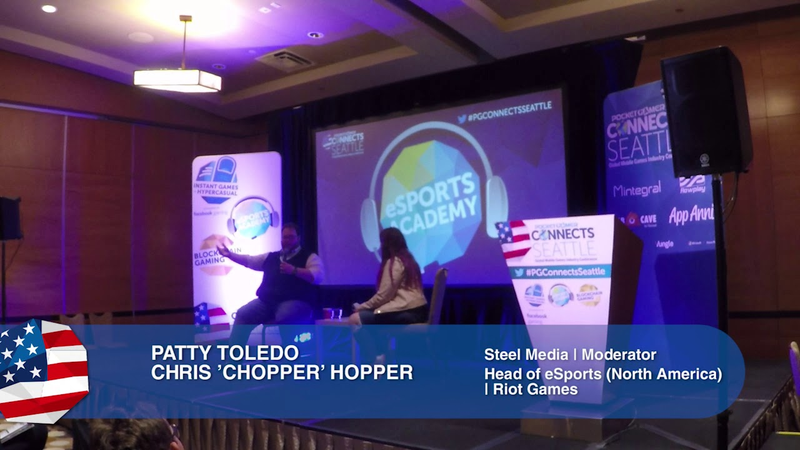
Creating a multi-generational esport in North America
Riot Games’ approach to building a sustainable esports ecosystem in North America centers on professionalizing the industry by emulating the structures of traditional sports.
- Riot Games is institutionalizing the League Championship Series (LCS) by emulating traditional sports structures, including franchising, revenue-sharing, and the creation of a Players Association.
- To ensure long-term viability, Riot is building a competitive pyramid that integrates League of Legends into collegiate and high school athletic systems to foster multi-generational engagement.
- Despite 85% of esports viewership being concentrated in the 18–34 demographic, Riot must actively educate advertisers to overcome the industry-wide hesitation to shift budgets from linear television to digital platforms.

Why Google Stadia Will DOMINATE Consoles (Game Dev's Prediction)
The gaming industry is entering a transformative decade defined by the emergence of cloud-based platforms like Google Stadia, which challenge the traditional console-centric business model.
- Cloud-based gaming platforms are expected to eventually render traditional console hardware obsolete for the majority of consumers as smart-TV integration and digital distribution become the industry standard.
- Console manufacturers will increasingly rely on aggressive exclusivity deals to lock content within their specific ecosystems as a defensive measure against the accessibility of cloud streaming.
- Sony and Microsoft are projected to pivot toward specialized, device-specific hardware, such as unique controllers or motion-capture peripherals, to differentiate their platforms from standardized cloud experiences.

AskGM #1: We Kick Off Ask GameMakers!
The Ask GameMakers initiative establishes a public consulting platform designed to assist independent developers and studios in navigating market challenges and improving game performance.
- The Ask GameMakers initiative provides a public consulting platform to help independent studios improve game performance and commercial viability.
- The project was launched in response to significant industry demand, triggered by over 30 unsolicited requests for consulting services following an outreach campaign.
- Consultations are conducted in a transparent, educational format to create a public repository of shared knowledge for the broader development community.

Hyper-casual in China: Games, players and lessons learned
The hyper-casual gaming market in China represents a significant, albeit distinct, opportunity for international developers.
- China represents a massive market opportunity with 242 million iOS devices, a figure comparable to the entire U.S. smartphone market across both iOS and Android platforms.
- While Day 1 retention should serve as a baseline metric of at least 40% to validate core gameplay, increasing Day 7 retention by just 1% yields 10 times the impact on long-term lifetime value.
- The Chinese hyper-casual market is distinct from the West, as it evolved from a core-gaming-first culture; consequently, games require more than simple mechanics to succeed and must incorporate socially-minded, competitive, or culturally relatable elements.
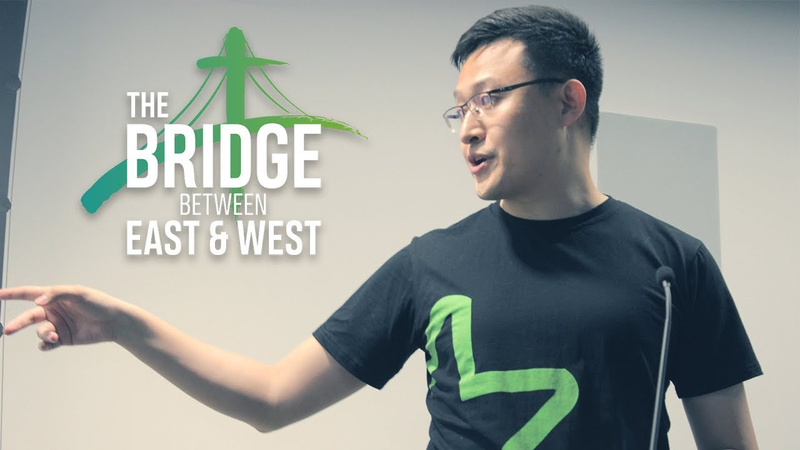
Tips on making your hyper-casual game a success in China
The hyper-casual gaming market in China represents a significant growth opportunity for international developers, driven by a massive mobile user base and evolving consumer habits.
- China is the world's largest mobile game market, with projections estimating 120 billion downloads and $62.4 billion in consumer spending by 2022.
- The Chinese market is shifting from hardcore games to hyper-casual titles, driven by users with fragmented leisure time and a growing female gaming demographic.
- Publishing on Android in China is highly complex and generally discouraged for foreign developers due to licensing requirements (ISBN) and a lengthy approval process that can take one to two years.