1 free read left. Create a free account for unlimited reading + AI research.
Create free account
JoyPac's lessons from launching 10-plus hyper-casual games in China
Key insights
7 takeaways- 01Hyper-casual gaming is a growing trend in China, though it is evolving more slowly than in the West, with four of the top ten downloaded games being hyper-casual compared to ten out of ten in Western markets.
- 02Entering the Chinese market requires navigating complex government regulations regarding game licensing and establishing partnerships with local entities to manage live operations and navigate the distinct advertising ecosystem.
- 03China represents a massive market opportunity with 800 million mobile users, including 242 million iOS devices, which matches the total device count in the United States.
- 04Viral growth in China can be influenced by integrating social sharing hooks specifically for local platforms like TikTok and WeChat, which can drive high organic-to-paid install ratios.
- 05Chinese players exhibit longer average session lengths for hyper-casual games—three to five minutes—compared to the one to three minutes typical in Western markets, necessitating adjustments to gameplay design and ad monetization.
- 06Successful localization for the Chinese market requires more than simple translation; it involves culturalizing content, characters, and colors to resonate with local preferences, such as incorporating self-deprecating humor or relatable storylines.
- 07Chinese players have a higher tolerance for advertising, allowing developers to utilize a broader mix of formats including banners, interstitials, playables, and rewarded videos without significantly harming retention.
Ask AI about this video
Transcript
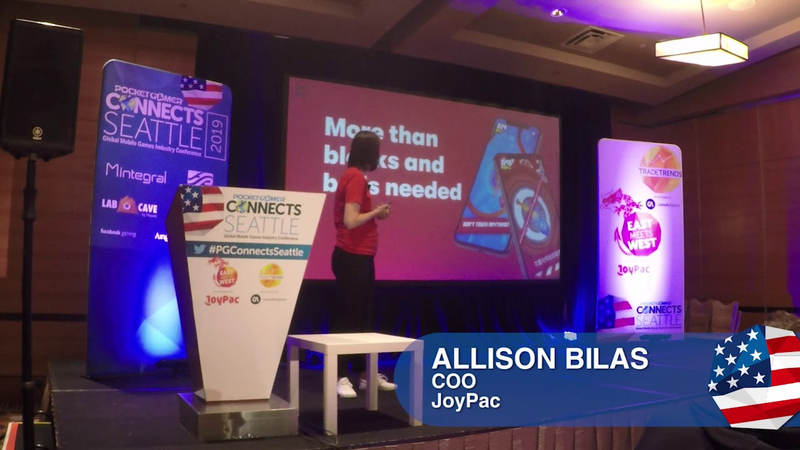
right yeah welcome you guys to the east meets west trek I'm Allison I'm from joy Peck and I'm super happy to be in Seattle I lived here for over a decade of my life and so super fun to be back I actually started my gaming career here at PopCap Games eight years ago this was as they were transitioning really from Facebook to mobile I helped them build their first analytics team and then I moved on from there to game analytics and to moviestarplanet and now I'm at joy Peck where I oversee operations today I'm gonna talk about hyper casual games and hyper casual games I know have been talked about a lot maybe over talked about over the last couple of years but I'm going to narrow in specifically on the trend in China and then talk about what we've learned launching hyper casual games in China over the last year yeah hyper casual
it's a new word in the gaming industry's vernacular it's come about in the last couple of years and it means these games that are very easy to pick up they have short play sessions the quick core gameplay loop and they have very broad appeal I want to emphasize that these games have always been around maybe starting from flappy bird and 2013 to cross the road in 2014 these are two of my favorite games actually hyper casual is more about the simple gameplay it really is a term that's come to denote a new business model and a new way of doing business for studios so hyper casual is a playground for developers that really thrive with this rapid pace of development voodoo and ketchup are really the kings of hyper casual right now and you can see that they're launching 50 games a year in the App Store so it is all about this pace it's about scale and again
it's a way of doing business so hyper castles come about not just because these publishers started publishing hyper casual games but because there is a demand in the market for these types of games the players really are there as well first and foremost this is because it complements other gameplay you can see here with that 78% of hyper casual players also play other games that are in app purchase driven that have maybe more in-depth gameplay so it's really supplementing gameplay for people with these hyper casual games now this leaves 22% of players that are only playing hyper casual games and they do so for a really specific reason and that's because they have limited amounts of time hyper casual games engage these players who don't have time to play other games and it's really expanding the pie of players as a whole this EDA report says 75% of players play while they're doing something else they're waiting or they're doing some other
multitasking so the short sessions that you see with hyper casual games are really appealing and there's a lot of market demand for them so yeah hyper casual is a trend that's really moving from west to east so I want to transition and talk about that in particular now the way that hyper casual has come about in the West has been slightly different in the App Store first we had these casual games that were driven out of Facebook gaming they were driven with these social mechanics and smart and app purchased triggers from there we went into more in-depth gameplay these mid core games really mastered virtual economies and then we had core gameplay that really was further catering to these in-app purchase whales and that's when hyper casual came it was a bit of a backlash or nostalgic revival this is a term that was quoted there's a great series of
articles in Pocket Gamer talking about the rise of hyper casual by someone from Apple Evan and I definitely recommend reading that to get the whole history but I love this term of a revival or some kind of backlash because it really is back to the basics of gameplay and taking advantage of a new business model so in China it's a little bit different the story is there it's the same different types of games is the same kind of range of games I would say but Chinese players have come about to hyper casual really starting from core so core honors have the top charts in China forever and this is a result of predominantly PC play that's been so dominant in that region consoles were banned in China and so all players of all types flocked to playing games on the PC where free-to-play monetization metrics sorry my decision mechanics really flourished so they are coming about hyper casual from core down the line and this has made hyper casual
come about a little bit more slowly in China but that said it's definitely happening there these are four of the games that were in the top ten downloads last week which are definitely hyper casual titles by comparison in the West 10 out of 10 of the top 10 downloaded games right now are hyper casual games that's not the case in China it's only four of the top ten so this is just showing that it's been a little bit slower to evolve in China but it's definitely happening and the trend is definitely there another reason why hyper casual has been a bit delayed in China is because of the advertising ecosystem hyper casual really relies on showing advertising to as many ads as possible to get your LTV up but then buying users with the low CPI so this ecosystem needed to be in place in China before the trend could really catch on there so at this point we do see eCPM
and CPI levels that really mayor the West in particular on iOS so it is a very viable business model there I do want to say that the advertising ecosystem in China is different than what's in the West so there are different players there's different networks that you need to be looking at and working with so while it's the same activities around you a campaigns and ad monetization optimization it's a different methodology you can't just transfer what you're doing from the West and apply it in in the East so it's slightly different over there so another key challenge to operating in China is of course the government regulation I think you know this but last year the Chinese government locked down licenses for nine months of the year they opened back up again in December but then they closed back down again because they had too much of a backlog to get through so we see a slow trickle of games getting licenses now at this point but there
definitely is a big queue and it takes a long time to get through that queue this is not necessarily a problem for Hyper casual though I should say hyper casual games again are driven by advertising and on iOS in particular regulation are largely around in-app purchases so hyper casual is a little bit of a way around that there's less scrutiny in terms of this business model that said the regulations are still very much being defined and it's something we watch very closely take a breath take a drink here so yeah the next challenge I want to talk about in China are the app stores so the Android app store market in China is dominated by large tech companies internet service providers and cell phone manufacturers and it's really fragmented across many stores so like you can see here you need to be on at least 15 of these stores to get this market coverage but really you need to be on a large number of them so that
your IP is protected in the region so that's a major challenge getting into China so I don't want to scare you too much about talking about the challenges of China because really the the market opportunity in China is huge there are 800 million mobile phone users across Android and iOS devices and if you're looking at just the iOS devices it matches the total number of devices that you see in the US so there's 242 million iOS devices alone so it really is a huge chunk of the market and lots of opportunity there the other thing about China is that it's a mobile first culture mobile phones are much more integrated into people's lives in China this is because the rise of mobile phones really was aligned with the rise of their economy so they do everything on their phone they spend a lot of time on their phone this leaves a lot of time for gaming app Annie was speaking earlier today and they said that in the West players play half an
hour to an hour of gameplay on their phones whereas in China it's more than an hour per day on their phones so it's it's a pretty significant chunk of time that players are dedicating on their devices yeah joy pact was founded a year ago we celebrated our birthday last Thursday with cake and champagne and all of that we came about because we saw these problems in the market and we saw the opportunity there and we really wanted to help Western developers get into China our solution is a blend of west and east we when you're working with joy pack you're working with our team in Copenhagen this includes everything you would expect from that with our open communication and that's where your legal contracts are as well now we also have a very Eastern get a done style of teamwork we have over 20 people operating out of Beijing and they handle our live ops and our launching and they give us access to those relationships that are needed in China to do business
so that's my sales pitch now I want to talk about the attraction we've had the games that we've launched and in particular what we've learned from doing this we've in this year time period we've launched 20 games total more than 10 of them have been this year I love this because I'm a data person like I said so we have a lot of data and insights between the games we've tested and these games we've launched so what have we learned let's take a look now the first thing to be thinking about in China is about the character development in games well hyper casual are really focused on blocks and balls and so many of these different titles in China that doesn't work as well in particular for the marketability of the game an example of this is fluffy fall this is a game that we worked with what games out of Paris to publish in China we changed three of their characters of those fluffy characters to reflect the Chinese New
Year that was happening at the time of launch this really helped with click-through rate all of our advertising you weigh metrics were improved because of this and also our retention and engagement in the game also improved maybe because of the predominance of more in-depth gameplay storylines all of that that the Chinese players are coming from there really needs to be something that they relate to in your game to help with those two things in particular another thing we see work really well in China is just this self-deprecating humor really awkward scenarios this is something that has been really fun to play around with this is a game called skip school and like the name suggests it's all about the nostalgia around a kind of fantasy around skipping school this was something that players really wanted to share and talk about so we saw some very very high organic rates with this game I
think over the lifetime of the game at this point it's average 7 organic installs for every paid install we've put into it so again the some of the viral 'ti you can influence and others you can maybe you can't understand the humor in particular of what will hit over there but there are things that you can do to influence virality and in particular you can support it by putting in the social sharing hooks for China that means hooking into tik-tok and WeChat in particular and then really providing your users with things that they can use to create content for those channels as well an day seminar attention I just want to talk about day 7 or attention as the most important number maybe and hyper casual gaming in particular in the industry we talk about d1r attention being so important and I do think it is but I also think that it's a little inflated how much we talk
about just this one number day 1 retention will tell you how good your gameplay is so is your core loop working or not you need to get your day runner attention above 40% to have a good enough game but a day 7 retention in particular is going to tell you if your game will make money the lifts you see in lifetime value when you increase day seven retention by one percentage point so from like ten percent to an eleven percent for example the lifetime value is ten times more than if you increase day 1 retention by one percentage point so again focusing in on that day 7 number is super important especially for hyper casual games where your margins are very very thin this is extremely important go for forty percent of course with your day one but beyond that focus all of your efforts on d7 something that's very particular to China of course these short bursts of gameplay are what hyper
casual is all about like I mentioned before but while still very short Chinese players have relatively longer session lengths than you see in the West so we're talking like three to five minutes for hyper casual games as opposed to 1 to 3 minutes this is something just to be aware of that it has design app implications around their gameplay and engagement mechanics and also around your ad monetization placements so be aware of the longer session but also within that longer session keeping it fun and snackable at the same time so maybe a string kind of series of gameplay together for example to cater to these longer session links could be impactful for your LTV I talked about this a little bit as well with fluffy film with localization for these hyper casual games you really need minimal vocalization and culturalization but that's it it's very important this
means doing it right so you need to translate your text of course to simplified Chinese and don't use Google Translate to do that it also means potentially modifying some of the content and characters and colors my last point about what we've learned is around showing advertising to Chinese players they really have a high high threshold for interacting with advertising and of course there are very elegant ways to put adds into your game rewarded videos in particular are much more appealing to all players globally those types of ads have less of an impact of your retention but for Chinese players they're very willing to have ads blast at them so put in every type of advertising you have available to you I'm talking banners interstitials and of course all of the different playable Xand rewarded video so yeah that's everything I wanted to say about hyper casual the trend in
China for the most part it's the same thing of what we've seen happen in the West moving to the east maybe a little bit more slowly and of course nuance to this audience as well again it's a very huge opportunity and I hope this inspired you to consider China as a whole China for your hyper casual games as well and maybe giving you some concrete steps to take to have success there and of course I would love to talk to you about that and how joypad can help I can talk with you afterward and I'm also happy I think have maybe one minute to take some questions yeah cool yes do you see hyper casuals in China also adopting IEP and casual or core mechanics as hyper casuals evolve yeah yeah definitely that is a trend with
brain we were seeing that it's a backlash but also I think as hyper casual has matured we've had to start putting in more engagement mechanics and and all of that so that is coming I think because there's some of the games are the same hyper casual games that are working well in the West just go east kind of as is so they're bringing those mechanics with them as well so yeah definitely I don't know if pervasive but they're they're working their way down from core down right so those mechanics do work very well over there and and are needed and so they might not hit as hyper casual as we've gotten in the West where games are super super basic right like very strimm you know trim down I don't know if they actually will ever get there because like we've seen with the characters around you a you do need a little more depth to the games to have success we
have time for more questions if you have yeah I'm very happy to talk with you guys afterward as well just catch me I will be around so appreciate your time today and I hope you enjoy the rest of the track there's a great lineup so thank you very much
Summary
The hyper-casual gaming sector is experiencing a significant expansion into the Chinese market, driven by a maturing advertising ecosystem and a massive, mobile-first user base. While the genre originated in the West as a minimalist, snack-sized alternative to complex core games, its adoption in China follows a distinct trajectory. Because Chinese players have historically been conditioned by PC-based core and strategy titles, the transition to hyper-casual gaming has been more gradual. Currently, hyper-casual titles represent a smaller share of top-download charts in China compared to the West, yet the market remains a high-growth opportunity with over 800 million mobile users and daily average play times exceeding one hour.
Success in this region requires a departure from a "copy-paste" approach to Western strategies. Key operational challenges include navigating a fragmented Android app store landscape—which necessitates presence across at least 15 platforms—and adhering to evolving government regulations regarding game licensing. Furthermore, while the core business model relies on advertising-driven revenue, the advertising ecosystem in China utilizes different networks and methodologies than those found in the West.
Data-driven insights from recent launches indicate that culturalization is essential for engagement. Simple, abstract designs often underperform; developers see improved click-through rates and retention by incorporating relatable characters, localized themes, and self-deprecating humor. Additionally, while day-one retention remains a vital metric for testing core gameplay loops, day-seven retention is identified as the primary driver of lifetime value. Because Chinese players exhibit longer session lengths—typically three to five minutes—developers should design for slightly more depth and utilize a diverse range of ad formats, including rewarded videos and interstitials, to maximize monetization within this unique, high-engagement environment.

















Comments