1 free read left. Create a free account for unlimited reading + AI research.
Create free account
Publishing 101: A crash course in navigating today’s mobile marketplace
Key insights
6 takeaways- 01Operational efficiency across the entire funnel—from initial acquisition to long-term live operations—is the primary mechanism for indie and mid-level studios to compete without massive marketing budgets.
- 02Achieving scalability requires maintaining a positive delta where the lifetime value (LTV) of a user consistently exceeds the cost to acquire (CAC) that user.
- 03Targeted user acquisition strategies that prioritize high-engagement users improve organic visibility and search rankings on app store leaderboards.
- 04Storefront optimization should focus on A/B testing video slots and featured graphics rather than relying solely on app icons to drive conversion.
- 05Developers must prioritize product stability and retention metrics before scaling acquisition, as poor user experience renders marketing spend ineffective by creating a 'leaky bucket' scenario.
- 06Success in a saturated market depends on a data-driven, iterative cycle that uses attribution partners and analytics SDKs to distinguish between organic and paid traffic performance.
Ask AI about this video
Transcript
hi I want to start by saying thank you for being here I know it's getting really late in the day and I'm up against like conference fatigue and flights home and all that so thank you for making it out the subject today that I'll be covering is publishing I want to do a couple quick disclaimers before I start disclaimer number one is this is a giant giant topic and I have 15 minutes so I'm gonna keep it super high level and like speed talk at you and hopefully have time for Q&A after but if not come find me I'd be happy to follow up disclaimer number two is really that publishing is a really really nuanced discipline so all of the advice I'm gonna give you is not one-size-fits-all depending on the size of your organization the nature of your content a lot of this is gonna be useful or not as useful advice so take it with a grain of salt and hopefully there's at least some tool recommendations or anything in there that'll make sense disclaimer number three which I will
apologize in advance for is that I'm kind of textbook millennial so I'm gonna gratuitously overuse memes to prove my point you should probably get used to it sooner rather than later that having been said I'm gonna dive in are we advancing that green button not the bottom green button sorry it's a little bit about me I've been games a really long time I've been lucky enough on the dev side to work with some really big brands and properties and then on the publishing side to be able to help grow out and scale some really major portfolios I've worked on multiple top sort of grossing and downloaded game content in both the mid core and hard core space and I'm currently the president of Denali publishing which is a 15-person sort of publishing studio out of the Bay Area with a development firm in Hungary we're pretty small not a lot of people know our content yet but we have with no branded IP and really minimal marketing spend been able to build our user base to 40 million installs so we know a thing or two about publishing and how to navigate kind of
the modern marketplace so let's talk a little bit about the App Store in general and we all you know we're aware of how saturated it is and how much content comes in every day but just to kind of quantify that a little bit in terms of how many apps are actually downloaded across ios and android every year year-over-year growth has been tremendous we're talking in the billions and by 2021 I think it's projected like 300 billion some plus downloaded apps right so that's a lot of apps when you talk about the space being crowded that's really kind of an understatement it's more like this is the landscape and you are maybe there and everyone around you is thinking the exact same thing to try to get everyone else's attention so if you can't compete and you're gonna be a little scrappy and you don't have millions of dollars to spend on you a competing with everyone else and you have to think about it like a system and you have to break it down systems have inputs their outputs you can manipulate so when you're looking at publishing the inputs that matter the most or your fixed costs yep marketing dollars traditional you a spend influencer marketing whatever you're doing whatever you're doing to spend money to get users
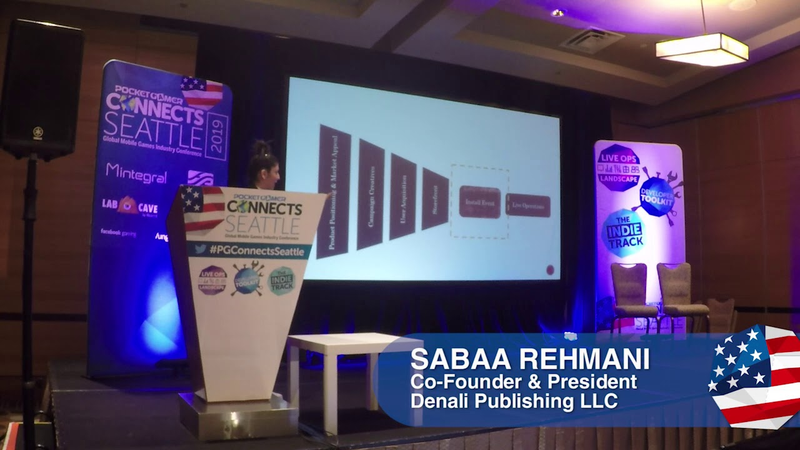
into your game this is your CAC if you're looking at it from a traditional just ad buy perspective you might be looking at CPI cost per install and said I like looking at cost to acquire customer cuz I think it's a little bit more inclusive on the flip side you have the money that's coming in the money you're generating right through I ApS or ad revenue or whatever else the relationship between the money you're making and the time it takes users to churn out of your game is effectively your LTV your lifetime value from here it's not rocket science the bottom line is really that you always want your LTV to be greater than your CAC my CAC is not showing up for some reason on this busted font on my slide I apologize the Delta between the two is really your profit and profit gives us the capital that allows us to grow and scale and build our portfolios and do all the things we want so I like to look at it from a publishing perspective then as a funnel right up at the top end of the funnel where you have kind of maximum eyeballs and interests is all about product positioning and market appeal in the middle of the funnel you have kind of all the UA magic and in the case
where it's paid you probably have campaign creatives and strategy that kind of comes along with that the UA portion can be either organic or paid and then there's a storefront first-party assets on Apple and Google that presumably lead to some kind of a conversion event that's like install in this case and then live operations that's the ongoing relationship you have with your customers as a publisher every step of this funnel has unique opportunities for you to be optimizing your return on that lifetime value so let's go to the beginning to take a look at it on the product positioning side you really need to do your research before you enter any space I want to enter a new product space really like to use this kind of a visualization cuz it really looks me lets me look at and track other apps that have been successful in the space how long they've been active in the space what their engagement metrics look like what their monetization metrics look like how they vary between gos if you haven't done that research you don't know your place within the universe and if you don't know your place within the universe you don't know how to just effectively message your users right away the
difference between successful ad campaigns and unsuccessful ad campaigns and burn dollars is often just knowing how to cut right to the chase with the user that you're interested in tracking with the right value proposition so test your assumptions do your research use the tools available to you I like to use a penny personally I have a bias for it having used it for years I know there are sponsor here you can go talk to people from there if you want to sensor tower is another tool that's available to you on the UA side of things targeting knowingly is something that you're going to hear over and over and over but it's incredibly true the user you're gonna target for a casual match three's kind of puzzle game is so different than the user you're gonna target for a mid course sort of RPG card battler and it seems like yeah that's common sense I totally understand that but there are really subtle nuances within that that maybe you're not thinking about like for example if you have limited capital which I think most of us probably do when we're publishing we're not trying to spend our way to the top of the leaderboard that would make no sense we can't compete what we're trying to do is target the users we know
are gonna be quality because those users are gonna come in they're gonna stick with your game they're gonna maybe spend money but more importantly they're gonna engage with the product they're gonna write positive reviews and those are the things that actually get picked up by Apple and Google's algorithms and make you visible on the leaderboard the more visible you are on the leaderboard the more organic installs you get the more velocity you have and the less you spent overall to really effectively kind of double triple quadruple whatever your install base so target really really knowingly pay attention to the micro trends you're seeing on a game we published last year I ran about 200 different campaign variance I know that sounds a little crazy but the content itself always stayed the same and the messaging is what changed so I paid a lot of attention to just rapidly iterating on the messaging we were putting out to different markets to create all these different variations to fig what was really gonna get my CPI down like below two dollars and then adapt and iterate frequently on this side I know people run ads of arrive different different places I still tend to favor
Facebook I think their tools are great for allowing me to target users and kind of drilling into what I eat to on the paid you a side of things it's okay then you want to optimize your storefront and I know everyone's always gonna say to you ASO a SOAs oh that's App Store optimization for anyone that doesn't know that but to break down sort of the importance of that and following the data I like this graph this came from store maven store maven is a partner that I have the luxury of working with because they are a paid tool if you don't have the ability to you know work with a paid sort of sample size you might consider using something free like Google experiments that lets you test the stuff out with users in real time and real Geo's but the thing I like to point out about this is we spend a lot of time talking about app icons and app icon conversion and that's super super true for the organic use case we're sort of browsing the store as part of the flow but in the paid acquisition sort of use case we're not browsing the store the app icon is kind of a less important piece of page conversion than some of those other elements like particularly the featured graphic on Android and that first video slot for iOS so I'd really
encourage you to think about both of those use cases when you're looking at sort of your assets here and another pro tip here is thinking about Geo's I've had a lot of success over the last year not just read curating the first party like storefront page but also thinking about it in the context of what messaging makes sense in a packer versus elia or you know what two North American players value or care about most the tools I'd recommend here are store maven again for a/b testing and user testing which allows you to get just a larger sort of anonymous sample size for things like focus groups that you can't run in person so back to the funnel for a minute because we made it through the whole black part we're at the install event now like fantastic our jobs done right we got users into the game absolutely not I think we all know this as developers or publishers now is when you really have to understand your game KPIs and I'm gonna apologize here again I totally use the like most overused analogy in games in general and that's the leaky bucket if you're unfamiliar with this problem the leaky bucket is
kind of exactly what it sounds like right if you have a bucket that you know is obviously leaking the last thing you want to do is go dump more and more water into it so if you have a fundamental product problem you're gonna blow all of your organic momentum by you know pushing users into a game that they're just gonna turn up and if you've been spending money for them that's the money even you know we're spent so focus on what really really really matters there's a ton of data and product managers are always gonna want you to look at all kinds of different things what I think really matters are these three kind of key bullets looking at that first time user experience in particular and I think of that as a product of the first few sessions I really like to understand what users are doing in all of these different cases in the fatu II insofar as they impact whether they're gonna come back to the game and whether they're gonna spend beyond that the other layer that really matters is attribution people who are kind of new to the publishing world don't value this step enough and you really need to especially if you're spending anything even if you're only gonna spend a minimal minimal amount spend it with an attribution partner just so you can understand the differences between organic traffic and
PEYA traffic because again you you as a publisher really have the ability to pull in the data points you want to affect or normalize the rest of the curve that you know you're gonna get organically leverage in your data is one of the next and ongoing processes that you're gonna deal with as a publisher forever data is truly the lifeblood of your business if you're not leveraging data on a daily basis you're going to lose all of your users I'm gonna show you a couple different examples here and I just want to point out real fast that you know if you don't have experience building out bi pipelines or you know data pipelines yourself there are a number of third-party tools and SDKs you can implement some of them are gonna give you just really basic sort of analytics information some of them are a lot more full-featured it'll be a whole platform that allows you to send out push notifications CRM whatever but so example number one this one kind of demonstrates if you have a crash in a tutorial that was introduced that affects a particular device type maybe this is something you didn't see in soft launch didn't see and test this could
really impact a campaign you're running in a particular geo all of that is money you know really poorly spent if you didn't actually catch and address the bug right away so this is a really good example of where data can help you solve your problem ahead of time it's an example is a storefront sort of UI component that's introducing unnecessary friction in the purchase flow and it seems like okay well this percent conversion can only be impacted in a minor degree that's not really much of an effect right but that's entirely untrue if for example the IEP you're selling is a targeted bundle that's part of a weekend event and you expect there to be the spender frenzy around you know having these particular items that difference in just a you know ten points or whatever percent conversion can be a delta of a million dollars or more so that really really matters as another example of where data is going to help you solve your problems the third one is a UA visualization if you deal on the ad buy side of the business you're probably used to seeing a little bit of robust we say a return on adspend on the Left it's negative on the right it's positive
sometimes really simple things can happen to trip up which should have been a very successful ad campaign and you realize your targeting was off your messaging was off maybe it didn't make sense than the particular geo or the language so pay attention to those things and adapt and iterate on them really really quickly again data is gonna help you solve that problem the last thing I kind of want to impart upon you is that you know your job as a publisher has really never never done the space is super competitive the joke is that you know your keywords are probably out of date the moment you publish them on the storefront because everyone's changing them constantly so you really have to stay current adapting iterate you're really never done no one wants to end up like this guy and finally I put together a bunch of resources for you the app an EAS o guide is one of the ones I like the best so I'm you know again I'm just gonna shamelessly plug them and send you to their Resource Center cuz it's actually really good and here are some quick links for just some of the software and tools I talked about that range from attribution providers to analytics SDKs
and whatnot some of these are free and some of them are paid as a full disclosure so again not all of these are gonna meet the needs of your organization it kind of depends how much capital you have to work with and all that but all things being equal from a business perspective I feel like you can't really afford to not have some of these tools in play if you can actually afford to have them in play that's all thank you for coming [Music] [Applause] thank you very much we want to give people a chance to get questions okay yeah so any questions on the publishing side of things go on the story's on is it going to be me so I mean one things I think it's obviously increasingly challenging during publishing at all yeah particularly on mobile and is there are some people who would argue that we now are less able than ever before to do publishing even arguably back to his greeter day it's not not sure that's
true Bob do you still think it is a good position for an India to be able to try and do it themselves I do I think you just have to be sophisticated in your approach spending your way to the top is the obvious and easy answer right but most of us actually can't do that I think if you really just spend time doing the work and kind of deconstructing how a lot of these tools and algorithms work you'll find some tips and tricks some ways to really bootstrap your way on up there I mean again you're not ever gonna compete with that spend that takes you all the way top to the leaderboard right but that's not your goal your goal is to understand how these systems work and find a way to carve it out it really just goes back to like if you can get to a place where your LTV is greater than your CAC on an order of magnitude that matters you're in business as a publisher I think that's really kind of important but knowing what success looks like to you and a lot of people are gonna make these kind of negative kind of connotations for zindies or often not trying to compare you with some of the big huge successes and I think there's a lot of games out there an increasingly kind of
the middle range of the top hundred top thousands yeah are actually making profits now directly they weren't we're in an interesting time that's true in every genre of game to mid core hyper casuals I seem to make money is it the same on all the platforms as well as mobile do you think I don't have a lot of experience with it personally I'm pretty concentrated in mobile these days make sense so last chance for question if not then I gotta say thank you very much thank you great stuff
Summary
The mobile game publishing landscape is characterized by extreme saturation and high competition, requiring developers to adopt a systematic, data-driven approach to achieve scalability. The primary objective for any publisher is to maintain a positive delta between the lifetime value of a user and the cost to acquire that user. By focusing on operational efficiencies across the entire funnel—from initial user acquisition to long-term live operations—indie and mid-level organizations can effectively compete without relying solely on massive marketing budgets.
The publishing funnel begins with product positioning and market research, where developers must identify their specific place within the ecosystem to craft effective messaging. User acquisition strategies should be highly targeted, focusing on quality users who drive engagement and positive reviews, which in turn improve organic visibility on app store leaderboards. A/B testing is essential for optimizing storefront assets, with a specific emphasis on video slots and featured graphics rather than relying exclusively on app icons. Furthermore, developers must avoid the "leaky bucket" trap by ensuring the product experience is stable and engaging before scaling acquisition efforts, as poor retention renders marketing spend ineffective.
Data serves as the lifeblood of the publishing process, providing the insights necessary to identify technical bugs, optimize purchase flows, and refine ad campaign performance. Utilizing attribution partners and analytics SDKs allows publishers to distinguish between organic and paid traffic, enabling rapid iteration on messaging and targeting. While the market is increasingly challenging, success remains attainable for smaller studios that prioritize sophisticated, iterative testing and maintain a disciplined focus on key performance indicators. By treating publishing as a continuous, data-informed cycle of adaptation, developers can build sustainable portfolios even in a crowded marketplace.

















Comments