Game Publishing reports and market data
Documents

2021 Review | Key Trends & Lessons Learned (Product Philosophy #11)
The digital landscape is undergoing a fundamental shift in power, moving away from traditional corporate institutions toward individual personal brands.
- Personal branding has replaced traditional corporate marketing as the primary driver of competitiveness, making authentic and vulnerable communication more effective than scripted campaigns.
- Professional credibility is increasingly determined by a robust digital footprint and demonstrated creative output rather than traditional resume-based credentials.
- Sustainable success requires a ten-year strategic horizon to filter out speculative market volatility and short-term hype cycles like NFTs or the metaverse.
Indie Game Dev Is TOO RISKY
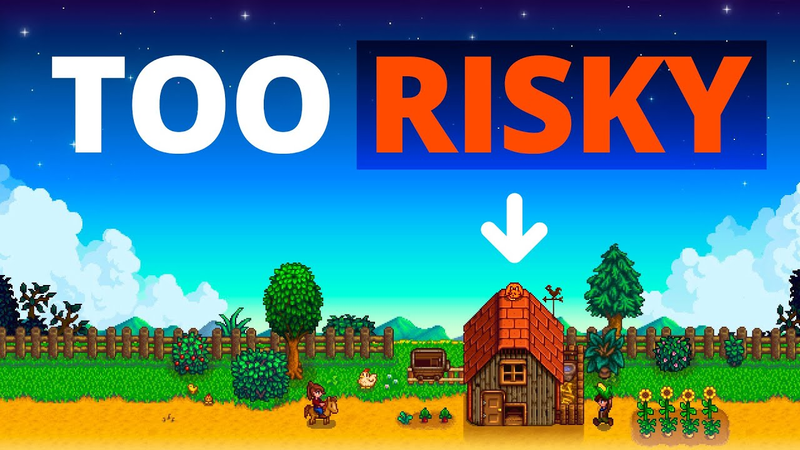
Indie game development is inherently high-risk, functioning as a form of entrepreneurship that requires a calculated approach to time and resource management.
- Indie game development should be treated as high-risk entrepreneurship where time is a finite financial asset that requires careful management.
- Developers must avoid over-investing in a single project by diversifying their professional efforts into multiple income streams, such as educational content, tool creation, or community building.
- To mitigate the risk of catastrophic failure, developers should adopt an iterative approach by releasing small, free projects to build technical proficiency and an audience before attempting large commercial launches.

My #1 TIP for NEW indie game devs
Securing a publishing deal as an indie game developer with limited industry experience requires a strategic approach to professional branding.
- New indie developers should adopt a 'fake it till you make it' mindset to overcome a lack of industry tenure and build immediate professional credibility.
- Curate a professional press kit that highlights modest milestones, such as game jam placements or positive alpha tester feedback, to signal competence to publishers.
- Use professional visual design elements, such as award laurels, to frame small achievements in a way that projects authority and professional maturity.

Superstar Session: The Key Elements for a Meaningful Hypercasual Game Review
Hypercasual game development demands a disciplined, iterative approach centered on constant self-correction and data-driven decision-making.
- Success in hypercasual development requires a disciplined, iterative framework that prioritizes data-driven decision-making over linear development paths.
- Development resources should be focused on addressing critical funnel drop-offs rather than superficial aesthetic improvements to maximize efficiency.
- Teams should utilize visual-heavy communication and early testing of multiple variations to minimize development cycles and accelerate pivots.

Panel: War Stories on the Business of Multiplayer Games
The evolution of multiplayer gaming reveals that while technical infrastructure has transitioned from proprietary hardware to cloud-based solutions, the foundational challenges of community management and player behavior remain constant.
- Prioritize human-centric design and transparent community communication over technological novelty, as these remain the primary drivers of long-term player retention and viability.
- Mitigate development risk by launching core systems at 20 percent polish to validate design assumptions before committing full resources to feature development.
- Integrate monetization models directly into the initial design phase rather than retrofitting them onto existing frameworks to ensure sustainable server liquidity and growth.
The Change in Mobile Landscape: What Does it Mean for You as a Developer?
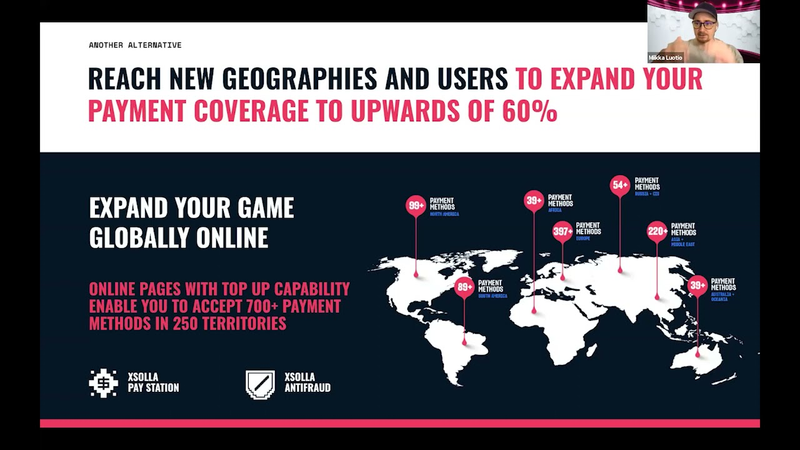
The mobile gaming industry is currently undergoing a significant shift as traditional platform-controlled payment ecosystems, often referred to as walled gardens, face increasing pressure to open.
- Developers can increase revenue by over 40% by implementing web-based storefronts that bypass traditional platform fees and offer a broader range of payment options.
- Standard mobile platform payment ecosystems often fail to capture revenue in emerging markets like Latin America, India, Russia, and South Korea due to a lack of support for local payment methods and bank installments.
- Web-based storefronts allow developers to cultivate direct relationships with high-value players by offering exclusive bundles and promotions that are not available within the standard in-game store.

WorldBox release date hack
Steam store pages allow developers to bypass standard character limitations in the release date field, providing a strategic opportunity to increase game visibility.
- Developers can bypass standard Steam release date field character limits to inject custom marketing copy into store listings.
- This technique forces custom text to appear in the Steam wishlist widget and the hover tooltip, areas that typically do not display a game's short description.
- The hack serves as a functional workaround to provide immediate context to potential players who interact with a game listing before clicking through to the store page.

Everything You Didn't Know About Playrix with Maxim Kirilenko, CBDO at Playrix
Playrix has established itself as the world’s second-largest mobile game publisher by prioritizing long-term development cycles and a data-informed approach to product refinement.
- Playrix has achieved the position of the world’s second-largest mobile game publisher by prioritizing long-term development cycles exceeding one year per title, rather than relying on rapid prototyping.
- The company mitigates player churn by designing core games as multifaceted platforms that integrate diverse mechanics and mini-games to maintain long-term engagement.
- Playrix utilizes a decentralized, remote-first operational model that allows for the rapid establishment of new hubs, enabling high productivity across a geographically dispersed workforce.
Superstar Session: What's New for Mobile Game Developers at Google Play
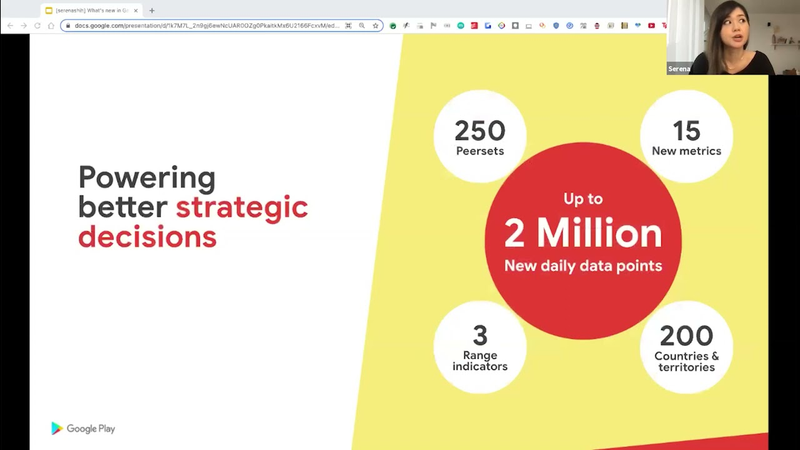
Google Play’s strategic partner manager, Serena Shih, outlines the platform's recent initiatives and tools designed to help mobile game developers scale their businesses, improve user engagement, and navigate evolving policy requirements.
- Google Play has implemented a reduced 15 percent service fee on the first $1 million of annual revenue to support sustainable developer growth.
- The platform now mandates the Android App Bundle format for all new applications, which reduces average app sizes by 15 percent.
- Google Play supports 2.5 billion monthly active users across 3 billion monthly active Android devices, with 140 billion annual installations.

Panel: The Challenges of Being Innovative & Unique in the Hypercasual Market
The hypercasual gaming market is currently undergoing a significant transformation, moving away from simple, disposable mechanics toward more sustainable, hybrid-casual models.
- Hypercasual development requires a mindset shift toward rapid failure, where studios often test dozens of prototypes over several months to identify viable projects.
- Successful hypercasual strategies often involve aligning game concepts with a team's specific internal strengths and passions rather than blindly chasing market trends.
- Developers can pivot failed hypercasual concepts with high user retention into more complex, successful products by adding meta-progression systems, as seen in the transition of the game Spire Blast to Apple Arcade.

Superstar Session: Long-lasting Publishing- How to Create Hypercasual Hits That Cross 100M Downloads
The hypercasual gaming market is undergoing a significant maturation phase, shifting from a model defined by short-lived chart dominance to one characterized by long-term engagement and sustained growth.
- The hypercasual market is shifting toward a 'hybrid-casual' model that combines low customer acquisition costs with deep retention mechanics to sustain titles beyond the traditional one-month lifecycle.
- Achieving 100 million downloads now requires robust live operations that transform simple gameplay loops into dynamic environments through progression and self-expression features.
- Long-term player retention is driven by integrating social and creative mechanics, such as competitive contests, voting systems, collectible items, and photo albums for sharing in-game designs.
Grow Your Mobile Game Beyond Traditional Platforms
Mobile game publishers are increasingly shifting toward web-based storefronts to circumvent the restrictive payment ecosystems of traditional mobile platforms.
- Mobile game publishers are adopting direct-to-consumer web storefronts to bypass platform payment restrictions, thereby increasing profit margins and gaining control over monetization strategies.
- Integrating localized payment methods significantly expands market reach, increasing coverage by 40% in Latin America and 60% in Russia compared to default platform offerings.
- Web-based stores function as a growth engine by reducing transaction friction and improving conversion rates through payment options tailored to regional financial habits.