Game Publishing reports and market data
Documents

Panel: Independent vs Traditional Publishing on App Stores: What Can we Learn from Each Other?
The mobile gaming industry currently faces a strategic crossroads where the choice between independent and traditional publishing models hinges on a studio’s development stage, financial capacity, and desire for creative autonomy.
- Mobile studios must integrate user acquisition, organic marketing, and product development into a single cross-functional workflow to effectively navigate privacy-centric frameworks like SKAdNetwork.
- Traditional publishers offer essential infrastructure and brand equity for scaling, while independent studios prioritize operational agility and the retention of long-term intellectual property rights.
- Sustained growth in the current mobile landscape requires balancing a long-term product roadmap with the flexibility to pivot based on real-time market feedback.
Seizing the Trends in Asia: Three Top Trends Game Publishers Should Prepare for in 2022
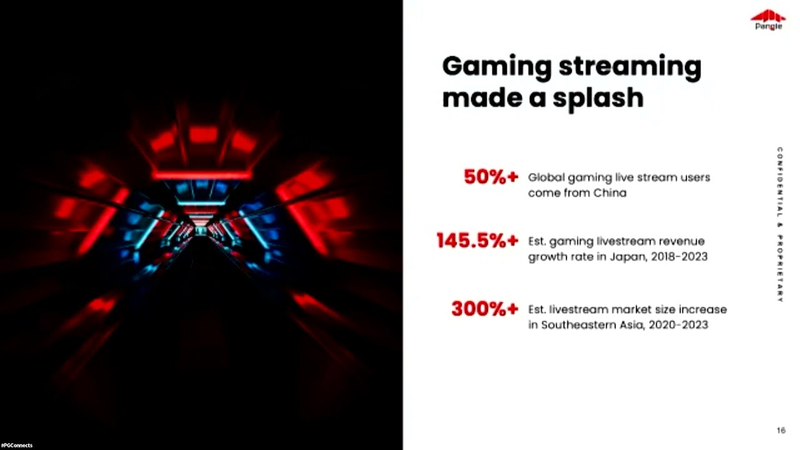
The Asian gaming market represents a significant opportunity for global publishers, accounting for 50% of the global gaming industry with approximately 1.5 billion players.
- The Asian gaming market accounts for 50% of the global industry, representing approximately 1.5 billion players and offering higher ROI potential for publishers who move beyond simple localization.
- RPGs dominate revenue in the Asian market, requiring publishers to implement complex, event-driven gameplay and frequent live operations to maintain player engagement.
- In-game revenue correlates strongly with regional e-commerce shopping events, such as the 11.11 Singles Day, which publishers should leverage to boost in-game spending and eCPM.

Publishing, Partnership & Problems
The publishing landscape in the mobile game industry is often characterized by a disconnect between the idealized, optimistic narratives presented by publishers and the pragmatic, often difficult realities faced by developers.
- Successful mobile game partnerships require abandoning optimistic 'fairy tale' expectations in favor of transparent, proactive communication regarding potential failures and operational risks.
- Developers should conduct multiple small-scale market tests with various publishers and share those results openly to gain an accurate, data-driven understanding of a game’s true market potential.
- Initial partnership discussions must explicitly address fundamental studio drivers, specifically whether the developer’s primary goal is long-term sustainability or a quick exit.
Panel: How Much are You Worth: How to Accurately Value Your Studio & Game
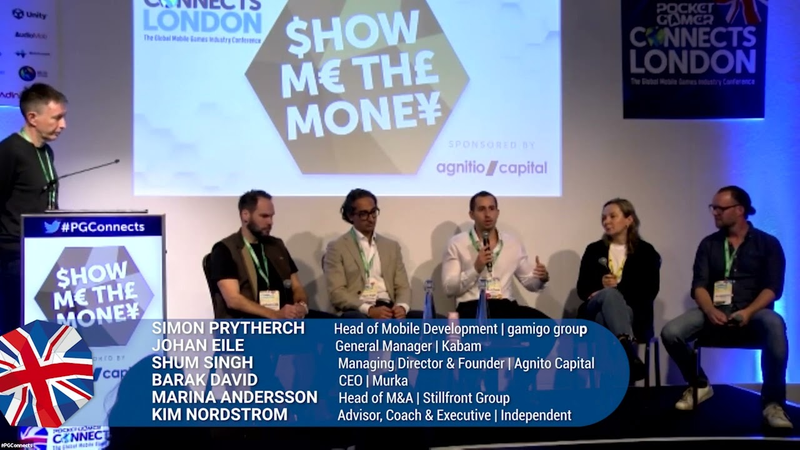
Valuing a game studio requires a sophisticated synthesis of quantitative financial metrics and qualitative strategic assets.
- Public game studios typically trade at valuation multiples of two to four times sales and eight to 25 times EBITDA.
- Private studio valuations are determined by a synthesis of financial metrics, intellectual property value, specialized technology, and team expertise, often adjusted by liquidity discounts or strategic premiums.
- Modern M&A processes have shifted toward rigorous, data-driven due diligence, requiring founders to provide standardized KPIs and professional documentation to satisfy institutional buyers.

The Metacast by Naavik: Roundtable #37 - Will Steam Deck Become a Success?
The gaming industry is undergoing a fundamental transition from physical media to digital-first ecosystems, a shift driven by the superior margins and control afforded to platform holders.
- The gaming industry is shifting from physical media to digital-first ecosystems to improve margins, increase platform control, and support the storage requirements of modern titles.
- Valve’s Steam Deck is a strategic move to deepen user engagement within the Steam ecosystem and insulate the company against platform taxes, rather than a direct competitor to the Nintendo Switch.
- Mobile gaming firms like Playtika are facing significant growth stagnation and shareholder pressure due to the impact of IDFA privacy changes on user acquisition.

Guardians of the Galaxy Disappointing Sales | Games ReCAP
Square Enix has publicly identified the sales performance of Marvel’s Guardians of the Galaxy as disappointing, despite the title receiving significant critical acclaim and winning the Best Narrative award at the 2021 Game Awards.
- Square Enix has officially labeled the sales of Marvel’s Guardians of the Galaxy as disappointing, despite the title winning the Best Narrative award at the 2021 Game Awards.
- Internal financial benchmarks for major AAA titles have shifted, with publishers now frequently requiring 10 to 12 million units sold to justify rising development costs, compared to previous standards of 5 million.
- Square Enix has a recurring history of labeling high-quality titles as commercial failures, including the 2013 Tomb Raider reboot, Marvel’s Avengers, and Outriders.

Matching big data analysis with KPIs with Shalom Michaeli from Fyber
The mobile gaming industry is currently undergoing a significant shift toward programmatic monetization and data-driven transparency.
- The mobile gaming industry is shifting from manual waterfall optimization to real-time bidding (RTB) systems to increase competition and publisher revenue.
- Real-time bidding enables more precise user valuation, replacing historical reliance on less accurate estimated cost-per-mille (CPM) metrics.
- Transparency in publisher-network relationships is being improved through granular auction audits, which allow publishers to verify the true market value of their ad inventory.

Accessing global players and new markets with Sebastian Zechel from Xsolla
The mobile and PC gaming industry is currently undergoing a significant shift in monetization strategies, driven by a desire for greater control over player relationships and revenue streams.
- Developers are increasingly adopting web shops for mobile games to bypass centralized app store fees and establish direct-to-consumer sales channels.
- Integrating specialized payment platforms that support regional super-apps and digital wallets can increase payment coverage by up to 60 percent in specific global territories.
- Transitioning to independent sales channels allows developers to capture granular transaction-level data, such as player geography and preferred payment methods, which is often restricted by major platforms like Steam.

How to Kill a Game and Pivot Successfully
Prioritizing the preservation of human capital over individual project outcomes is the fundamental requirement for successfully navigating game cancellations and pivots.
- Prioritize the preservation of human capital over individual project outcomes to mitigate burnout and attrition during game cancellations.
- Shift from top-down mandates to a culture of radical transparency by sharing financial data and performance metrics to ensure team alignment on project viability.
- Establish objective kill gates based on development velocity, market performance, and team conviction to remove emotional bias from the decision-making process.

Preparing My Game For Release... (Final Devlog!)
The final stages of indie game development involve a transition from creative design to the administrative and technical rigors of a commercial launch.
- The transition to launch requires shifting focus from creative design to administrative and technical rigors, including finalizing legal requirements like privacy policies.
- Developers must prioritize critical bug fixes over minor polish to avoid development limbo and adhere to a viable release schedule.
- Managing community feedback and playtester suggestions requires a structured workflow, utilizing tools like Trello to organize and triage an endless stream of tasks.



1Q FY2022 Presentation Material: October to December 2021
CyberAgent demonstrated significant financial growth during the first quarter of fiscal year 2022, with consolidated sales reaching 171 billion yen and operating profit increasing nearly threefold to 19.8 billion yen.
- CyberAgent’s consolidated sales reached 171 billion yen in 1Q FY2022, with operating profit nearly tripling to 19.8 billion yen.
- The Game business segment saw sales nearly double to 58.3 billion yen, driven by the success of 'Uma Musume Pretty Derby' which exceeded 12 million downloads.
- Operating profit for the Game segment grew 15.1-fold year-over-year, though management remains cautious about full-year forecasts due to gaming market volatility.

GameMakers 2021 Drunk Awards Show
The year 2021 served as a transformative period for the global gaming industry, characterized by a stark divide between companies successfully navigating the metaverse and subscription-based models and those struggling with internal cultural crises and product execution. miHoYo emerged as a dominant force, with Genshin Impact…
- The legal battle between Apple and Epic Games emerged as the industry's most consequential event, signaling a long-term shift in the operational model of app store marketplaces.
- The deprecation of Apple’s IDFA forced a fundamental industry-wide pivot in user acquisition strategies, disrupting traditional mobile marketing models.
- miHoYo’s Genshin Impact established a new benchmark for revenue efficiency and global engagement, while Roblox solidified its metaverse leadership through strong stock performance and brand integration.