1 free read left. Create a free account for unlimited reading + AI research.
Create free account
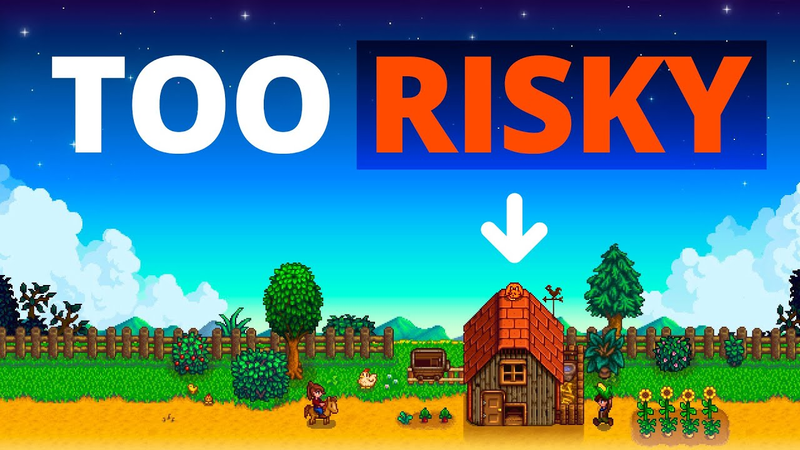
Indie Game Dev Is TOO RISKY
Key insights
6 takeaways- 01Developers must avoid over-investing in a single project by diversifying their professional efforts into multiple income streams, such as educational content, tool creation, or community building.
- 02The pursuit of game development becomes an unacceptable risk when it requires sacrificing mental health, personal relationships, or primary livelihoods for projects without guaranteed returns.
- 03Indie game development should be treated as high-risk entrepreneurship where time is a finite financial asset that requires careful management.
- 04Risk management requires strictly scheduling development hours and maintaining a realistic expectation of failure to protect personal and professional stability.
- 05Success is rarely achieved through a single title; instead, it is built by treating failed projects as learning opportunities that provide transferable skills for future ventures.
- 06To mitigate the risk of catastrophic failure, developers should adopt an iterative approach by releasing small, free projects to build technical proficiency and an audience before attempting large commercial launches.
Ask AI about this video
Transcript
guys how's it going my name is thomas brush i make indie games for a living i've made a game called never song a game called pinstripe i'm currently working on a game called father um i do this full time i also run an online school so my income comes from games game sales comes from platform deals publisher deals and also selling tools resources and courses so there's sort of my portfolio just to give you an idea of kind of what i do now the beginning of my career was mostly making games right just selling games selling copies of games then i started partnering with publishers then i started partnering with platforms then i started creating resources and building a community and just building my social presence i say all this because it was a long process and every source of income for my business um would either change or it would just sort of stack right so my income has grown because i'm just willing to change and shift and try new things and partner with new people partner with new platforms for example i partnered with apple arcade for never song
um so it's always changing right it's never never exactly just one source of income well i had a friend there's no reason to mention who it is i had a friend um who worked really really hard for i think it was like five years on his indie game and it just tanked the whole process sucked creating the game and then it just didn't do well it didn't make money um and he started releasing content bashing people like me like people youtubers who who run channels who talk about how to get into the indie game industry right and how to start a career i mean i run a course about this so i'm definitely teaching people how to do it and his his sort of final thesis about game dev and also about people like me is that it's way too risky how dare you tell people to to give it a shot do it
and my response to that is yes it is very very risky and before we talk about that guys just remember you can download my free 2d game kit below it's totally free it's my treat to you you can use it however you want you can make a million bucks off this game kit i really don't care i actually used this game kit to make a game for pewdiepie in just 14 days so be sure to check that out using the link below so the answer to the question of is game dev 2 risky specifically indie game dev is indie game dev too risky the answer is yes it is very very risky it is only too risky if you do the following okay the first thing that you do that makes it too risky is you ignore your family you ignore your friends you ignore yourself and you put all of your energy your social energy your spiritual energy your creative energy into this project then yes you've gone too far right the second reason is well it's definitely too risky if it's
hurting your mental health and you're just crashing and you're becoming a worse version of yourself right it is too risky if those two things are true or one of the one of those things is true so here's my point my point is indie game development is a gamble it's it's the same thing as going to a casino and putting money into a machine um and hoping that you get money back that's that's kind of what it is right you you just hope that you're bringing in more money than you originally put in right well a lot of you might ask um well thomas what if i don't have money am i still wasting money well yeah you're wasting time right time is ultimately money and so if you're a student right now or or maybe you're you're you're making indie games on the side that time you're spending is is cost um is costly so you need to
be thinking of of your time as money okay so basically i've told you that time is money and you could potentially waste all of that money and all of that time and all of that energy creating a silly game that didn't bring in money right so what's the solution here the solution is to treat it like any other entrepreneur right i've seen game devs talk about how indie game dev is unique and different than other online businesses or entrepreneurship gigs and i don't think it is i think it's the same thing it's it's running an online business it's being an entrepreneur and to be an entrepreneur is to be a gambler there are no guarantees in entrepreneurship that's why so few people actually do it they they don't follow through because it's scary essentially you're you're preparing to jump off of a cliff you're hoping that your parachute opens you're you're hoping that you you're prepared and then you take that leap and you hope it works
so the way that you can gamble and you can gamble wisely and by the way i don't recommend actually gambling i'm just talking about entrepreneurship here and this is just from personal experience in the last decade the way that you can gamble and do it wisely and this is whether you have a family or whether you're a student whether you have more free time than others i know a lot of you are probably parents some of you are students and some of you are just young adults starting your your career at a desk job the way that you gamble effectively and wisely is you schedule it out for the week you schedule out how many hours you're going to work on your indie game and then you schedule out how long it's going to take and you decide you say maybe look at yourself in the mirror and say i'm okay with throwing all of that time in the trash i'm okay with losing it all right is this the same is true with putting
money into more risky investments right stock market not so much but like bitcoin especially right now you know you put bitcoin in you better be willing to lose it all right that's that's kind of the i think the way you should think about investing time and money in more risky endeavors so you need to be okay with losing it so never put in more time than you're willing to lose so for me when i first started making indie games it was maybe two three hours a day five days a week right so it's like basically 15 hours a week i was willing to lose all that right i was willing to say you know what that's time away from my wife i didn't have kids at the time so it was a little bit easier that's time away from my wife that's getting up early in the morning and not sleeping as much so sacrificing time sleeping and it's also sacrificing time sitting at my desk in my cubicle
when i could be enjoying a lunch and watching youtube videos instead i would eat a sandwich in one hand and work with the other hand on my game right so be willing to lose that time if you're not willing to lose that time don't do it now here's the thing are you actually wasting the time if your game doesn't do well not necessarily i will say if you made one indie game it flopped and then you gave up you probably wasted the time because what was the point right if you never used those skills in any other career opportunity or never really made another project what was the point if all you felt was shame and and frustration and kind of hated yourself for making that indie game then you wasted your time right so a good way to think about this is am i willing to one burn that time am i okay with it just being gone and failing am i okay with
that but also be thinking yes i did not make money from that but at least i'm gonna learn something and use that and apply that in some other career opportunity right so for me i'm an indie game developer i make indie games working on one right now and you can check out my live streams i live stream the creation of that game it's called father but i also use those skills to seed other entrepreneurial entrepreneurial ventures so selling selling tools selling online courses creating youtube content right those are other ways to bring in income other ways to help my audience help you guys out and help change people's lives so it's not just making indie games and selling those games on steam that's not why i make games that's just one income opportunity that's one project opportunity that can
make people's lives better there's all these other opportunities available what i love to do as an entrepreneur is i love to spin plates i've got like 10 plates spinning all the time and these are just various income opportunities for me that also help you guys right so obviously be willing to burn all that time and say you know what it didn't work out but at the very least you can say i learned something and i'm going to take that and apply it to a future opportunity so the next time you hear indie game developer horror stories where somebody worked five years on a game and it flopped the next time you hear that and if this individual is complaining just remind yourself that this should be expected you should expect excuse me you should expect to fail you should never start an entrepreneurship venture
just thinking it's going to succeed you should be okay with failing and failure ultimately is a good thing it really is it doesn't feel like it when you're doing it but to fail as an indie game developer means that you can go to the next game and make it better because you learned from the failures right one final thing i'll leave you with is when it when it comes to to gambling gambling your time as an entrepreneur gambling your time as an indie game developer start gambling small right don't gamble big don't say i'm gonna dedicate 20 hours of my week to making indie games and i've got a wife and kids right and a full-time job don't start like that here's a better way to start i'm going to make a small 10-minute game i'm going to release it for free on hio i'm going to use that game to also build a social media presence so that ultimately that audience and also the things i've learned
from that game will help me make a better game and sell it bigger and make some money next time so start small and get better and better and better that way it's not as much of a gamble all right people like me i i jump into things pretty head first fast and i'm pretty aggressive about things i start and that's not a good thing when i when i started making my first commercial release pinstripe i went in really fast and aggressive and i think that um i wasted a lot of time i could have been a lot more patient a lot a lot more resourceful but all i wanted to do was get the game done and so i would spend three hours a day 15 hours a week on top of being a husband and being a full-time employee and looking back i feel like i wasted a lot of time and i gambled away a lot of time fortunately for me it paid off but i
know that i'm fairly unique in the sense that most indie game developers it doesn't pay off so i just want to leave you guys with that especially towards the end of 2021 and also the beginning of 2022. for those of you who want to you know make a um new year's resolution to be an indie game developer just remember it is risky and it is gambling and you need to be thinking of small ways that you're going to slowly dip your toes into that gambling and be okay if it fails if you're not okay with it don't do it alright guys be sure to leave a like subscribe and as always download my free 2d game kit below it's totally free it's my treat to you i use this game kit to make a game for pewdiepie in just 14 days also there is a link below for a webinar and this webinar is how you can make six figures no guarantees but how you can make six figures with just a
demo with an incomplete indie game believe it or not i secured funding to go full time twice just by showing off an incomplete game to publishers and to kickstarter so be sure to check that link out below and i'll talk to you later cheers
Summary
Indie game development is inherently high-risk, functioning as a form of entrepreneurship that requires a calculated approach to time and resource management. The primary thesis is that while the industry is often romanticized, it is essentially a gamble where failure is a common outcome. Aspiring developers must treat their time as a finite financial asset, acknowledging that investing years into a single project without a contingency plan or a diversified portfolio of skills can lead to significant personal and professional loss.
Key findings emphasize that the risk becomes unacceptable when developers sacrifice their mental health, personal relationships, or primary livelihoods for a project that lacks a guaranteed return. The analysis suggests that developers should adopt an entrepreneurial mindset, viewing game development as one of many potential income streams—such as educational content, tool creation, or community building—rather than relying solely on game sales. Success is rarely the result of a single project; instead, it is built through iterative learning, where even failed projects provide valuable skills that can be applied to future ventures.
To mitigate risk, the recommended strategy is to start small, such as releasing free, short-form projects to build an audience and technical proficiency before committing to larger commercial releases. By scheduling development hours strictly and maintaining a willingness to lose the time invested, developers can protect themselves from the catastrophic impact of a failed launch. Ultimately, the industry demands a realistic expectation of failure, where the goal is not to avoid risk entirely, but to manage it through patience, resourcefulness, and the strategic diversification of one's professional efforts.














Comments