Game Development reports and market data
Documents


An Artificial Emotional Agent-Based Architecture for Games Simulation: Brazil
This research proposes a novel architecture for modeling non-player character (NPC) behavior in digital games by integrating psychological models of personality, mood, and emotion.
- A new NPC architecture integrates the Big Five personality model, the OCC emotion model, the PAD mood model, and fuzzy logic to translate real-world external events into quantifiable in-game behaviors.
- Validation of the architecture involved 2,800 test iterations across four distinct scenarios, confirming that external stimuli consistently drive measurable shifts in agent performance.
- The system uses fuzzy logic to process vague, natural-language inputs, allowing game engines to interpret and react to external data sources.
Evaluating Paper Prototype for Tabletop Collaborative Game Applications
The primary objective of this research is to evaluate the effectiveness of paper prototyping as a method for identifying natural, intuitive user gestures for collaborative tabletop digital games.
- Paper prototyping is a cost-effective method for identifying intuitive user gestures for multitouch tabletop games before committing to expensive software development.
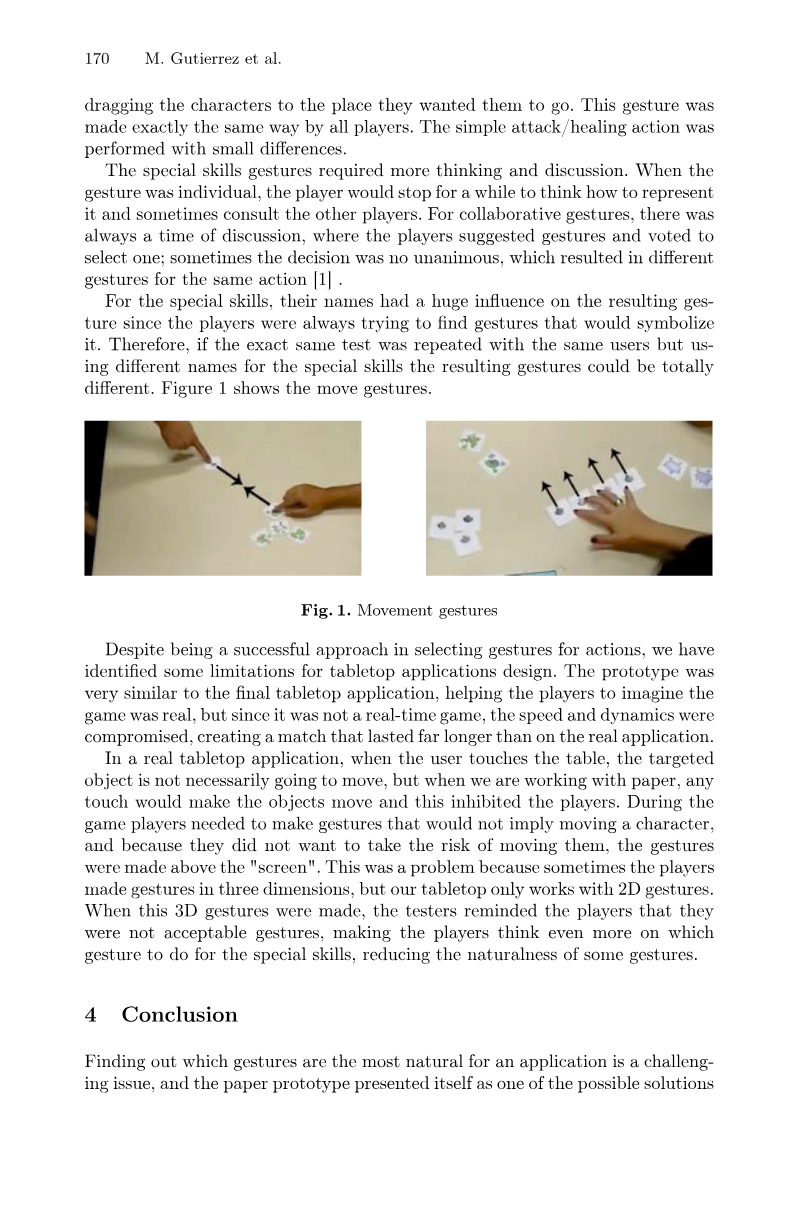
- Basic movement gestures are universally intuitive, but complex or collaborative actions require significant social negotiation and deliberation among players.
- In-game skill naming conventions directly influence the specific gestures players choose to perform, suggesting that terminology should be finalized early in the design process.
A Game Design Analytic System Based on Data Provenance
This analysis introduces a game design framework that utilizes data provenance to assist developers in identifying critical gameplay patterns and balancing issues.
- The proposed framework uses data provenance to map player actions and environmental variables into visual graphs, eliminating the need for designers to use specialized query languages.
- The system identifies design discrepancies by correlating metrics such as distance traveled, item acquisition, and failure points to detect unexpected difficulty spikes or ineffective reward distribution.
- By capturing both prospective and retrospective data, the methodology allows designers to compare intended gameplay loops against actual player behavior.
Exercise My Game: Turning Off-The-Shelf Games into Exergames
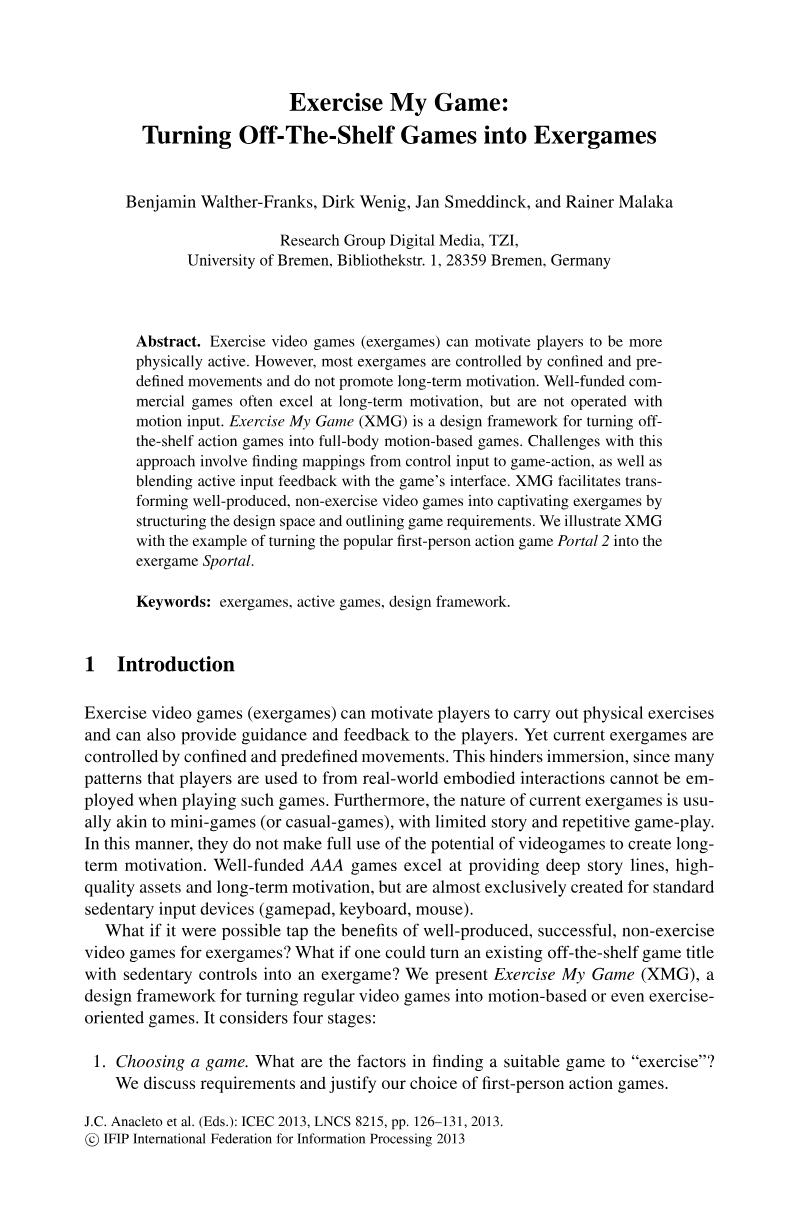
The Exercise My Game (XMG) framework addresses the limitations of current exergames, which often suffer from repetitive gameplay and limited long-term motivation compared to high-budget commercial titles.
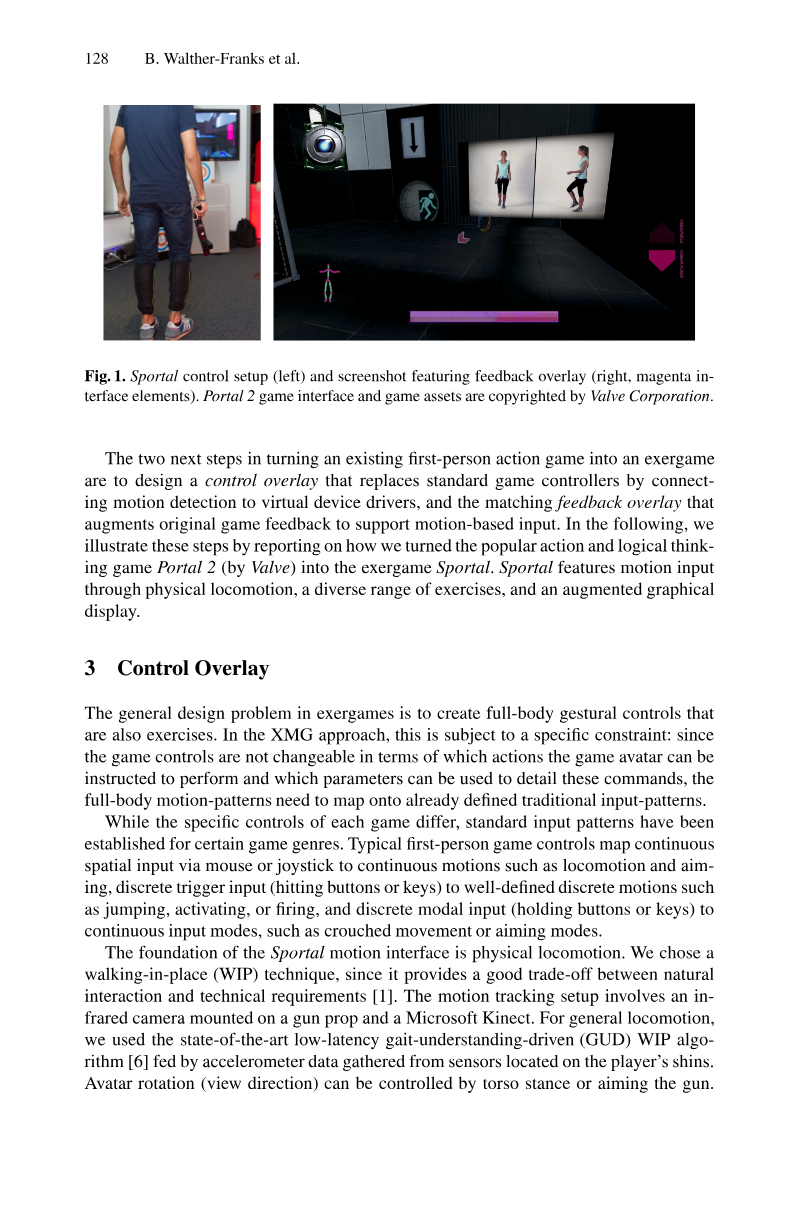
- The Exercise My Game (XMG) framework converts sedentary, off-the-shelf AAA action games into full-body exergames to overcome the repetitive gameplay and low engagement typical of existing exercise titles.
- The framework follows a four-stage design process: selecting a game, creating a control overlay, designing a feedback overlay, and adapting workout intensity.
- First-person action games are the preferred selection for the framework because their immersive perspectives and humanoid avatars allow for intuitive mapping of physical gestures to standard game controls.


Casanova: A Language for Game Development
This Ph.D. thesis introduces Casanova, a novel programming language specifically designed for game development, arguing that specialized languages, rather than just engines, are crucial for simplifying game creation, reducing bugs, and fostering innovation, particularly for serious and indie games.
- Giuseppe Maggiore's 2012 PhD thesis from Università Ca' Foscari di Venezia argues that game development has become prohibitively costly for small teams and that a purpose-built language can lower those barriers.
- Casanova is a functional, F#-based language built around a rules-script-draw pattern and targeted at indie, research, and serious games rather than AAA titles.
- The thesis critiques mainstream engines such as Unity, Game Maker, and XNA as limited in generality or expressive power.


Essential Facts 2013: Canada
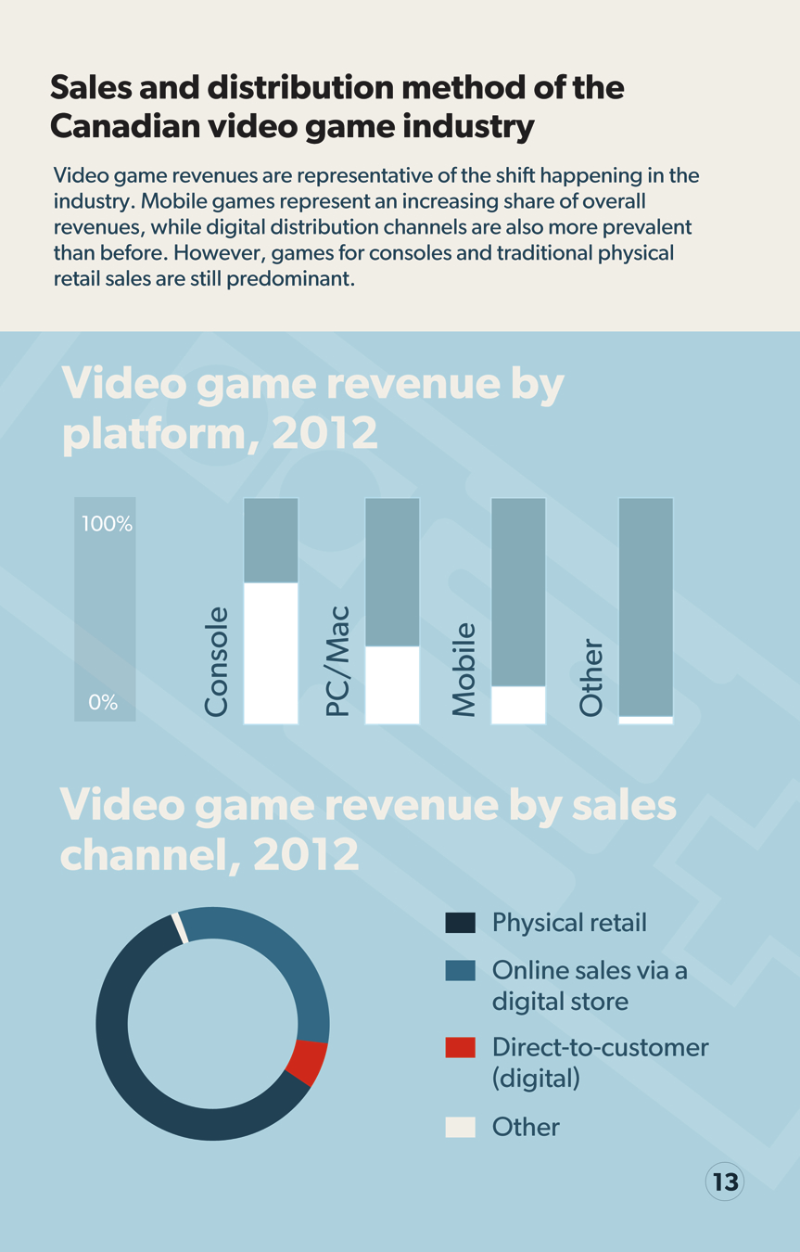
Canada's video game industry is presented as a fast-growing, economically significant sector, ranking third in the world after the US and Japan, and first per capita by employment.
- The U.S. computer and video game industry generated $21.53 billion in total revenue during 2013.
- Consumer spending on game content reached $15.39 billion, representing the largest portion of total industry revenue.
- Digital format sales experienced an 11 percent year-over-year growth rate in 2013.
The Indie Academy: Promoting Gaming Communities through University Collaboration
Universities often struggle to align their intellectual property (IP) strategies with the realities of the gaming industry, frequently overestimating the commercial potential of academic research.
- Universities should shift their focus from short-term commercialization of intellectual property to prioritizing student talent development and community engagement.
- Rigid legal requirements and bureaucratic delays make traditional university-industry partnerships ineffective for the fast-paced gaming sector.
- Independent developers are more effective partners than large corporations because they are agile enough to experiment with niche IP that larger studios typically ignore.


The Toronto Indies: Some Assemblage Required
The article, by Daniel Joseph of Ryerson and York Universities and published in the Journal of the Canadian Game Studies Association, examines independent video game production in Toronto.
- The author describes Sworcery as a runaway success in the sphere of indie games; it has grossed more than $3 million in sales and was made with a team of about five people.
- The OMDC's Interactive Digital Media Fund provides grants of up to $150,000, capped at 50% of the total production budget.
- The OMDC requires that 75% of funded project money go to proprietary products, with 25% going to joint ventures with foreign-owned IP.
Balancing for Skill - The Link from Optimal Power to Strategy - Extra Credits
Effective game design requires balancing not just the raw power of mechanics, but the relationship between player skill and the power output of those mechanics.
- Game balance requires aligning player skill levels with the power output of specific mechanics to ensure long-term engagement.
- High-power, low-skill entry points are essential for retaining novice players and preventing the formation of exclusionary, stagnant communities.
- Designers must create clear progression paths that incentivize players to move beyond simple, repetitive tactics to avoid hitting difficulty 'brick walls'.



CESA Game Development Technology Roadmap: 2012 Edition
The CESA Game Development Technology Roadmap 2012 Edition outlines current and future technological trends relevant to game development, aiming to serve as a guide for developers, industry professionals, researchers, and students.
- The industry is transitioning toward highly integrated, automated development pipelines characterized by cross-platform compatibility and the maturation of standardized game engines.
- Development strategies are increasingly shifting toward cloud-based services, necessitating new focus on data privacy, cybersecurity, and the ethics of content accessibility.
- Game design is being fundamentally reshaped by the adoption of free-to-play business models and the use of player analytics to optimize user experience.
Combining Genres - How to Pick the Right Design Mechanics For Your Game - Extra Credits
Successful genre integration in game design requires a disciplined focus on the core player experience rather than the arbitrary combination of disparate mechanics.
- Successful genre blending must be driven by a clear, core emotional or aesthetic goal rather than personal preference or market trends.
- Designers should use secondary genres to fill functional gaps or address specific deficiencies within the primary gameplay loop.
- Every borrowed mechanic must be evaluated for its ability to reinforce the game's central purpose; otherwise, it risks creating a disjointed experience.

"My Name Is Ozymandias..." - How to Archive Games for Future Generations - Extra Credits
The preservation of video games represents a critical challenge for the medium, as the rapid evolution of hardware and software threatens to erase the cultural and historical record of game design.
- Video games face a high risk of permanent loss because they are tethered to obsolete hardware and degrading physical media, unlike traditional art forms that remain accessible over centuries.
- Mandatory online connectivity and server-based multiplayer create 'dead-end' software that becomes functionally unplayable once developers shutter the supporting servers.
- The reliance on specialized input methods, such as trackballs or unique arcade controllers, prevents modern ports and emulations from accurately replicating the original design experience.
Writers
Games and companies
Games