1 free read left. Create a free account for unlimited reading + AI research.
Create free account
Combining Genres - How to Pick the Right Design Mechanics For Your Game - Extra Credits
Key insights
6 takeaways- 01Every borrowed mechanic must be evaluated for its ability to reinforce the game's central purpose; otherwise, it risks creating a disjointed experience.
- 02Designers should use secondary genres to fill functional gaps or address specific deficiencies within the primary gameplay loop.
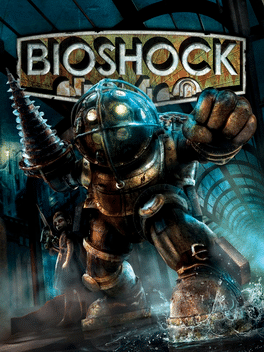
- 03Poorly integrated mechanics, such as the hacking mini-game in BioShock, can disrupt player immersion when they lack thematic or aesthetic synergy with the main experience.
- 04The inclusion of progression systems, such as leveling, should only occur if they directly support primary objectives rather than serving as superficial retention tools.
- 05Each additional layer of complexity increases the potential for design failure, necessitating a disciplined focus on coherence and unified mechanics.
- 06Successful genre blending must be driven by a clear, core emotional or aesthetic goal rather than personal preference or market trends.
Ask AI about this video
Transcript
Mixing and matching genres is a tricky thing. Good game design is all about finding why your player wants to play your game and executing on that well. You don't want to try to be everything to everybody, but instead deliver on the core reason that someone might want to engage with the experience you're trying to present. You want to know what those elements are early and avoid dragging new, shiny, distracting possibilities into your game midway through production. So, with that in mind, let's look at why we combine genres. When you go about combining genres, you should be trying to use each genre to reinforce that core you're trying to deliver on. If you remember back to our episode on the aesthetics of play, it's those core aesthetics you're trying to reinforce when you mash up genres. Do not under any circumstances mash genres together simply because you like each of them. Don't slam together action, puzzle, and RPG just because you're a fan of those genres. Rather, try and drill down and figure out if there's a common underlying reason you really like those genres, some common element that all those genres share that attracts you to
them. If you can find such a common element, then see if there's a way to put those genres together that really highlights that common element. If you can discover that, then you know what to pursue when putting your genres together. Let me give you an example of how not to do this. Now, despite all of the love I usually heap on this game, let's look at the hacking mini-game in BioShock. Even when including mini-games, you've really got to think about how they reinforce the game's core elements. The hacking mini-game is based on another game called Pipe Dream, and the aesthetics that BioShock delivers on don't overlap with or complement the aesthetics that Pipe Dream delivers. So, you're left with a task that feels out of place and disjointed from the experience as a whole. For a better example, think about the Plants vs. Zombies mini-games. Even when they're radically different from the main levels, they still work cuz they tend to reinforce the same sort of problem-solving challenges as the main game. Okay, but let's assume that you've found two genres that are in some ways congruent. How should you put them together? One of the best tactics is simply to look for ways that one of the genres can make up for something that the other genre lacks. The original Puzzle Quest is one of my favorite games because it does this brilliantly. Most traditional RPGs, especially JRPGs, are great vehicles for delivering narrative,
but they usually fail to deliver heavily on the aesthetic of challenge during the combat segment, despite often trying to. So, how do we resolve this? By making the combat a puzzle. The designers of Puzzle Quest realized that fundamentally JRPG combat isn't about reflexes, it's supposed to be a puzzle. So, they simply swapped in a much more effective puzzle to increase the way the player engages with the challenge elements of the game. This is also usually the differentiating factor between successful games that incorporate elements we usually associate with RPGs, like progression and leveling systems, and those games that simply missed the mark. If you've ever played a game that borrowed RPG elements like grinding and levels, but it all just kind of fell flat, really think about what the core game is trying to deliver. Then, think about the RPG elements and ask yourself, are those features really helping to promote that? Are those elements helping to prop up the central aspect of the game in any way? There are plenty of bad games out there that crammed in a leveling system simply because someone on the team thought, "Oh, wouldn't it be cool if you could level? Other games like this have leveling systems." Or, by far the worst, "If we let him level up, they'll play for longer." Those aren't good reasons to throw in a leveling system. Instead,
you have to consider why a leveling system works so well in certain games, and then modulate the system to fit your particular experience. Now, whether or not you like the series, think about Call of Duty and consider, why does it have the option to reset yourself to level zero when you hit the level cap? You'd never find something like that in a traditional RPG, but I would argue that for a Call of Duty game, it makes perfect sense. Think about what they're trying to reinforce with that. Think about how they've modified the traditional system to better blend those genres and address a need their specific If you can solve that one, I think you'll be well on your way to understanding how to combine genres. Combining genres is a fairly risky endeavor. As you make anything more complex, you create an exponential number of new ways it could fail. To combine them haphazardly, to follow the whims of personal preference rather than carefully seeking out and designing solutions for problems in the genre, is to potentially doom your project. But, don't let that scare you off from trying. Just make sure you know why you're combining those genres. Ask yourself, "How does this help to deliver on those core reasons players come to play my game? How do the genres fit together? What do they have in common? And of course, how can elements from this genre help to fill in an area that
the other one's lacking in? It's all about creating a unified experience. No matter how many genres you cram together, it's all still got to be about one thing. Good luck and happy genre mashing. See you next week.
Summary
Successful genre integration in game design requires a disciplined focus on the core player experience rather than the arbitrary combination of disparate mechanics. Designers must identify the fundamental aesthetic or emotional goal of their project early in development and ensure that every borrowed mechanic reinforces that central purpose. Merging genres based solely on personal preference or industry trends often leads to disjointed experiences that fail to resonate with the player.
Effective genre blending often involves using one genre to address a deficiency in another. For instance, Puzzle Quest successfully elevated the traditional role-playing game combat model by replacing standard turn-based mechanics with a puzzle system, thereby enhancing the player's engagement with the game's core challenge. Conversely, poorly implemented mechanics—such as the hacking mini-game in BioShock, which lacks thematic or aesthetic synergy with the main experience—can disrupt immersion. Similarly, the inclusion of progression systems like leveling should only occur if they directly support the game's primary objectives, rather than serving as a superficial tool for player retention.
Ultimately, the complexity of combining genres introduces significant design risks, as each additional layer increases the potential for failure. Designers should prioritize coherence, ensuring that all mechanics work in concert to deliver a unified experience. By critically evaluating whether a secondary genre fills a functional gap or strengthens the game's core identity, developers can create innovative, cohesive titles that avoid the pitfalls of haphazard design.



Comments