Game Development reports and market data
Documents

Rovio's Marja Konttinen reveals how developers can brand their way to success
Strategic brand licensing and partnerships serve as essential tools for game developers to scale their intellectual property into global brands, particularly when operating with limited marketing budgets.
- Strategic brand licensing allows developers with limited marketing budgets to scale intellectual property into global brands by leveraging partner reach and collaborative barter deals.
- Successful partnerships rely on three pillars: brand fit, partner alignment, and prioritizing the user experience by providing tangible value rather than intrusive advertising.
- Rovio has utilized brand partnerships to secure high-value placements, such as Super Bowl advertising and global retail distribution, without traditional media spending.

Finnish mobile games history: part 3
The Finnish mobile gaming industry has established itself as a global leader, characterized by a highly collaborative ecosystem that prioritizes knowledge sharing over cutthroat competition.
- The Finnish mobile gaming industry thrives on a collaborative ecosystem where developers prioritize knowledge sharing over competition, a culture necessitated by the lack of a significant domestic market.
- The sector has matured from a technical, coding-focused foundation into a sophisticated hub that integrates creative design with advanced business strategies, user acquisition, and brand development.
- Industry success is shifting away from distribution-based power toward a model driven by content quality, speed of execution, and the ability to cultivate direct relationships with fans.
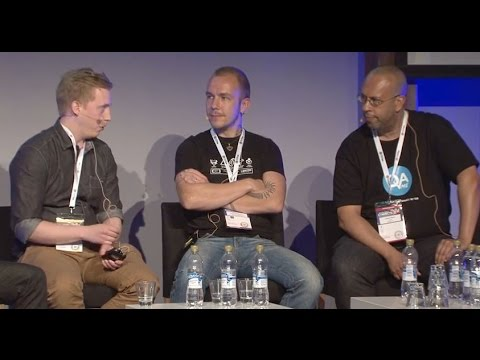
Why QA is even more important for F2P games
Free-to-play games face a unique set of challenges that elevate the role of quality assurance from a standard technical necessity to a fundamental pillar of business survival.
- In free-to-play games, technical instability and poor UI design lead to high player churn because the low barrier to entry results in zero user patience for friction.
- Quality assurance is a fundamental pillar of business survival for F2P titles, as seamless mechanics and a polished early-game experience are essential for retention in a saturated market.
- Studios must blend qualitative user feedback with quantitative analytics to refine game economies and identify performance bottlenecks prior to global release.

Finnish mobile games history: part 2
The Finnish mobile gaming industry underwent a transformative shift following the introduction of the iPhone and the subsequent launch of the App Store.
- The 2008 launch of the Apple App Store ended operator-controlled distribution, allowing Finnish developers to bypass restrictive barriers and access a global market directly.
- The introduction of in-app purchases in 2009 served as the critical catalyst for the industry's shift from premium, one-time-purchase models to the dominant freemium, free-to-play structure.
- Major companies like Rovio and Supercell have acted as industry anchors, attracting venture capital and providing a blueprint for success that inspires new generations of local developers.

Wooga's Sebastian Kriese says inflate your player's ego. Don't crush it
The primary objective of successful mobile puzzle game design is to maximize player engagement and retention by fostering a sense of accomplishment while avoiding feelings of inadequacy.
- To maintain a casual experience, developers should limit player choices to between three and seven moves per turn to prevent the game from becoming overly strategic or mentally taxing.
- Integrating randomness into puzzle mechanics prevents players from feeling inadequate by allowing them to attribute failures to bad luck rather than a lack of personal skill.
- Randomized elements ensure every session is unique, which helps avoid the frustration and self-doubt often associated with static puzzles that have only one correct solution.

Cursor's Jan Storgards on creating a passionate community of start-ups
The Playa program serves as a pivotal initiative for fostering a robust ecosystem of game developers and entrepreneurs in Finland.
- The Playa program has accelerated over 50 startups and supported hundreds of individual projects within the Finnish gaming sector over a two-year period.
- The program operates on a three-pillar framework consisting of 'heart' (passion), 'mind' (technical and business training), and 'body' (physical infrastructure and health).
- A core objective of the initiative is to bridge the gap between creative passion and professional business acumen to prepare developers for the global market.

Finnish mobile games history: part 1
The Finnish mobile gaming industry represents a unique case study in regional economic development, evolving from a niche technical community into a dominant global force.
- The Finnish mobile gaming industry emerged from a unique convergence of a collaborative software demo scene and a cultural preference for indoor technical pursuits.
- Nokia served as a critical catalyst for the industry by providing essential funding, professional infrastructure, and training grounds for developers during the sector's early stages.
- Although the N-Gage platform was a commercial failure, it forced local studios to master technical constraints and team-based workflows that became foundational for later successes like Rovio and Supercell.

Embrace your mistakes and chase your passion, says Rovio's Niklas Hed
Rovio Entertainment’s rise to prominence in the mobile gaming industry serves as a case study in the importance of iterative learning, passion-driven development, and brand expansion.
- Rovio developed 52 titles before achieving global success with Angry Birds, demonstrating that iterative learning and persistence are foundational to long-term success.
- The success of Angry Birds was driven by intuitive physics-based mechanics that removed the need for tutorials and a commitment to continuous post-launch updates.
- Early technical constraints, such as limited heap memory and GPRS connectivity, forced Rovio to master content compression and efficient design, which proved critical for the transition to touchscreen gaming.

Panel on the Game Executive leadership program at Aalto University
The Aalto University Game Executive program serves as a critical bridge between technical expertise and organizational leadership for the Finnish mobile gaming sector.
- Long-term success in the mobile gaming industry is driven by an executive's ability to align individual creative motivations with broader business objectives rather than relying solely on technical proficiency.
- The Aalto University Game Executive program facilitates this transition for fifteen studio leaders by focusing on the intersection of organizational culture, creative autonomy, and production deadlines.
- Effective leadership in gaming requires high levels of emotional intelligence and self-awareness, specifically regarding the ability to provide constructive feedback to creative talent.

How Finland change the direction of the mobile games industry
The Finnish mobile gaming industry owes its foundational success to the strategic influence and patronage of Nokia.
- Nokia served as the foundational corporate patron for the Finnish mobile gaming industry, providing the essential investment, technical infrastructure, and distribution channels that enabled studios like Rovio, RedLynx, and Bugbear to scale.
- The Finnish 'demo scene'—a culture of programmers dedicated to maximizing hardware performance—provided the core talent pool that Nokia leveraged to pioneer early mobile gaming concepts.
- Nokia’s N-Gage hardware, despite its commercial failure, acted as a critical bridge to the modern era by introducing early mobile connectivity standards and concepts that prefigured modern ecosystems like Game Center and mobile MMOs.

Fondia's 3 key legal areas that matters for game companies
Game companies must prioritize intellectual property (IP) management and legal documentation to secure their core assets and mitigate operational risks.
- Game companies must secure explicit written IP transfer agreements from all founders, employees, and external consultants to ensure the company retains full ownership of its core assets.
- Developers must audit all third-party assets, including open-source code, fonts, and agency deliverables, to verify compliance with underlying license terms and avoid infringement claims.
- Proactive trademark searches in databases like USPTO or TMview are essential before finalizing game names to prevent costly rebranding or legal conflicts.

Episode 200! - How Far Have Games Come Since 2008? - Extra Credits
The video game industry has undergone a profound transformation since 2008, evolving from a niche hobby into a central pillar of global culture and intellectual discourse.
- The U.S. Supreme Court officially recognized video games as protected art, a milestone supported by institutional validation from organizations like the Smithsonian Institution.
- The industry has experienced a massive surge in independent development, evidenced by a tenfold increase in the number of annual game releases on Steam since 2008.
- Gaming has achieved mainstream cultural and commercial dominance, with major titles consistently breaking entertainment launch records and esports events like the League of Legends Championship drawing tens of millions of viewers.