1 free read left. Create a free account for unlimited reading + AI research.
Create free account
Fondia's 3 key legal areas that matters for game companies

Key insights
6 takeaways- 01Game companies must secure explicit written IP transfer agreements from all founders, employees, and external consultants to ensure the company retains full ownership of its core assets.
- 02Developers must audit all third-party assets, including open-source code, fonts, and agency deliverables, to verify compliance with underlying license terms and avoid infringement claims.
- 03Proactive trademark searches in databases like USPTO or TMview are essential before finalizing game names to prevent costly rebranding or legal conflicts.
- 04Securing domain names and social media handles early is a critical cost-saving measure to prevent the need for post-launch negotiations with squatters.
- 05Game companies must maintain transparent privacy policies that explicitly disclose data collection practices, particularly regarding third-party advertising SDKs, to avoid significant financial penalties under EU regulations.
- 06Documenting the development process, including specific creation dates and contributor roles, provides the necessary evidence required to defend against future copyright infringement claims.
Ask AI about this video
Transcript
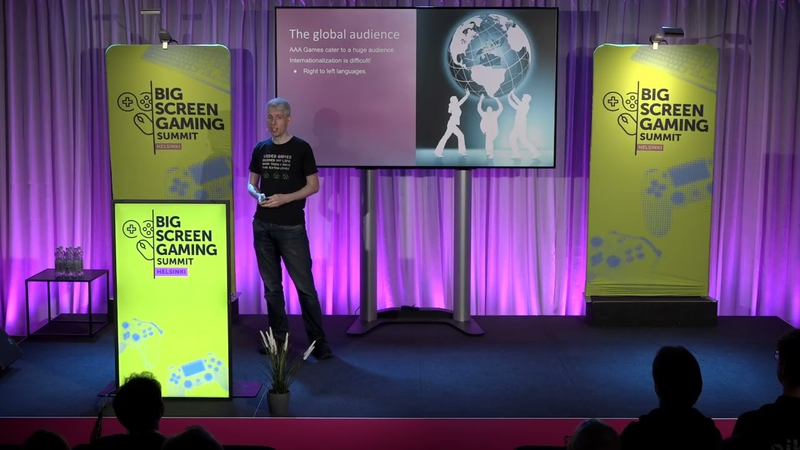
I must use this opportunity to endorse the Aldo game executive program. I think it's a really really nice nice thing that Sana and the others are doing there. So, so great work there. But yeah, today's topic um my name is Hanu. Uh I come from Fondia. Uh we're a law firm based in uh Finland, Sweden, and Estonia. We have roughly 100 employees. um some 65 lawyers and uh one of our focus areas is startups and gaming companies, gamified companies and uh that that's why I'm here. Great honor to be speaking. U today's topic IP and legal stuff that matters for gaming companies. I'm going to mostly focus on IP and privacy. some key takeaways for developers that they should take into notice in the game
development process. I think this was actually first supposed to be a panel discussion but uh I was the only one who wanted to talk about legal stuff. So, so now it's a presentation but please bear with me. Okay. If we think about the main assets a gaming company has, obviously the first one that comes to mind are the people. Probably the most important aspect of a gaming company. But then when we think of the product, the game itself, it's practically 100% based on IP, intellectual property. And uh when we think about IP, IP rights are mainly rights that give you the right to say no to someone as well as the right to say yes to someone.
So let's think about the game being distributed in an app store and the end user download it. Obviously they can't distribute it forward for commercial purposes. uh you might want to take into notice how they can create fan content, distribute that. Can they monetize it or not? Or uh let's say that you have a user acquisition campaign. You're putting the banners out with your partner. You might want to agree with the partner how they can use those banners, where they can show them, where they cannot. And then if the banners were created by a creative agency for you, uh you might want to ensure that the creative agency hasn't put in anything fishy into the banners and that you have the right to give it to the partner. So uh this
not not very creative agency level type of picture but but it says all your bays are belong to us which is from from early 90s game. So ownership is the main main key word here. And then when we think about IP what does that cover? It actually covers a lot of different things. Um, in this presentation I'm going to focus on copyrights and trademarks. Copyright is probably the king in game development. It's pretty good because copyright is free. Uh, it's created instantly when you create the work and is global. So, a pretty good asset to have. Uh copyright can be on music, on graphics, uh on the codebase, everything that is visualized or can be
heard or seen. Then trademarks um those are for the brand to protect the brand and uh differentiate your brand from others. There's pretty there. There's a lot of different approaches on how aggressively you want to protect your IP or monitor it or enforce it. I'm not going to tell you how to do that, but these are the sort of principles we're talking about. So, IP is basically about ownership and the right to say no and yes. So, uh, how do I protect my base? There's, uh, three things I'm going to focus on here, and, uh, there's tons of others as well, but, these are, in my view, pretty important. Number one,
contracts. Uh, at least in in the indie scene, it's pretty common to do stuff on a handshake. Uh, I think it's great. Uh, and one of the one of the reasons why the Finnish gaming industry is so good, it's a sharing economy, and I I don't want to be a party pooper there, but uh, but there are some contracts that you have to do in writing or I strongly recommend to do that. Another thing is about the game development process, how you should document that. And the third one is about registrations. um you might want to register trademarks uh and at least you might want to register your domain names and social media accounts and uh those types of things. So those are maybe the three three areas which you should focus on when you think of how to protect the game.
I'm going to split these into three three uh areas. You might have stuff that is created for you that you put into the game. Well, obviously you in the beginning you have a set of founders who are maybe friends together. They have previous experience from working at another firm who start to develop codebase and graphics and music and what what have you and put it into the game. As we think of the copyright, copyright rights and um that area the copyright is created by somebody and that somebody who creates it owns the copyright. That's the sort of main rule. So if we think of these all friends and the company it's the the main goal is that the
company should have the IP that's created. So there should be some sort of written document between the founders and the company that says that hey the IP belongs to the company shareholders agreement. Um you might also have friends uh who are employees they're not founders. Uh there again you should have a written employment contract with those guys and girls. Uh number three maybe the sort of most mis interpreted area is consultants that you might have. Um, you might have someone who's not employed by the company, who's not a shareholder there or a founder, uh, who creates, say, say you ask your friend to create music for your game and you shake hands and it's all fine. But again, if we think about the IP being with a friend of yours and uh what the friend might have thought
where you could use that asset that they're creating, I would definitely go for a written agreement with those friends and consultants saying that the IP belongs to the company. Okay. So the stuff created for you um obviously in today's world uh everything is not created from scratch. Uh I'm not here to claim that. Uh you have a lot of stuff that is readily available and what you might put into the game. And here it's also good to see that the stuff that is readily available might be included in the stuff that your employees and your consultants give to you. Yeah. So the stuff that is readily available you might have for for example fonts. Fonts are a good example. You're probably not creating them yourself. You're downloading them from a website. they're readily available. And then
there's the license text attached to those fonts which not that many people read. But then again, that license says how you can use those and how you can't. So I would strongly advise to have a look at those license terms or graphics engine if you use open source, you name it. So, and and this stuff could be included actually in the consultant's work. So, when you have the agreement with the consultant, you might want to agree with them if they can put open source in there or if they can't and so forth. Okay. So now you might have the written agreements in place with your founders, your employees, your consultants. You really know what's included in the
game and that you're distributing correctly. You of course don't want to step on someone else's toes. You don't want to have a game that's been out for two years and then there's someone else coming that hey the name you have for this game is actually mine. You have to change the name. Obviously you don't want to do that. And here we come to trademarks. I mentioned trademarks are brand protection. Uh trademarks are country specific. So if I have a trademark in Finland, I don't have it in Sweden. And if I have it in the US, I don't have it in the EU. And uh you have to actually register the trademark to have it in place. I think all of us remember to go to Google Play and Apple's App Store to check whether there's existing games
that might have similar names or similar logos to ours. But in addition to this, what I would do would be to check the public trademark databases for existing names. So do you don't have a conflict there. There's a lot of databases that are free to use. It's a quick quick Google search. For example, United States patented trademark office, USPTO, they have a good website. And for Europe, we have trademark view, TM view. So go there, check out the name that you planned and uh see that there's no underlying trademark available that might not be in distribution. I think there's a lot of IP owned by the big players who are not in the mobile space right now, but uh some of them have pretty aggressive strategies of
defending their rights even if they're not using the mark. And of course uh if you ask me uh I would recommend to register a trademark at least in one country. Okay. Then the question is that hey the market is global. What can what good is it if I have like a finished trademark? I don't have any protection in the US or anywhere else. Uh the good thing about trademarks is that uh if I first file in one country I have a sixmonth grace period to extend it. So let's say I file something in Finland today within six months I could file a trademark in the US and get protection for day one. So if we think of a gaming company for example in a soft launch ph soft launch phase uh if you file trademark then you might within six months you might know if the game is good enough to go live with that name
and that brand and then you go live and then you file for additional trademarks. That's my recommendation. They're not that expensive to get in one country and at least I would file for the game name. Okay, so that was a trademark and then we have the copyright. Last but not least, copyright is about the way the game is presented, the way it looks, the way it sounds. Uh protecting an idea is generally not an option. Let's say that I've created an endless runner. Obviously, I can't go everyone and say that, hey, I own endless runners and nobody else can do them. So that's
that's not an option. Although although in some countries you can have software patents, you might have a certain method may maybe maybe you have a dialogue that opens up in a certain way and there might be some thing you do for to open that dialogue. It's possible to patent that in some countries. I wouldn't say that this is an important thing to check uh in the development phase but especially later on uh it might be worth considering some companies go for that and then of course there's the patent trolls especially in the US who wait for you to be big enough and then they come after you u end user terms uh pretty important document that you might not need to do yourself uh if If you're in the mobile space uh and you have a pretty standard game where not
that much user generated content, you might be able to go with the help of Apple and Google and the others because they have created this sort of standard enduser term set. If you don't have anything yourself, the standard set applies. It's not good for everyone. It depends on the situation and uh you can you can read it online so you can check if it applies to you. But I don't think that all games need to have their own end user terms. If you're in the mobile space uh if you have a browser based game that is not on some platform then obviously you do need that. However, a privacy policy should be drafted if your game is internet connected. I'm going to come back to that later.
Okay. Credits. Um, copyright as I told uh it's by default it's created by somebody who owns it. So if you agree with them that the ownership transfers to you, you might still need to credit them. Some companies are doing a good job at crediting. Some don't have any credits. I recommend to do do a set of credits in the game. And of course, domain names and social media accounts. It's much cheaper to get them acquired before you go live big with the game. It's just a matter of googling a bit and it's very expensive to buy them afterwards. Even though if you are sort of right and it's just a domain squatter who has registered them to sell for you, it's it's very hard to get them by legal means or I mean like by by suing
someone, you you usually just need to buy them. So, it's much cheaper to get them in an early stage. Okay, privacy. Uh, as I mentioned, uh, if your game is connected to the internet, it has some interaction with servers, I would say that you need to have a privacy policy. So, what is a privacy policy about? It's a document for the end users where you tell what data you collect and how you use it. If you give it to someone else, let's say that you have a advertiser SDK integrated and there's data flow right out of the game. It's important to tell tell the end user that this is the case. Um I don't think uh people are doing a good
job right now to make a privacy policy. There was an uh there was a survey from last year uh by GPEN which is the global privacy enforcement network. It consisted consisted of of national privacy authorities. um they investigated a set of mobile apps and they found out that 92% of the mobile apps had some concerns with privacy and 54% of them didn't have a privacy policy at all. So I I don't think it's a very good good situation. They actually had a new new survey this year and they are publishing the results in August September. Um it's a much bigger I think right now they had 2500 companies mobile developers evaluated. So it's interesting to see if if there's progress on that end. And
also there's some of like when uh the BlackBerry store uh require that you must have a privacy policy. You can't post a game if you don't have it. And some analytics companies require for example flurry. If you use flurry you need to have a privacy policy. So in addition to the authorities being angry then the analytics company might be angry if you don't have it there. Right now uh if you're a Finnish developer uh people think that hey if I don't do it then what happens? Uh right now in Finland there are no no fines that you could get from from the data protection authorities. They haven't been that active in the sector. But uh as some of you might have heard there's a new
privacy regulation coming in uh that applies to the EU and they have pretty hefty fines. you can get millions of euros in fines for not obeying privacy laws. I I don't know where it's going to lead, but uh at least it's something that would be nice to take into notice. So I I really think privacy is one of the emerging areas where you need to focus on. Okay. Uh, I went through some of the game development process, copyrights, trademarks, make your agreements in writing, document your development process, and then make the privacy policy. It's not a big deal. You have to sit down and consider how are you collecting data and where does it go and what are you using
it for. So, any questions? Do you want to mic? Um when you say uh document your development process uh what is uh the exactly the interest in that uh what uh advantages does it grant you in the legal sense? Uh thank you. Um, I think the biggest advantage of documenting it is that if something would go wrong, if somebody else would come and say, "Hey, this is a ripoff of our copyright, then you could have the co the documents available that, hey, on this date, this guy or this girl created this asset and it's ours." So, it's a way of giving proof of of what you've done. And there's no sort of um uh law saying how you should do that. So just put it on paper, maybe
make a shared folder somewhere and just have a document. I I think in some cases if you don't have any documents then you would go to sort of photos metadata and check out the creation dates and that's the sort of last but it's better to have some sort of process available. Sure. Hi quick question on credits. You mentioned credits for us. We know credit as the item in the menu where you everybody who's been involved in the game creation. Did you have something else in mind and and if I mean what what does it help for? Yeah. Uh good question uh about credits. Um I think at least you should list the people within your company who have taken part in it. Uh there's no sort of it's a bit vague the area on who you should list and who you shouldn't. I think if you use external consultants uh who are sort of acting on a company
level, it's not that common. If you use like a creative agency who do some banner art and you attach uh a character there and the character is done by you, you might not need to credit the one who did the banner behind that. But it depends on the situation. I I think if if somebody has a big impact on on the result of the game, I would I would credit them. And then there's also if you're using some standard component like u some open open source component they might require that you tell that hey this physics engine is from da da da address and created by this and that guy. So there's some discretion and then there's some requirements. Okay. Any other questions? I guess not. So uh thank you very much Hanu and thanks [Applause]
Summary
Game companies must prioritize intellectual property (IP) management and legal documentation to secure their core assets and mitigate operational risks. The primary thesis is that because a game’s value is almost entirely derived from IP, developers must proactively establish ownership through formal contracts, strategic trademark registrations, and transparent privacy policies. Failure to formalize these arrangements early in the development lifecycle can lead to costly disputes, forced rebranding, or regulatory non-compliance.
Key legal strategies focus on three pillars: contracts, development documentation, and brand registration. Ownership of IP created by founders, employees, and external consultants must be explicitly transferred to the company via written agreements to avoid ambiguity. Furthermore, developers should audit third-party assets—such as fonts, open-source code, and creative agency deliverables—to ensure compliance with underlying license terms. Documenting the development process, including creation dates and contributor roles, serves as essential evidence in the event of copyright infringement claims.
Brand protection requires a proactive approach to trademarks. Developers should conduct thorough searches of public databases, such as the USPTO or TMview, before finalizing game names to avoid conflicts with existing marks. Registering trademarks in at least one jurisdiction provides a foundation for global protection, with a six-month grace period available to extend filings internationally. Additionally, securing domain names and social media handles early is significantly more cost-effective than attempting to acquire them from squatters post-launch.
Finally, privacy compliance is an emerging necessity for internet-connected games. Data collection practices must be clearly disclosed in a privacy policy, particularly regarding third-party advertising SDKs. While enforcement has historically been inconsistent, the introduction of stricter EU privacy regulations threatens substantial financial penalties for non-compliance. Consequently, maintaining a transparent, documented approach to data usage is critical for long-term sustainability in the global mobile gaming market.