1 free read left. Create a free account for unlimited reading + AI research.
Create free account
How Finland change the direction of the mobile games industry

Key insights
5 takeaways- 01The Finnish 'demo scene'—a culture of programmers dedicated to maximizing hardware performance—provided the core talent pool that Nokia leveraged to pioneer early mobile gaming concepts.
- 02Nokia served as the foundational corporate patron for the Finnish mobile gaming industry, providing the essential investment, technical infrastructure, and distribution channels that enabled studios like Rovio, RedLynx, and Bugbear to scale.
- 03Nokia’s strategic use of games, such as using Snake to demonstrate infrared capabilities, helped establish the initial commercial viability and technical benchmarks for mobile software development in Finland.
- 04Nokia’s N-Gage hardware, despite its commercial failure, acted as a critical bridge to the modern era by introducing early mobile connectivity standards and concepts that prefigured modern ecosystems like Game Center and mobile MMOs.
- 05The technical expertise and high-quality development standards fostered by Nokia during its peak years created the necessary conditions for the later global success of companies like Supercell.
Ask AI about this video
Transcript
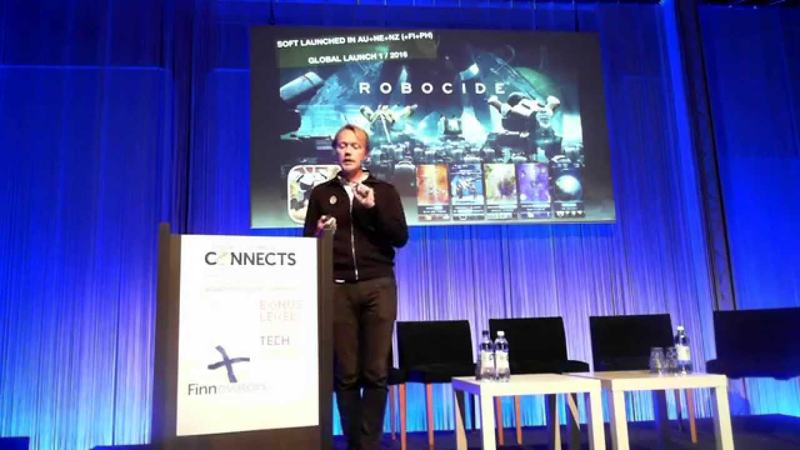
It's kind of It's not so much with the experts, I'm afraid. Um, wow. I'm just kind of I did not think there was going to be so little room for this folder. That's impressive. Yeah. So, it's So, yeah. So, essentially, just in case any of you missed the sort of introduction actually, I'll just wait for there's some people going out. I'll let them leave. You know, they're going to miss out on something that's obviously spectacular and brilliant and wonderful and all that. We'll just let them leave so that the noise goes down and things like that, which is good. Okay. Okay, everyone. Is everyone ready to go? We all ready to go? Oh, they're going as well. Sorry. Well, honestly, well, makes things easier for me, I guess. But, um, so yeah. So, just in case you missed out on the introduction, in case you missed out on anything that I was saying or what people were saying about me, uh, I'm George Osborne. I'm working at Steel Media as an events editor, mostly for Pocket Game of Beers, but at the same time, I've been basically working on the research for the history of Finnish mobile gaming. And I've been trying to look at it through the eyes of someone
who perhaps wasn't actually obviously at the in the industry at the time and is maybe sort of able to take a step back and look at things in a different way. Um, and I think through the research there was one thing that really stood out to me and I think there was one company who made a really big intelligent strong difference to the industry and I think as you can see it's Nokia. Um, and when I look back at it and when I look throughout the history of mobile gaming, although of course they're not influential throughout the whole phase, they're one of the companies who basically provides, you know, the important pivotal investment and the basically proven that the idea of mobile gaming actually would work on a global scale. I think they gave developers in Finland both the idea that mobile gaming could succeed and the backing to help make sure that that would happen. Um, but before I actually dive into the practicalities of that, I'm going to take you once my clicker works. How's my clicker work? How does the clicker work? Which one do I click? Which one? That one. Ah, there we go. There we go. Putting the clicker the wrong way up. So, anyway, I'm going to take a brief diversion to the 1400s because, hey, that's how I roll. Um, so this is the Paty Chapel and this is in
Florence. It was built in the mid400s by the Paty family to act as both a place to learn um as a place to go and pray and as a place for the family to be buried. Now, it might seem like a bit of a strange place for me to be going, but the idea behind this is Renaissance patronage. And the idea behind that is essentially that these people would have a practical purpose in mind that they would go and build a building, but that they would go and embellish it with certain things, certain elements to make sure that it looked better and to make sure it increased their own personal status. And as you can see on this, this is considered one of the archetypal Renaissance designs and it was designed by the architect who built the dome in Florence. So that was Brunelli and inside there's art from the likes of Nicola Barabino, Jeppe Cioli and dozens of other artists. And basically what this was was this was an example of someone setting out with an idea which is that they wanted to go out and create this chapel for their own purposes, but that it actually went and provided the commercial backing for a number of people to go out and create their own careers and basically create something
that they could do themselves and go off and build their own legacies. And that's what brings me to Nokia because when I think about Nokia, I actually see that there's quite a strong parallel between that person seeking to create a building for their own purposes and also going and creating the career for these artists and architects as well as the way that Nokia basically built their commercial mobile business and gave the opportunity for all of these individual mobile gaming companies to come and arrive and succeed. I mean, if you think about Nokia's history, like in the 1980s, they were making TVs, they making computer monitors, they were even making rubber. I mean, hey, you know, I don't think any of the other companies operating today can say that they made tires at any point. So, fair play to Nokia on that count. Um, and essentially when they came into mobile, it was about that they had essentially created the European browsing standard in the 1980s. That was GSM and they went and built their handset business as a result of that. and snake. While they ended up obviously releasing that in 1997 and it went on to be on 300 million devices and was embedded upon that, the original reason why it was designed by Tano Lementoto was essentially to act as a
demo for infrared functionality. So in the same way that the patis hired these architects and these painters not in the sole purpose of creating art but in the purpose of supporting their own individual aims, Nokia managed to have this individual game which actually showed off their functionality but then opened up this whole new idea, this whole new perhaps concept that they could go into and that concept basically ended up being mobile gaming. So you know basically when Nokia ended up coming up they realized that gaming could be something that was very important to them. it could be something that they could really build off and the finished scene was particularly well suited to actually taking advantage of that. And the reason was this is basically you know this is from assembly which is one of the major demo scening things. And as you can see this is basically a hub for talent and talent who are perfectly suited to creating these fantastic mobile experiences because as we were talking about a moment ago the demo scene essentially encouraged people to go out and ek the most out of devices possible that they could go and do something really cool with a PC or go and show that they could make a game using a pocket calculator.
And it's that kind of mentality that basically helped to forge this industry by basically providing people with the necessary skills to create fantastic mobile games. So Nokia had that advantage and they obviously had this idea here's a game that's been successful. It's helped create this cultural movement. People loved Snake and it created this fantastic level of interest and they had the talent that they could basically take hold of. And so what Nokia started doing was it essentially started to invest with into the straight into that talent and it did it in two particular ways. The first way was basically by supporting developers by actually allowing them to be on their decks to be actually included with devices and a number of companies benefited from that including Mr. Good Living, Sumeare, Digital Chocolate and many more. They basically benefited from having their games on Nokia devices and basically placed into the hands of users. It's that distribution issue that I guess they managed to circumvent. But beyond that, Nokia Nokia's other main area to contribute was in investment. And as we briefly mentioned, the endgage is perhaps the best example of that.
Now, Nokia were also involved in the investment in RIT. And obviously, that didn't go quite as well as they were probably hoping. But the endgage was the area where Nokia attempted to really try and I guess redefine the boundaries of mobile gaming. And okay, let's be honest, it wasn't really a success. You know, the portrait screen wasn't great. The need to hold the phone like a taco in the original release was ridiculous. Um, the fact you had to remove that battery just to put a game in, I mean, come on. you know, everyone had a Game Boy Advance at that point. You could just slot the game straight in. Why would you bother? And then just the price tag, which at the time was probably a bit out of the reach of what most consumers were expecting, essentially killed the endgage at birth. And when it came out, it didn't succeed. And as it basically went on, it evolved into a gaming platform and eventually was phased out of the company in 2009, roughly around the time that Nokia started to really make significant layoffs as a result of their business declining. But, you know, it's easy to say that. It's easy to say that the endgage was a failure. And that's what everyone says. But, in my opinion, the
endgage was essentially it it was the psy chapel for Nokia. It was their equivalent of that. And the reason why I say that is because of the significant amount of support they threw behind the handset. Now, I apologize in advance for this incredibly grainy screenshot of Pathways, Pathways of Glory by Red Links, but they're one of the few developers who essentially benefited from Nokia's move into the endgage. So what they basically were able to do was able to receive investment to help them make the game, a platform in which to distribute it and they went and created one of the big hits. And that's a good example of basically how Nokia worked. They helped to sustain these studios as they were getting started. They helped to give them the kickoff to get them started. And they weren't the only company Red Links to benefit from that. Reude Studios who went on to be Roio were another and a company called Bug Bear which you see worked for. You see Larkin of uh well now of Amplify. Those were examples of companies who benefited from this funding. But also the other thing that the engage did really well was that it basically laid this technical blueprint ahead of time. I was talking to Scott Fo uh about this and I
was talking to him about some of the games on there and he introduced me to Pocket Kingdom which was one of the first mobile MMOs and he introduced me to the idea that the endgage bought in functionality like the equivalent of basically Xbox Live into the mobile ecosystem. And so although it didn't succeed, it laid this foundation for these really fantastic ideas that would become part of mobile game today. So the idea of being connected. So of course we might not have have Xbox Live, but we definitely do have game center. We expect highquality experiences, the kind that Nokia were hoping to create with the endgage. And just in general, they really helped to raise the standards within the industry. And although obviously Nokia didn't succeed in the end, many of the people who benefited either indirectly from Nokia's assistance, so through the expertise that they spread through the industry and the talent that they created or directly through funding went on to go and create their own games to go and create their own studios to build it upon. And Supercell, they obviously benefited from Nokia's role within the ecosystem. Roio as we found out one of
their first games was created within the assembly thing but they were helped kept going during their earlier phase when things were perhaps a little bit more difficult by Nokia's funding and essentially what Nokia ended up to do ended up doing was building the platform on which these people could go out and create their own success stories. So, you know, Nokia, as Alex Bub said a moment ago, like they're still going. They're providing the Nokia X and I think the idea there is to go and develop go out to developing markets and to go and basically sew the Nokia seed somewhere else. But I think when you look essentially at the history of Nokia, what you can say is that it helped to lay the foundations for the Finnish industries to succeed. Now, of course, in the moment where the Finnish industry perhaps succeeded the most, the iPhone era, that was the era when perhaps the developers led the way more, but those developers perhaps would never have gotten there without the help from Nokia in terms of investment in terms of the increased experience they got and just in terms of just the general factor of working within these highquality areas. So, as I said, you know, my
thought on Nokia is that like these Renaissance patrons, they basically helped to prop up these artists and creatives by basically saying they fit into our commercial strategy. They fit into our corporate strategy. And although they may not have said like the Patty family endured as a legacy forever, their role within creating the Finnish industry, I think it's not disputed. And I think without them, the industry that we' see today would be very different. And that's about it. There we go. Hooray. [Applause]
Summary
The Finnish mobile gaming industry owes its foundational success to the strategic influence and patronage of Nokia. While Nokia’s own hardware ventures, such as the N-Gage, are often categorized as commercial failures, their broader impact served as a critical catalyst for the local ecosystem. By providing early investment, distribution channels, and technical infrastructure, Nokia functioned as a corporate patron, enabling a generation of developers to refine their skills and establish sustainable studios.
The development of the Finnish scene was heavily influenced by the local "demo scene," a culture of programmers focused on maximizing hardware performance. Nokia leveraged this talent pool to support its own commercial goals, such as demonstrating infrared capabilities through the game Snake. This symbiotic relationship allowed studios like Rovio, RedLynx, and Bugbear to gain essential experience and funding. Nokia’s initiatives, including the N-Gage, introduced early concepts of mobile connectivity and high-quality gaming standards that prefigured modern mobile ecosystems, such as Game Center and mobile MMOs.
Ultimately, the thesis posits that Nokia acted as a bridge between early experimental mobile software and the modern era of mobile gaming. Although the company’s direct influence waned with the rise of the iPhone, the expertise, technical standards, and financial support provided during its peak years created the necessary conditions for the subsequent success of Finnish companies like Supercell. By fostering a high-quality development environment and solving early distribution challenges, Nokia established the blueprint for the Finnish industry’s global prominence, proving that even failed hardware experiments can leave a lasting, transformative legacy on an entire sector.

















Comments