1 free read left. Create a free account for unlimited reading + AI research.
Create free account
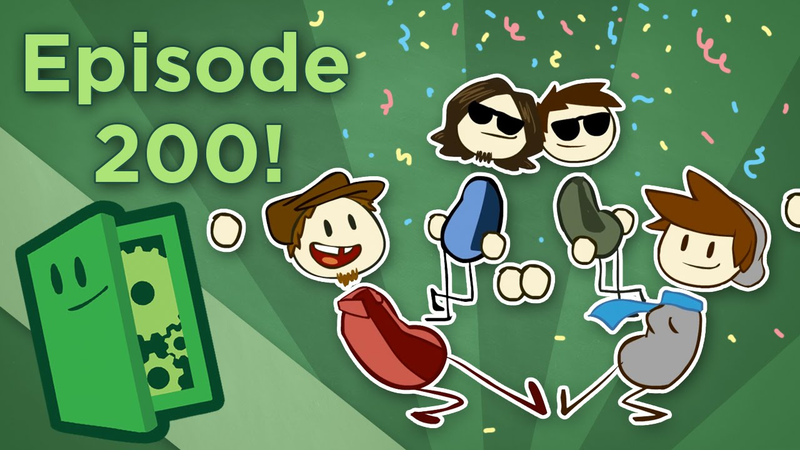
Episode 200! - How Far Have Games Come Since 2008? - Extra Credits
Key insights
7 takeaways- 01The U.S. Supreme Court officially recognized video games as protected art, a milestone supported by institutional validation from organizations like the Smithsonian Institution.
- 02Educational institutions have begun integrating game-based principles into formal curricula, as seen in the establishment of schools like Quest to Learn.
- 03The industry has experienced a massive surge in independent development, evidenced by a tenfold increase in the number of annual game releases on Steam since 2008.
- 04Gaming has achieved mainstream cultural and commercial dominance, with major titles consistently breaking entertainment launch records and esports events like the League of Legends Championship drawing tens of millions of viewers.
- 05Digital distribution has improved the accessibility of gaming history, ensuring that foundational titles remain available to new generations of players.
- 06The rise of gaming-focused content creation on platforms like YouTube has established entirely new professional career paths within the industry.
- 07Gaming has expanded beyond entertainment into diverse sectors including scientific research and physical fitness, cementing its role as a multifaceted tool for societal engagement.
Ask AI about this video
Transcript
Cue the fireworks. This is our 200th episode. And I cannot believe we have done 200 of these things. James and I started doing this 6 years ago now. Since then, we've all had a ton of jobs between us, worked on a gaggle of games. Heck, two of the EC crew even finished school since this all began. And we would like to thank you all for making this possible, for coming back week after week, listening to me ramble, and bringing the discussion to your friends and family. I know sometimes it seems like gaming is still just riddled with nothing but problems. Bad games, bad business practices, bad behavior, just problem after problem after problem. And there are plenty of problems, but it's easy to get caught up in the moments with our frustration and forget that it's actually gotten a lot better to play games over the last 5 years. So, on this our 200th episode, let's take a moment to celebrate. For once, let's not talk about what still needs to be fixed
and instead take a day to appreciate all the amazing things that have gone right. Since this show began, the Supreme Court of the United States ruled that video games are an art form entitled to all the protections that affords us under the Constitution. And not to kick a man when he's down, but Lilland Ye, the senator who decided that violent video games were so dangerous to society that he needed to propose a law that banned selling them to minors, which is what kicked this whole Supreme Court thing off, was arrested recently for weapons trafficking. He was buying shoulder-mounted rocket launchers from an Islamic extremist group and accidentally sold them to a member of the FBI. I mean, thank God he doesn't play video games or he might have really become a threat to society. [Music] Anyway, since we first launched this show, Quest to Learn opened its doors. It's a public school in New York built around the idea of learning through play, where they educate using games and believe that game-like principles can help children succeed in the real world. It may not be 100% perfect yet, but I don't know if I'd have believed we'd see a game-based school, much less a public school, so soon in the US when we were scribbling our first episodes out. And
since we began, the Smithsonian has held an exhibit on video games. And in its six-month run, over a half million people went to see it. I mean, the Smithsonian, the Institute that houses the defining works of American culture. That's awesome. Since this show began, the number of new games being released on Steam, has increased year after year. And while we might be going a little overboard at this point, it looks like more than 10 times as many games are going to come out on Steam this year than the year we started this show. So, while the store may be getting cluttered, more people getting to make games and more games getting out there to players is always a good thing in my book. And speaking of people, 32 million people watched the League of Legends Championship last year. Now, that's not quite the 111 million that watched the Super Bowl or the billion something people that at some point tuned into the World Cup, but it's not half bad given the fact that League of Legends didn't even exist when we started this show. We still need to make esports more accessible to people who don't play the games in question. But if anybody can do that, I think we're going to catch up to the Super Bowl's numbers within my lifetime, and that is pretty awesome. And since we started this show, not only did the Grammys start officially
recognizing game music as eligible, but Christopher 10 even won for Baba Yetu in Civilization 4. And in the days since we've began this show, we have seen so many classics that looked like they were going to get lost to the ages be re-released so another generation could enjoy them and learn from them. Games that shaped our understanding of design, filled our childhood hours, and made us think more about the medium. Games like Balders's Gate, System Shock, I Have No Mouth, and I Must Scream. They have all been made accessible for a new generation so that the history of this medium and the evolution of its ideas can be explored by everybody. Since we began, a game with PS1 level graphics and mechanics about digging holes made over a hund00 million. And games claimed the top spot as the highest grossing entertainment launch in history several times over. And heck, since we started this, game video streams generate millions of dollars in revenue and billions of views on YouTube alone. There are people who've made entire careers out of playing games on a non- major league gaming level. I mean, since we first started this, the ideas from games have been used to help us self-educate, to get us all more involved in some of the mysteries of
science, even to make exercise more fun, we have seen an enormous rise in using them for good and exploring what more we can do with them. And people at all levels of society are starting to notice. Heck, there's even a Wii in the White House. So, all in all, I'd say it's actually been a pretty great 6 years, not only for us, but for games in general. We are super proud to have been a tiny part of the unbelievable sea change that's going on in the industry and the world right now. And we are immensely grateful for all of you who come back each week and jump in the discussion, help spread the word that games do matter, think a little bit more about the medium, and in the end make the medium a better place. All the things we've listed, all these monumental events that sometimes go unnoticed or seem like no big deal in the moment because we're in the midst of things are because you, people who love games, made these things make sense to society on a financial level, on a social level, and on an intellectual level. So, thank you again for an amazing 6 years and here's to many, many more because games matter.
Summary
The video game industry has undergone a profound transformation since 2008, evolving from a niche hobby into a central pillar of global culture and intellectual discourse. While industry discourse often focuses on persistent challenges such as poor business practices or toxic behavior, the medium has achieved significant milestones that validate its status as a legitimate art form and a powerful tool for societal engagement. This period of growth is marked by increased institutional recognition, the democratization of game development, and the mainstreaming of gaming as a professional and educational pursuit.
Key indicators of this progress include the United States Supreme Court’s landmark ruling that video games are protected as art, alongside the Smithsonian Institution’s successful exhibition on the medium. Educational innovation has also flourished, exemplified by the establishment of public schools like Quest to Learn, which utilize game-based principles to foster student success. Furthermore, the industry has achieved unprecedented commercial and cultural scale, with major titles consistently breaking entertainment launch records and esports events, such as the League of Legends Championship, drawing tens of millions of viewers.
The accessibility of the medium has also improved through the digital distribution of classic titles, ensuring that foundational design history remains available to new generations. Simultaneously, the rise of independent development—evidenced by a tenfold increase in annual Steam releases—and the emergence of gaming-focused content creation on platforms like YouTube have created entirely new career paths. By integrating games into diverse sectors ranging from scientific research to physical fitness, the industry has successfully demonstrated that gaming is a vital, multifaceted medium that continues to shape modern society.



Comments