1 free read left. Create a free account for unlimited reading + AI research.
Create free account
Finnish mobile games history: part 3
Key insights
6 takeaways- 01The sector has matured from a technical, coding-focused foundation into a sophisticated hub that integrates creative design with advanced business strategies, user acquisition, and brand development.
- 02Industry success is shifting away from distribution-based power toward a model driven by content quality, speed of execution, and the ability to cultivate direct relationships with fans.
- 03Developers are increasingly adopting multi-platform strategies, such as utilizing Steam to validate game concepts and broaden reach beyond the mobile-only market.
- 04The ecosystem remains resilient without a single dominant anchor company like Nokia, supported by a diverse array of successful studios and sustained access to private investment.
- 05Helsinki has established itself as a premier international hub by attracting global talent through a non-hierarchical work culture that emphasizes individual responsibility.
- 06The Finnish mobile gaming industry thrives on a collaborative ecosystem where developers prioritize knowledge sharing over competition, a culture necessitated by the lack of a significant domestic market.
Ask AI about this video
Transcript
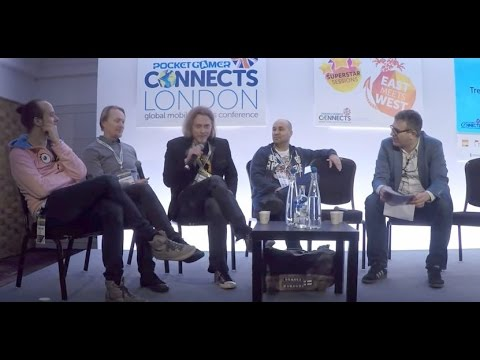
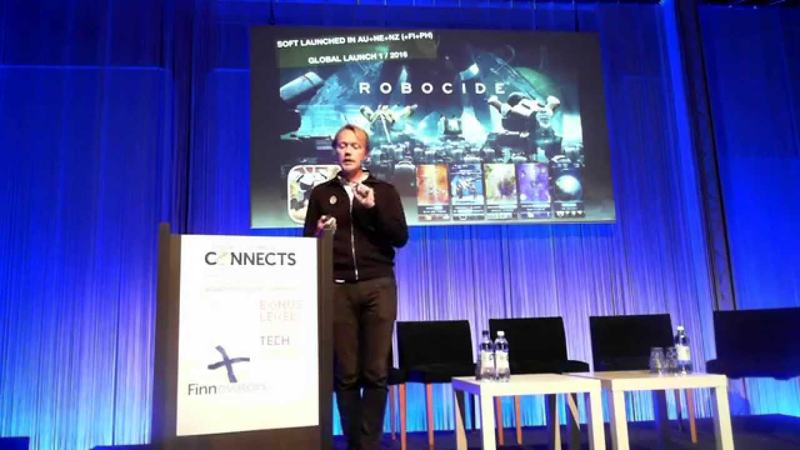
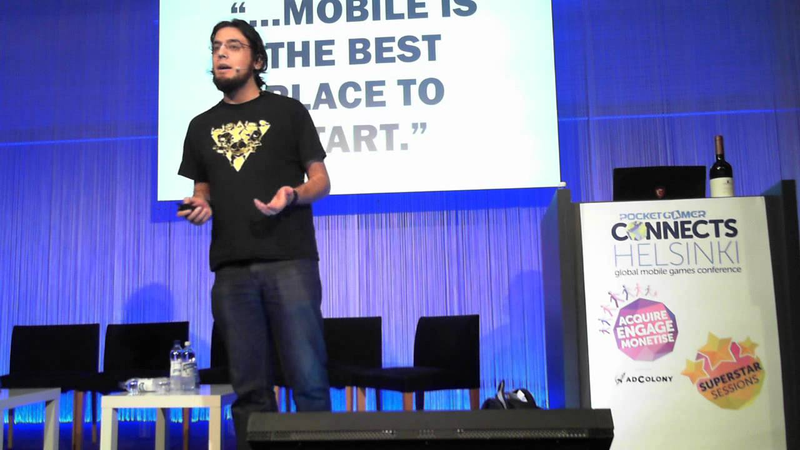
you know we've talked about the history of mobile gaming we've talked about the history of finish mobile game we've come up to the present day success of supercell and all of those people so we're going to be talking with these lovely people about the industry today and more interestingly than that perhaps about what the future might hold it's going to be like gazing into a crystal ball or something and hopefully we will find a magical prediction in which we will all be able to make vast amounts of money by listening to exactly what these people say but before we kick off with the exceedingly interesting questions I thought up I'm just going to get you all to run quickly down the line and introduce yourself just so we know all of these lovely uh people who are talking so off we go so hi everyone I'm Petri Yar I'm the chief creative at seriously building a new incredibly ambitious and pretty awesome Mobile gaming startup previously uh I was running Robia games unit and prior to that one of the founders in a company called remedy hi I'm Timo so in and I'm thec of small Giant games uh we also building
pretty awesomeness uh for the rest of the world so uh which is we'll be announcing our first title soon uh my history is one of the veterans of the uh industry so I ran h a hotel almost 11 years here from uh from Helsinki and I'm s from n games coordinator and I came kind of came to the industry at new 98 with the Real Time 3D graphics and then then there was an internet bubble and then I ended up to do some game resar research and then after I've been doing some uh game indry support and I think I'll stick to that path hi I'm L and I'm the CEO co-founder at play Raven I worked on games for the past 16 years uh co-founder of igda Finland uh built a studio for Su which was sold to Digital Chocolate and then spent six years of Remedy as executive person Chief Operating Officer hi I'm on stand I'm the CEO and
one of the founders of Boom Lagoon and uh I'm one of the many people in Finish gaming who was schooled by Sum and N chocolate was there for over seven years and then I was a couple of years at tro and then founded bomon in 2012 and the most awesome game is coming out really soon from us it's called monzu um Mo I'm y k and I'm the CEO of shark punch where we make games with our fans happy to tell you what that means after the panel um I've been in the Finnish games industry for 14 years now and uh my previous company was called uh rocket pack and was acquired by Disney uh a couple of years ago hi uh I'm Maus I'm the CEO of Remedy um we're one of the unique studios in the world where we've had success both on the consoles in AAA and also on on iOS and mobile uh having uh a number one seat um on both both sides of the equation I've been with remedy since 99 and our track record is is pretty it's
pretty um awesome and we hope to make exceptional games in the future as well hi everyone I'm y founder of next games uh I have a background from gaming entrepreneur since 2005 when I started my first mobile games company uh did a stint at supercell for a while uh then started working on next games and we just celebrated our first anniversary last month fantastic wow it looks like a signified selection of panelists which is fantastic and I've got my first question before I go off and try and look into the future and make us all look very intelligent or foolish depending upon how things work out in five years time just going to ask you all a question first about what's the finished Mobile gaming Community like now I think suie I think you were dealing with it very nicely in the uh the last presentation but what would you describe say were the Essential Elements of the finished industry now and why perhaps it's so successful at the moment uh I think that the originally reason is
that we really don't have any do domestic Market in Finland so people don't find themselves as a competitors and uh it's always about that nobody's actually worried that somebody's going to steal your game idea because it's not an issue it's about how you're going to execute the idea and I I don't think that um that people are really afraid that people others would steal their ideas or something like that and it's um and as as they said in earlier panel that when somebody succeeding it's kind of uh bringing a wind from the others so it's easier to come on the side when somebody's being successful it's uh increases the possibilities the others to be successful and as we have now seen that there is something like four or five really successful uh game companies like who has breaken through so it's obviously an issue that Finland is is the place to be and now it's much more easier for new startups to okay so how do how does how exactly does that work so someone's having a great idea how
does this great idea get into the rest of the industry is it a case that you're all phoning each other up or whatever or sending into some messages or is there a sort of a wider community that helps to construct this do you go out to a vent and meet up I mean how does it work anyone anyone want to take that in particular beer well there we go come on one thing is that when when a finish gu says let's have lunch we actually have lunch so instead of like there there's that I mean and I think is um generally in Finland in particularly obviously in the nordics as well I think we do value cooperation above competition uh and and frankly I I think there's very little um in in terms of particular ideas or execution that's not really what we're looking at what we're really looking at are kind of thought models and and kind of different approaches and when we look at strategy or game development or production or technology we look at the solutions and the logic behind that as opposed to the specific implementation so in terms of looking I guess at sort of new directions that people are taking I
think one of the things that's really developed recently is of course um I think development of Brands development of these um attempts by companies to build up their own successful entities and to build up their own successful characters and things like that I mean what's been your experience with that do you think that companies in Finland are moving ahead with that better than other companies I've always thought the Rio would been the Pioneers in that case but there's plenty of other companies that seem to be doing that is is that the case and do you think that's the future of the industry oh there we go too go for it t yeah yeah sure I mean I think what is kind of interesting it's very not so often talked about is that obviously we have fantastic coders and a lot of sort of you know fantastic graphical design talent but you know what has emerged over the last four or five years is also that you know we're finally getting our act together in in sort of the business business side of things and also building Brands uh learning user acquisition which has been the one of the Achilles heels of of the industry so far but you know that also that side of the business has matured dramatically over the five years yeah and and and but it's also there's a I
think a strong sense of progress in in terms of getting creative to meet commercial kind of finding the right uh right combination of how to create both creatively fulfilling fantastic games but but at the same time combine that with with a financially and commercially successful product and that to me is U that's very very much at the center of of the modern design talent I think that's I think that's definitely the case and I think this brings me round to one of the major questions I guess is about monetization about how people are going to be making money in the future from their games I mean uh the previous panel you know there were people who were saying I can't well basically there was someone who said I've always made pay games and I can't transition to free play it's not my skill set it's not my strength can you survive in the modern economy now in the modern app economy with paid games do you have to go all the way to free to play I mean Yim I think you you'll be an natur to talk about this yeah I think it's kind of like a transition definitely going on
that people are figuring out how to to start monetizing uh with the premium model kind of like going for all the different kind of genres in gaming but I would say like it's it's just mobile so there's going to be new platforms coming out like Oculus is going to be interesting can you actually bring free to play there with the SE similar kind of like game genres can you do RTS on Oculus probably not so it's going to be interesting with the new platforms yeah I've been seeing your eyes no I just I think it's also important that we realize that the kind of the Target price for All Digital Goods is zero I mean that's if you look at what's happening in music everybody just plays music on Spotify so you know effectively you play you pay zero for for your albums nowadays so what bands are doing is they're actually trying to monetize the customer relationship you know the fan relationship and I think that's something we all have to really recognize and get much better at like because right now you know our customers aren't really ours they're Apple's customers and they just happen to play our games like we have to figure out how
to you know get in touch with the customers before Apple pulls them in exactly you yeah the the way I like to think of the the premium versus free tolay thinking is really the movie theater versus television so when television was introduced it was I mean obviously people thought that TV is full of crap and it's it's because it's free and that's the problem but over time uh people were able to come up with new genres and new content design for television so I think fre play will evolve over time to have more quality and more Brands and be a very very big area but it doesn't mean the the movie theaters went away they just have a smaller role right so the premium game I don't think it's going to die out completely but again but at the same time if you look at premium on on the mobile market it is becoming extremely difficult to actually ship anything that that you get get your development cost back on yeah on the premium side it's almost like uh the premium is cliff
diving while the free free side is in exponential growth so so it's a challenging environment on on M is it permanent situation no no I mean transition is fantastic change is good it keeps you at least you know you have to stay awake and when you want to uh build a big business is extremely challenging with the uh B download we have seen it it's it was only like uh was it December December that these G Fox Brothers were really um lucky with oone but still you are not building like you're it's really hard to build a scalable business with with yeah if you're if you're depending on Fe featured all the time like that's that's suicide to follow up on on that transition note if if you look at the changes we're seeing in in this market like business models are Chang distribution models are change changing
platforms are changing customer behavior is changing everything is in a massive transition and state of flux right now and uh that is generally especially for people like us like trying to build something new on on this platforms that's a super exciting time that's that change gives creates new opportunities absolutely and I think Petri Petry hits the nail on the head there I think in the time of Rapid change it's it's more and more about who learns the quick as opposed to what you know uh previously and and frankly the incumbents if if we had a status quo that we had before it was all about distribution power and marketing power and now it's more about your smarts and it's about your speed and how aggressive you are and how good you are in execution I think that's a fantastic market for us to be at that's one of the reasons why I think it's it's a much more egalitarian system than it was before that's one of the reasons why we're seeing tremendous success within because content is King the best content is winning it's not about EA's marketing muscle no pun to ea uh or or or Walmart
it's it's it's more it's a better life yeah I think I think there's something else I'm G to continue on this because I mean obviously you speaking about the model of Television you were saying television versus movies but at the same time that when you were talking about TV you were saying that look it's all free and things like that but on top of TV being all free the model in TV is evolved so you've got the likes of Netflix which has arrived HBO in the US which has arrived its own subscription model and they've worked out different ways of monetizing their content they've evolved the model further by doing something new and different but I guess my question is is the problem within the mobile ecosystem is that Apple has such a strangle hold in many ways of the way that you make money of course you know they they give you a certain amount of flexibility but as we've seen recently with ad networks and things like the video incense stuff if Apple decide they want to shut off a route to you they can quite easily do that so how much room do you think there is for Real Innovation within the way that people are going to end up paying and monetizing their games in the future I mean Apple have brought in app bundles for the paid games to try and you know introduce a bit more uh you know a bit more flexibility the PID Market but do you see the arrival of new
models like within freeto play that might change things yeah I think one one of the key issues seems to be the the unfairness or fairness of the of the freeo playay model and I think that's become a really hot topic and I think you know now we have not only Apple and Google sort of stepping in and restricting the business but we have also you know you know legislators jumping in there's really interesting discussions that how do you actually interpret this what's fair and what's not fair and uh especially when you talking younger audiences gets really problematic and uh I think you know know as long as we have this like a diabolic system with Apple and Google I think it it will actually restrict Innovation because there will be new players who will be get nailed down that you know you don't even try this and I think that is bit of an issue I think one area that we which is not very much very much talked about is the third world countries where we have hundreds of millions of people who are now you know with with without the reach of Apple because they don't have no they don't have credit cards so they can't really utilize Apple's payment systems that therefore it's going to be interesting to see how this operator billing systems
actually Change the World going forward because as the Western World so to speak becomes really mature yeah anyone ask you there we go yeah I mean I've been reading a little bit about television and the isas of television in in America is that the cable networks used to really dominate the content so what you could say can you use the f word and so on and then HBO bypassed them by satellite they were the first channel to to send their content over satellite so I think there will be trials to sort of bypass this one way or another and if there really is attractive content at the other side of the thing uh it's hard for me to say that the barriers are Eternal but they might last a long time yeah I think there's something interesting here I think with Yim was mentioning Oculus and I think developers in the mobile space are willing to broaden their Horizons they're willing to go maybe I was developing on mobile first but now people are looking at other platforms they're looking at the likes of steam so simogo and obviously from Malmo they started out by releasing year walk on iOS but theyve recently relased Le on Steam as an attempt to
broaden their Market I mean I guess there's two questions to this is like one do you think finish developers are thinking in those sort of terms do you think they're thinking about broadening Beyond say mobile and thinking about other things and two if they are doing that do you think that represents some sort of danger to the mobile industry the perhaps Talent of thinking about moving their games elsewhere I mean maybe I'm just being unnecessarily controversial here he's nodding in agreement with that no agree you what your thoughts on that well so I mean I can just talk about our company but our strategy actually is we we did a lot of multiplatform at Rocket pack so we know that pretty well from a technology standpoint and we really think that for many game Concepts this actually makes more sense to kind of get the initial validation of the early fans on PC and steam for example and then you know when we have that user base we can make the jump to Mobile in a much easier manner since we already have a lot of weight before behind the behind the product which helps in the discussion with Apple for example yeah that's that's the Mike diff argument I believe he he said something similar yes yeah yeah I think it's like finished developers are learning look at all the platforms and
the new platforms I remember when Facebook turned on its like canvas the app canvas in 2007 like Finnish developers weren't there and all the US developers were like hacking away and building like really primitive games but making a lot of money and making some noise there but I think it's kind of we're learning now that it's not so much a big jump to go try something new and we're happy with that yeah no that's that's really interesting I mean obviously there's all of these different ways that people are looking at making money throughout their say business models or the way their games monetized or more just generally through which platforms they look at but another way that companies are obviously looking to get themselves off the ground it's investment investment from government authorities maybe investment from just private companies I mean how do you think that's working out in the finished sector do you think these companies are still going to get the support I mean Nokia I mean obviously I was speaking about that earlier about the role that Nokia played in investing all these companies now they've gone and it's been relying on private investment
and other government authorities coming do you think that's going to continue in the future do you think finish companies can rely on that or are they going to have to be working on basically creating these small hits and scaling themselves up in that way I'm looking at subie again I'm sorry I don't mean to but it's just I might might uh be a little bit bed but uh I would say that of course uh all the all the Finish game developers who are able to do a solid business plan and are willing to get a private Investments St I'm definitely sure that this this time is opportunities is going to last for at least for a while and uh I'm not that worried um about our success kind of getting uh fading or something because there there has been so much uh investment so so many with so many game game companies so I'm kind of relying that um that not kind of Nokia thing is going to happen to to the game industry because everyone is always asking is it is this going to be next Nokia no it's not going to be this not really the our success is not relying on one company there are several new
different kind of companies and there are several Visions not just only one Vision how to do it so that's the reason I I strongly believe that uh this U kind of great opportunities to to get some more private Investments it's continuing not of course not necessary for eventually but okay and also I don't think there's like a lot of fear of for example T not being up to beat what's happening because they are constantly developing their programs and things like that so it's quite quite obvious that they know what's going on and they are kind of tailoring their funding programs based on what's what's happening yeah that's that's fair enough I think I'm coming around to sort of one one last well perhaps one last section of questions so I think it's about Finland as the destination for mobile gaming so we saw Jeff Jefferson Valas of EA he was talking earlier about the fact that he came over from Brazil to Finland because he saw this rep with the industry and I think when you look at
the when I look from an outsider at the finished scene I see a much more mature and developed an advanced ecosystem and one that perhaps has longer term values at the heart of it and say somewh like Silicon Valley or something like that which is much more iterate and rapidly go through something how do you think Helsinki is going to evolve do you imagine it becoming this International Hub or do you imagine that it's going to retain a sort of a finished field to how about you Lassie I think it absolutely has to be an international Hub because for instance we are 10 man company now we have two me uh one Mexican and two Brazilians so we really have to be International we can't find all the talent in Finland away but I think on many levels it would be fair to say that already today Finland is the mobile gaming capital of the world kind of this it's not about the future it's here and now right now it's one of pretty much the most thriving Mobile gaming community on the P okay so yeah how's it going to retain that that position then there's a lot of competition I guess I think the economic factors are there they've always been there uh it's it's
what mono rated Us number five in the in the world to live five best cities you know lost to stockh home again damn it but but you know we're fins we play Ice Hockey we're used to that uh but anyway I mean I think we we have a lot of um lot of attributes that make it a a destination for people that's fairly accessible and easy to come to at least for us 40% of our staff are from overseas uh 16 different nationalities uh it was a big milestone for us when our first Japanese game designer joined us you know coming giving back you know uh from from kind of a a great gaming country having those guys actually migrate to Finland to make games and certainly we're seeing more and more of that and it's no longer just about coming to a certain company you're coming to a certain ecosystem so that for many is a hurdle uh if you're the only employer uh it's it's a large risk to come but honestly uh if if you're a game designer you can you can see your future in the ecosystem as well maybe uh your next career or your next next uh kind of um job will be at another
company in this ecosystem and you know obviously great companies all around uh and and New Opportunities so I think that's good for us I think we'll just draw more and more Talent yeah I think one of the you know we are also a team of 10 we already have three or four well four four guys from from you know different different countries in Finland and uh I think one of the things in going back also you know looking at some of the colleagues here I think it's the culture you know kind of the the working culture is different and at least to us I mean a lot of people seem to appreciate the the really almost like No Nonsense a lot of responsibility they are really part of the team members super critical team and they appreciate the the responsibility because you know some some guys have said to me that you know I was working there I kind of liked it but you know I was like boxed into this little thing here you know I'm the you know the King of the Hill if you exactly and so I I think I've got time for just one last little question I think I'm going to keep it on a vaguely similar theme but I'm going to talk about the way that in a way that sort of helsink is actually drawing International elements into it another way so uh in the case of next games
you've got The Walking Dead license and I think previously in mobile games obviously riy managed to get all of their licenses and I don't think they particularly delivered the thrilling gameplay experience that's expected but is it a case that Finnish companies are able to use their expertise to help International internationally known brands or licenses to basically realize their potential and if so how can they go about making sure that Finnish companies continue to secure those titles ahead of say American competitors I think it's uh sharing a lot of knowledge Shing contacts helping a friend help friend so yeah definitely need to grow as a community in a sense that there's always new things to learn how this kind of business is like done that uh we're still probably lacking a lot but yeah uh and also like just going out outside of Finland talking with other developers and Finland has the the reputation now of bringing some cool stuff to gaming so
let's try to use that I would also add that if you look at say for example the success of thoia and uh how incredibly much they've worked with creating licensing creating branding that's all builds know how it builds expertise it it's uh means that there's more people who have connections more people that know each other if if you don't know anyone directly then you probably know somebody who knows somebody and given the culture and the Cent it's pretty easy to reach out and go like hey dude I need a favor can we talk yeah think he sounds like a knowledge Utopia but no I think well I mean that's all we've actually got time for there but so could everyone give our panelists a round of applause because it's been absolutely fantastic
Summary
The Finnish mobile gaming industry has established itself as a global leader, characterized by a highly collaborative ecosystem that prioritizes knowledge sharing over cutthroat competition. This professional landscape is defined by a lack of a significant domestic market, which encourages developers to view one another as peers rather than rivals. This cooperative culture, often facilitated by informal networking and a shared focus on solving complex production and design challenges, has allowed the region to mature rapidly. The industry has successfully transitioned from a reliance on technical coding talent to a sophisticated hub that integrates creative design with robust business strategies, user acquisition, and brand development.
The industry is currently navigating a period of rapid transition, particularly regarding monetization models. While the market is shifting heavily toward free-to-play structures, there is a consensus that the sector must evolve to maintain quality and brand integrity. Experts note that the industry is moving away from a reliance on distribution power toward a model where content quality, speed of execution, and the ability to build direct relationships with fans are the primary drivers of success. Furthermore, developers are increasingly looking beyond mobile platforms, exploring multi-platform strategies—such as releasing titles on Steam—to validate concepts and broaden their reach.
Helsinki is evolving into a premier international hub, attracting global talent by offering a unique work culture that emphasizes individual responsibility and a non-hierarchical team structure. Despite the absence of a single dominant anchor like the former Nokia, the ecosystem remains resilient due to a diverse array of successful studios and sustained access to private investment. By leveraging its reputation for innovation and its growing expertise in managing international intellectual property, the Finnish industry is well-positioned to remain a dominant force in the global gaming market.














Comments