Game Development reports and market data
Documents
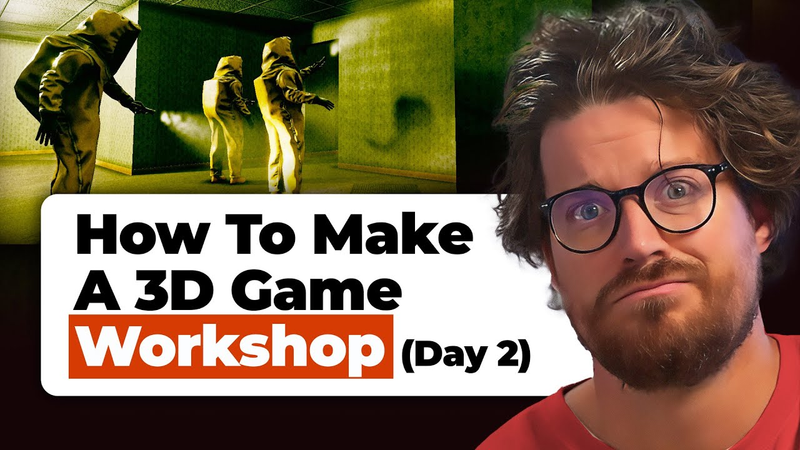
Workshop: How To Make A 3D Game (With No Experience) Day 2
Creating an immersive 3D environment in Unity requires a disciplined balance between technical performance and cinematic design.
- Optimize 3D performance in Unity by replacing resource-heavy point lights with optimized spotlights and using occlusion scripts to manage real-time shadow casting.
- Achieve a professional, 'lived-in' aesthetic by manually adjusting UVs and using horizontal texture tiling, similar to the design standards seen in Half-Life.
- Enhance immersion by applying decals to break up repetitive textures and standardizing audio levels to a range between -12 and -6 dB.

How To Make Games In 2026, 6 Years On 1 Game, Making Custom Engines (Edmund McMillen & Tyler Glaiel)
The modern independent game development landscape is defined by a tension between rapid, hyper-focused production cycles and the enduring viability of long-term, ambitious projects.
- Long-term projects like Mewgenics remain commercially viable by prioritizing unique, infinitely replayable gameplay over industry trends that favor shorter development cycles.
- Custom C++ engines can increase creative control by bypassing standard visual editors in favor of streamlined pipelines, such as integrating Adobe Animate for modular, vector-based character generation.
- Design philosophy should embrace intentional imbalance to drive player engagement rather than striving for perfect, sanitized equilibrium.
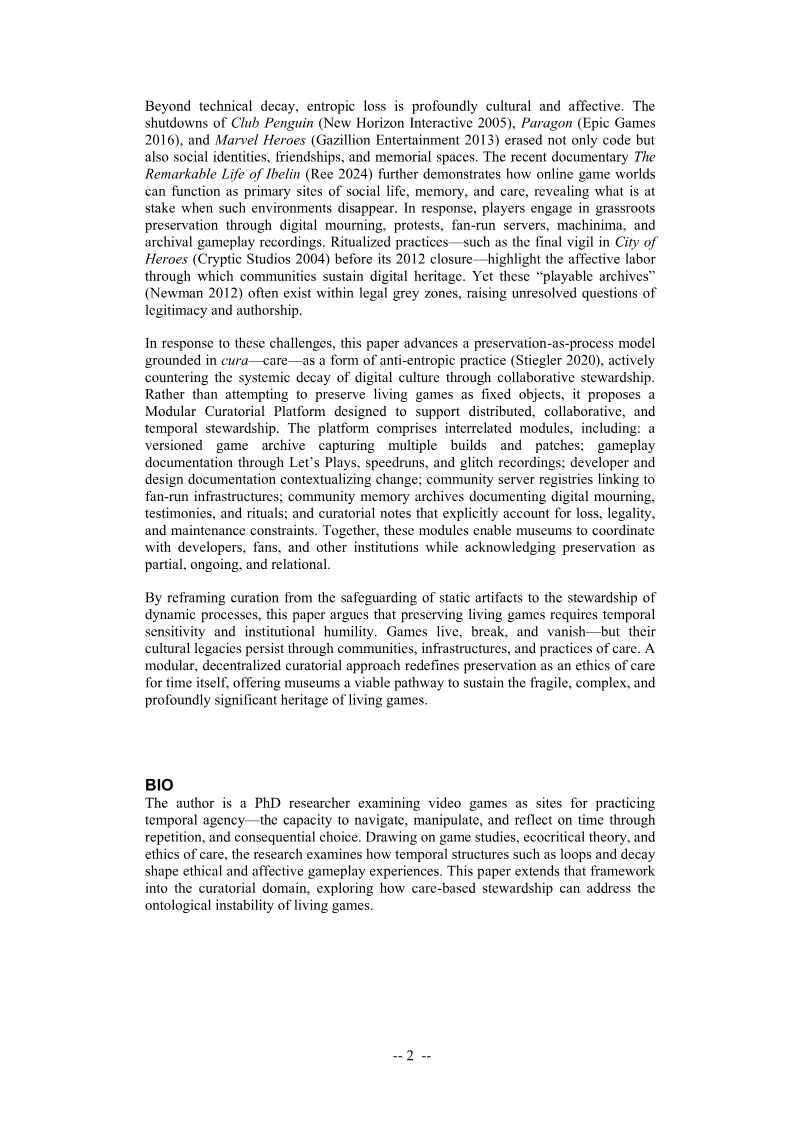

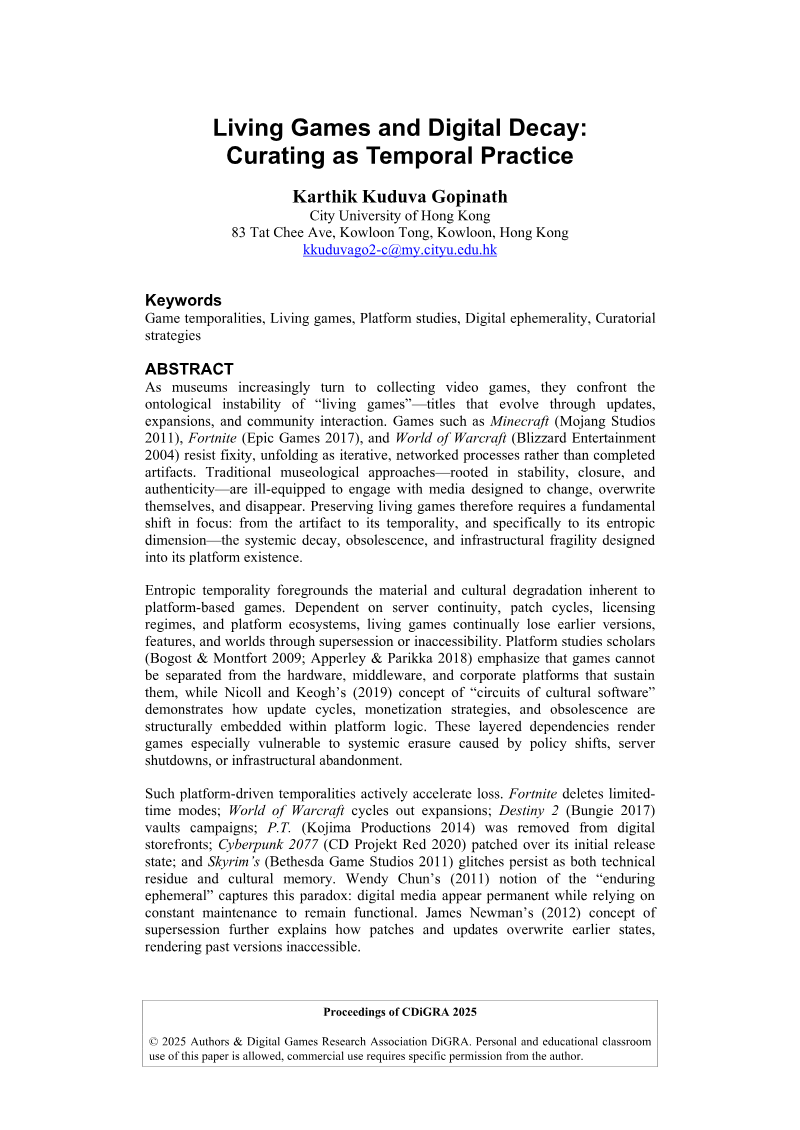
Living Games and Digital Decay: Curating as Temporal Practice
This paper examines the challenge museums face as they increasingly collect video games whose identities shift through updates, expansions, and community activity.
- Living games such as Minecraft, Fortnite, and World of Warcraft resist fixed identity because they function as ongoing networked processes shaped by updates, expansions, and community activity, so museum preservation must shift from the artifact to its temporality.
- The paper's central argument is that preserving living games requires attending to their entropic dimension: systemic decay, obsolescence, and infrastructural fragility built into platform-based existence.
- Games depend on server continuity, patch cycles, licensing arrangements, and corporate ecosystems, so earlier versions, features, and worlds are routinely superseded or made inaccessible.

Arguing With Chris Zukowski About "Friend Slop" And "Cheap Games" | Ep. #057
The independent game industry is currently undergoing a structural shift toward high-velocity development, moving away from multi-year production cycles in favor of smaller, agile projects.
- Indie developers are finding higher success rates and better mental health outcomes by pivoting from multi-year projects to smaller, faster development cycles of 4 to 6 months.
- The current indie game market is characterized by the emergence of new, rapidly evolving genres—including 'friend slop,' idle games, horror, simulation, and auto-battlers—which allow developers to define the boundaries of a new creative frontier.
- Many of these high-performing, smaller-scale games are heavily influenced by the 'Roblox' design philosophy, which emphasizes rapid iteration and accessible, fun-focused mechanics.

Their 0 Combat Game Made Them Millions
The development of non-violent, exploration-focused adventure games relies on a synthesis of immersive world-building, clear mechanical communication, and disciplined production management.
- Environment art efficiency is achieved by prioritizing unique, hand-crafted assets over modular sets to maintain a distinct visual identity and optimize performance through reduced draw calls.
- Developing for a fixed camera allows developers to treat every frame as a 'hero shot,' significantly reducing production costs by only requiring high-fidelity art where the player can actually see.
- Successful indie games on Steam are often found in the 'middle class' of sales, typically ranging between $100,000 and $1,000,000 in revenue, rather than just the extreme outliers or mega-hits.

How to Build an AI-First Culture with 1,300 People. Real Story.
AppsFlyer is undergoing a fundamental organizational and strategic transformation to transition from a measurement-focused platform into an intelligence-driven marketing cloud.
- AppsFlyer is transitioning from a measurement-focused platform to an intelligence-driven marketing cloud by unifying fragmented data across mobile, web, connected TV, console, and retail media.
- To drive an AI-first culture among its 1,300 employees, the company paused standard business operations for one month to mandate comprehensive AI training for the entire workforce.
- The company is deploying autonomous AI agents to handle technical tasks like creative optimization and audience building, aiming to shift human roles toward high-level strategy and creativity.

Let's Review Your Games — Ep. 034
Successful game design hinges on the delicate balance between atmospheric immersion and intuitive player guidance.
- Implement a structured 'Level Zero' to teach core mechanics sequentially before granting players open-world freedom, as this significantly reduces early-game drop-off rates caused by overestimating player intuition.
- Prioritize clarity and purpose within the first five minutes of gameplay, as this initial window is critical for establishing player engagement regardless of the game's genre.
- Replace abstract, text-based instructions with logical, guided sequences that allow players to learn mechanics through active gameplay rather than forced wait times.

This New Genre For Game Devs Is A Gold Rush...
The current landscape for independent game development is characterized as a golden age, defined by the simultaneous emergence of multiple highly profitable, accessible genres.
- The current indie game market is experiencing a 'Golden Age' characterized by the simultaneous success of five to six distinct, high-performing genres that can be developed within a short 4-to-6-month timeframe.
- Friend-slop games are a major trend featuring small-scale, cooperative multiplayer experiences—distinct from party games—where players work toward a single shared goal, often with intentionally 'janky' aesthetics.
- Incremental or 'idle' games, such as clicker-based city builders and civilization simulators, are seeing a surge in popularity as developers apply the core mechanic to diverse themes.
Fireside Chat with Mike Seavers at the Online Services Summit
Hypergrowth in the gaming industry necessitates a fundamental shift from startup-driven improvisation to standardized, enterprise-grade engineering practices.
- Scaling a studio from 300 to 5,000 employees often leads to a 80% turnover rate in leadership, as only about 20% of managers successfully adapt to the evolving demands of hypergrowth.
- Engineering leaders must shift their focus from individual technical contributions to team enablement and long-term organizational health once they reach the director level, as failing to delegate effectively is a primary cause of leadership burnout.
- The gaming industry should adopt mature, pragmatic operational processes from enterprise software development—such as rigorous production cycles and structured outsourcing management—rather than resisting them due to a desire to remain 'different' or 'creative'.

Let's Review Your Games — Ep. 033
Indie game development requires a rigorous focus on technical stability, marketability, and the strategic implementation of game feel to ensure commercial viability.
- Prioritize cross-platform testing across diverse monitor resolutions to prevent performance failures that alienate players and streamers, as technical stability is a prerequisite for commercial viability.
- Enhance combat intensity and enemy intelligence through audio design techniques like layering mechanical sound effects, pitch shifting, and spatialized audio rather than relying on complex mechanical overhauls.
- Avoid using problematic stock music to prevent copyright strikes, which can discourage streamers from showcasing a title and stifle organic growth.
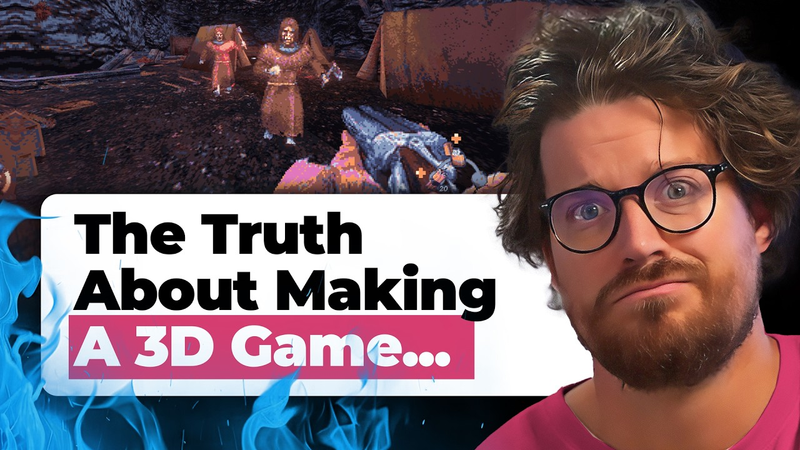
The Truth About Making 3D Games (In Unity)
Achieving high-fidelity visuals in Unity while maintaining optimal performance requires a strategic departure from traditional light-baking workflows.
- Real-time lighting is preferred over light baking to preserve specular and metallic material values, which are typically lost during the baking process.
- Performance optimization in Unity is achieved by consolidating multiple light sources into single, shared point lights to reduce the rendering load on meshes.
- To maintain high frame rates in complex scenes, developers should use occlusion volumes to block the rendering of objects outside the player's immediate view and clamp shadow render distances (e.g., to 50 meters).

Life beyond Elden Ring: A rare interview with Bandai Namco Entertainment CEO Nao Udagawa
Bandai Namco Entertainment CEO Nao Udagawa outlines a strategic vision centered on balancing third-party partnerships with an increased focus on internal development capabilities.
- Bandai Namco is shifting its strategic focus toward balancing third-party partnerships with a greater emphasis on internal development capabilities.
- The company is using the success of its partnership with FromSoftware on Elden Ring as a primary benchmark for future development standards and global marketing strategies.
- To mitigate rising development costs, the firm is maintaining a diversified portfolio that spans from large-scale AAA blockbusters to smaller projects.