Fireside Chat with Mike Seavers at the Online Services Summit
19 Nov 202572 min video
Transcript
I've described Epic's scaling as Riot's scaling on steroids. You know, Riot started out as a startup and went kind of on your normal trajectory um through their hockey stick. Uh Epic was a 300 person company for 20 years and then they hockey stickked to 5,000 people. That created a really interesting environment where you had really ingrained longheld beliefs about how a team should work and how a company should work and how technology gets built and um all that kind of stuff that simply just had not scaled um and uh there was quite a bit of u suffering at
Welcome to the Gaming Founders Podcast, a show where we interview the founders that have shaped the gaming industry. I'm Eden, the CEO of Pragma. We build tools for studios to connect with their players and essential services, including First Look, our player relationship platform, Connect, and Engine, our cloud and source-based backends that power many of the world's best studios today. If you have an interest in getting exclusive access to
the game industry's best early access games, sign up at playest.verlook.gg. And I'm Kevin Zayn, partner at Upfront Ventures. We're a venture capital firm based in LA and San Francisco. I lead game investments both in studios as well as the pick and shovel tools that power game developers and content creators to do their best work including Pragma. We interview founders on their origin stories, the tactics that help them survive and thrive, and key lessons for anyone interested in building the next generation of leading gaming companies. Learn more and subscribe today at pragma.gg/gaming founders. Today we have a special live episode recorded at the Pragma Online Services Summit. Kevin and I interview Mike Severs, a true titan in the gaming industry, having served as the CTO or a senior technical leader at some of the most defining companies in games, Riot, Epic, and now Scopely. In this episode, Mike shares his unparalleled insights on leadership, specifically how to
effectively manage engineering teams in hyperrowth environments. We'll explore critical cultural shifts that those companies face as they scale, the art of identifying who his high impact leaders were, and the pitfalls that ultimately led to leadership failures. Mike also offers a perspective on the North American gaming industry, discussing its need for maturity and a more pragmatic approach to business and game development, and draws contrast between mobile first studios and traditional PC console developers. Tune in for an honest and deep dive into the business of making games and the leaders who drive it. Uh all right, welcome everybody to the uh this is our third online services summit. Um the uh original intention for us starting this was uh it was really hard to get a bunch of engineers in a room together and um this is one of those rare opportunities where um we get to do that. Um, so, um, yeah, uh, a lot of the structure of this is spent, uh,
really allowing people to get to know each other and spend time talking to each other as opposed to, um, us being able to get on YouTube and watch, um, watch talks and things like that. So, we we have a couple talks, but we do a lot of roundts, a lot of open time for people to, um, spend time with each other. Um, and then just a reminder, um, we have a Discord. I use it to ping you guys randomly when I'm like, I need to see someone at this particular studio. Um, if you're not in the Discord, uh, join it. And it's just a great way to be able to be like, I met this person. I can't remember or I don't have their contact information. Um, but I can just DM them on Discord, which is great. Um, so, uh, thanks for everyone who, and there's a bunch of people that half of us, I think, traveled from from a different, uh, state or location. Thanks for making it out here. Um, I am going to do some quick thank yous
to sponsors. As you all know, uh, it's a tough time for the games industry, so affording anything is difficult. And so, we got a lot of sponsors. Um, so thank you for uh uh thank you to the sponsors for uh allowing us to uh run this event. Okay, I'm going to go through them real quick. Uh give you a quick um chatpt summary of who these uh uh people are. Sorry if chatpt didn't uh um give give an accurate thing. You can work on your AEO. Is that is that what it's called? AEO something like that. Um okay. AWS for games. We all use them. I don't need to talk about AWS for games. Uh Pragmas on top of AWS. Almost every studio is is living on top of their stuff. Uh Hora, they're um uh they do server hosting. Um I know you we've worked with them a ton. Um i3d.net, they have a global game server and network uh provider focused on low latency. Um,
Curse Forge, uh, by Overwolf, they're the leading platform for game mods and creator monetization. Uh, Solsta, um, Solsta is a they do build automation and deployment for live games. Uh, Rocket Science, they help studios launch and operate online games or service uh, work on the services side. Uh, K, um, they do compliance and identity services to keep online play safe and legal for all ages. uh Unity um uh and uh Vivox. This is multiplay. Um Unity's got the game engine and Vivox powers voice and then multiplay on the uh server orchestration side. And uh Navic is uh helping us on the media side. Um doing uh they do consulting and insights for game strategy, economy design and growth. um Pragma and First Look, uh obviously ourselves um doing the back end and then
uh player CRM uh and then Upfront helped sponsor the um dinner last night um which most of you guys were at. Uh Upfront's the early stage venture uh capital fund. Uh they're our first investor as well. Um Kevin who's here sits on our board um and uh is also a very hardcore gamer too as well which we need more of in the VC industry cuz they've they abandoned us um 18 months ago or so. Uh okay, those are those are uh the sponsors. Um like I said, we got an awesome lineup of uh talks, roundts, things like that. Um try to try to actually go out and and meet each other. We're going to try something new. Um, this year we're doing uh a corny networking bingo to force you guys to get up and meet people that aren't just the people that you know. Um, so uh we're giving out things like a Steam Deck, Steam gift cards, AirPods, things
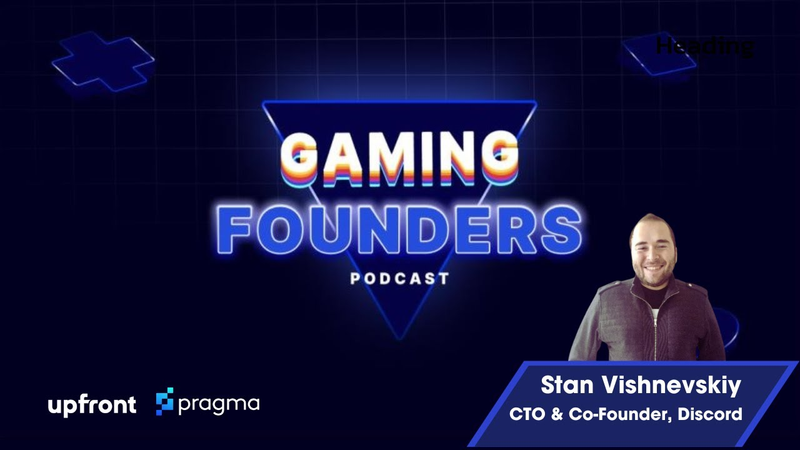
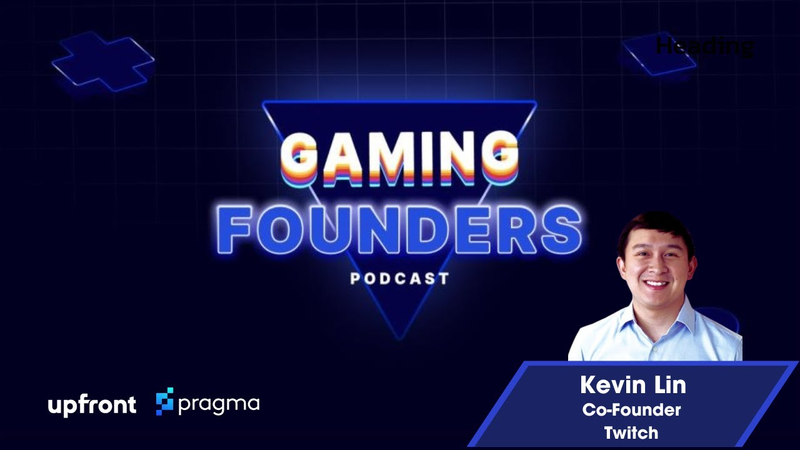
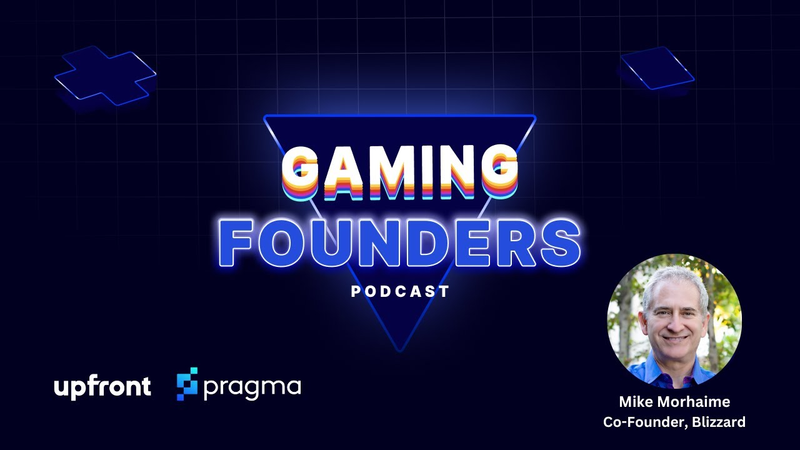
like that. Um, and uh uh so the idea is I mean you guys know how to play bingo. just if you don't have one. The idea is get get out and find someone that uh and and fill out the cards and then we will um look get as many signatures as possible on the uh bingo card. Uh it's just a fun thing to to get us to get out our seats and talk to each other. Um and uh all right, so I think the first talk is going to be uh me and Kevin uh Zang. We have something called the Gaming Founders Podcast uh that we uh have been doing for a while. Some of you guys told me you were listening to the Gaming Founders podcast coming up to this event. So, I appreciate the listens. Um but we've interviewed um tons of founders and early early stage folks at um a lot of the biggest studios and the and and platforms. The founder of Discord, uh founder of EA, the founder
of Twitch, um uh and tons of others. Uh, and um, so if you guys haven't checked that out, um, you can just search Gaming Founders Podcast on Spotify, YouTube, uh, iTunes, what is it called? Apple Music, I don't know, something Apple podcast something. Uh, and um, and uh, we're So we're going to do we're going to interview Mike Severs, who a lot of you guys know. Um, and uh, I don't think I need to do an intro for M. Well, I'll do a quick intro for Mike. Um, Mike uh was the CTO at Riot uh and then has worked at all the other successful game studios too. Uh just kidding. So he was uh he was then at Epic uh had a short stint at Yuga um doing the Monkey stuff uh and then went to um uh Scopely now um who's uh who's taken over the world. So, um, Mike is, uh, has become, uh, a recent friend and I think he actually hired my
co-founder, too, or like at least was part of the process of hiring my co-founder at Riot. Um, so maybe give a round of applause for Kevin and Mike and we'll bring him up here.
Where should I sit?
Uh, maybe over there. And Kevin and I will do this.
Oh, the the hot seat. the hot seat.
No, I see you.
Yeah. Yeah. Yeah. Yeah. We'll look at you over here.
Hi, everybody.
All right. So we'll do um we're going to be talking a little bit about um leadership uh and particular leadership as it pertains to managing engineers and um running the various organizations that Mike has run and also uh what makes a failed leader too which I thought we'd talk a little bit about this and
um that that would be a very interesting topic and obviously Mike you've been at um a lot of different studios that have different leadership and um So, I'm
really excited to see what you learned throughout the the years, but maybe we could set the stage by uh starting with with the Riot and maybe like the leadup to how you got to Riot and where Riot was at when you first joined.
Sure. Yeah. Uh some of that is a blur. I I'm I've uh I've burned a few brain cells since then, but uh um I first started uh I I was talking to Riot at the end of 2012. um joined at the beginning of 2013. I want to say the company was in total somewhere around 350 people back then. Um about 2third of that was engineering. Um we were just uh actually there's some people in the room that might know this better than me. The history part again was uh we I think we had just launched in uh South Korea. Um and the game was it was kind of the bottom of the hockey stick and uh it was a it was a pretty crazy time. Um, we were growing like crazy. The game was growing crazy. We were hiring people.
The teams were Yeah, it was it was uh that was a that that was a that was a pretty nutty time at the company. And um I guess what were some of maybe the changes that uh as you as soon as you joined and started hockey sticking, what were some of the ch changes that had to be put in place and some of the cultural changes that were happening? Yeah, it's so that that period was um I I distinctly remember um it was really like everybody did do whatever you can just to keep things running basically. You know, we you know, Riot's culture at the time, at least the way I would describe it was, you know, we'd hire great people. Uh we'd give them a mission and we'd say go, you know, just whatever it takes, right? Go get it done. um you know our infrastructure team they were like begging borrowing and stealing servers on in dark corners of the earth just just to keep bleed uh scaling um and and so it was you know it was a time of like a lot of problem solving uh I think a lot of collisions right um I think it
was around 2015 2016 I distinctly remember this the transition from okay like things started kind of leveling off a little bit um now what do we right? Like now that we can now that we can take a breath. Um and there was kind of a period of I would say stabilization and kind of rethinking that approach of um everybody do whatever you want uh to to to get to get a result. So
do you remember roughly
Oh, maybe flip it.
There it is.
Yeah. All right. Um do you remember roughly how many people it was at that time and you know was there sort of a whole new crop of folks who came in that was whatever more managerial more experienced etc or did they a lot of the existing folks kind of
pivot themselves into kind of new roles new responsibilities a new way of
that's a it's a great question um I
there was a period of leadership changeover for sure and and I and this is something I've seen happen many times now um as a company scales uh Some people can scale with the company and and the demands of of of role change and new responsibilities and new new culture shifts or ways of thinking or ways of working and and and new responsibilities and and some people don't. Um I I couldn't, you know, put a number on it, but if you made me guess, I would say about 20% make it and the rest kind of either um flatten out um uh move into lateral roles or or end up leaving leaving leaving a situation like that. So there was definitely some changeover. I would say the you know that was kind of the beginning of it around 2015 2016 I think. Um and that progressed for a couple years. um by the time you get to you know 2018 2019 I think it was a completely different company leadership leadership uh had had almost entirely turned over in a lot of
different places so um I don't remember how big we were uh around then probably 2500 2500 people would be my guess
I guess like how did you as you guys were scaling in that period identify who was going to be like a high impact leader or like high impact person in the company is like what was the what were the some of the systems to to do that? See, I I'll never forget uh the I'll never forget this day. There was there was a there was a there was a a meeting. It was me, uh Eric Danker, who I think a lot of you know, um I think Michael Saladino was there. Um Chris Heimmes and we were we had just gone through a performance management cycle. Um I think we were doing nine boxing and um we noticed a pattern. We just we had a lot of people a lot of uh a lot of uh managers that had stepped into director roles for the first time. They were struggling. They were struggling big time and and we were really trying to figure out like what was the difference between this profile and this profile.
Um and and and so you it's complex, but one of the things that we really, you know, boiled it down to was, you know, and and and I that my my thinking on this has since evolved. Like the director role is probably one of the hardest transitions you're going to make in your career because everything about that job is different. Um I think transitioning from director to VP is is hard, but in a very different way. um uh getting into that director role is is a complete like everything about your job is is different and everything about the expectations are different. Um what's required of you you're no you can no longer rely on your IC uh kind of experience. You have to insert some of that organizational leadership capabilities and um and and that's just that's a that's a rough transition especially if you don't have anybody to kind of hold your hand um through that. So I guess what were you how did you guys identify who would be successful and then what did you do to train them
after
and how much time right before like hey I'm not sure this is working out
uh before any particular person yeah um uh I can tell you the I can tell you the signals right um we used to call it uh we used to we used to call is there anything squirting out the side right um I know it's a a weird It's but it's like do you have your world in order, right? Um are you is your team accomplishing the results that it was expected to accomplish? Um are you generally uh on top of all of the issues that are happening within your sphere? Um are your people uh healthy, happy? um uh if there are issues within the the the team uh do are you on top of it or is it kind of you and so you know this idea of like something squirting out the side was like you know how under control is your thing. Um and so the people that were able to do that well
they those people thrived. Um the people who did not do that well did not thrive. Um they uh and I and I I can give you maybe an example. This I this won't be from Riot but um I remember uh starting one-on- ones with a person. This person started reporting to me and I was asking them um so first oneonone tell tell me what's going on. Oh well I have this issue this issue and this issue this issue. Okay. um how are you thinking about that? And give me the answer, you know, two weeks later. Uh so, uh how are things going? Tell me about those two issues that we talked about last time. Well, you know, it just this constant kind of um not really having their arms around these issues. And this went on for probably two months. And and finally, I I I confronted the person. I said, "Look, like just just to be clear, like the expectation is you're the one solving these issues, right?" um these can't go on two, you know, for two months and not have a plan. And you
know, they were kind of externalizing. Um and um that's actually more common than you'd think. Um I still see it today and I see it in very senior leaders.
I'm going to ask a very VC follow-up question.
We love to pontificate about oh the founders never fired people fast enough and I'm just curious like you've been in multiple small to large orgs. Yeah. have you know I mean that's kind of a whatever truism everyone you know spouts right um
is there a way to actually get over that is there a way to actually get better at like hey look properly identifying do making the corrections faster or I'm curious how you've sort of dealt with that over the years
yeah um I've seen both sides I've seen I've seen uh I've seen ruthlessness right um with a a total lack of empathy um and I and I've seen what you just described I haven't seen a lot in between if if I'm being honest. Um uh the you how do you solve that I think is is complex. Um, I
fundamentally believe that, um, especially in the games industry, we do not do a good enough job of training or expecting people at director level and above to expand their repertoire of leadership capabilities beyond their individual function. Right? So, um, you know, I can tell you stories of being, uh, I'm I'm not going to name companies for this, but um, where, you know, I, you know, it's like, well, this person's a senior director. Okay, great. Well, you know what, uh, what are they doing? Well, they're they're they're writing code. Oh, great. How many people report to him? 40 people. Oh, interesting. I go talk to the 40 people. Tell me about your boss. Well, I haven't talked to him in six months. Um, okay. Well, you so you just like there's a there's this, you know, this we we do not do a good enough job of telling people, hey, when you get to a certain level, um your job
changes from doing the individual contributor work. And and this applies to this applies to engineering, art, you know, design, product, you name it. Um you have to start thinking about the broader organization. You need to start thinking about what does high performance look like? You have to start thinking about the culture. you have to start thinking about all of those things that make a high performing team and organization. Um because no one else is going to do that for you. Um and then yeah, getting to how you train that or maybe systems that you put in place to help actually get those people
Yeah.
better.
Um yeah, that's a good question. Uh it usually starts with a conversation. and I took over a team. Uh this is like a few years ago and um I watched this team work for a while and there was a ton of this happening and um it was interesting because when I would have my one-on- ones with all the directors and senior directors, you know, you could tell they were in pain.
They were there. They they were literally suffering. Their their jobs were terrible. And um I thought for a long time about how to approach them on this, but finally I pulled them together for a quick, you know, kind of two-hour like, hey, let's just get together and talk about how things are going. And um and I reflected back to them. I said, hey, you know, you guys seem like you're in pain. And they're like, yeah, our jobs suck. And I said, well, if I was doing your job like you were, I would think it sucked, too. And they were like, what do you mean? And so um that was the u impet that was the beginning of a conversation where I had to just tell them the these this is what good leadership at your level looks like. Um it is comprised of being a good contributor but also a good manager, a good organizational leader, you know, etc. etc. Um and uh you know I will in a situation like that for example I I'll do some coaching. all you going to see if people are actually kind of um uh picking up what you're
laying down. Um some people just can't get over that hump, right? And so you there's a kind of a decision on an individual level of like can you go on that journey or not if you're that far off.
Um so but it really it takes a lot of hand hands-on one-on-one coaching takes a lot of um willingness to uh speak truth to people and with with empathy in a way that maybe they've never heard before. Um, it's pretty hard to go tell somebody like, "Hey, you you've been told for 20 years that your job is to do A. I'm telling you, if you want to be successful, you need to do B." And you can watch their head spin around. And I've literally had people like scream at me and tell me I'm wrong. Um, you know, but it's um Yeah. So, yeah. And um I guess going back to the sort of Riot experience going from basically like a startup culture where where maybe there was a need to sort of move fast and iterate fast and those kinds of things to um whatever 2,000 plus people that are working on multiple games that have
need to have you know when they ship anything it's going to impact 100 million players and those kinds of things. I guess what I guess maybe what did you learn in that transition? Um, and then m maybe is there something that you would have maybe changed about that some of those things that happened cuz you hear about all the time like oh I mean what people will reflect on hey
remember the good old days of blah blah blah versus now or
sure you know
um people a lot of people in this room went on this journey with me. Um uh um but I think um the biggest thing was we had to transition from everybody can do whatever they want to some standards to some you know common way of doing things. Um, Riot was carrying around a huge um, uh, weight of uh, tech sprawl. Like we had technology. Oh yeah, I we had we had every technology on the planet somewhere. Um, and I remember
talking to a group of our new engineers that had just started. We did a we called it dnubification. We had a we had a we had a class for all the engineers. And usually was a month or two after they started and you know started seeing a theme of like you know what has your experience been like and they're like it's really hard to get started here. Why is that? Well because there's nothing standard anywhere. There's no I've got to make all these micro decisions about first I got to pick the technology I want to use and then I got to figure out how to get it into our environment and then I you know D and then I can be productive. And um that was really a turning point for us to start thinking about okay what um what would that look like? Um and that was a journey. It was a journey to get, you know, a group of people, especially, you know, close to a thousand people who were used to coming to work every day and being able to control their own destiny to be like, well, yes, and um we I need you to think about um the company and I need you to
think about your co-workers and I need you to think about the future engineers that are going to work here more than you think about yourself. Um and that that was that was a tough transition. I I'm glad we I I still um am proud of that transition. I think we did I think we managed it pretty well. Um if I could do anything different. Um I think it would be I don't think we I don't think we moved fast enough. Um I think I would have been more forceful. I think Riot had a very consensus driven culture. It was, you know, go talk to everybody about everything and get everybody make everybody feel good about it before you try to even take the first step. um the the the the me you know five six years later I think I would just be like no this is what we're doing um and and I think uh I I think we would have potentially got a better result faster um yeah got it yeah and I guess transitioning to maybe the next uh next phase um so I think you joined Epic and
Epic was going through another uh scaling uh exercise, I guess. What were some of the maybe differences and commonalities between the two?
Yeah, Epic um I've I've described Epic's scaling as Riot scaling on steroids. Um there was there was a lot that was different um in the sense that um you know, Riot started out as a startup and went kind of on your normal trajectory um through their hockey stick. Uh Epic was a 300 person company for 20 years and then they hockey stickked. to 5,000 people. Um and um the that created a really interesting environment where you had really ingrained longheld beliefs about how a team should work and how a company should work and how technology gets built and um all that kind of stuff that simply just had not scaled. Um and uh there was uh there was quite a bit of
uh suffering at at Epic uh because of that. Um Epic also I think grew faster than Riot. I Riot went from what 350 in 2013 to I think about 4500 in 2019 when I left. Um Epic did that in the span of like two years, right? They went they went from 300 to 5,000 in in in in a couple years. Um, Riot held the hiring bar very very tightly to too too much to the frustration of of of many people in this room if you remember those days. Uh, Epic had was kind of gloves off hire anybody you can. Um, that created some issues as well. I guess was was there any like cultural differences from when I think about Riot, I think about this kind of like player first kind of like business almost like business guys that were like in the mod community and that that kind of um founder DNA versus Tim being this you know uh technologist uh
like how did that
shape the culture?
Yeah, Epic very much an engineering le culture. Um uh I I was in multiple meetings where Tim uh would uh someone from I felt so bad for for these folks sometimes. You know, somebody from marketing would be talking and Tim would be like uh where's the engineer in the room? I want to hear I want to hear from an engineer. Um and uh and if you've been at Epic in any period of time, you got used to those kinds of uh those kinds kinds of comments from Tim. Um so yeah, very engineering led. Um uh which you know I I you know frankly I kind of en enjoyed that a a little bit. Um it was really nice for things like Epic Online Services and the engine team where you know you could really have a strategic conversation about technology um with the founder of a company in in in in a way that you know was meaningful. um that was not always the case at you know somewhere where at at Riot where um engineering I think was
just you couldn't have that same kind of conversation um uh so it did create some cultural differences now you know there's a dark side to that too right uh we didn't have great product management uh we built a lot of bridges to nowhere um we uh hacked together a lot of stuff um just you know to hit a deadline and and and I think uh you know my my takeaway way is uh balance is good. So
you you mentioned earlier about the uh you wish during that transition at Riot you know looking back you you wish you could have been a bit more forceful like was sort of Tim or that epic culture that way and did that help them or were there sort of downsides to that approach too? Yeah. Uh uh it was very um yeah this is a this is a nuance question. Uh yes you know when Tim said jump everybody said how high. I mean that was you know and and we would pivot the company on a dime. It would you know today it was you know get uh the epic
online store to you know X. Uh tomorrow it's uh we are shipping UFN by uh GDC. um the next day it's we're shipping uh Lego um you know by six months later um and and you just didn't you know those those big big pivots were the ones that I think um were good because there was zero lack of ambiguity about what was important right as a company um it was just crystal clear to everybody the number one priority ship ship UFN um Unreal Engine for Fortnite sorry I'm using uh using acronyms Um uh now the dark side of that was and I'll tie this back to leadership. Um I would ask uh you know we we'd we'd be uh looking at our road map and you know I'm hearing from the team hey this road map doesn't work and I'm like great. Why are we why are we still why are we still trying to make it happen if it doesn't work? like
well because Tim said and I used to play a game with uh Dan Vogle who was my boss our COO. I used to play a game with Dan and Tim and it was called Tim said and so I would come go to every every just about every oneonone. I would walk into walk into Dan Dan's office and be like so here's what I heard that Dan and Tim said this week and um I can't tell you how many times the um intent and the uh words did not match. Right. And so I had to one of the one of the hardest things at Epic for me was to kind of retrain the leaders to like, okay, Tim said, "But what did he mean?" Right? And and and if it doesn't work, why not tell him it doesn't work and let's come up with a plan that actually makes sense. Um that was that was tough. But anyway, so
actually I'd love to stay on that for a little bit. I mean, you're sort of alluding to how to manage up.
Yes. Um any more thoughts around I mean especially with sort of a founder like a Tim or co-founders or whatever you know
sometimes you have like oh that's the Tim whisperer let's all go to that person which can work for a while and then at some point like oh that breaks down or the person leaves or whatever like yeah any thoughts on sort of how to effectively do that and have it last longer.
Yeah. So um I this may not be for everybody uh but this is my this is my style. This is my approach. This has worked for me. Um, I will speak the truth with um almost in unabashed like I will I I'm just like this is this is the situation. Um and I I do it unemotionally, but um I I have a I have a um a project that I'm on right now. Um when I first, you know, started working on the project, the team thought they were going to ship the game in October, and I was like, "That's crazy. There's no way you're going to ship this game in October." Um, and uh, I was the first person to tell the I think I was the first person to tell the CEO that that this date you've been hearing is just it's just wrong. And um, and you know, that might sound crazy,
but I'm like, what are the what's the alternative? I have I have two choices here. I can lie to you and uh and try to force a team into a bunch of pain in order to um to um meet some criteria that is probably a farce anyway because most people I know even even very um uh demanding founders are pretty reasonable people just like hey the team isn't off by a week here they're off by 12 months right and they're like oh well gosh what are we going to do about that they may not be happy, but at least you can come up with a plan that makes sense and then you make a commitment that you're going to get it done and you fix it and you move on. And so, um, that's that's my approach. That's usually what I tell people, you know, uh, I remember working through a pretty a pretty interesting situation uh, with a with one of those Tim saids where the team had committed to a timeline that they knew they couldn't hit. And I was like, well, you got to tell them. They're like, we can't do that. Like, yes, of course you can.
You have to. You have to, you know, otherwise you're going to miss the day. They're like, "Well, we'll take our knocks when we when when we when we miss the date. We're not going to tell them now." And I was like, "This no that's not that's not that's not how we lead." So,
yeah, I think certainly appreciate when when you when you hear the truth and and you build trust obviously over time too as well.
Yeah. Yeah. Exactly. I mean again there's nuance to how you handle that conversation tactfully but um I have found time and time and time again uh that I have I've been able to move some of the most complex issues in an organization forward um that people thought were immovable just by having a truthful conversation with the right people.
Yeah. Yeah, I mean I I guess part of me is kind of thinking a little bit about um the sort of maybe North American games industry like troubles right now around um
I guess staying competitive where it feels like maybe I I I guess maybe the narrative out there is like North American labor expensive and um urgency levels are low. Maybe that's the narrative, right? Sure. Like there's probably some truth to that and some like uh not truth to that. Um I guess do you have a sense on you know your thoughts on where the industry is going from a like what do we need to do better I guess as particularly in the North American side and just
what are some ways that we can I guess really ship games faster because just pushing sort of on on your like well the deadline's unrealistic so we can't meet it. Um, wow. It's a spicy meatball. Thanks, Aiden. Um, you all can uh you all can beat me up later, I guess. Um, I think the games industry has needed to and and is just now coming to terms with um maturing as
an industry. Um, it's been around for a while, but you know, like I I I have um I spent 15 years in enterprise software development before I joined the gaming industry. Um, I had people tell me I I still have people tell me video games are different. I'm going to tell you, you're wrong. Um, software is software. Um, there's a bunch of creative software out there in the enterprise that has the same, you know, trappings. You know, they are different. It's a different kind of software. it is. But um the the teams, the processes, the the mindset, the the you know the how you move something from a production perspective, from concept to execution and delivery to uh to people is relatively the same. Um there are things that the enterprise software world has been doing for 20 years that the game industry just has either refused to do or or won't do. Um because because we don't want to be like those corporate people. Um and look,
I'll be the first to tell you, I still have friends that work in those environments and every time I go talk to them, I'm like, "Oh my gosh, I want to throw up in my mouth and I'm like, I'm so glad I work in games." I'm so I'm not talking about the red tape and the bureaucracy and the inability to move forward and that kind of stuff. Like I think that world could take something from gaming. But what what I think has been what what I've seen in in gaming at least is just a lack of just kind of pragmatic maturity about about the business. Um this is one of the things I really love about Scopely. Um I've I've told a couple people this story this morning. Um you know Scopely um has managed their fundamentals very well. Um it's a uh in a lot of ways Scopi is a financed driven company.
Um and and it's served them well. Uh we are not afraid. We have budgets. We have um we have hard yeses and hard nos on certain things. We have um we have uh
accountability meetings around our games and how they're moving and that have actionable takeaways. And we are not afraid to kill things and um and we're not afraid to continue investing in the things that need to be invested in. And so I I there's a business maturity and a process maturity and a um you know every studio thinking they're you know the special flower that is different you know I think is something the industry if the industry wants to continue to be competitive um there are some things that we just don't need to reinvent the wheel around every time you start a company or every time you go to make a game. Can I'm I'm curious actually I mean you sort of just alluded to the finance piece of it but if we maybe also ask about are there things around tech and product design that you've just sort of seen this pattern over and over again that hey look I I think these are things that
as a whole we should change and not do it this way.
Yeah, this is um I'm going to make some uh uh I'm going to I'll probably make some general statements here. There are
exceptions to all of these things, right? Um but you know I I think we're finally over the hey we have to make our own game engine right uh in in the industry. Um now are there times when that makes sense? Of course. Um but in general you know let's let's uh UEIE and Unity are probably good for 98% of the use cases out there. Um we're starting to get convergence I think in platform technology. you know, um, we're the the 2015 2016 era was pretty nutty when all the new stuff was coming online and service mesh and and all that kind of stuff. You know, that that's finally stabilizing. Um, but you know, I used to tell the team at Riot and I still believe this. Um, uh, there I think a guy named McKinley wrote an article one time was called choose boring technology. I think it's the best technology article ever written. Um, boring technology works. You don't have to think about it. It just runs. Um, and so, you know, find the best tool for the
job. Um, and use that tool and then when it stops being useful, move to a different tool. Um, what the thing that I find myself fighting engineers on the most is they're like, "Well, it only meets 85% of my use case. I need I need I need something that meets 100% of my or I'm going to go write my own thing because it's missing that 15%." I'm like, "You actually need to change your use case 15% in order to make that thing work." um because you're going to pay for that for the next 20 30 years until that thing goes away. Um so
that's why uh Pragma's on the JVM and uh gotten a little little criticism for that over time, but it's boring.
Yeah.
It's old enterprise Java stuff. Uh um I I I guess Yeah. And part of the the DNA that you mentioned on um on the Scopely side is I I wonder contrasting the the founder of Walter Javier plus their background plus also just
mobile and PC console having very
different DNA with mobile being very
you know datadriven maybe to a fault to some extent and then the PC console industry being very much like this is an art form and
um and having a lot more looseness around that side of things.
Yeah, I don't want to Yeah, I don't want my my other my other comments I don't want them to be, you know, mistaken because Yeah, there there is nuance to it for sure. Um and um you know, I think some of the the high-end game development is a lot like making a you know, like I'm making a Hollywood movie. You know, you're going to spend you know, two $300 million. Uh you hope it's a hit at the box office. Um maybe not, right? Um and um I think that's where you're seeing the the industry evolve right now, right? Is you know uh even making movies like that's a pretty ruthless like factory kind of like you know there's there's probably you know a handful of
people who get to exercise their creative muscle but for the most part it's a lot of people doing a lot of the boring things day in day out over and over and over and over again to actually get a movie out the door. um video games kind of the same way, but I think in a lot of ways we just we try to make it more than that and some of that gets in the way of us just you know getting the job done. Do you think there's maybe things that uh the mobile industry can learn from the PC console industry and vice versa? Like what are I think maybe having the lens of working at a
maybe mobile first studio today versus Yeah. you know the other ones.
Yeah. Um, I think I'll answer that from a player perspective, right?
Um, and you'll you'll you'll find this anywhere. So, but I am going to kind of pick on the mobile industry a little bit. Um,
games are supposed to be fun, right? and and fun. Like this is the thing that I I think kind of just uh uh forgive me, but like it kind of breaks my heart about where gaming is
going and and and and even the film industry to be honest. Like you know I I just I find very little original content out there now. We're like making the same movie 50 times because we found a formula that works and and we're kind of doing the same thing in in gaming. Um I'd love to see more more innovation, right? Um,
how many match three games can we make?
Yeah. Yeah, exactly. And you know, look, let's some of those things can be fun, but you know, you're you're flipping different switches in people's brains, too. Um, so anyway, um, so I but I do think I think if you were to um, again, very very broad generalization. I do think your PC console kind of uh titles tend to lean more into like is this a great experience? Right. I think your mobile titles tend to lean a little more into is this a great business,
right? Yeah. And I guess like the mobile
space has really really strong metagame systems that will
generally encourage strong retention and those kinds of things, but maybe like from a fundamental standpoint like Yeah. you're turning on certain
Yeah.
setting off certain things in your brain. But
yeah.
Yeah. And I sometime I sometimes wonder like what's the next evolution, right? Um because you know freeto play was the the the big shift in in monetization. I I sometimes wonder you know what is the next shift if if there is one or or is this what it is you know forever? Yeah makes sense. Um I guess bringing some of the um uh the transitions from Scopely um which is uh I guess now in the news a lot for both uh the EA stuff. uh I mean it doesn't directly you know impact you but um Scopely seemingly has grown in its sort of and and now it's just the whole uh I guess the whole parent company has grown in this sort of really ambitious move towards uh you know being
a multi-platform publisher right in uh a lot of ways I I guess maybe you could talk a little bit about the transition in in this current I guess epoch in your career and Yeah. Um it's actually one of the reasons I joined Scopi. Um so uh I was um coming to the end of my time at Epic. I was thinking about um taking a break. Uh next thing I know I'm on the phone with Walter and Javier um hearing about their ambitions to turn Scoply, this you know mobile game studio into um you know an omnipatform you know kind of company. U what actually really resonated with me the most in that conversation was uh I think it was Walter said you know look we you could you could do nothing to scope play you you could not make six seven you know however many new titles we have on our on our slate um and still be wildly successful right but they they
weren't content with that like hey like what is the next evolutionist company and um and they wanted to double down they wanted to see you know how far they could push it um and see if we could be the best gaming company in the world, right? You know, and of course everybody wants to be the best gaming company in the world, but I just I I was like to to be at the top of your game and and and still want to push um further um in the way that they're trying to do it just I don't know, something that really resonated with me. Um I didn't want to just go just go make another game if that makes sense.
Um and so I'm excited to be on that journey. Uh there's a lot to change. Uh there's a lot of shifts, you know, happening. Um a lot of things that the company's having to figure out uh for the first time. Um because, you know, we we haven't done, you know, crossplatform before. Um but we've hired some incredible talent. Um some of it's here in this room. Uh and we uh we've got a
great ambition. uh we've got the runway and I I think um yeah I'm I'm excited about what what we have uh on deck. I'm curious if you've seen I mean given the existing successes on mobile this for right now into you know PC console what is the strategy I mean you mentioned all the hiring is it like hey look we just need a whole separate team we'll silo them to go work on the PC console stuff now we're going to mesh kind of the two things together how do you figure out who internally to lead versus external
yeah um so uh this gets just and this is really just how scopy is structured um scopely is decentralized uh uh almost entirely. So, uh, every game is its own is is its own P&L. It's its own business unit. Um, they roll up into divisions that are, um, drawn around categories. Um, so, uh, what we call the new slate is all one one unit basically. Um, those are primarily new teams, I would say,
but there's a there's a there's there's a decent amount of folks who've moved from other titles at Scopely. um maybe maybe 50/50 uh uh uh existing talent versus new talent. Um I actually don't know but um they do operate very independently from from all the other all the other games. Um so
and then related to that I mean Scopia is also known for you know working with third party studios especially a bunch in overseas markets and you know having done a great job with them pulling them inhouse and etc. or like any any lessons from how to do that well that you've seen and and does that apply, you know, to the PC console side?
Yeah, I mean, I can speak for myself. Um I don't know, but I think of um I think in the in the due diligences that I've been a part of, I think of those in the in the same sense that I would think about anything else we've talked about. Um, I'm usually the person uh like tell me about the team, tell me
about the leaders, tell me about how they're wired, tell me about how they think, uh, how do they plan, how do they deliver results, uh, what do they what do they do when they fail? Um, how do they act when they fail? Um, and um, and I I I will sometimes get, why are you asking these questions? Like, you're the tech guy. and and and to you know I'm like well because honestly like in in in in the in my 30-year career u I've seen very few technical issues that were were technical issues almost all of them were people issues um or organizational issues at some level and so um and so so to me I think it's you know find the great team that is aligned with your culture your mentality um the way you want to work the way you think the way you the way you solve problems s together like this is this especially when you're merging two cultures I think really get into okay what are we going to do when we disagree uh who's going to win that argument right and how are we going to resolve that and what who has
voting rights and who doesn't um that's a huge huge thing um because I've seen that go really well and I've and I've seen that uh not go well the the other thing is just be clear on expectations too um I've seen people try to woo a studio by making promises is that they can't deliver um and then you acquire them and then you end up with uh angry angry angry founders and or other other other people and that's never a good situation to be in either. So um yeah I to me the tech is obviously important right um but to me those are the easy things. Is it good tech? Is it not good tech? Does it scale? Does it not scale? How much tech debt is there? How buggy is it? What you know etc. etc. Um, but when you're dealing with the studio or an acquisition or something like that, it is to me it is all about the people.
Maybe one more personal question. Um, I I had randomly found out from LinkedIn that you're in seminary and um,
uh, I and I, you know, we share the same faith and I just learned that and so I I was, you know, curious like what are you I guess why did you decide to go to seminary? on. And then second, like what are you maybe learning that maybe applies to your um your a lot of the leader stuff stuff that you do today?
Yeah, it's a great question. Yes. Uh so yeah, I'm uh I'm entering my second year of seminary. Um I uh and people ask me like, "Are you going to be a pastor?" I'm like, "No, I'm probably not going to be a pastor. That's not I don't at least I don't think that's my I don't think that's my path." Um I um my my my journey to seminary is long and if anybody ever wants to hear that story I will I will tell you. Um I my my uh coming to grips with my faith has been a lifelong journey. Um I and and and it was actually a lot of my career that brought me to a kind of a crisis moment of of faith and um and uh and and now I've I fell fell fell onto this side of that. Um
uh the thing that I think to to the second part of your question I have long believed and I and I believe this to be a thousand% true. The kind of leader you are is directly related to the kind of person you are. The kind of person you are is um made up of your past, your background, your baggage, your struggles, your pain, your suffering, your your triumphs. We're complex beings. And you know, uh I don't think there's any nobody's there's only a couple people at Riot that worked with me many many many years ago. Um, I was not I was a terrible boss. It was terrible. I mean, just outright bad. And And it was because I was an arrogant little jerk.
Um, you know, I thought I knew everything. And I thought I um uh uh I thought the world revolved around me. It took me a very long time to realize that, you know, work a lot of work is about being dealing with humans and dealing with other people and dealing with their stuff. And um and you got to know how to do that if you're going to do it well, right? right? If you're going to do it well, if you're going to lead teams, you got to know you got to know what makes people tick. You got to know what um you got to know uh what who they are as people. And um and I find there's a a lot, at least I'm getting a lot um from my seminary training in terms of just um thinking about people as uh as um you know, complete humans.
That's great. And one maybe one final question that we we ask in um all of our interviews is like if you could kind of go back to you know young Mike uh early in your career is there kind of one lesson that you'd communicate to yourself on um something that you know
you could you could either do better or just some some message that you would give yourself?
Yeah, I think um this is going to be related to your last question. I I think I would have to I would have told my younger self that I that you're not going to find your identity and your purpose in your career, right? I think um I spent way too long trying to prove uh that I was worth something um through uh bigger titles, bigger roles, bigger achievements, and that ultimately ended up hollow.
Great. That's very powerful. Great place to uh uh end. Um why don't we give Mike a round of applause. Um yeah. Okay. We're going to have some time for Q&A. Um uh so uh if anyone wants to ask a question, raise your hand. We we can
get you a mic. James will get you a mic and um and go from there. So, um, one of the things you were talking about was blending product and techn sorry blending product and technology. I'm wondering about your thoughts about, um, sort of senior leadership rooms where there's a lot of sorry, a lot of assumptions usually about people turning up and being accountable. uh but sometimes on the technology side you've got people who are maybe influencing and not directly accountable for making decisions and and there can be difficulty of getting technology people into those rooms.
Yes.
So I'm wondering what your approach or or your learnings about that topic are.
Yeah. Um, I don't know if this is going to be a satisfying answer, but it's my honest answer because I I've I've um I I recognize the privilege I have now of some positional authority. It wasn't
always this way, but but now I will fight to get that person in the room. Does that uh So, I just took over a project. Um, it's not in the best shape. Um early on as I was doing kind of due diligence on it, I was asking some of those questions because what so one of the signals the reason I got pulled into it was that the tech was um uh not performing very well and uh so I was asking about you know tell me about how leadership meetings go who's in them who you know and sure enough you know tech director I don't know if anybody had even talked to the tech director in in in in some some amount of time. And I and I just I pressed on that. I was like, "Look, like, explain to me how you're going to build a uh let's say you're a construction company." I use construction companies as a as an
analogy all the time. Um, explain to me how you're going to run a construction company without having the foreman and the architect in the room. Like seriously, like just that doesn't make sense, right? It really doesn't make sense. Most people are like, "Yeah, oh gosh, that's crazy." you know, and and to me, I think software is kind of the same thing. Um, now I think tech leaders don't do themselves much service in a in a lot of cases. Um, they don't help themselves out here. Um, I think a lot of technical leaders um haven't learned the language um that happens in that room a lot of times. um uh how to be succinct, how to um know what people care about um and bring just that uh to to the conversation in a in a business and kind of like um producty sense if that makes sense. And again, I'm you know I'm generalizing there's a lot of
lot of people are very good at that. Um but um it is not uncommon to find at companies especially that aren't engineering led like Epic um where you know people just don't think of the engineering side of the house as as leaders. They're they're the people doing the work. Um and yeah, it's a it's a it's a huge misfortune. So um you got to fight for it. You you got to or have somebody help you fight for it. Um I think um but uh I will also say you know I don't let go of those things when I like if if I'm like what is the thing that's between me and success and and it's that I just I won't stop until I either get the outcome or I you know reach the conclusion that I need to go work somewhere else where where or where or where or where or where or where or where or where or where or where or where there's a better a better situation. So is that Yeah. Okay. Other questions
over here? There. Cool. Perfect. Um Jason from Hora. Nice to meet you.
Hi Jason.
You've talked a lot about leadership. Who are some of the people in this industry that you turn to in your growth um as a leader or somebody that you'd love to meet and would admire to learn more about?
Man, that's a good question. Um so most of my leadership growth has come from people outside the industry if I mean uh in terms of like my mentors that I go to today, right? Um I so I I've had I've I've been very fortunate to have some great um bosses um in in in the industry um that you know invested a lot in me um trusted me maybe when they um didn't need to gave me opportunities. Um who is somebody I would like to meet? Um
that's a good question. I'll have to think about that. Give me let me let me chew on that for a little little bit longer. Yeah. And part of that's just because and and say this as humbly as I can, but I've just I've met so many people in the industry now. I'm trying to think of who I haven't met yet that I'm like, "Wow, I'm really Yeah. Um Yeah. Yeah. Let me think about that. That's a That's a good question. Hey, uh Will from Pragma. I just a one as I'm growing and like becoming a manager and like growing into leadership positions. Um what what advice would you give someone coming into a new organization for the first time?
Um who is a leader kind of working up to that director level, that higher level?
How do you gain the respect of the
engineers and the organization if you're not in the code as much? if you're not being able to demonstrate your true engineering skills. What kind of advice do you give people coming into a situation like that?
Yeah. Um I'll I'll I'll answer that with a question. When you were an engineer, right? Um who were the bosses you respected the most? And was it because they were in the code with you?
Yeah. Not necessarily in the code, but yeah, they knew they knew about the
they knew how to give advice, I guess. Yeah. So, um I I believe strongly in um being remaining technical, right? Um, I'll tell you one of the uh one of the hardest jobs that I think I had in this regard was when I when I was leading the Unreal Engine team because I mean uh no disrespect to any other engineers,
but some of the people on that team are like some of the smartest humans I've ever met. I mean, they're just like incredibly ridiculously talented engineers. And um so um and I was just like I I like I had some I had a deep sense of um imposttor syndrome. I'm like how am I going to how am I going to uh uh uh uh you know resonate with these folks. And so I did two things that I think helped I think I don't know you could go ask people from that team uh if I'm wrong about this. Um there were areas of the the engine that I knew nothing about. And so I found the the the team or the tech director on that team or one of the principal engineers and I said can you mentor me on how this part of the engine works. I just want to can can we spend you know an hour a week for the next six weeks and just like explain to me because I know nothing about this uh how it works. Um, I've forgotten a lot of that, but I but
I remember a lot and remember enough that, you know, the next time we're having a conversation or something like that, you know, I could be like, "Oh, that's that thing we talked about." You just you ask just show curiosity. Um, show concern, show care for for what they're doing. The other thing that I think is really important is the way you become useful. um besides doing your you know the your HR responsibilities as a manager and holding them accountable and getting the best performance you can out of them etc et etc is to figure out what is in their way like how can you how can you help them um anybody who's worked with me any period of time probably knows that I bet at the end of almost every conversation I will ask how can I help you I mean it's genuine I mean that when I ask people that question how can I help you what can I do to make your job easier. Um, one of the best pieces of advice I have ever gotten in my career, I didn't think much of it at the time, but um, but it has just been so true, was if you
can help people identify their burdens and offload them, you can you will have a wildly successful career. And and I I cannot tell you how true that is. like if you make it your job to find people's problems and make them go away, you will you will you will do well. Um, and so I think that's that to me that's the key of building building trust with your team is if they view you as someone who has their back, someone who can help them be u be successful um and you take an interest and and you're trying you're trying to learn, you're trying to if for the areas you don't know um you know but don't try to be everything either because you have you have a real you have I you have a real job to do you have real responsibilities that you can't ignore. here. I think maybe we have two more. Hey, I'm uh Cody from Curs Forge.
Uh how are you handling
this kind of move towards more outsourced resources within the video game industry in general? And is there have you dealt with that a lot? And is there any skills in particular that engineers here could uh could use to to manage that better? Yeah, this is um this is one of those things that I mentioned that uh enterprise software has been doing for decades. Um uh some uh somewhat successfully, somewhat not. Um uh so um the key to me of successfully outsourcing um and there's so uh there's lots of different models, right? You know, partner studio, devouts, right? like it's kind of what we talked about earlier, you know, just make sure you got a great team that you have you can build a good relationship with, get to know them, etc., etc. If you're more in the um contingent workforce kind of uh scenario, um just just my my practical advice is um invest in a very senior
project manager. And and and I know that's a project manager is kind of a bad word in the industry. Uh I do mean a project manager. I mean like a pinach carrying product product management body of knowledge. Uh they've been to school. They've got certifications. Like they know how to go coordinate work and dog an issues list and manage risks and raise they're fearless in in saying, "Hey, there's a problem here." Um uh and and put them uh make put put them in charge of making sure that the work gets done um and done well. Um my second piece of practical advice is if you are able to I would go visit um wherever that place is um that that contingent workforce is like you know if you're um you're using a team in Bangalore or whatever you know like go visit and get you spend a little bit of time just trying to understand how they work and who they are and that kind of stuff that
even even a light touch personal relationship goes a long long way um in doing that. Um, communication is key. Um, but you know, uh, sorry, last last thing. Um, you your processes have to work. I would not put contingent workforce or that kind of thing on top of processes that are already shaky. Um, you're just asking for trouble.
Hi, my name is Canal from Riot Games. Um super quick perhaps I'm really curious uh your opinion on how AI is playing a role in gaming industry. I'm just curious what what you think.
Yeah. Um uh my my my all my other Riot friends will can can tell you this is true. Uh was it probably 10 years ago, 12 years ago maybe. Um I I I told everybody if
you're not learning AI now, you are going to be irrelevant in a decade. Um and I think that's starting to be true. Um I was and I look I I was dubious about AI um last year. You I was just like uh it reminded me I'm old enough to remember kind of the the the intro of the internet. Um, and when everybody was trying to build e-commerce portals and all this kind, it was just it was a huge hype train. Um, and you know, five great companies came out of that out of a million. Um, and so I kind of thought AI was going down that path. I have changed my tune in the last six months in particular, eight months now probably. Um, the acceleration of change is happening so quickly. Um, and it's uh I mean I think cursor is now the fastest growing um uh application ever. Um maybe in other tools since since taken taken off. So um I think if if you're not
learning it and you want to stay relevant, you you you need to be learning it. Um it's uh it's a complete if I don't know if anybody's, you know, tried vibe coding or not vibe coded. I you know I know people have varying reactions to even the term vibe coding. Um try it. I I would I would I would encourage you to lean in and try and learn and see what the technology can and can't do. Um I made a um I made a a web assembly uh Asteroids clone uh only prompting windsurf uh and it was good. It was a good game. It was a good it was a good asteroids clone um in about two hours. Um, so, so, so, so that's one I think from a productivity and just cost perspective. Now, is the AI going to write your production code for you? Probably not. But I'll I'll give you a I'll give you a real example. Um, I have a team uh, they're struggling with um, some data ingest into the client game
data um, for client configuration. I was like, let's point AI at the at that database and have it create a bunch of UI for us to have better, cleaner data going into the system. now they're going to get a 90% solution and then they'll have to spend a month, you know, fixing it. But if they started from scratch, like that's a six-month project, right? So, that kind of thing. Um, I think it's I'm waiting to see somebody really leverage AI and gameplay. I think that's the thing I'm the most excited about. Um, this is where I, you know, back to what we're talking about earlier about innovative content and innovative stuff. You know, I I grew up with the choose your own adventure books, right? If anybody remembers those. Um, I want, you know, like I'm waiting for that evolution of gaming um to uh so that you and I never play the same game, right? And then we can talk about that shared experience and what that does from a social perspective and you know, etc., etc. So, um, it's here, it's real. Um,
it's not going to solve all the world's problems. It is going to cause others. Um, but I think if you're not trying to leverage it now, um, especially if you have a title coming out in the next two or three years, um, I think I think you should rethink that.
All right. Uh, maybe one more round of applause for Mike and then thank you.
Thanks.
Auto-generated captions from YouTube — names and numbers may be misheard.
Key insights
7 takeaways · ~3 min read- 01Scaling a studio from 300 to 5,000 employees often leads to a 80% turnover rate in leadership, as only about 20% of managers successfully adapt to the evolving demands of hypergrowth.
- 02Engineering leaders must shift their focus from individual technical contributions to team enablement and long-term organizational health once they reach the director level, as failing to delegate effectively is a primary cause of leadership burnout.
- 03The gaming industry should adopt mature, pragmatic operational processes from enterprise software development—such as rigorous production cycles and structured outsourcing management—rather than resisting them due to a desire to remain 'different' or 'creative'.
- 04Effective management of founders and executives requires 'translating' high-level intent into actionable plans, ensuring that the actual execution matches the stated vision rather than blindly following ambiguous directives.
- 05Engineers who fail to integrate AI into their workflows risk professional obsolescence within a decade, as the technology is already capable of rapid prototyping, such as building a functional WebAssembly game in two hours.
- 06Successful outsourcing relies on embedding highly senior internal staff to manage external partners, a practice common in enterprise software that many game studios have historically neglected.
- 07Consensus-driven cultures can hinder growth during rapid scaling; leaders must be willing to make firm, decisive choices to achieve results faster rather than prioritizing universal agreement.
Ask AI about this video
Cite this video
Citation
Generating citation…
















Comments