VideoDeconstructor of Fun
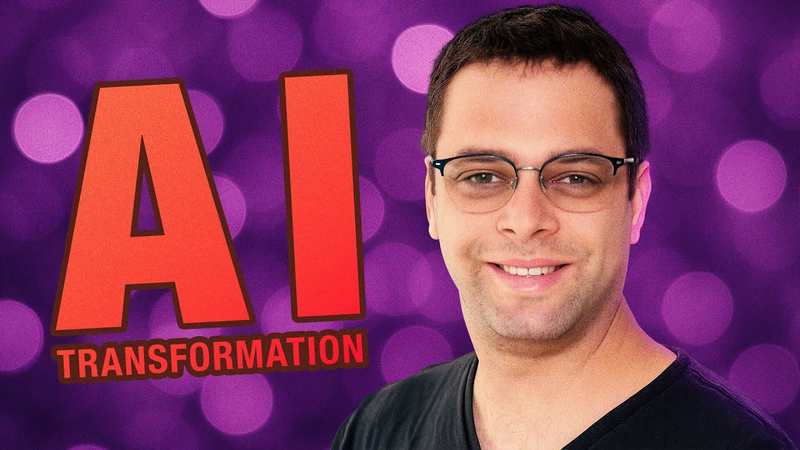
How to Build an AI-First Culture with 1,300 People. Real Story.
20 Nov 202549 min video
Transcript
I have 100% confidence that we're moving towards an era of autonomous marketing. I don't know if it will happen next quarter, next year, two years from now, or six years from now. Performance marketing is going to be much more automated.
What happens to the performance marketers when the performance marketing ecosystem becomes automated?
Barack Vitsky, CPO of Appsier. I've heard something very interesting about what's been going on at AppSlider. So what I've heard is for a one quarter you basically took away all the goals from people and you put everybody on AI builder course where for full four weeks people were learning different tools and ways to use them in their work without worrying of hitting the goals and hitting everything else like this wasn't on top of things. This was the thing. Is that true?
We're we're pretty much all in on an on AI with so many fronts. It's sometimes even hard to keep up the speed. I think what I really um like the most in how we approached it and how it was treated in Appsfl is both the top down and bottom uh uh up approach. So on one hand from from management it's about setting KPIs defining processes that must be moved to be AIdriven but most importantly at our scales is exactly what you refer to uh which I think is the really secret sauce and how we ignite um everyone for internal innovation. So we have 1300 people and um what we try to achieve is that each of them will know AI better than the management so we can leverage the wisdom of the crowd. So hackathon champions recognizing the ones that can contribute
and like I've said completely freeing their time and and their tasks in order to innovate with AI. Uh the by the way this is also how I personally try to approach it and um keep the pace. Honestly for me my number one source of knowledge for AI is coming internally from our 1300 people.
Well it's almost my source of knowledge coming from your people [laughter] and and I'm not even even like not talking about engineers or or product people. I'm talking even you know your marketing people know more about AI tools than people working you know in development. So that's that's fascinating. How did you arrive to that decision to make that type of an investment? It came directly from Orurin, our CEO. And um honestly, I must say that when he first talked about it probably two years ago, for me, I felt like he's almost too
much. But now, I think it's very common. I I do not meet anyone who doesn't think anymore that AI is not going to shape everything from the digital user experience to how we're doing marketing to how you're running SAS companies to what it means for us as as people on this planet. So I think we're we're already across that barrier and now it's mostly a matter of um focus and execution and how companies that still the vast majority of the companies especially if you look at the ones in high scale were not built in the AI era right so that that they're by definition still not AI first companies yet still what you can do to shake the boat and really do bold moves as a company, as an as a corporate to reflect to everyone that reality is
changing and and it it it's what it means for a product person. It's what it means for a software developer, it's what it means for a designer, for an analyst, for for a manager, for everyone.
How was the uh the ROI on on this investment? because it is a huge investment when the whole company is learning AI tools.
We have something we call in the company atoms. So we defined for each department what are the processes that must be moved to be fully AIdriven and um we're in a good progress about which parts of these addons are really moving to be AI native but um honestly when you talk about ROI and and then measurement is what we do so ROI is something close to my heart um I I think it's still too early and it's still on us as a company um to prove that this culture is really
translated to AI leadership in the long ter term or or you know even to um to be a real distinguisher for us as a company. So, um it's still on us to prove that.
And that that hasn't been the only transformation that you took because there's also the uh the fall release that has been advertised widely across the the media and that basically puts apps into an evolution to a modern marketing cloud. Mhm.
So what were the uh the market forces that pushed the company to evolve from an attribution platform to a full full-on full-blown growth platform?
Yeah. Um f first I think it's a very natural evolution for us because um attribution is is really the core and the infrastructure for growth. uh both in how it makes marketers how how they're making decisions and also how
attribution fuels uh the entire signals uh for their campaign optimization. So I think that for years we've been treated as as growth partners for our customers not just as a SAS attribution provider but indeed there were three critical market trends that uh uh accelerated that evolution for us. One is that in last year's marketing teams are under a lot of pressure to prove their business impact. We see more and more CFOs on the customer side enter to the picture. Uh you know market economy impact maybe the high interest rates. So that's number one. Number two is everything around the omni channel reality. uh I've seen recently that an average American families now has in average 17 different connected devices. So marketing teams cannot work in silos anymore. And of course AI, we already talked about it. I'm sure we will also talk about it uh
uh later. So it's changing everything for how marketers are working. There's so much suspicion and and FOMO. So for us as horizontal market leaders working with so many brands, we're we're fortunate to see what's working well and what's not working well. Um so our customers expect us to build for them the products that will take them to the AI era, not just as a as as a measurement provider. Stay ahead of the competition with Sensor Tower, the trusted source for mobile marketing intelligence. Whether you're tracking trends, benchmarking performance, or scouting the next big hit, Sensor Tower delivers the data that drives strategy. Dominate the charts with Sensor Tower. Game devs, here at Heroic Labs, we know that great gameplay is what players love. But integrating metagame features like challenges,
progression, and rewards is crucial for retention and monetization. But coding them is a tedious and timeconuming process. That's why top studios have turned to Hero from Heroic Clouds. Hero provides [music] a complete suite of battle tested metagame features that are quick to implement, letting you spend more time on the core gameplay experience. Ready to ship fully featured engaging games?
[music]
Check out her today at heroiclabs.com.
And do you still see Appsier as a measurement company or has it become now uh almost like an operating system for marketers?
Yeah, 100% we're we're still a measurement company. That's what a company was founded for and that's where we plan to keep on on on leading and we must have that responsibility as as a measurement company for our customers with all of what we've just said omni channel privacy regulations different signals how it's fitting AI being a
measurement provider is is more critical than ever but also actually because um in order to be an operating system for marketers like you've said you cannot reach to that without having measurement in the core that that's at least our strong belief. Um that's also how we talked about it in the follow release. So it all starts with strong measurement and only then when you really trust the data and close the feedback loop you can move to the more upper layers in the operating system of marketers of how you're running autonomous marketing and how you are running data collaboration.
And for those who are a little bit unknown of what was in the fall release can you kind of recap what you introduced? What we talked there is about how we're building the uh modern marketing cloud with the four pillars of measurement and confidence in measurement about deep
linking and user engagement. um about AI and mostly autonomous marketing um and about data collaboration that feeds all of that both in the mobile ecosystem but also in a in a general omni channel way which is something our customers are pushing us very very hard uh as they are breaking the silos internally between their mobile teams to their general uh growth teams. So we had a bunch of uh 10 actually different product launches around each of these four pillars with incrementality for UA, new mobile attribution model, creative management layer, the first AI agents and and so more.
So you basically introduced tools that promise to help marketers to act faster and to act smarter. But how do you avoid of of creating essentially another
dashboard in a world already drowning with different types of dashboards? How do how do you turn essentially this chaos into clarity as as you're promising?
You know, this is this is why I think product is much more an art rather than science and maybe why I wanted to be a product person when I grow up because simplicity is the most complex thing in the world, right? So um actually we shifted from delivering many different dashboards to one which is fully customizable, fully contextual with AI embedded within it. But but but if you look at a bigger picture, I think that actually AI is a great gift for any productled company to try and turn their product to be actually more simple because with AI you can maintain uh the context. So the main principles we tried
to follow in in these uh new products that we released to ensure that there are not yet another dashboard but actually ones that simplifies the experience of our customers is one unite everything to one dashboard one reporting doesn't matter if it's mobile cityv console it's one the ability to make it their own so any different persona has different set uh of dashboards the balance between the option to consume the dashboards in a reactive way of getting the insights to how we are proactive and alerting them and as said what I think is the biggest gift of AI uh for simplicity which is the option to maintain the context and once the context is maintained also the experience for the customers to do what they want is actually simpler they not they do not need to re-enter enter the entire context again and again.
So single source of truth, one dashboard
to rule them all, all AI enabled. Well, my question here is like when I use AI, my confidence levels are not high. Like I have to constantly be really sharp to catch the slop, but I'm not deploying, you know, hundreds of millions in U in UI. [laughter] So how do you ensure that there's confidence in this dashboard that is essentially built and maintained with AI?
Very very good and very tough question. Sometimes I'm I'm jealous in sales people that uh their ability to measure their KPI is much more straightforward. Right? If you if you sell more then you're doing something good. Um, in product it's it's indeed much harder to directly attribute the impact of the new product that you are building to the business impact that that it generates and and it also means that honestly it's
hard for us to measure if the confidence of the customer is growing. The way I usually approach it is I first ask myself theoretically if I could measure everything what would I want to measure to see that the confidence of our customers is growing. And for me the answer is if I will see that they are making more bold fast decisions based on their measurement reality it means that they have confidence in it. if when they see an opportunity they go all in and as you've said moving $20 million from here to there just because of measurement. If they launched a new campaign two days ago and they are willing to cut losses and and stop it completely based on the measurement they they're seeing it means that they have very high confidence. But um throughout the years I I learned to live peacefully with knowing that I
cannot measure all of what I would have wanted to measure to see that confidence. So the truth is that for me the big the best indicator for that is the qualitative feedback from speaking with our customers. Um I have dozens of customers that I personally have great relationship with and truly trust them as marketing leaders. So when I ask them what we can do to increase their confidence if they are doing that all over the world across the different verticals this is honestly my best complex compass to know uh that that they they can trust and have that confidence and and and you're right because it's really really not easy in the post iOS 14 era with less signals for advertisers to have confidence in measurement with all of what's going around uh and connecting the dots. The this is our
mission and it's not an easy one.
Got it. So there's there's it's it's hard because there's so many channels and it's hard because you're using AI and as everybody knows in their personal life when they're using AI, there's a little bit of a variety in the in the answers the AI tool gives you. Like Claude is maybe more direct. Open AI thinks I'm a genius every day. uh no matter what I do. So so uh okay let me let me ask you about this omni channel approach. So this is very interesting because uh the apps measurement suit now spans mobile that was there web that was there but you added CTV so connected TVs consoles even retail media so that's an in enormous surface area. What are the sort of a hidden technical and organizational challenges in bringing all these channels under one unified measurement model, especially showing it only on one dashboard as as you're doing
it right now? It's it's really ironic that the more devices we have and the more we're connected, it's actually harder measurement wise to connect the dots between all of that that. So um a our product strategy it like always with measurement or attribution it starts with coverage. So for us to be able and deliver that not only in mobile but also web CTV console retail media whatever it starts with the access getting the right signals partnering with CTV platform with console platforms with retail media getting different signals from each of them building different attribution model different integrations. So it's a the nitty-gritty of going one by one and ensuring that you have that coverage. this is the basis then you need to stitch it together. Uh we believe this is one of the unique values that we can bring uh
there to connect the um unique reality that we're seeing in mobile with what the end user is doing afterwards or before that outside of the mobile app uh uh PC TV web whatever. So to look at everything in a more user level approach not device level approach. Third, we covered reporting apples to apples, showing it all together in a way that is actionable for our customers. By the way, when I'm saying actionable, whether actionable for humans or actionable for their AI, um, and the fourth one, um, hoping the industry will go there is bringing the the goodies of mobile marketing and bringing all of that beyond mobile, cleaning, fraud, audiences for targeting, deep linking, creative optimization, signals all of
that from mobile also to the other platforms. So these are the four main building blocks. We try to to check mark each of them and it's a long journey not something that you're doing in one in one day or even one quarter uh uh to really deliver that value beyond mobile.
Do you think that type of a incremental measurement will turn all marketing finally into performance marketing? Eventually, yes. Eventually, yes. Um, we have more signals. We need to collaborate more on the data. Uh, we need to close the feedback loop and we need to leverage AI. I still think always mobile will be maybe two steps ahead but 100% a lot of the things I see today around console around CDV
reminds me a lot the mobile world I don't know 10 years ago understanding the importance of signals understanding the importance of uh uh predicted LTV understanding that you need to connect the signals across your entire stack and connect the CRM to the paid channels, we start to see it more and more uh uh also in other platforms. So, um like always when it's a wide ecosystem move, it takes time. So, it's not enough that any company is doing that move. We we need to do it together. But I'm I'm very optimistic and I already see the signs that eventually everything is be becoming performancedriven.
I I agree. I think every every marketing is performance marketing and I had this actually this not argument but discussion with my wife this weekend cuz she was she also works in tech in a big company and she was talking about how they're doing these type of campaigns but they need to also do the brand and
they need to do the corporate responsibility and those are different they are measured and I'm like well the end result is the same right to drive the sales of the company and she's like yes in theory but these are different things I'm like well then it is performance marketing because you're increasing performance whether it's today or whether it's a long term and so forth. So
it uh it's um it's like we internally are saying there is there is nothing like organic right it's whether attributed or you couldn't attribute it. So eventually same thing ev every marketing you're doing it in order to drive performance uh brand marketing maybe your KPI for performance are more upper funnel awareness all good but it's still for performance so find a way to measure the ROI the performance based on the KPI that you try to achieve.
Yeah. Yeah. So, if I drop $50 million on a on a celebrity campaign with
and put it blasted all over and then another 25 million on influencers and creators to post on YouTube and suddenly I get more installs and I call them organic. That's kind of not true. That means I mean they are organic to you because you didn't attribute them. But for anybody else who would be using attribution channels,
yeah, organic
there's actually cost
or organic is the enemy of performance.
[laughter]
Yeah. Yeah. Okay. Um, so let's talk a little bit about the uh the AI again. So you use this a aentic AI suite. So what is exactly an AI agent in the context of marketing?
Each person you will ask will probably define what is AI agent slightly differently. I treat agents as new members in your team. like people you give them tasks tell them what you expect them to do and the the agents are doing that for you. So same thing with
AI agents in marketing. These are your new marketing team members which I think is exciting because now every marketer is actually a a big boss and he manages a big team of agents and each one of your agents it it's not a tool. It's a full-fledged teammate, your your analyst, your strategist, your executor, uh, whatever. That's what for me an AI agent in marketing is.
Well, not quite humanlike. I mean, you're not going to invite the person to to dinner afterwards or agent. It's like it is a tool in the end. Like, it's a it's an automation of a task.
It's an automation of a task. By the way, I read just yesterday something fascinating that um I think it was on Tropic saying that um they are now afraid to deprecate all the AI models because they're afraid that once the model will know it might be deprecated.
So it might take extreme measures to prevent their own deprecation. So they now start to do for them a more humanlike phase out approach. So, uh I don't know. I think we're closer than what we think uh uh with really treating agents as human eventually. You're you're true. An agent is a is a technological tool. Uh AI is a calculator that calculate the right next word to be sent in your answer. in in that essence they probably do not really have uh feelings. But I think that the best way to maximize what you can get from them is for a m moment to forget that they are tools and treat them as humans. Not in the manner of bringing them coffee but in the manner of um understanding that you will
get a most out of your agents like what a good manager needs to do in order to get the best out of their team members which is to teach them to develop them not develop their code but develop what they can do to make them work and collaborate very well together whether with other agents or with the other humans in your marketing team. This is what you need to do to do to really maximize what you can get from the agents.
And this is now working with with your tools, right?
Yeah. Yeah. So, um we we've we've introduced in the fall release the first uh six agents. um as as an industry we we we've just started but uh I I'm I I really feel lucky to be able to work with some of the biggest brands in the world as they also do together with us
the first steps into the autonomous marketing agentic workflow. So we work hand in hand with our customers to see that our creative opportunity spotter agent is doing the work that the audience builder agent is is doing the work. We still have a lot to do to prove um to really enable brands and advertisers to trust what these agents are doing. We've talked few minutes ago about confidence, right? So I do not think we're still there with the confidence of advertisers in really um reducing overload by moving a lot of strategic things to these agents. But this trust probably like again like PE new people in your team that it takes time to build trust. Uh we need to build it together with them step by step.
So it took apps a you know a significant investment to become AI first and or AI first that's such a stupid word to become not unease with AI and to become actually proactive in using all the tools across the organization and and still inside your company what I've heard you have AI consultants you have all the tools you have the people who are mentoring others when they're using the tools so you know you're pushed to do something and then you can ask advice from your AI consultant how Does your client who hasn't had the same type of an investment from their employer to learn the tools and doesn't have internal AI consultants operate an army of agents? I I'm I'm so happy that you asked this question because to truly become an AI first company, it's not enough to ensure that you're working internally with AI in your tools, in your processes. Truly becoming
an AI native company means that you're helping your customers become AI first. And for me, especially as I'm coming from the product side, this is what I think is my number one task in taking Appsflare to be AI first, which is um the way I see my KPI is to see that we're doing something dominant in making our customers to be AI first. And it's a big uh umbrella of things which is which goes way beyond just delivering to them these products. It's also training them. It's thought leadership. It's building forums. Um I I I said it before everyone is is almost having some imposter syndrome of thinking all others are working so great with AI and and not me. So arranging executive meetings between all the different marketing leaders, learning
from one from each other, we see how one customer is using our AI agents. We learn from that and then we can assist better the other customer. For me, if Appsflare will not be dominant in the way that our customers are becoming AI first, it means that we're not AI first. In the game of growth, everyone is looking for that power up. Vibes is exactly that. It's built by industry people, so they actually get the challenges you're dealing with. As a result, they become the fastest growing gamified rewards platform out there. And the results are kind of nuts. With their AI powered targeting, you're not just [music] buying stalls, you're bringing in the right players. And now they've got this new rorowass optimization engine, [music] so your campaigns basically level up automatically. Vibes is built different. It's designed for [music] growth and I guess you could say it's powered by good vibes. Check out
their [music] doof exclusive case studies by following the link in the description and go to vbs.co. That's vybs.co. CEO. Share your email and join the weightless list.
Using clunky payment systems in your game, that's like fighting a boss with a wooden sword. App Charge gives you the power up you need. Seamless inapp purchases, global payments, and analytics that don't require a PhD. Monetize smarter, not harder. App charge, because your game deserves better loot. In today's hyperco competitive digital landscape, understanding your app's journey from discovery to download isn't just insightful. It's the difference between scaling and stagnating. Enter Apps Flyier, the undisputed leader in mobile attribution and marketing analytics. They've mastered the science of making every ad dollar work harder by
revealing exactly where your players come from and how they interact with your app. Their platform transform mountains of complex data into clear actionable intelligence that separates winning campaigns from budget- draining experiments. And I know that many of the top game companies leverage Apps Flyier and are a key partner in their success. Appslier, where your app's potential meets performance. And talking about getting this knowledge to your customers, you have products like agent hub model context protocol and these almost sound like developer infrastructure. So are you trying to create an open ecosystem because you said you're learning from your clients, you're distributing that information, putting it back uh where essentially companies built their own agents inside apps. I think the industry is at a point right now that it can turn to two distinct ways. Um, one is a more world garden
approach where every company will build its own AI product and AI stuff and only them will be able to use it or we will go to a more open ecosystem that collaborates on the data that innovates together. uh we hope the latter is what will happen and that's what the MCP and the agent hub come to do. They try to enable everyone to connect to their data in apps and whether they're using our agents using others agents uh it all works as great um tools and arsenal of opportunities for them to innovate on top. So, so in that manner to answer the the second part of your question, yes, um, we absolutely want to enable our customers leverage also agents built by other third parties. I think it's good for our customers that they can run
these agents directly where their data is stored, which is Appsfly. And of course, it's also good for these third parties that are looking for ways to um push adoption in the in in their AI innovations.
So, not going open source with this one.
I think it's yeah, it's still too early and and and it's it's it's even more strategic than open source or not open source. It's about also building a place for brands and their partners to collaborate and the in in in in many aspects that's what appsar is doing for over a decade right so it's an ecosystem of thousands of advertisers and thousands of their partners whether it's ad networks or technology providers or product analytics or creative tools and enable them to collaborate better based on their data. It was true before AI and it's true after AI
and and you're so so you're interacting
with you know all the biggest clients in in the world medium size as well as small size. So I'm just curious to to to kind of see the delta between the interaction because what has becoming AI native for your company meant structurally, culturally, even emotionally because when I talk to other companies, there's two things. There's one thing as you mentioned is everybody has an um a fear of missing out uh thinking that that somebody else is doing something magical and they are just not able to reap the benefits. It's like you're talking about armies of agents and one person is now driving 15 others around them and and there is productivity boost in your company that is significant but but the other part is when you talk to not the management but more on director and and even below that on staff level there is a unease about AI conversation like the the same type of uh excitement does not exist the more rank and file you go down the
organization chart. hard. So I'm curious is like how do you do this interaction because you interact with all the levels like you of course talk to other leaders of other companies and they are very positive but your sales teams talk talks to you know marketing managers marketing directors and then it goes there when when you try to get the whole marketing team going using the agents now you're talking to people who are actually not that bullish about AI and they see the 15 agents uh and and them being as one of the agents in in just amount of time
first internally the way that we're doing that is like said before the both the top down and bottom up and I think a company any company that is not making all their people be excited about AI is probably not going to be here five and seven years from now it's like in in in the year 2000 saying that you're not you do not want to connect your company to the internet you you can you cannot have a company
you will not be able to have a company that not everyone are innovating with AI. I can certainly relate to what you're saying it it comes all the way to almost job security of people and and if they're working hard for AI to replace them I I I first I want to be very humble. I think that we've never experienced such a digital transformation and I think we cannot really predict how it's going to look 3 four 5 years from now. I don't want to speak with overconfidence about how it's going to look but myself personally I'm actually very optimistic about the importance of great people and also great marketers. If I look at at at our customer base in the future, um, as long as they will leverage AI, if you will find how AI is not replacing you, but as an it's an extension to your
capabilities, you you you still need to bring your creativity, your strategy, your big business context. But if you extend it with the power of AI, um I think marketing is actually going to become more and more important because building the product is not anymore the the bottleneck. The bottleneck is about getting the end user attention which is marketing. So you must leverage AI there. And I'm as always optimistic that better technology will will not make people redundant if they know how to leverage that. I think there's a there's a important message there because when you don't know about technology, it's very easy to create a very negative scenarios especially with the things like AI that is replacing certain jobs. And what I've noticed with interacting with people from apps is that by investing into your
people throughout the organization and making them AI builders like that's literally the course. Four weeks of AI building course is a lot and the the perception of AI of the people who have gone this course is significantly different and they see now more in charge of AI rather than being being you know at the at the mercy of AI. So I think that I think that's the biggest change but I've never heard about any other organization especially of your size that has made this investment and I think that's big part why there's the AI hesitancy and unease with using the tools especially they're seeing the power and the and the speed of evolution of these tools. So that's what I was kind of trying to understand is how do you interact with your clients who must have different sentiments especially on the execution level towards AI.
By the way for me as a product person in apps flyier one of the most challenging
things is that eventually we're building a one product that aims to fits all. it it's for gaming but it's also for ecom and finance and travel and it's for customers in US but also in in China and India and in Europe and it's from bigger the biggest enterprises to the smallest startups so it's challenging to find how it one fits all same with AI um I've met only this morning a very very advanced customer with AI already having their agents started talking with me about agentto agent collaboration and how they connect that MCP to another MCP and two hours later I meet a customer that that is really doing their first steps and that's again the art of simplicity how you are building it in a way that fits everyone and it takes us back to the building blocks so you need to have the right solid building blocks um making the data
ready for AI I I tell everyone that AI models are eating data differently than the way people are eating it. So you need to ensure your data is ready. If you supply data for c for other companies, you need to ensure it is AI ready and then let them build whatever AI stack they want on top of it as long as the data is ready and then whether they're advanced or basic, they can do it in in in their own pace. Absolut sits at interaction of marketing, data and now AI. You shape the culture and the future of digital commerce. What keeps you the chief product officer of Appsier wake up at night when you think about the responsibilities that you have?
I think what we've said earlier about the pivotal point whether the industry
will turn left and right. Appsfly always had a strong belief in an open ecosystem. So I try to think what is my role and what is our role because we do have a unique position of being trusted both by the advertisers and by the partners in ensuring that AI is shaping itself to a place of an open ecosystem that everyone are collaborating with their data that everyone are innovating together that if you are building an amazing agent others can use it as well. Of course, with you finding a way to monetize it if needed, but I I try to think a lot about that because I have 100% confidence that we're moving towards an era of autonomous marketing. I don't know if it will happen next quarter, next year, two years from now, or six years from now.
Performance marketing is going to be much more automated. I I I I will be much happier if the path there will go through the entire ecosystem collaborating together versus many different siloed world gardens of abilities.
What happens to the performance marketers when the performance marketing ecosystem becomes automated? A as I as I said I'm I'm very optimistic about it that per that first because I think marketing is going to become even more crucial because it's not anymore about the challenge of building the product but about how you market it and every marketer see what an exciting time every marketer is a boss of agents which are bosses of other agents. Dream with it. Build whatever you want with it. Take marketing to the extreme.
Um I'm again I I I I cannot look 10 years from now, but I certainly the when I look two, three, four years from now, I see marketers more dominant than ever. How they work internally with their product teams, with their finance team, with the stakeholders of their company. uh uh because they now have extension to their abilities for the most critical KPI in whether they are a mobile app or any other brand. How you take that to the to entire universe because even with AI there are still only 8 billion people on this planet and each one still has only 24 hours a day. So you need to find a way how to to get their attention. So maybe spending less time on Excel, which is all the performance marketers that I've seen, they just walk around with their heavy computers with with Excels open. And I'm like, you're the marketer.
[laughter]
Absolutely. Marketer Marketer needs to build the strategy and be creative, not just to check whether the cell in Excel is green or red and then to reduce the bid or or or remove budget. So we moved from performance marketing to growth marketing now into what we could call um intelligencedriven marketing looking five years ahead which you said you can barely look three years ahead but let's go over that let's go over the AI bubble and all the things that [laughter] crash everything in the short term and into the uh the next rise. So, uh, what's the sort of a crazy vision you have for Appslier that most people would find impossible today?
I really liked how uh Mark Zuckerberg called it the ultimate growth machine that for a marketing you just connect your bank account, say what you try to
achieve and are working hard for you to try and achieve that. Um for me my ultimate dream is is thinking how Appsflare plays in that ultimate growth machine. Uh because we're an horizontal player. So if Meta is building their ultimate growth machine and and other ads platforms are building which is great their ultimate growth machines we can be and need to be that trusted layer on top which is omni channel cross network representing the brand and making that ultimate growth machine working for them. This is where I think we want to be 5 years from now. Now will it be on top of MCP? Will it be on top of other threeletter acronym that still wasn't invented? I don't know. But we want to play a meaningful piece in the puzzle of that ultimate growth machine. Barak, I think you will. I I'm really,
how would I say impressed by the way that your company has approached this. It's so different. Every CEO talks about AI. Every leader asks the teams to put more AI into their processes and every team member who I talk to directors and they're just I don't know what they should be doing and on what time they should be learning. And this is VPs in big companies. They are they're not AI hesitant. They just don't know what the next step and they don't have time because they're running from one meeting to another from one OKR to the next one to the quarterly to this to that. and your company which is over a thousand people just pressed the pause button and said we're going to figure this out and we're going to democratize the usage of tools across the organization not say from the top what needs to be done essentially but saying here are the tools and you guys build using these and this this will empower and from my
knowledge of the business results it has been good also on that that sector uh but again I'm not telling anybody's KPI is here. So that I I think I think you'll be you you'll be a model on AI transformation for a lot of companies. I think that's what's going to happen.
Thanks a lot, Mishka. It was a pleasure.
Thank you and thank you everybody for listening and catch apps people anywhere around the world and ask them about AI builder courses. So on that note, thank you everybody for listening and thank you Barack for joining the podcast.
Thank you. You did it. You made it to the end of the episode. As a fan of the show, it would help us out if you'd subscribe and leave us a review on the podcast service of your choice. Those stars and likes, while a small action on your part, mean a lot to us and help to grow the show. More importantly, are you a member of the Deconstructor of Fun Slack group? If you have 5 years or more of games industry experience, go to deconstructorofund.com/slack
and apply to join. Join the games [music] industry best professional community filled with peers always willing to lend a hand or subscribe to our newsletter to get all the latest insights [music] from the deconstructor of fun content creators. Thanks for listening.
Auto-generated captions from YouTube — names and numbers may be misheard.




















Comments