Game Development reports and market data
Documents

Let's Review Your Games — Ep. 037
The indie title Devoid demonstrates significant creative potential, characterized by a compelling art style and well-conceived core mechanics.
- Menus serve as a primary indicator of a game's overall polish; a lack of hover sound effects or excessive time spent navigating them often signals an unrefined product.
- Avoid using walls of text to explain mechanics; instead, use icons or short video clips to demonstrate controls, and introduce mechanics gradually rather than all at once.
- Text-based dialogue should be paced automatically or allow for manual progression, as players cannot gauge reading speed without accompanying audio cues.
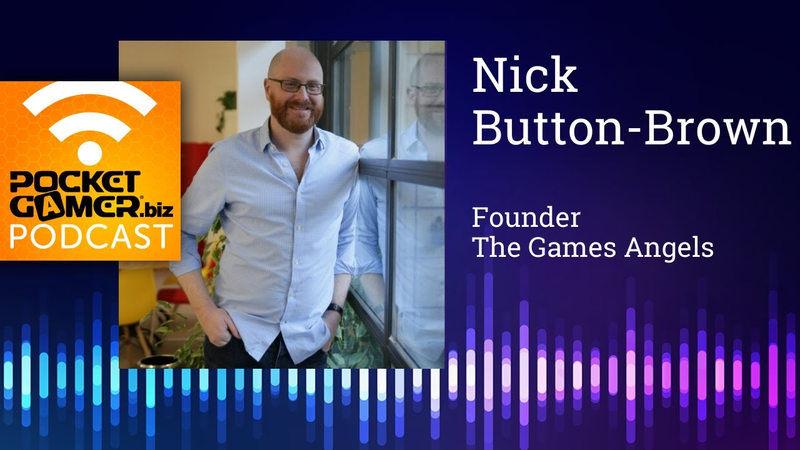
Nick Button-Brown on Studio Funding | What's Really Happening in 2026
The landscape for video game studio funding in 2026 is defined by a transition away from reliance on large-scale venture capital toward a more fragmented, hybrid model.
- The UK games industry is pushing for a Games Growth Tax Credit to help domestic studios scale and retain long-term value within the country, preventing the loss of economic benefits to foreign entities after acquisitions.
- Investment trends in 2026 are shifting toward 'hustler rounds' and hybrid funding models, as traditional venture capital investment has declined while private equity and publisher funding for smaller projects show signs of recovery.
- Investors currently prioritize unique, protectable intellectual property and innovative business models over past pedigree, moving away from the previous trend of raising millions based solely on a founder's previous work on major titles.

We interview the man who signed Arc Raiders: "The AAA industry is at its end"
The traditional AAA game industry has reached a structural dead end, characterized by unsustainable development costs, industrial-scale managerial complexity, and a reliance on legacy intellectual property that stifles genuine innovation.
- The traditional AAA industry model is structurally failing due to unsustainable development costs, excessive managerial complexity, and an over-reliance on legacy intellectual property.
- Artificial intelligence is projected to redefine the gaming industry over the next five to seven years by enabling smaller, agile teams to bypass traditional dis-economies of scale.
- The integration of AI tools is expected to catalyze a significant expansion of the gaming sector, potentially tripling its overall size by increasing operational efficiency.

Let's Review Your Games — Ep. 036
Indie game development requires a rigorous focus on the intersection of technical polish and player experience.
- Game UI should balance aesthetic and functionality, with the host recommending blurred backgrounds and darker, cleaner designs over heavy chromatic aberration effects to improve professional presentation.
- Developers often struggle with lighting consistency due to high-brightness gaming monitors, leading to games that appear too dark or have flat, cheap-looking specular highlights on standard displays.
- Effective player feedback requires clear, immediate sensory cues, such as audible impact sounds for combat and on-screen prompts for key mechanics like flashlights to prevent player confusion.

How To Make Games Full Time (in 2026), 8 Years On One Game, Slop vs. Polished Games (Adam Younis)
Achieving long-term financial sustainability in independent game development requires a shift away from traditional publisher reliance toward a diversified income model.
- Long-term game development requires a sustainable financial model, often involving a hybrid approach of 50% contract work and 50% original IP development to maintain cash flow.
- Accepting large publisher funding can be counterproductive for solo or small-team projects, as it often forces developers to prioritize rapid delivery milestones over the time needed to iterate and discover the game's true identity.
- Developers with an established audience (e.g., 300,000+ subscribers) may not need the platform-specific traffic provided by Kickstarter, as they can leverage their existing community for launch support.
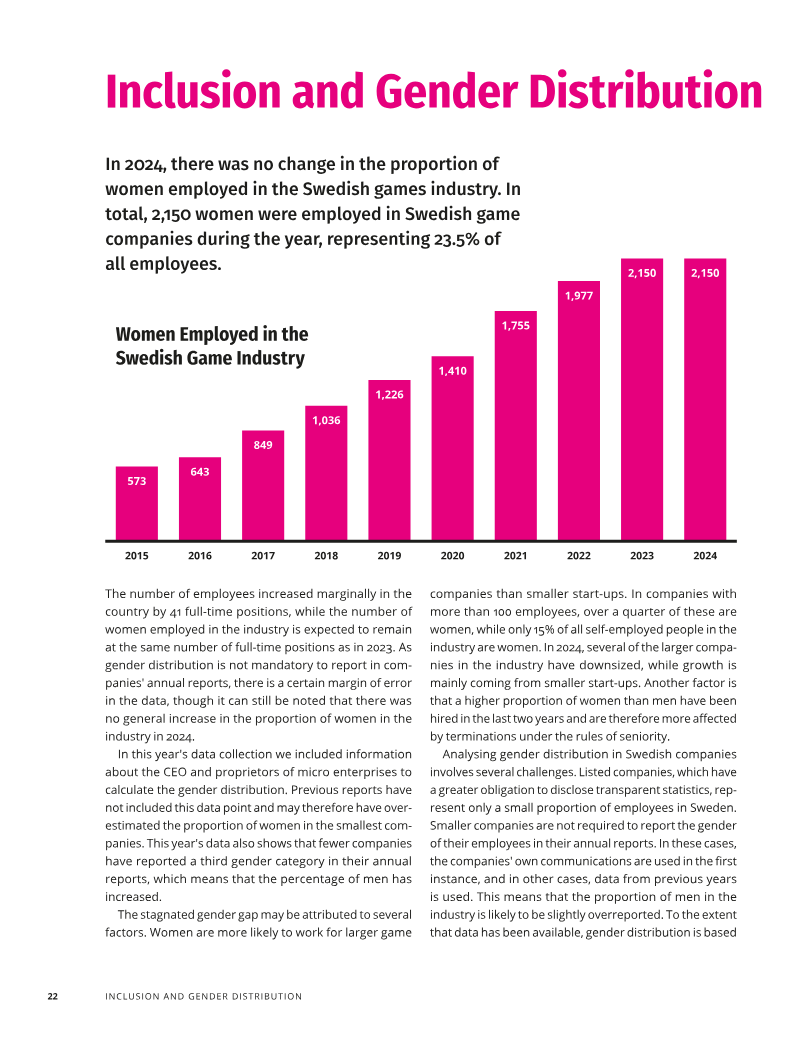
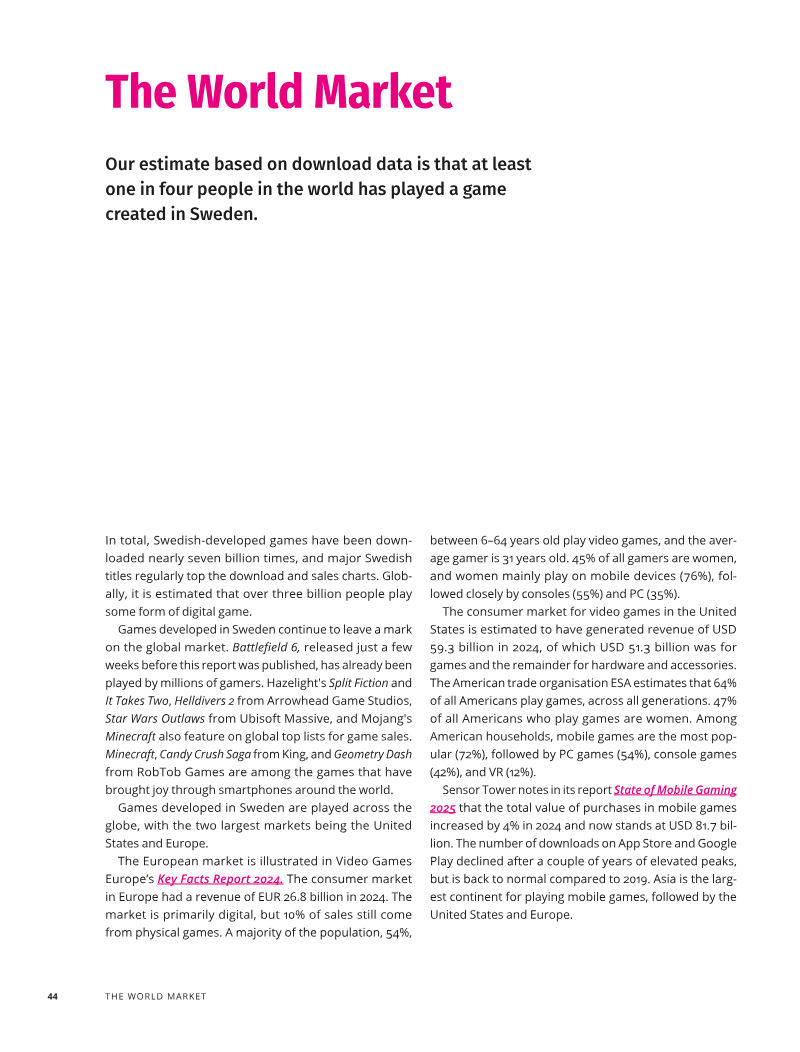
Game Developer Index: Sweden 2025
The Swedish games industry remains a cornerstone of the national economy, demonstrating significant resilience throughout 2024 despite a challenging global financial climate.
- The Swedish games industry is a significant economic force, generating SEK 37 billion domestically and SEK 73 billion globally, accounting for 3% of Sweden's service exports, with 1,101 companies and over 9,000 employees.
- Despite recent challenges including corporate divestments, studio closures, and 400-500 redundancies, Swedish-developed titles reach an estimated one in four people globally, maintaining a dominant international position.
- The industry is highly entrepreneurial, with 93% of firms having fewer than ten employees, though large corporations like Embracer Group, Stillfront, and Modern Times Group drive 90% of international net sales.
You (Probably) Can't Trust Game Dev Formulas
The modern game development landscape is defined by its inherent unpredictability, rendering rigid, universal formulas for success largely obsolete.
- Prioritize the core game idea over execution, as experienced developers often reach a point where technical execution is no longer the primary hurdle to creating a successful product.
- Develop a unique visual identity quickly by leveraging constraints; for example, the game Slots & Daggers established its final aesthetic in just two weeks by combining gestural iPad sketches with specific post-processing and lighting effects.
- Balance familiarity and novelty by ensuring a game is recognizable enough to not alienate players while offering a distinct hook, such as combining the established deck-builder rogue-like genre with a claw machine mechanic.
Why (AND HOW) You Should Make Games ALONE In 2026 (Workshop: Day 3)
Solo game development in 2026 requires a strategic shift away from expansive feature sets and high-fidelity graphics toward intentional, high-impact interactivity.
- Solo developers should prioritize high-impact interactivity and environmental responsiveness over expansive feature sets or high-fidelity graphics to differentiate their work from generic, AI-generated content.
- Achieve professional-grade immersion by utilizing 'surgical' design elements, such as sound-reactive objects, wind-affected shaders, and dynamic audio triggers, to simulate complexity without the overhead of large-scale production.
- Maintain technical efficiency by reusing assets and code, employing simple techniques like object rotation and script repurposing to ensure visual and functional consistency.

Want To Make Games? Here's 1 Hour Of Brutal Honesty From A Game Dev Legend (American McGee)
The production of high-end interactive media requires a delicate balance between artistic vision and rigid financial constraints.
- Large-scale game production, such as 'Alice: Madness Returns,' often relies on a core team of fewer than 10 stellar programmers to handle complex technical challenges like hair physics, while the remaining staff focuses on integration and cleanup.
- Production of 'Alice: Madness Returns' involved a total team of approximately 300 people, consisting of 100 internal studio staff and 200 external contractors dedicated to art asset production.
- Publishers may structure development deals to keep spending off their financial books by delaying the booking of costs until the moment a game is delivered and a bond is repaid, effectively making the development process invisible to shareholders during production.
Why (AND HOW) You Should Make Games ALONE In 2026 (Day 2 Webinar, Part 3)
Solo game development is increasingly viable through the strategic application of free assets combined with disciplined design principles.
- Solo developers can construct professional-grade, cohesive game environments in as little as two to three hours by utilizing existing asset libraries.
- Visual fidelity is achieved more effectively through intentional art direction—such as lighting and atmospheric effects—than through the complexity of individual assets.
- Prioritizing strong color theory and the economical use of textures allows independent creators to maintain a consistent, high-quality aesthetic.

How Three Engineers No One Wanted to Fund Built a $XXXM Company
Heroic Labs demonstrates that sustainable growth in the gaming infrastructure sector is best achieved through a commitment to open-source technology and operational autonomy.
- Heroic Labs achieved significant market penetration by transitioning from a closed SaaS model to an open-source infrastructure framework, which allowed them to secure major clients like Zynga.
- The company prioritized long-term stability and product quality by rejecting traditional venture-backed growth models in favor of a bootstrapped, engineer-led approach.
- By focusing on solving genuine technical problems rather than chasing artificial growth metrics, the founders maintained operational autonomy and avoided the volatility of external investor influence.

Making Your Game 10X Better Is Easier Than You Think...
The primary thesis of this analysis is that game feel—often referred to as "juice"—is the most critical factor in elevating a game's quality, frequently outweighing the importance of core mechanics or complex programming.
- Game feel and 'juice' are primarily tools for emotional manipulation, designed to dictate how a player should feel at any given moment in the game loop.
- Using non-game software like Adobe Premiere allows developers to rapidly prototype and iterate on sound design and feedback loops without the time-consuming overhead of coding in engines like Unity or Unreal.
- Effective sound design for combat requires layering multiple audio elements, such as combining a quick impact sound with a longer 'tail' or 'fleshy' effect to provide clear player feedback.