Game Development reports and market data
Documents
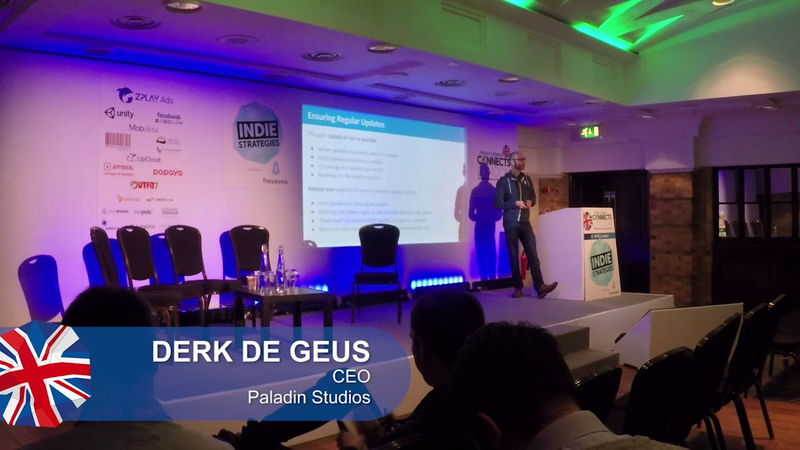
Live ops for indies – The DNA of an effective mobile team
Effective live operations for independent mobile game developers require a fundamental shift in mindset from the creative, milestone-driven development phase to a data-informed, stability-focused maintenance phase.
- Transitioning to live operations requires shifting from a milestone-driven development mindset to a disciplined, stability-focused maintenance phase.
- An effective live ops team for indie studios consists of four to eight members who balance creative vision with technical conscientiousness.
- Consistent, smaller updates generate recurring performance spikes that extend a game's lifecycle, effectively transforming a declining revenue curve into a sustainable long-tail asset.
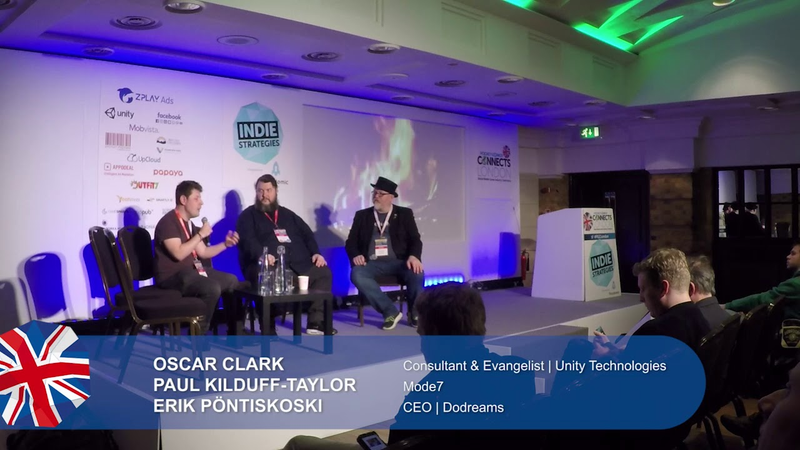
Switching from developer to publisher
The discussion explores the evolving landscape of game publishing, focusing on the shift from traditional developer-publisher relationships to modern self-publishing and hybrid models.
- Developers must treat game projects as businesses by prioritizing product-market fit and market-oriented strategies rather than relying solely on creative focus.
- The decision to engage a publisher should be a strategic choice based on specific needs like funding, marketing, or distribution, rather than a default industry path.
- Studios like Mode7 and Dodreams demonstrate that using early access, soft launches, and prototyping to gather retention data provides the necessary evidence to successfully pitch to investors.
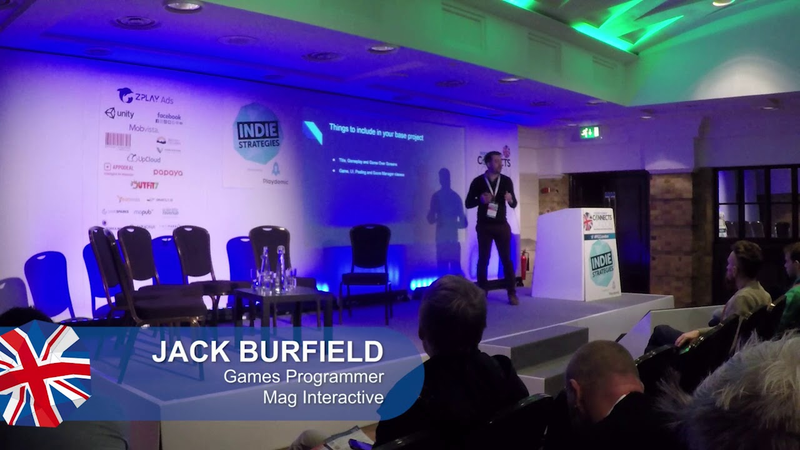
Rapid prototyping for mobile games development
Rapid prototyping serves as a risk-mitigation strategy in mobile game development, allowing studios to validate core gameplay mechanics before committing to long-term production cycles.
- Successful prototypes should target specific retention benchmarks: approximately 60% to 70% day-one retention, 40% week-one retention, and 10% to 20% month-one retention.
- Rapid prototyping functions as a risk-mitigation strategy by using a strict five-day development window to validate core mechanics before committing to long-term production.
- Prototypes must be released without ads or in-app purchases, as success is measured exclusively through player retention metrics rather than monetization.
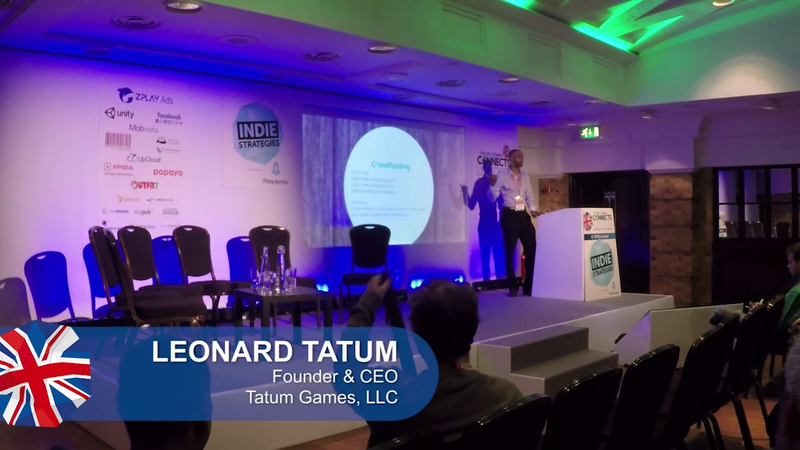
New start-up? No money? No problem!
Securing capital for a startup requires a strategic understanding of different funding types and a resilient approach to networking.
- Successful fundraising relies on building genuine professional relationships rather than cold outreach, as personal connections are more effective for securing seed-round investment.
- Angel investors typically provide approximately $50,000 in seed capital, necessitating that founders present a realistic valuation and a documented plan for fund allocation.
- Entrepreneurs must distinguish between fixed capital for tangible assets, working capital for daily operations, and growth capital for expansion to maintain a disciplined financial ratio.
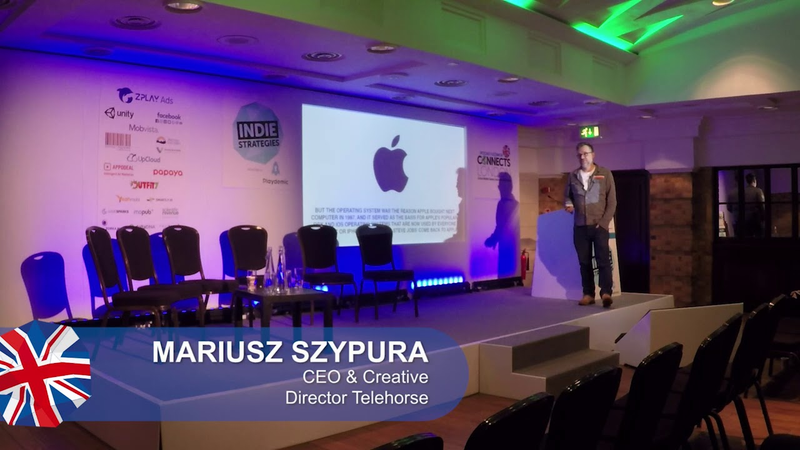
The art of failure
The CEO of Telehorse, Mariusz Szypura, presents a candid analysis of the game development industry, framing professional success as a byproduct of persistent failure.
- Solo-developer models often lead to inefficient resource management and 'everlasting crunch' due to the lack of specialized roles in programming, marketing, and localization.
- Non-coding developers can bridge technical gaps and accelerate production by utilizing visual scripting tools like Playmaker.
- Failing to localize games for specific regional markets, such as Japan, significantly limits user acquisition and global growth potential.
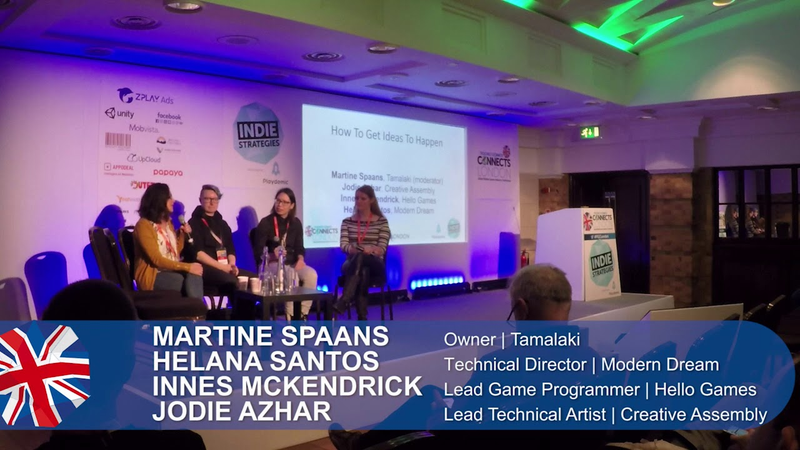
Panel: How to get ideas to happen
Successful game development hinges on the ability to translate abstract creative concepts into polished, shippable products through a disciplined balance of vision and pragmatism.
- Successful game development requires balancing ambitious creative vision with the practical constraints of budget and technical feasibility.
- Teams must foster an ego-free environment where the best ideas are prioritized regardless of their source to ensure the most effective product outcomes.
- Early prototyping and consistent player feedback act as essential filters to refine the core game experience and validate design choices.
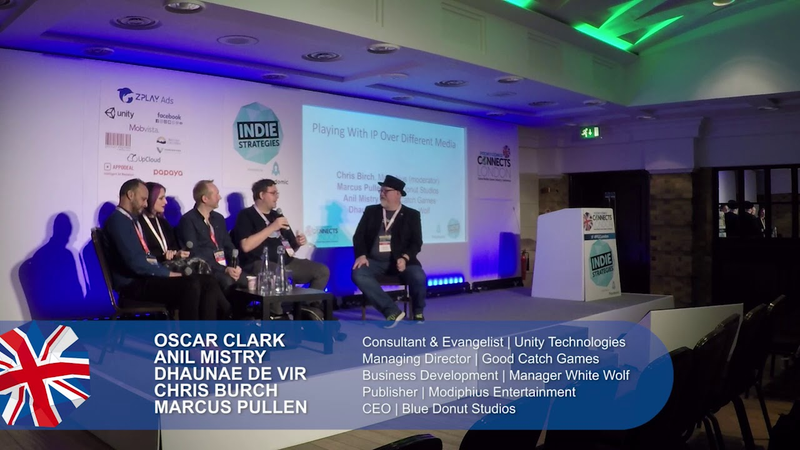
Playing with IP over different media
Successful intellectual property adaptation in the gaming industry hinges on a delicate equilibrium between commercial viability, fan engagement, and an unwavering commitment to the authenticity of the source material.
- Successful IP adaptation requires balancing commercial viability and fan engagement with a non-negotiable commitment to high-quality, authentic game mechanics.
- Strategic IP selection must align directly with a studio’s existing technical capabilities and toolsets to ensure development efficiency.
- Effective partnerships require IP owners to act as active collaborators by providing organized asset libraries, streamlined approval workflows, and robust marketing support.
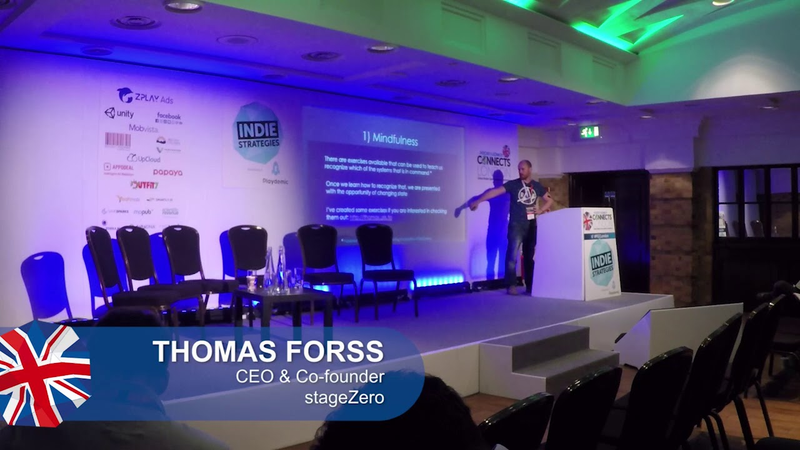
Increasing productivity and preventing burnout
The primary objective of this presentation is to provide strategies for increasing professional productivity and mitigating the risk of burnout within the high-pressure environment of the game development industry.
- Burnout is caused by the nature of stress rather than long working hours, specifically resulting from external pressures that trigger negative stress responses.
- The human mind spends approximately 50% of its time lost in thought, which is governed by an impulsive system that hinders productivity.
- Mindfulness exercises should be used to transition the brain from an impulsive state into a logical, controlled state to strengthen focus.
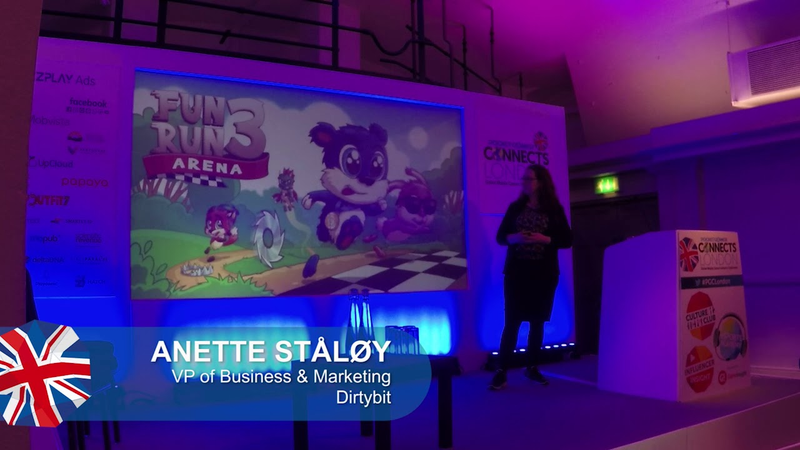
Remember coffee with your squats – Building a company culture
The development of a sustainable and positive company culture is a critical component of organizational success, particularly within the mobile gaming industry.
- Dirtybit successfully scaled from 8 to 17 employees by prioritizing cultural fit during recruitment and maintaining a flat organizational structure.
- Company culture is defined by daily rituals and shared experiences rather than written values, requiring intentional efforts to preserve intimacy as a team grows.
- Physical office space acts as a critical hub for social interaction, facilitating informal communication that extends beyond strictly professional tasks.
Prototyping and production process – The core of the Gram Games company culture
Gram Games, a mobile game developer with offices in London and Istanbul, maintains a unique organizational philosophy that treats company culture as a product requiring constant iteration, bug-fixing, and development.
- Gram Games treats its organizational culture as a product that requires constant iteration, bug-fixing, and development to maintain a high-performing environment.
- The company operates on a flat organizational structure that removes traditional management hierarchies in favor of data-driven and evidence-based decision-making.
- Operational success is built on five core tenets: a flat structure, constant iteration, a familial environment, a commitment to learning from mistakes, and transparent communication.
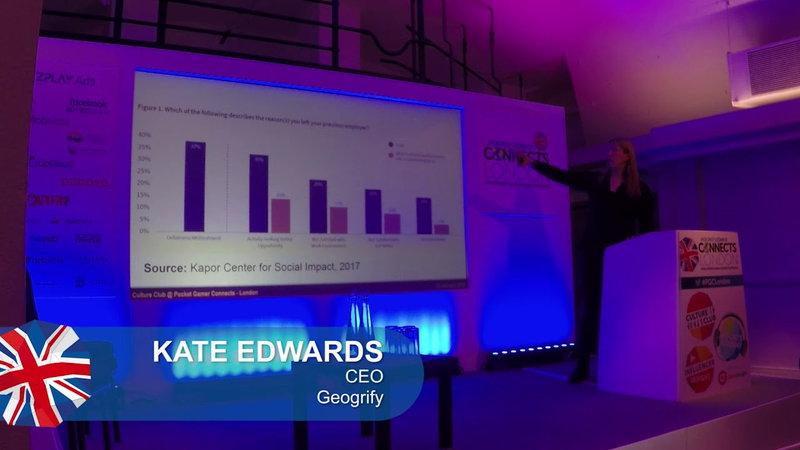
Leveraging inclusion to build better teams – and games
The game industry is currently facing a critical juncture regarding its internal culture and workforce composition.
- Inclusion is a strategic business imperative that directly enhances creative output and commercial success rather than being a mere demographic quota.
- Systemic bias in performance reviews creates disparate feedback patterns for women compared to men, contributing to talent turnover and perceptions of inequity.
- Unconscious bias frequently influences hiring decisions, as managers often incorrectly perceive diverse teams as disruptive to the development process.
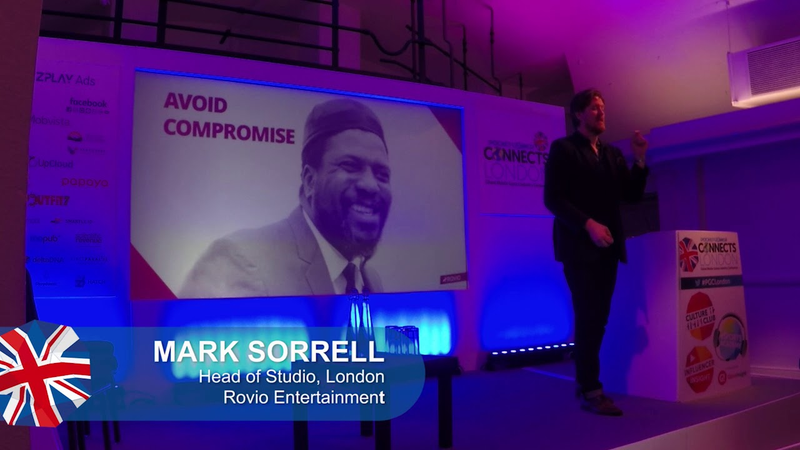
Culture is hard
Building a successful, diverse studio culture is a complex, ongoing process that requires intentionality and a willingness to embrace friction.
- Prioritize cognitive and identity diversity over team homogeneity to avoid mediocre compromises and foster high-quality, innovative creative solutions.
- View studio culture as a living, imperfect process that evolves with every new hire rather than a static goal to be achieved.
- Replace superficial office perks like beer fridges with practical benefits such as flexible working conditions and family support to improve long-term inclusivity.