1 free read left. Create a free account for unlimited reading + AI research.
Create free account
Leveraging inclusion to build better teams – and games
Key insights
6 takeaways- 01Developer satisfaction surveys indicate that while employees prioritize diversity and inclusion, rising reports of sexism, racism, and unfair working conditions are driving significant talent attrition.
- 02Systemic bias in performance reviews creates disparate feedback patterns for women compared to men, contributing to talent turnover and perceptions of inequity.
- 03Unconscious bias frequently influences hiring decisions, as managers often incorrectly perceive diverse teams as disruptive to the development process.
- 04Case studies from the broader entertainment sector demonstrate that rapid, positive cultural change is achievable when leadership makes a conscious, top-down commitment to diversity.
- 05Inclusion is a strategic business imperative that directly enhances creative output and commercial success rather than being a mere demographic quota.
- 06Widening the diversity of development teams allows companies to better reflect their global consumer base, leading to more innovative and commercially viable game products.
Ask AI about this video
Transcript
[Music] [Music] so as you can see I worked at Microsoft for thirteen years because my powerpoints really like Microsoft it's boring it takes a long time to get that out of your system like a tapeworm you know so anyway I'm the I'm a geographer I do culturalization work I've been working in the industry for about twenty-five years thirty know which was Microsoft the rest was consulting a lot of people know me because I was the executive director of the International Game Developers Association for five years which I departed that position last year I'm also the executive director of take this which focuses on mental health in the game industry both on the developers side as well as on the consumer side so today I'm going to take a very high-level look at the notion of
inclusion this is a topic that obviously is much much bigger than what 20 minutes can handle so forgive me for the brevity of it but let's kind of dig in so we know what the industry is we don't really need this Latin definition because we all kind of know what an industry is for the game industry welcome to the game industry you can see yourself somewhere in there right you kind of pick out I'm that nut or I'm that cog or something unfortunately for a lot of companies in our industry still despite the wonderful examples that we just heard over the last three speakers a lot of the industry perceives you as this you are a part in a machine that cranks out entertainment and has to hit its KPIs and blah blah blah but the reality is we know that it's not this and we're not belching out stuff well we kinda or if you're minding Bitcoin but that's not us it's an industry of people we are this industry is made up of people it's made up of great wonderful people I love the fact that if you know this company nor deists they have this
on all of their t-shirts it's on their website that their number one game is their people and they really mean it and and I love that they they go out and emphasize that and so it's really important for us to remember that because I have talked to thousands and thousands of developers especially in my IT a role all around the world and I hear a lot of them will and moan and say the industry screwed me the industry does this yeah yeah that's you it's us we are the industry it's not some faceless machine out there I mean like we showed with the examples here of the other speakers I mean you can make a conscious decision to change the Machine and focus on the people so there really isn't a machine to rail against it's it's basically just a set of relationships between you and your co-workers and the projects you're working on now when I was at the ITA we created what I called the developer satisfaction survey and so every year we would gauge kind of where where people are in the industry this is one of our later surveys and you can kind of see the locations that we covered there I'm
in terms of the sample size so what we were trying to gauge with this survey was essentially we were trying to gauge demographics that was a big key part of it but we also trying to gauge developer attitudes about not only their specific jobs throughout the industry in general so just a couple of things to give a little context and it doesn't show up on this screen really well but reasons for one of them to join the game industry well two of the biggest ones earn a living doing what I enjoy and sharing my passion that's we kind of know yeah that's obvious we're we are a passionate industry and I love the fact when you ask them how long do you plan to remain in the industry indefinitely and so you don't see that a lot with a lot of other industries like accounting or banking or things like that this is a lot of the dated behind the survey really illustrates the fact that we are creative artists so we really are artists you talk to writers painters filmmakers all of these other people in creative media the answers are very similar which basically means we can't get it out of our systems we can't help herself we make games because we are compelled to do so and we love it
we're gonna do it till we drop dead which is actually what some of the comments in the survey said I will do it until I faceplant on the floor and of course the four students you know if they finish University all of them you know they're very eager to start their own company which again it's that entrepreneurial spirit as we've seen in the last several years of the rise of the indie developer because of the democratization of game development tools and resources this is pretty much the number one aspiration of a lot of students because again the creative spirit tends to be independent enough that it wants to go on its own path you know some people yeah they want to join Call of Duty 26 or Halo 15 or whatever which is totally fine you know but that's that's a matter of preference but for a lot of people it's like I want to do my thing that's why I'm doing this in the first place so all of that is really cool it's nice sorry that's why I don't do that and then you know the other thing that's interesting too we asked questions like what best describes your relationship with your current employer well I'm glad that it's
the second answer which this is my career and a large part of my life I would be concerned if it was the first answer which this is my career and my life so at least we're showing that people have a sense of balance between what they do at work and what they do outside of work but again it's you know for a lot of people it's this is basically underscoring the idea that game developers are very passionate people they love what they do it is a big part of everything that they do from day to day now the problem though is that when we ask also these questions like what factors do you think creates a negative perception of the industry by the public and you can see here some of these I don't know if it's too small but sexism of among gamers sexism and games sexism in the workforce racism among gamers racism against racism the workforce all of those numbers so the game developers who responded to the survey in 2016 that those answers went up it's the wrong direction so they're basically saying it's even worse and it's getting worse and so the trend that we were seeing and
of course you also have to take into account that some of this is the aftermath of gamergate some of this is the aftermath of the rise of the alt-right because when we think about that the survey it was responded to by about 50% North America actually more like 55% North America so you are getting a heavy weighted towards some of those issues that in the US but the general response here is that this is not the direction we want to see these numbers go on the interesting thing too is that when with some of these answers like working conditions in the industry that again went up as well that they felt that working conditions is a really big reason why the public has a negative perception of Industry but honestly when's the last time you talked to someone on the street who plays games who knows what crunches or is they've even heard what's what's going on it's a lot of people I talked to on the Simar site they have no idea how games are made they have no idea what the process is so it's interesting so when I see that I to me that's game developers
kind of crying out for help saying it's really bad help us but anyway so this this is not a good sign we don't want these these numbers to go in that direction now what's interesting though we asked game developers how important is diversity in the workplace and this means just general workplace anywhere so this is great so they felt the importance so these are people who answered very important or somewhat important went up 15% in one year that's great so they feel this is important diversity in the game industry 14% increase in one year that's also great diversity and gain content also went up so this is fantastic to see so the attitudes across the survey and if you could think back to the demographics this is not just women or people of color answering this this the demographics who make the people who primarily took the survey were white males so this is not just a view shared by the few this is a viewed shared by the majority that this is a really important thing so great we have the right direction in terms of the internal attitude of developers they want they
believe in diversity they think it's important both in the games and in the workplace so good you know we also have to remember though that there are layers of diversity and the some of the previous speakers kind of touched on this a bit there's a lot of different layers to diversity that we have to remind ourselves of so you know gender gets a lot of attention ethnicity to some degree as well and we get a lot of focus on gender in the industry you know and but the other thing there's people of color who are also massively underrepresented in this industry even worse than the gender issue then also we have ageism as well ageism is a rampant issue in this industry that my opinion is like this close behind the sexism issue yeah that's like a millimeter or less it's a massive issue I mean I can tell you story after story after story of people who are incredibly experienced in this industry 20 30 years of experience and they cannot find a job to save their life why because their hair is gray or they have wrinkles or some other issue or well they can't learn this technology
because they've been around you know in the technology field for thirty years how could they possibly learn thing new so if I don't know maybe because they created it so but there's a lot of different to make dimensions to diversity we have to keep in mind it because it's very important to think about that of course gender diversity here's how it kind of evens out across the game industry as we measured it some of these stats are a little bit outdated at this point but generally a lot of the survey's that I've seen is is anywhere from 15 to 20 percent in the game industry depending on the country so we usually say about 20 percent women in the industry select the 28 percent that would that Rovio that is good that's great it's it's far above average unfortunately what I've seen some trade associations do like the ESA for example has said you know they quoted on our survey once the a GD survey they said well you know the general tech sector is more like 10 or 15 percent so the game industry is doing really good and I'm like that it's not the right answer that's not the right answer you
know to compare to something even lower it's like yeah we're doing good but it's still pretty pathetic ethnic diversity as I alluded to before is even worse in terms of the background so this is something else that needs to be worked on we asked this question do you feel there's equal treatment and opportunity for all in the game industry and again this is really disheartening to see that these numbers have gone down so there's fewer people who think there's equal treatment and all for the in the industry and so there's a lot of this fact dissatisfaction that's brewing out there there's a lot of there's a lot of reasons for this to I mean certainly the crunch issue is a big part of this certainly there is a lot of the practices around hiring unconscious bias all of these things that I'm gonna get into very quickly here so there's a there's a study done last year the tech lever study that was basically examine across the IT sector which included some game companies why do people leave their jobs what are the main reasons for leaving so unfairness the perception of unfairness drives turnover in a very big
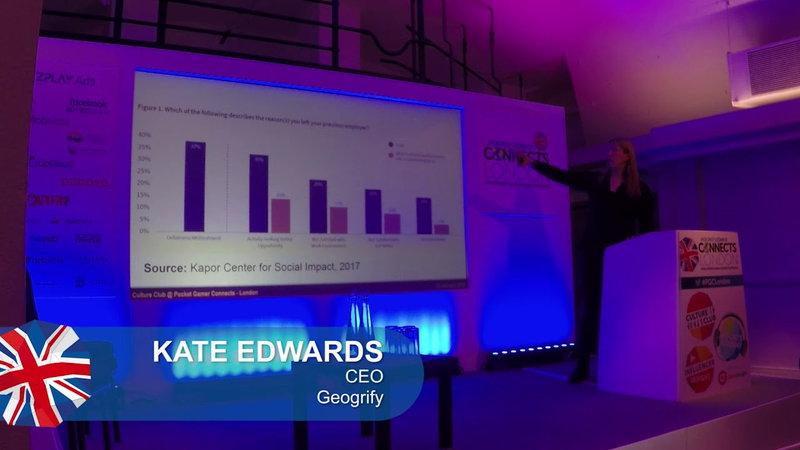
way and a lot of times that unfairness is driven by a sense of not being included you know there's no sense of inclusion or they might think that why I'm not being you know this environment is not hospitable to Who I am as a woman as a person to color or whatever dimension of their of the diversity quartz the experiences differ dramatically across groups both in terms of the geographic location go I'm so sorry that's usually why we're laughs Mike sorry it's better than when I wanted to knock about a glass of wine off the podium so unfairness costs a lot of money not just in the u.s. I mean it costs money for all companies because you're losing great talent some a lot of cases they lately leave the industry because they just perceive that this industry is not quote fair and they didn't show that diversity inclusion can work but of course as you might expect it has to be done right you know the way that you implemented in your company really matters so some of the reasons they mentioned here like what what falling describes the reasons you left your employer over there is unfairness
and mistreatment the other one activities seeking better opportunity I'm not satisfied with the work environment not satisfied with job do he's recruited away so again unfairness the perception of unfairness really brings very high now Fortune magazine also did a study a few years ago where they basically took a look at performance reviews and they wanted to examine was there some sense of bias going on in the performance review system between genders and so you can see they looked at 248 reviews these were reviews by men and women and they then they also had men and women review those those reviews from 28 different companies and so it also was a range of companies as well well what happened is they found and this is all third-party examination of reviews from across different companies is that look at what they found feedback received in the critical reviews women versus men so it has only constructive feedback that's
the light blue look at this it has negative feedback in terms of the women's performance reviews something's wrong here this is and so people are wondering why are women leaving tech why are they leaving games what it's driving them out well this is a sense of unfairness that's going on right here and again here's another one about reviews that include include critical feedback now of course they both Curtis but look at the number that had no criticism men versus women and so there tends to be again this sense of bias that goes into the performance review system that happens in these companies that is you know obviously that is an issue that's driving people out there of course there's also the wage gap issue yeah sorry it's euros not pounds but I think y'all get it so this has been an ongoing issue as well this is from for the game history specifically and so okay so we've got issues we've got weight wage gaps their persistence we've got a sense of unfairness that keeps
being persistent we have the notion of unconscious bias that I'm for I'm glad that like Google and Facebook over the last few years have really focused on that a lot for example but just to give you a quick example of unconscious bias I talked to a hiring manager just recently and so we did the hypothetical situation it's like okay you have two resumes a man and a woman both equal in terms of their skills who would you hire and so his response to me is as well I'll probably hire the guy I'm like why and he says because hiring the woman on to my all-male team would be be disruptive and there's actually been sociological studies that prove the exact opposite of that effect and I've heard all kinds of anecdotes from people across the game industry who saw the exact opposite happened all kinds of things happen you put one woman as part of a male team and all of a sudden all the men just kind of out of this innate an anthropological response perform better they do I think you know they don't want to be a slacker in front of this woman they even found anecdotal things like the kitchen area was a little bit
cleaner they heard the guys dropping fewer profanities and f-bombs even if she was you know dropping f-bombs every other word it's just they it's like they eat I don't want to be the douchebag in front of her so it was just interesting plus a lot of women they can report it said as you go into an all-male environment you're gonna work your ass off because you really want to prove what you can do and a lot of times you'll see that the one or two women in an all-male environment are actually kicking ass in performance and so the guys are just like huh yeah I better kind of up my game a little bit anyway so there those factors exist in our industry it's pervasive here's a great example though about how inclusion was basically recognized and then turned around very quickly because one of the things that's very frustrating is when I hear this all the time it's like well it's difficult that game industry takes time to change bla bla bla I'm like that's all I'm sorry it doesn't take that much time to change I mean you think about what's going on in Hollywood right now with the me2 movement that
issue of harassment has been pervasive since the beginning of the industry a hundred years ago and now within the last several months you suddenly have this movement now whether or not you agree with what's going on in terms of the implementation the fact is that this is the first time in the history of that industry that this is happening and be and it has been elevated to this level so change can happen very quickly if you want it to so here's an example FX networks is a cable TV network in the US and so the CEO this was back like when Jennifer Lawrence was being vocal about like the pay disparities in Hollywood and there were some other issues going on and so he looked at his own staff and he said look in the 2014-2015 season his shows that they were produced the only 12% of the directors hired were women or people of color and so he does flat out said where did it change this and he said we don't need a focus group we don't need consultants he said I'm the CEO I can do whatever I want and he had the board's backing and so he said
you know what I want more women and people of color being too rector's of our show so you can see how he just flipped this so quickly so in the 2016-2017 season 51% which is amazing and this is a quote from him that when he gave an interview back in late 2016 you know what he recognized the system is biased and we weren't taking responsibility so he basically said okay we're gonna be the change so it's just an executive decision and boom it changes and and things are different now what's interesting though and you can this is maybe a little dubious but you can draw your own conclusions 2015 Emmy nominations for FX show is back under the old model they had 38 nominations for the Emmys in 2016 after they changed the directorship they saw a hell of a lot more nominations now is there a correlation maybe maybe not I don't know I'm just suggesting the fact that maybe the fact that you are actually invoking inclusion and having more people of diversity make your programs you're actually appealing to a
wider audience now this was back during the Leadership Summit that we ran in the HDA when I was the executive director that's Rami you probably a lot of know people know him the person there to my left is Kristina Reed now Kristina was a producer at Disney she was a producer on big hero 6 as well as the two shorts called Paperman and feast so for those three projects she won three Oscars not bad and this is a quote from her when she gave a keynote at that conference and this is she illustrated to me exactly what inclusion is all about she basically did not talk anything about diversity about the numbers about quotas any of that stuff what she talked about is this the act of making everyone feel welcome along with their uncomfortable ideas unorthodox strategies and really matters when you make people feel welcomed and valued they engage and give you their biggest and boldest ideas and so what she did is described the creative process for those three programs that she worked on what they would do is when they would have liked
the dailies from the footage that the artists were making they'd get everyone in the room and not just the core creative team not just the artist not just the writers they would get every single person in the building the security guards the catering people the cleaning people every single in that building they would invite into the room and they basically laid out a policy saying everyone's voice is equal here nobody's gonna be judged for anything you say so they would show the footage and they would invite people say what do you think what do you see does anyone have an idea is there something wrong or something we can do better and she said they would get this avalanche of ideas coming at them from all kinds of people of color people of gender it doesn't matter they don't care who the person is but they just absorbed they basically through like the widest possible creative net they could and so then the job of the core creative team was to sift through all those ideas and see what one of those ideas are a few of those ideas best serve the creative vision of the project and that's how they made key attributes that very
process to how they achieved the highest accolades in her industry and that's pretty awesome it's pretty amazing to see and I've seen this work in getting the game industry quite a bit like I said I do culturalization work in this industry my job is to focus on basically helping game developers avoid political and cultural issues in their games but also avoid things like the use of stereotypes and allegories and all that kind of stuff and I have noticed there are teams that focus on the inclusion part not necessarily on the diversity part like we need to have X many women in there we need to have X many people of color it's more like what's serving the creative vision of the game but also thinking about okay well if you create a group in the game that's all these white dudes it's like well is there any reason you can't have some of those be people of color or women is it gonna change the story at all it's gonna change the gameplay at all and a lot of times the answer's no it doesn't change it at all and the fact is you're gonna actually open up the the the game's appeal to a lot of other people because really the goal that we want to
see is because we already know that our games are played by a very diverse wide audience out there so really the goal is to see that those who make games better reflect those who play them and that's really what we're striving to do and I think every company if they keep that in mind it starts with the company culture it also starts with the hiring practices it starts with thinking about what is inclusion means your company as a modus operandi you it's like this is a way of it's a way of thinking it's a way of working it's not just something that you plug in you know when you have to when it's convenient so there's a lot of things that can be done to address this there's a lot of things that can be done internally externally I'm not going to read through all this because I'm out of time but yeah there's this again big topic short time there you go thank you [Applause] [Music]
you [Music]
Summary
The game industry is currently facing a critical juncture regarding its internal culture and workforce composition. While the industry is driven by a highly passionate, creative workforce that views game development as a lifelong vocation, there is a growing disconnect between this passion and the industry’s professional environment. Data from developer satisfaction surveys indicates that while employees increasingly value diversity and inclusion, they simultaneously report rising concerns regarding sexism, racism, and unfair working conditions. These perceptions of inequity are significant drivers of talent turnover, as employees feel the industry is failing to provide a truly inclusive environment.
The core argument is that inclusion is not merely a demographic quota but a strategic imperative that enhances creative output and business performance. Evidence from performance review studies suggests that systemic bias often disadvantages women, leading to critical feedback patterns that differ significantly from those received by men. Furthermore, unconscious bias frequently influences hiring decisions, with managers often erroneously perceiving diverse teams as disruptive. In contrast, case studies from the entertainment sector demonstrate that when leadership makes a conscious, top-down commitment to diversity, rapid and positive change is achievable.
True inclusion involves fostering a culture where all voices—regardless of role or background—are invited to contribute to the creative process. By widening the net for ideas and ensuring that development teams better reflect the diverse global audience that consumes their products, companies can produce more innovative and commercially successful games. Ultimately, the industry must move beyond viewing itself as a faceless machine and instead recognize that its greatest asset is its people. Building a more inclusive, equitable workplace is a necessary evolution to sustain the industry’s creative spirit and long-term viability.















Comments