1 free read left. Create a free account for unlimited reading + AI research.
Create free account
Live ops for indies – The DNA of an effective mobile team
Key insights
6 takeaways- 01Transitioning to live operations requires shifting from a milestone-driven development mindset to a disciplined, stability-focused maintenance phase.
- 02An effective live ops team for indie studios consists of four to eight members who balance creative vision with technical conscientiousness.
- 03Success in the competitive mobile market requires a total commitment to the live operations model, as half-hearted efforts fail to provide the necessary stability and engagement.
- 04Consistent, smaller updates generate recurring performance spikes that extend a game's lifecycle, effectively transforming a declining revenue curve into a sustainable long-tail asset.
- 05Integrating monitoring tools to aggregate data from store reviews, Discord, Reddit, and support channels is essential for identifying and addressing issues before they escalate.
- 06Developers should use player feedback and performance metrics to identify pain points, but they must remain the final arbiters of design solutions rather than letting players dictate mechanics.
Ask AI about this video
Transcript
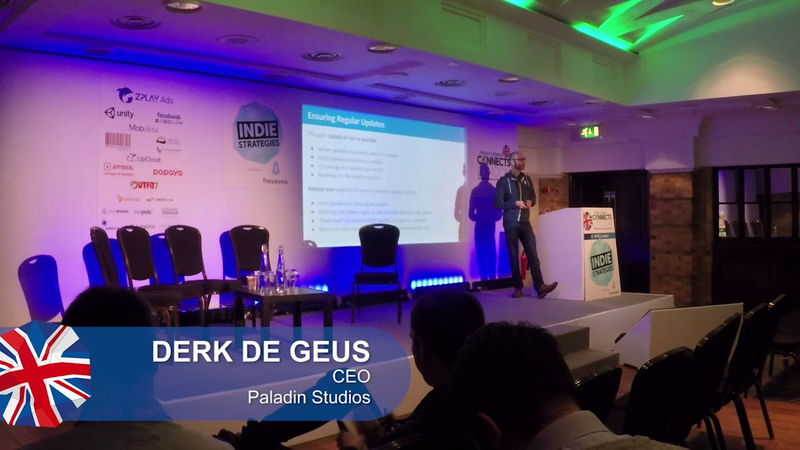
[Music] [Music] so I'm starting a little early gives me more time to to talk and tell my story about storm and so and I guess there's also plenty of time for questions afterwards so usually it's very fast I'm gonna go a little bit slower I guess then then the other stuff all right so live operations for Indies who's an indie in here who develops games ended by ourselves okay cool awesome so I hope this is gonna be useful for you guys first a little bit about me and about my company so i'm the co-founder CEO of paladins CEOs our mission is to create games that make you smile our office is
located in The Hague in the Netherlands it's nice and you know green and we have all kinds of movable stuff right in the back there you can see the storm mount team so and that's also one of the things I do want to mention before I begin all credits go to them I'm only facilitating this whole this whole endeavor and they are doing all the hard work so we work with publishers quite a lot of them actually so we've for Starbound we've partnered with congregate publisher from the United States I'm sure you you guys know them we've also worked or are working with Bernard unko for example he Lou DNA and a bunch of others so these are some of the titles that we've recently launched or announced Momonga primal adventures this was our first self-published adventure I guess you could say Galaga
Wars Katamari Damacy which was recently launched and we also a couple of weeks ago or months ago announced tamago chief for mobile all right we do a whole bunch more but I won't go into that too much I'm gonna talk today about a game called storm up some Rada is a collectible card game where you play cards on the field and you basically have to try to destroy the opponent's base the unit's move forward in a lane and let me just play the trailer to [Music] [Music]
hey that went smoothly nice nice work for the techies so yeah it's a it's a game that's been out since last year and this is actually our sort of first attempt at creating a sort of a bigger multiplayer mobile game we it started as an internal game jam so we do those every now and then and it was originally called Mirage we it went through a lot of iterations but ultimately we we came to a place where congregate was willing to pick it up and that was really really awesome to see that I'm gonna talk mostly about the the live operations part so not so much going into the development but I do want to share some
highlights like what are the differences between the development stage and the live operations stage I think the the simple state of the project is sort of dictating the the mindset that that we needed to adopt for development it's it's very milestone driven we have the the publisher in this case congregate providing us with feedback we have internal processes for feedback purity of feedback and everything there's no data and there's plenty of bugs along the way and everything so that's that's the status and it's okay live operations is way different we're not going to talk about milestones anymore we're going to talk about releases and release dates the community is providing feedback there kind of interact with us there's a lot of data and there's zero tolerance for any bugs whatsoever and we believe me we've had a lot of bugs and they are
very painful so in terms of team size or composition the the team composition is actually pretty similar we try to keep the team the core team in tact throughout the live operations face the simple reason for that is that if you have the people that sort of envisioned and built this product from the start then these are also the people that know it most intimately so we're really trying to keep that core yeah intact the big difference is that the the the the team is smaller so while in development phase we might peak at 15 people we actually sometimes go beyond that but it's not preferred in live ops it's usually between four and eight people on average and of course that
heavily depends on the success of the product if the game is wildly successful obviously then maybe you will grow it even bigger than the original development team but in most cases just keeping that stable team together is the the most important part this one this is actually the the heart of this whole talk the mindset for live operations is just different when you're in development you are going by gut feeling we really have this creative vibe in the company that that our that's all about making the best game ever and really pursuing crazy ideas the cool features are all over the place and then of course stakeholders both the the publishers that we work with but also internal stakeholders like myself they all want stuff yesterday as you know and the team has to figure out how to best serve those stakeholders or deal with
those stakeholders depending on your point of view there's a lot of milestones it doesn't matter if the game is super stable for those milestones we're just gonna try to squeeze as much features and content into those milestones as possible and really keep up the pace of development there's also not a lot of quality assurance and we have those crazy creative people and with live operations everything is different so it really flips itself on the head we're now dealing with a game that's out there the the data comes pouring in that's impossible to ignore because that those artifacts this is how players actually engage with your game and if you don't have the data to tell you that or if you don't look at the day then the community will will really tell you what what what they think and what they want so it's all about improving the game it's all about figuring out the the really the features that are most needed
and and how to serve those players the maybe the biggest difference of everything is the the question of updates and Quality Assurance cycles how fast can we do QA how fast can we push those updates the faster the better so this is always a challenge to to to deal with and instead of crazy creative people you actually need very careful people that are conscientious and really are very deliberate and in what they're doing these could be the same people that way it's just a it requires a different mindset it's not for everybody but it's most people will be capable of doing both so first tactic or I guess tip or strategy that we use is we want to ensure regular updates if the game is
alive there's a really strong pressure to create a lot of content or features and really push the game forward the problem is that if you make the updates too big it could take weeks and weeks before they get pushed and in my opinion it's better to have a lot of small regular updates then a couple of big ones there's this debate there's a little bit of friction between the notion that big updates have better chance of getting featured but in my opinion I think the best way forward is to ensure steady rhythm so the players can expect updates on a regular basis it doesn't matter what it is as long as you have that sort of expectations those expectations aligned so the game is running on the server mostly the client updates take a little bit longer server updates we can just do them on a daily basis if we want to but we sort of match
those those smaller changes and pushed in life whenever we have a bunch of things going on but yeah it's it's a lot of a lot of pressure and to sort of release the the pressure from the team we basically have this release train approach the Train is leaving in a set date in this case whatever makes it into the Train makes it into the Train whatever remains is for the next release and that's another advantage of having these regular updates even if you're working on big features it doesn't mean that they they need to be shipped with every release you can just push it back for the next release and keep everything stable and keep the people sane then the other part is the balancing and the updates these these are minor features or minor changes that we're doing we could in theory do that on an hourly
basis but the the community is there as well and we always have to consider what the impact is going to be on the player base so what we do is we really look at the data for for any balancing changes that we're making things like win rates card usage very important and at that point we started engaged with the community we talked to them we explained our reasons why the change is coming if there's big changes coming we might communicate that weeks in advance and sort of it gets them already adjusted to the thought that there will be changes along the way and that those changes might actually have a negative impact of course when we have make big changes we're also giving some rewards to compensate for any lost currency for example that they just upgraded this card to to the high level and then we nerf it in that everybody's pissed off and we don't want that so this is the kind of stuff we we do so even though that work the
technical work is simple it's really important to to keep that community management in mind so this is the kind of stuff that we see I mean a lot of analysis the community is a very active one for storm bound and we see a lot of really good comments a lot of really nice suggestions and a lot of very strong emotions as well around the whole game and the bouncing around it you know you spend the last two months trying to upgrade specific card level for two days ago I get enough and I spend a bunch of fusion stones was just sort of a hard currency to upgrade it and then we nerf it right that's sucks that sucks it's not a good experience so that's the that's why we need to be very deliberate with these changes and then of course we add content as well it's a collectible card game so that means that we have a lot of opportunity to add more content to the game and this is really really
nice if you do this on a regular basis people love it it's actually a really good good way to keep players engaged it changes this sort of the meta structure of the community the gameplay and yeah it's in general seen as sort of a gift to the players I love the hill paladin sentiment there we should get that a little bit more often but so yeah and then maybe the biggest one is features mmm the problem with features is that it's really easy to get into feature creep and just think of all the cool stuff you can do and the way that's we sort of try to balance that against the real world is that features should be tied to KPI goal so for example if we say we want to add friends versus friends gameplay that's a feature that
we hope or anticipate will increase retention rates and based on that goal you can then hypothesize around what it what it might need to achieve that goal and you can also test it another part of that is that we always need to keep in mind the the different types of players that are in the game so new players need to be on boarded the user experience need to be and it needs to be good the if we have to explain a lot of difficult rules then people will drop off very early and that's never a good thing but also the veteran players need to have this sort of balancing and an engaging sort of end game content and that needs to be in place as well so this is a continuous balancing act between new and veteran player players so a small thing we're doing which has a
big impact actually on the team is that we use app follow that IO with slack integration so it's like a sort of internal communication system and follow that IO is basically a monitoring tool that basically pulls all the reviews from the app stores and it pushes it to slack so we have a separate channel for storm mound news it actually also has Google search and the app follow integration so every day several times per day we see the reviews that are popping up and this allows us to stay in touch with the community and really keep a pulse but also the the issues that are there they will be in your face on a daily basis until you fix them so there's a really good sort of incentive to to get rid of the negative reviews I guess that's it for that then we engage with the community so there's several platforms or channels
that we use the primary ones discord I'm sure you know it's a very good way to to stay in touch this is really a chat chat based system you can get verified channels with discord and it's a really good investment then we have a reddit page which is also very active and the congregate forums which also have I would say it's all pretty much equal percentage of players that are on these different channels I think the the the key thought with these community interactions is that it needs to feel it needs to be the right balance if you engage with them too much you're gonna be very cynical at some point players can get angry or they can be trolling fortunately we have excellent community that actually it's almost self
monitoring and they're there they seem to be intelligent reasonable human beings which is not for every game I think the case but yeah engage with them as much as you can stomach and just keep in mind that that it might get to you at some point and that could that's a very slow subtle process so be aware of it and the last point this last two points I didn't invent these but I forgot who taught me that but basically the players know what's wrong with the game but their suggestions might not be the right solution so don't let them be game designers they're the players they know exactly what sucks and what's good but the solutions to the problems they indicate that has to come from you yourself some I just wanted to share some some of the good stuff that's coming out of the community there's a lot of memes that they create so for example the iron clad faction is not the stronger the strongest one and this is
the quest that that's tied to the faction it's called a recipe for disaster legendary cars are pretty hard to get so this is where I would put my legendary card if I had one I don't know it's that's fun you know it's it's good stuff and yeah it's just great to see people sharing their strategies and their deck builds and everything we also get a lot of fan art and I was surprised at this in it's such a nice you know I guess it's a indication that people are really into the game and the fan art is all over the place in terms of the quality this is this is fan art as well heat it's almost I would say almost better than we could have created or at least it's a professional level of fan art and you know it's this kind of stuff that really made me realize that wow if we're doing these kind of games that's that's the
way forward for us and for these people that's why you're doing live ops right to keep these people into the game make sure to keep their hobby alive and and keep them engaged the wiki is also community managed so were amazed at the quality level that they they got out and it's really something that we sort of hoped for but it's it's just there if you create a game that sort of has this emergent gameplay in it I think that's just a really good yeah a good starting point for this kind of community participation I would say I want to start wrapping up so a data analysis this talk is not about data analysis but we use a bunch of tools for it there's several sources that are
funneled into periscope and that visualizes the data in general we were not we don't have a full time data analysts on the team but we do the sort of the minimum data analysis that we need to to keep going my impression of that is that it's very useful to make decisions like card balancing if you look at win rates for those cards then it really gives you a good reasoning to to do to take certain actions and the funny thing is that it's pretty rare that we sort of spot something from the data get new Intel from the data that we sort of didn't already know so it's mostly a sanity check that we use it for I'm sure there's people that will strongly disagree with me on this point but that's just how we use it and I can
imagine that for most Indies that's how you're going to be engaging with data and that's fine right it's just ok customer support congregate is doing an excellent job at this what they did is they are super active on the forums and social channels they respond to reviews they they have the Zendesk page set up so there's a lot of frequently asked questions and everything and we are in constant communication with them through our sheykh select channel and we on our end we actually have custom bill admin tools that allow congregate and ourselves to really make changes to the game so this is another point where it really helps to first of all work with the publisher but also have the server site setup done well so the big question of course for me and I can imagine for you guys as well is that is this worth
it right all these feature changes all the only effort that's going into the game is that actually paying off well I did a rough analysis of of that and I think it is what you see here is the iPhone u.s. top grossing ranking for store amount in the games category and same for Android by the way which is a lot more flat but especially on on iOS you can see for each update that we did sort of major client update update you see you actually see a pretty big spike in terms of the top grossing ranks and if we sort of do a little bit of guesswork like okay this is how I use data it's sort of intuitive mathematics this is the trendline we're seeing with the live operations if you would have taken away those spikes then I think you
would have seen a curve similar to that so this difference between these two curves is the difference between live ups and no live ups for me that's a significant sort of flat night flat line especially because this is basic effectively bumping or a long till and that might last for years so it's an investment but it's it's worth it I would say all right so quickly some takeaways I think we have some time left right it's a two minutes okay so serve your community super important engage with them talk to them explain ask questions it's sort of the mindset of a party host like you need to or maybe a DJ or something you need to feel the crowd and really understand what what what's next for them what are they going to appreciate and an obvious one but still social elements in the game features like friend play is it's really
important for a longevity of the game we have a bunch of things we can still improve we want to sort of start addressing issues before the complaints are happening a little bit more data focused like a be testing deep dives into the data to figure out the onboarding process for example things like their social features and community get that integrated from the start the QA process internally we can definitely improve that and the focus on stability should be sort of the mindset thing that that's across the team onboarding you acts and and simply that live operations offense that mindset from the onset as early as possible we want to switch the the mindset to the LiveOps mindset and a main takeaway is basically do it or don't but not half-heartedly not a little bit I would really
recommend to to stay sharp on that make sure that your team is is capable and willing actually to to do serious live operations and that's my talk thank you I remember we went live ops with Playstation home and it was saying it's amazing and transition and like you say it's often the same call people yeah but a lot different in terms of the mindset yeah like I say the unforgiving nature players anyone remembers PlayStation own but when we launched there was his expectation we'd have trophy rooms and 3d stuff that never went away even after like seven or eight years order of existing thank you very much most welcome thanks for saving me [Applause] [Music]
[Music]
Summary
Effective live operations for independent mobile game developers require a fundamental shift in mindset from the creative, milestone-driven development phase to a data-informed, stability-focused maintenance phase. While development prioritizes creative exploration and feature expansion, live operations demand a disciplined approach centered on regular, incremental updates, rigorous quality assurance, and active community management. Maintaining a core team of four to eight members who possess both creative vision and technical conscientiousness is essential for sustaining long-term engagement and product stability.
Data serves as a critical tool for validating design decisions, particularly regarding game balancing and feature prioritization. Rather than relying solely on intuition, developers should utilize player feedback and performance metrics to identify pain points and guide development. However, while players are excellent at identifying problems, they should not dictate design solutions; the developer must remain the final arbiter of game mechanics. Integrating monitoring tools that aggregate store reviews and community sentiment—such as Discord, Reddit, and dedicated support channels—allows teams to maintain a pulse on player needs and address issues before they escalate.
The financial impact of this strategy is significant. Analysis of top-grossing rankings indicates that consistent, smaller updates generate recurring spikes in performance, effectively extending the game's lifecycle compared to a static release. By treating live operations as a commitment to the player community—acting as a host who monitors the "crowd" to ensure long-term retention—indie studios can transform a declining revenue curve into a sustainable, long-tail asset. Ultimately, success in this space requires a total commitment to the live operations model, as half-hearted efforts fail to provide the stability and engagement necessary to thrive in the competitive mobile market.














Comments