1 free read left. Create a free account for unlimited reading + AI research.
Create free account
Increasing productivity and preventing burnout
Key insights
7 takeaways- 01Burnout is caused by the nature of stress rather than long working hours, specifically resulting from external pressures that trigger negative stress responses.
- 02The human mind spends approximately 50% of its time lost in thought, which is governed by an impulsive system that hinders productivity.
- 03Mindfulness exercises should be used to transition the brain from an impulsive state into a logical, controlled state to strengthen focus.
- 04Daily routines should be structured around personal energy fluctuations rather than a static schedule to maintain high output.
- 05Engaging in 30 to 60 minutes of daily physical exercise is necessary to improve cognitive function and support mental resilience.
- 06Active habits should replace passive activities like television to maintain a clear sense of purpose and sustain professional engagement.
- 07The 'one-more-hour' technique can be used to gradually expand willpower and build capacity for demanding, deadline-driven environments.
Ask AI about this video
Transcript
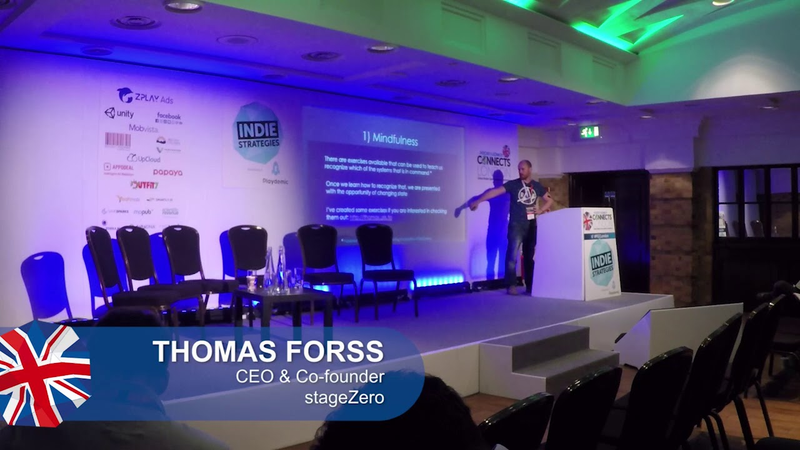
[Music] [Music] all right so my name is Thomas Fox I'm here to speak about productivity and and preventing burnout all right it's a little bit about me background in in software engineering and a PhD in machine learning from Torico in Finland the University called of Academy I'm a co-founder and CEO of company called state zero it's relatively new company three people
working on our first game but I'm also an AI researcher at a private research lab called silo AI that does artificial intelligence as a service and I also have written a book called the self away for work self-aware way forward it's gonna be released sometime in in March end of March so that's what I'm gonna talk about today is a little bit about what I've written in a book and a little bit about my experiences all right so why is this topic relevant start off I want to show a bit of bit of statistics so according to the stress that org 75% of all doctor's visits are stress-related and stress is the
underlying cause of 60% of all human illnesses and disease so it's it's highly relevant in a field like like game development where where people work long hours and tend to have a constant kind of milestones that they need to press for prolonged stress can then in turn lead to burnout there's essentially two different types of stress we have positive stress and negative stress positive stress is the stress that gets you interested in doing things it kind of pulling you to do more while negative stress is more like something you are pushed pushed by a task pushed by a deadline and so on and and I would say it's more and more than negative stress that leads to burnout if you're how if you're doing things that have a
negative effect on you for a long time however people seem to think that that the number of hours you work is what determines whether you will burn out or not and I'm here to today say that's not necessarily the case so it I claim that it it's how you work that matters and not actually not actually the number of hours and so consider these two two different scenarios here so a few years back when I was working 40 hours a week I got really close to to burnout I was working as a teacher in a in a university teaching programming courses and project management courses and stuff like this the kind of negative stress from having constant courses led to to getting really close to burnout with kind of
cyclic pressure coming every before every Christmas and also after every every Christmas for for both semesters then I change to beat our work I left that place and and started our game company and I worked the best year of my life 5000 47 hours which is equal to about 96 hours per week and and the difference in in hours for going from 40 or 40 hours to 96 hours actually made me feel better because I was no longer having this kind of negative stress instead I was having a positive stress and and changed the way I worked [Applause] so increasing productivity I have six different points today I want to discuss and then I have a point at the end discussing also how to prevent burnout
research has shown that the average person spends about half of their time lost in thought so this is a bit of bit philosophical and at the same time kind of research-based there was a study done by Killingsworth and Gilbert that show that this is the case and we can increase productivity either by by becoming more focused or by working longer hours up to a certain certain point after which there's diminishing return on how much work but essentially if you work more you get more done it doesn't maybe stack up in the long run however the tips I have or tips a bit go through will show you how it can still apply so becoming more focused is actually a skill that you can learn and
I'm gonna talk a bit about that right so I have three points here I thought to talk about becoming more focused and then I have three points to talk about how you can get more energy so the first point is to learn to control your mind so if as the research has shown we humans spend about 50% of our time lost in thought so then the idea would be that maybe we can reduce the amount of time we're spending lost in thought and this is how you can do it so there's a guy called Daniel Kahneman he's a researcher it's been he's a researcher that's been doing his no never a brain researcher now what's it called never scientist and he's written a book called Thinking Fast
and Slow in in this book he has used his research to come to the conclusion that the human mind is split into two two kind of systems we have wine one fast system and one slow system you can kind of see them as the impulsive system and the logical system so that the fast system is the impulsive system which is kind of in general in control of of the mind when we are not thinking about what we are thinking about and then we have a logical system that gets that becomes in control of what we do when we start actually thinking through different tasks or different thoughts in any more detail and the thing the founder is that the impulsive system is the thing that's
in charge when we are lost in thought so if you're able to to to make make it so that we would spend more time in this logical system than in the impulsive system then we are also able to reduce the amount of time that we are lost in thought and there are techniques that you can use to to kind of train up the ability to be less lost in thought mindfulness are an example of these kinds of techniques well what happens in in a mindfulness exercise is that it teach us to recognize which which of the systems that are in command kind of once once we learn to recognize that we are presented in an opportunity to change state so so in a mindfulness exercise it's generally a kind of breathing
exercise where you focus on you you choose to focus on something for example your breath breathing in and out and you exercise the ability to recognize menu lose-lose kind of track of your own thoughts so so you you start by breathing in and out and Counting your your breaths and after a while you might notice that oh I lost I lost count of my breath I lost count of my thoughts and so the mindfulness exercise is when you notice that that happens you release your thought or release whatever had kind of taken your attention and go back to to doing the breathing exercise again and when you do these kind of things you strengthen your you're kind of you strengthen your your your focus so that you are you you kind of automatically
after doing these kind of exercises for for a couple of months you automatically start releasing releasing thoughts that you have that intrude when you try to focus on something right and it's kind of hard to start out with these kinds of exercises so I created a creditor a playlist of videos or actually no it's it's audio how the exercises so it's this is linked to my to my soundcloud and from there you can check out these kind of exercises I have both both basic exercises and and a number of more advanced exercises where you learn kind of breathing techniques and similar and so using that you can you can change your state of mind from being in this impulsive state to this more logical state and through that become more kind
of focused for a few hours right the second point that you same point is is to control your body through exercise so light light or medium exercise between 30 to 60 minutes per day can increase productivity and also reduce stress and here I have also a research from Erickson Curt and a bunch of others that's shown that exercise improves memory in learning so if you set up your day so that you exercise when you are the least productive then you can kind of increase your focus and get a few hours of focused energy to to be able to get more done the third point is about daily routines so if you
analyze your own behavior and and make your workday into a process that can increase your productivity so if you identify the weak points that you have during each day they tend to reoccur so for example my weak points are usually after lunch I get kind of tired after having eaten and also in the morning I have a hard time getting started so if you if you know when your weak points happen you can use either mindfulness or you can use another thing that I will talk about later too to kind of get a boost in your productivity for a short while [Applause] yeah so you can use one of the methods to fight those weak points it's the other part of all becoming more productive is to find find that extra energy so I'm gonna go through now three
different things that I I've found that helped me a lot in in getting more done like either getting longer done a lot longer hours worked or simply finding energy to start something that I have tried to do but not been able to in in a while so feelings of not having enough energy and being powerless generally comes from how you structure your life so to get more energy we need habits that make make us act instead of passive so for example an example of a passive passive habit is watching TV and you just sit down and you do nothing you can't turn off your brain and just your eyes just watch whatever is happening and and many many people seem watching
TV as a kind of way of relaxing and getting back and sure you're relaxed but it's it's a it's a passive habit which may means you actually kind of lose energy in the long run you you don't get energy back from it you get energy back from being active and so the suggestion here would be to to make showing up or starting into a habit and which means if we I have an example of for example I used to work for full workdays and then come home and not have no energy just to continue with my own projects or other projects when I got home and I fought kind of a long time with how I could be able to do to change that and then and the solution for me was to to
essentially always everyday just force myself to start with something but not decide on what I need to do is I for example I would fire up fire up my computer and start thinking about doing a doing work for a project and then and then after I started I didn't decide on what I should do I've just decided that okay like I will do this for half an hour just to get a habit into starting doing this project so I could sit there for half an hour and doing essentially doing essentially nothing but after a time when this became a habit I started automatically doing more and more so starting is kind of the first step and then after that once you have been able to start getting more things done you can apply what I call the one more hour
mentality the one more hour technique so once you have been able to create a basic habit change the kind of mentality to when you are allow yourself to stop working on something so when we work on our projects that comes a point when they start telling ourselves we have done kind of enough for today you always get kind of why do you become really tired and you're like oh I'm going to do this anymore or maybe you even become happy with what you have done or I did this much faster than I wanted to know I can stop but if you then apply this kind of attitude where you have always one more hour after the first time you come to the conclusion that I need to stop and then you do one more hour after that then you will automatically over time stretch you're kind of your willpower you will stretch the real power so that with time it becomes longer and longer how you the time you can work it becomes longer and longer before you come to the point that
oh no I want to stop and then you always apply one more hour after that so you kind of stretch your real power further on and then we have a kind of problem that I think everyone runs into is that the kind of greatest problem humans have is tend to forget why we start things so so if you ever have started a diet or something or first you're really really into it and you're really kind of yes I'm going to lose a lot of weight and then you could carry on for a few weeks and suddenly if you don't remember even while you started so you just you have to stop or you feel like I have to stop I don't even know what I started in the first place so to kind of combat that problem I started using actually motivational speeches so I gathered a
playlist of motivational speeches by different famous people and people on the internet and I've linked to that playlist here so it's a it's a playlist of different motivational videos that I use essentially daily to get back on track to remember why I do certain thing it's a it's really kind of miraculous how much energy you can get back out of of reminding yourself of what you started something through through motivational speeches so identify event during a day you become unfocused and then you can use other mindfulness or motivational speeches to get back on track to combat that problem alright so the final thing I was gonna speak about is preventing burnout and in a sense I've been speaking about it the whole time because the different points that I talked about this six different points
they are all kind of part of what has helped me realize that I can prevent burnout so I think the strongest point is is mindfulness if you're using it there is a lot of different research that shown shown it kind of reduce reduce depression and it can reduce anxiety it can reduce a lot of different things but I'm also claiming that by by doing daily mindfulness exercise to prevent burnout because you you kind of learn to know your own mind you you learn you learn how how you work and you learn how you can kind of release stress without without having to go into a burnout so if you follow the steps that I outlined you will kind of effective effectively become immune to burnout it's a process you have to develop but it requires kind of both exercise requires mindfulness exercises it requires conscious effort daily and
they through these steps you can kind of develop mental tools needed to cope and release stress so this is my last slide there is my my email address here if you want to follow our company font on Instagram or Twitter you can do that and here's a game that we are developing yeah thanks yeah you're wrong I think it's hugely important or not something is underestimated I mean I still remember you know people talking about crunch and how you know that was a normal thing and obviously clearly in the world of games as a service sure I think most of us are in now you can't do that because you can't have conch after you've released something and still have a service that's worth experiencing so you know take your time out to look after ourselves and you know having a culture that says we should be looking after
ourselves is incredibly important does anyone have any thoughts or questions I want to add well here I I have the question that once I approach a tasks that I really don't want to do something that that is necessary but I am totally not in the mood to do it or I just don't like this in general yeah are there also techniques that can make me want to do stuff that I usually don't want to do yeah I mean for me it produces the mindfulness techniques because it's kind of its kind of way of reminding that reminding you that you can kind of enjoy anything and if you can enjoy anything you can learn to enjoy anything and you can as you said you can come past past the idea of not wanting to do something it's like you can enjoy any moment of your life through rustication add a little former
boss of mine had a really kind of not interesting mindsets of way to do this if he hated doing like chasing people to pay him just hated it hated it however he was in a bad mood he found he was really good at it and so he decided he would only do chasing up people for debts when he was in a bad mood and so I think what I'm saying it's like if you know yourself if you're thinking about where you're flowing and you're in your mindset and you're able to take time out and work out what's what is the real blocker it's much easier thing than to Mack what you're able to do in and unschedule your time to fit when okay I may not like having to finish that bit but I've got this deadline I've got this thing and the reward is it will be done and that I will get the benefit of knowing how to do that better next time and I think having that kind of sense of purpose even with those things that you hate I think is really powerful that kind of makes sense yeah yeah unlike me don't
give self chocolate every time you do it you don't have this see that always work okay thank you very much thank you [Music] [Music]
Summary
The primary objective of this presentation is to provide strategies for increasing professional productivity and mitigating the risk of burnout within the high-pressure environment of the game development industry. The central thesis posits that burnout is not a direct consequence of long working hours, but rather a result of the nature of the stress experienced. The speaker distinguishes between positive stress, which fosters engagement, and negative stress, which is driven by external pressures and leads to exhaustion. By shifting from a reactive, passive work style to a proactive, self-aware approach, individuals can sustain high output without compromising their mental health.
The methodology relies on a combination of personal experience—transitioning from a high-stress teaching role to a high-volume, 96-hour work week in game development—and established psychological research. Key findings suggest that the human mind spends approximately 50% of its time lost in thought, governed by an impulsive system. To counter this, the speaker advocates for mindfulness exercises to strengthen focus and transition the brain into a more logical, controlled state.
Practical recommendations for enhancing productivity include implementing daily routines that account for personal energy fluctuations, engaging in 30 to 60 minutes of daily physical exercise to improve cognitive function, and adopting the one-more-hour technique to gradually expand willpower. Furthermore, the speaker emphasizes the importance of active habits over passive ones, such as television, and suggests using motivational content to maintain a clear sense of purpose. Ultimately, the speaker concludes that by developing these mental tools and cultivating self-awareness, professionals can effectively manage stress and build resilience against burnout, even in demanding, deadline-driven sectors like games-as-a-service.




















Comments