1 free read left. Create a free account for unlimited reading + AI research.
Create free account
Switching from developer to publisher
Key insights
6 takeaways- 01The industry landscape has shifted significantly since the mid-2000s, offering developers diverse growth paths ranging from independent funding sources to platform-integrated SDKs.
- 02Studios like Mode7 and Dodreams demonstrate that using early access, soft launches, and prototyping to gather retention data provides the necessary evidence to successfully pitch to investors.
- 03Data analytics should be utilized as a tool to reduce uncertainty and answer design questions, serving as a complement to artistic integrity rather than a threat.
- 04The decision to engage a publisher should be a strategic choice based on specific needs like funding, marketing, or distribution, rather than a default industry path.
- 05Developers must treat game projects as businesses by prioritizing product-market fit and market-oriented strategies rather than relying solely on creative focus.
- 06Long-term studio sustainability requires a transition from an introverted development model to a communicative approach that leverages performance metrics to inform business decisions.
Ask AI about this video
Transcript
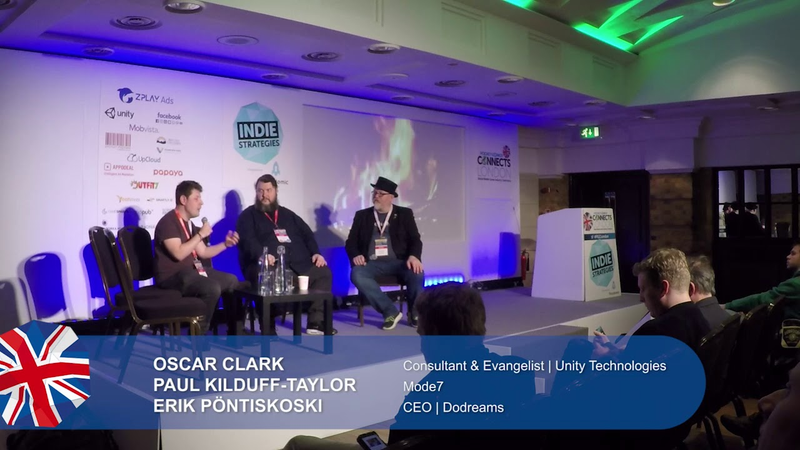
[Music] [Music] so we're gonna have a another kind of fireside chat like experience I'm gonna get Eric and Paul to come up and join me what wouldn't run do is sort of talk about the idea of publishing and what that means nowadays particularly in a point of view of whether you're going to self publish or in the case of Paul almost ever now they're starting to get moving to the world of publishing themselves so that's really kind of the idea we're trying to explore what that means from a different angle than we normally do so hello guys we've got a lovely fire again so I'll probably get a warm back from there maybe not so let's start off by getting you guys to
introduce yourselves because it's always better that way Paul you know tell people and we don't think about presents I know something I kind of stuff to get the context and what you guys are doing now sure hello my name is Paul Kilduff Taylor I'm the co-founder of a company called mode 7 we're an indie developer and now very small-scale publisher based in Oxford we've been going about 12 years our first game was a multiplayer flying sword fighting game which was exactly as terrible as that sounds and then from there we moved forward doing some contract work we started developing our own strategy games we did a game called Frozen Synapse in 2011 they did quite well and then a follow up to that and then in 2016 we decided to start working with other teams and become a publisher so our first title as a publisher was released last year it's called Tokyo 42 kind of a multi-platform action title and we're currently working on Frozen Synapse - and another project called the colonists which is yet
another strategy game with a colony building inflection that will be coming out this year Erik Jordan will explain who you guys are hello everyone my name is Erik and I'm the CEO of the dual dreams game studio and no though I'm from Finland I'm not the great-grandson of Santa Claus I guess with the beard I'm confused also but still remember to be nice because you never know who was watching these days especially but yeah we're we're the makers of drive ahead of the drive ahead family of games and I think the best way to explain what where our studio is about this to talk about our vision so we want everybody to watch drive ahead games I understand that that sounds really weird that why would this be the vision of a studio so drawn ahead games are like a perfect combination of casual competitive skill gaming and then random crazy fun that comes through physics so it's something that you could be really proud of as an achievement and then when watch you
watch them we find that people who don't play the game enjoy them it's like America's Funniest Home Videos for games so this allows us to grow by 100,000 new downloads every day that's not the average that's at least so that's why Frost the community is absolutely at the core so our mission is simply more joy together good a good mission really I mean so on track of picture first about kind of how you first look to this kind of picture and how that's changed over time so in particular I'm thinking about you know the traditional model was we would make a game and we'd might get some money from a publisher maybe we've pushed that into a marketplace it's obviously before mobile kind of that really happened is that the worlds that you guys entered or did you start in the moral kind of relatively modern era of of the kind you're giving a market you've got to find a way to Scrabble and get yourself some attention in your own so what was your starting important yes so we started kind of 2004 2005 when
steam was kind of quite nascent and there were only a couple of indie games on Steam so our objective really was to get a game on Steam initially but we had them yeah we pitched to publishers we kind of did absolutely everything and we member pitching a sort of virtual pet puzzle game to a well-known retailer and having them tell me that virtual pet games were dead and that would never come back and sort of interesting things like that so we we did kind of do that run around but ultimately we found that what we needed to do to make the stuff we wanted to make was kind of proved that what we were saying was true ourselves and released something and get a track record behind us as a studio before we dealt with anyone else it sternal so he kind of went to a runway do dreams was founded already ten years ago I've been the CEO for three years now so or a little over three years so we've done all kinds of stuff related to gaming we were doing transmedia and eSports with like a big TV broadcaster and Finland already back in the day and
we've also done work for higher you know dirty deeds done dirt cheap and that was when we made the shift to mobile gaming and in the beginning we were working with a publisher because of course we didn't have any contacts but then after we gained more experience and and had our own contacts with the stores we figured that we might just as well self publish so I think this is really where that sort of fight the you know the rubber hits the road it's this moment where you having to work out how you've produced your game and how you get it ready for market what all this particular skill thing you know skill sets you've learned from that point of view you productions done getting this out to market what sort of core lessons you know is it completely different skill set or is it something which is just an evolution of what you'd know anyway I think it definitely is a different skill set because when you're creating something yourself you're trying to find that intersection between things you want to make things that you want to have made and things you can
make and that's quite an introverted process but getting the game out there and marketing again is about communicating it's about looking up your vision and what you've done and then thinking about how can I communicate that to another person what are they going to say back to me and how can I respond to that so all all through our development we've always been kind of looking at the design of a game and then thinking about how people are going to react judging their reactions and then trying to incorporate you know some of that back into our design similarly with press and with other partners it's about trying to really open a dialogue with them as soon as possible if you put things in your game that are going to start conversations that are going to intrigue people that's going to work across everything from the people playing your game all the way through to to journalists and potential publishers where do you see the same experience here as a as a differences as a so yeah I you know I'm a I'm a business guy I get excited about stuff like product market fit and and what I had to
learn how to communicate this in human language not only to my team but to the players so what is product market fit is finding some niche some underserved market so similar to the previous talk we we had this prototyping stage after we launched one big mobile game that that didn't didn't perform very well so we realized that we just need to learn from the market so the team can do any game they want it just as long it takes couple of weeks or let's say months to go from idea to live game and this allowed us to learn and then we discovered that there's this underserved niche in local multiplayer games that games you play together with your friend on the one and same device and I'd pitch it so that you know like I said that parents don't like it when their kids are glued to these devices during family time and when you hang out with your buddies there aren't that many games you can play together and I noticed that when I was using this pitch then
everybody's eyes light up like the store partners media and it's a really good story for the players so that's I think like the local multiplayer was the reason why we got featured on why people download that's an area which has to be popular but actually not being very good at being monetized yeah so so the frost rewarded video has worked very very well with local multiplayer games and from a business perspective of course we want we knew from day one that we want to make online PvP you know that's that's like the World Championship level you know stuff in gaming but I'm rather developed those features with cash flow then work on something in secret for a year and then you go live and you know fingers crossed you're you're hoping that it will be a successful if it's not then you know you're you're you might be bankrupt so it seems to me there's a kind of different flow a different dynamic to the way I think you're describing working maybe this little more traditional kind of publishing kind of route you know the the whole process of being our identify and satisfy
consumer needs which by the way was the first thing I was ever taught in my marketing diploma you know this idea being out I should remark it first that the game comes out of that and then you test against that that flow it seems to be very suitable in terms of a self-contained self publishing organization but when you're dealing with a team that maybe doesn't have those kind of marketing skills you were talking about earlier or maybe the the different mindset you know how do you kind of deal with that as it kind of with this this wider role there's publishing kind of aspect well I think I mean the the process that you're describing of identifying you know essentially a niche and and then serving that niche I think that's it you don't necessarily have to have a lot of complicated marketing data to do that it can be as simple as you know we found this group of players that we know that really like this for this reason I mean it's it's if you're sort of moving from that older product idea to the idea of customer value if you're going to kind of use this type of turns customer value is about the experience that someone's having and it can they get it elsewhere
how easy is it for them to get the experience you know what's the convenience for them and I think a really good developer even if they're quite new and inexperienced will have some idea of that it's a it's a conception of what is their own creative vision but in tandem with how is a person gonna play this game you see so much sort of just thrown away comments of you know this this dijanna is popular or this thing is popular and that's far too broad it needs to be what is what is a person gonna get out of my game specifically that's what a funder or a publisher wants to hear about in addition to you know your vision and your story as a developer I think it's really interesting area to kind of explore because if you think about the kind of old traditional console kind of model you would have people like you say you were looking at a balanced portfolio they were looking to be able to find a again to finish on where the ability to join or maybe a kind of sort of playing style you know a first-person shooter type thing whatever or or I want a game like I'm charted or something like that and they'll be looking for a developer who could fill that hole first so the
developer wouldn't be doing that kind of thinking about where the market fit was the traditional publishers role was to find out where that hole was and then put a developer into it nurture them through to production and then release it so when we started talking three or four years ago in here we were talking about publishing being dead is that really just a simple the fact that we actually have much more control over access to information and therefore we shouldn't can do that ourselves as developers is that kind of what's what's going on yeah I think like the traditional publishing model if you think of it this that if your offer to the deal that is something like that uh let's look at the KPIs at soft launch and if it's looks good then we'll publish it and we'll do our best efforts to get featuring you know media publicity and then if it's performing really well we might invest into marketing well in that case I think you could say that well why don't I just self publish so so I think like
yesterday round zero from Helsinki arrives from Finland which is a spinoff from finger soft the makers of Hill Climb racing they have a really interesting model wargaming also last summer announced this program where basically both companies are doing the same that anybody can implement their SDK you get some seed funding through seed downloads through their cross promotion so you can actually get some data they have back end for the analytics maybe even provide some server stuff I think that kind of approach is gonna kill traditional publishing yeah and just to give you an idea well so from a from a kind of PC smaller indie perspective I am a partner in indie fund as well as my work with mode seven so we're a group of independent developers who it's just solely financial support for games that are in development and one of the projects we funded was a strategy a strategy game called armello which is a fantastic beautiful game on
PC almost have sort of studio ghibli type artwork and they actually approached us with with data with stuff that they'd had from early access and their beta with user numbers with retention data and they and they had a plan a whole roadmap through to the end of development and they just need a top-up funding and that was definitely the easiest investment I've ever made it was a really instantaneous decision so it was so clear that this game was working so even if you're if not from from this background where you're considering something on the scale of you know a wargaming type title you can actually do that you can put something out you can get data collect meaningful analytic and then use that to approach a publisher if you want a really easy easy funding I think it's very important cuz I think that's the whole point area so we we actually would talk a lot about my book because it smokey came up etc but actually a lot of the lessons that we've learned through mobile are incredibly powerful throughout especially now with how difficult the PC and console markets are exactly and it's not gonna get any easier and in fact if you if you apply those lessons of data even I don't think about to my console days when you know it's only we were only just starting to
use data I'm not trying to get the team to realize that we should be using analytics in playstation home was a struggle for a long time until Warren managed to CCCP talking about it yes I think this this is a beautiful topic you know you could have a talk like how I learned to love numbers and so can you likely because what is data and why should art or or anything creative be measured by numbers is that it reduces uncertainty so you know you put your heart into some some art or design in the game don't you want to know how people experience it and and like that that's why the analytics is there so we know that are we doing the right things and doing things right so so that I'd encourage you know people to approach it that way I think that the best way I ever had that frame to me was by someone who said analytics is about answering specific questions because I think developers worry that their work is going to be judged by these sort of
mysterious numbers that are gonna come in and it's no it's for developers to ask the question you have to frame the question and then the alert is going to help you answer that and there's so many times when as designers you'll you'll be working on something you just don't know if it's gonna work and you have to kind of make a call and that's that's the time when data is really useful and it doesn't have to pervade your entire you know development process it can't just be for one or two things and I kind of obsessed with the idea of being the scientific method it's obviously not quiet but this idea that we're creating hypotheses and we're testing them is just a beautiful way to think about it but then I'm a cake liner so you know let's take about Guiness turnover a different point of view now so obviously you know what you've got a lot of people in this room and gonna have different ways of working you know why should they you know decide to self publish or to seek your publisher you know one of the kind of things that they should be looking for when they're making those decisions I think like the when I was teaching introduction to marketing at all the university I always said that one of the topics was this channel
creates demand yes and and especially in mobile gaming it's it's very true so you know you have to customers you have the end-user the player and then your your your channel partner is your customer so a CEO my number one job is to sell drive ahead games to the channels and make sure we get their support continuously with new releases and then the on the updates so I guess it's a you need to ask yourself that you know will I grow faster with a partner so I would be happy to work with a publisher for drive ahead games if I feel that they will help us grow faster and develop faster and make drive head games bigger than we can do alone and and that's what we evaluate when we have discussions with people if you don't have these contacts you know then it would be best to work with a publisher you know you go to the local tesco here it's not coincidence
how the items are placed in the shelf so the Tektronix and the the producers that have the best relationship with the store and can bring highest revenue get the best spots on the shelves normally just below eyesight I think if you if you're considering going for a publisher then look at the publisher look at what they've done their work will be out there the marketing they've done the type of games they've released their relationship with the platform holders it will all be visible and you can check them out as much as they're checking you out and if you see that and think I could never do any of those things then it might be worth considering if you want to learn and develop the skills yourself or maybe you come from a marketing background already or maybe you you know you just have the desire to do it yourself then then do that there's no pressure to seek out a publisher in this day and age there are other funding means there's organizations like UK games fund in this country there's a huge variety of ways you can get something done so don't just look for a publisher
defaults make a clear decision and that will help you pitch them if you're going to publisher and saying you can add this that and the other and this is why we've chosen you that's always much more compelling further comment is that I think you need to decide that do you want to be an NB and you're making games as a hobby or do you want it to be a business so for example with drive ahead games there's a new update every three weeks regardless if we feel like it if if somebody is having a divorce as we heard from previous speakers or whatever is happening in the world there's always an update and we commit to that and and I sometimes here see Indies who say that oh I'd love to have a publisher or somebody who would help with the business side and then we can focus only on the game and that's fine if it's a hobby and you get your income from something else but if you want it to be a business that everybody who is in the company will make their living you know
pay their apartment and make sure that their children have food and everything like that then it has to be a business and then everybody has to be interested on the performance of the game nobody has the luxury to say that that you know like I'm a creative person and I'm not concerned with this financial side of the the games yeah that's right we're also lucky enough to be in an industry that currently can sustain lots of different sizes and shapes and types of businesses so it doesn't have to be a binary decision between I want to work this way and be this size and make this sort of revenue you know versus a sort of it's just something I do in my spare time you can actually define that for yourself especially when you're starting a business it is important to have that in mind I think a lot of people just barrel into game development development and say we want to make games want to do this that and the other but actually thinking about long term what kind of level do you actually want to be at and planning for that really important and of course you know obviously marketing people are magic and they they have this weird kind of thing that nobody else can
understand no that's not true and the point is for me that light pole and like Erica said the the reality is that there are so many variations of what a publisher means now and that's a huge step forward there's so many sources of funding that are not publishers and that's a huge step forward but understanding what the right fit is for you understand what role you want to take in this marketplace it's going to come down to your experience and your skill set and your understanding and your willingness to fail because you will it's okay that's how we learn thank you much thank you [Applause] [Music] [Music]
Summary
The discussion explores the evolving landscape of game publishing, focusing on the shift from traditional developer-publisher relationships to modern self-publishing and hybrid models. The primary thesis is that developers must treat their projects as businesses, utilizing data-driven insights and clear market positioning to determine whether they should self-publish or seek external partnerships. The speakers emphasize that the decision to engage a publisher should be a strategic choice based on specific needs—such as access to distribution channels, funding, or marketing expertise—rather than a default path for game creators.
Key findings highlight that modern game development requires a transition from an introverted, creative-only focus to a more communicative, market-oriented approach. Data analytics are presented not as a threat to artistic integrity, but as a tool to reduce uncertainty and answer specific design questions. The speakers note that successful studios often use early access, soft launches, and prototyping to gather user retention data and performance metrics, which then serve as compelling evidence when pitching to investors or potential partners.
The scope of the discussion covers the global indie and mobile game sectors, drawing on experiences from the mid-2000s to 2018. The methodology relies on the professional experiences of industry leaders from Mode7 and Dodreams, who share insights from their transitions into publishing and their use of iterative development cycles. The speakers conclude that the industry now offers diverse paths for growth, ranging from independent funding sources to platform-integrated SDKs. Ultimately, they argue that regardless of the chosen path, developers must prioritize product-market fit and maintain a commitment to the business realities of their projects to ensure long-term sustainability.















Comments