1 free read left. Create a free account for unlimited reading + AI research.
Create free account
The pain and pleasure of free-to-play game UI design
Key insights
6 takeaways- 01Free-to-play UI design requires balancing player experience with business metrics, necessitating a skill set that spans visual aesthetics, data analysis, and product economics.
- 02The living service model of free-to-play games demands a culture of constant iteration, where designers must be prepared to discard completed work to improve feature performance.
- 03Designers must act as ethical advocates to prevent the use of dark patterns, prioritizing long-term player trust over short-term statistical gains.
- 04Usability issues should be treated as design failures rather than player incompetence, requiring designers to iterate based on objective playtesting feedback.
- 05Professional success in this field depends on effective collaboration with data analysts and developers to align design decisions with the game's monetization and retention goals.
- 06Embracing the inherent instability and frequent revisions of the development cycle is essential for maintaining creative productivity in the mobile games industry.
Ask AI about this video
Transcript
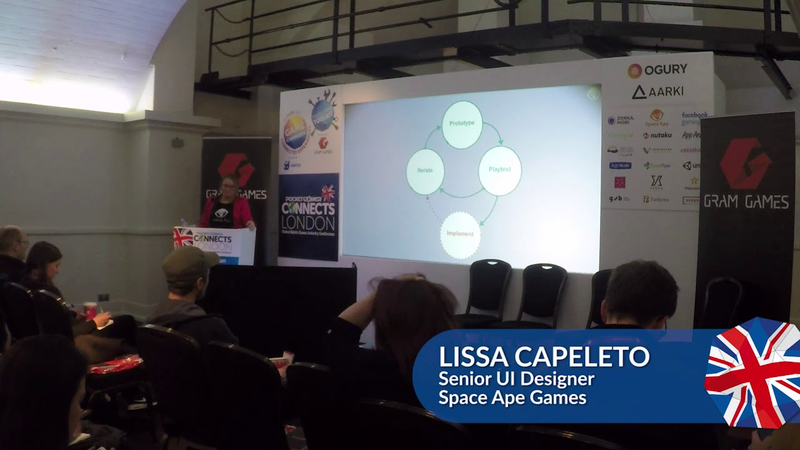
[Music] I'm Lisa and I work at space ape and I design uy I've been designing UI for quite a long time now and I just want to talk to you a little bit about the specifics of designing UI for free-to-play games clearly it's very different from from any other and I want to tell you why I love and I sometimes hate it now why am I qualified to talk about this well I began my career and my career with graphic design so that's what I studied at uni I got myself a job as an intern in game design then I transitioned from that for UI design for
but that was for PC this was back in Brazil where I am originally from and finally I ended up in mobile UI I feel like this is easier for you to hear me right yeah I'll just I'll just stay around yeah okay so finally I transitioned in my way into mobile UI this means that I've been making free-to-play games for well a long time nine years almost 10 years since 2010 this is kind of like almost the entirety of my career now what are free-to-play games how many of you like are working currently on like a company that's making free-to-play games cool most of you know this then I'll just skim past but yeah free-to-play games are obviously free that's one of the main characteristics they're living services and because they're free this means that the gamer that the player doesn't really pay for it upfront you need to keep proving your worth which means that you need to add features and change the way you do things to actually add value so
that people will spend they also have escalating complexity for the same for the same reason and they're very stat centric most of the time so you're always looking at stats like conversion retention making sure that people are spending making sure that they are happy and that they want to come back and finally lately you've been we've been seeing an increasing quality ramp in movement free-to-play games and players are noticing and they are expecting free-to-play games to be of that high quality now the thing is when you're working as UI designer making free to play games you don't have like a specific set of features that you at the end kind of nicely wrap up and then move on to the next project you end up doing a lot of changes things kind of don't always work out as they should which means that that's kind of like a lot of hurt and a lot of love that goes into it and that's
kind of what I want to talk about about the pain and the pleasure of working with UI for free-to-play games specifically now the pain number one is probably one of the easiest to fall into it's kind of like a trap that sometimes we get and it's avoiding dark patterns but okay what what are dark patterns basically dark patterns are ways that you design things to kind of like unknowingly make the player do things they don't want to do so things like having a big-ass sari by this button with a tiny like almost invisible cancel button underneath it when the player is kind of like it's they already have a pretty huge cognitive load of like playing the play the game and trying to decide what to do you think sometimes I'll just go and tap on the brightest thing in the screen and sometimes that will mean spending when they don't want to or engaging in an activity that they don't want to do so that's a dark pattern it's a very sneaky and sometimes
it's on purpose sometimes we just don't notice it this is kind of related to the fact that games are loving services so we need to add new features and those features need to be stat centric because we need to keep the conversion up needs to keep the retention up so sometimes it's easier to fall into this trap now the cause of this pain is like I said the necessity to improve stats and this comes from a product from a company level and the fact that a Hahn honest design can be quite challenging sometimes we as designers end up you know going into these traps just because it's easier and sometimes you don't even notice that it's actually creating a pain point for a user until you actually put it a test and negotiating this with product or with like a manager or with direction you know you need negotiating skills to negotiate so that that can be quite challenging as well now the right medicine for this is firstly understand deep deeply that this is an ethical
problem that you shouldn't be they should be always aware of it and becoming an educator about it understanding that dark patterns are an ethical problem and making sure that everyone else understands that deeply is the right way to do it and in the end you will end up defending your player tooth and nail now how do you turn it into pleasure well you advocate for your players I'm really sorry that you can't really read but my phone's didn't make it in and some of the formatting was lost but that says advocated for your players the way that you do this is by making sure that the company shares these same values of you know an ethical issue and once everyone's kind of like in on your game that's just a matter of team play everyone will start advocating and making some sense out of it and at the end you know that's what it is it's just defending what your player now related to this in a way is my second
pain which can be quite painful and it's playtesting your designs it's something that's me that's becoming more usual and more normal to do we are doing it just like routinely and I want to share a little experience about play testing with you guys hopefully this will format correctly but we use play test cloud a lot and we do we can do like user research on perp on person in person and you know everything else this is a specific thing that we did if we place has cloud so we've got the video back and I was trying to like sell the specific feature and I was really you know super happy with my design and everyone everyone in the company got it and it was pretty easy but this particular person at all of these points in 20 minutes that they were presented with this feature it was a quest feature and that's when they were introduced to the concept even though before they were like it was already in the screen but they weren't introduced to it that's
when they were introduced to it that's when she mentions out loud that she saw the quest update doesn't do anything about it that's when she saw the button for the first time didn't do anything about it that's when she saw the button for the second time again did not tap the third time still not tapping and then a fourth time and she she says something about it then a fifth time and in those 20 minutes this feature that we designed with crafted very you know we cared about it was not engaged with at all but the thing is we picked it up very early because we play tested it and this is quite painful but it means that being is exposed to something as a player it's not the same thing as understanding what you've been exposed to and usually some people I don't know I don't know if everyone feels that way but some people sometimes think that the the player somehow is stupid or like the user is stupid that's a complete lie your design
is stupid it's like you need to internalize that even though it's a very painful truth as you as soon as you grasp that it the easier it will be now this is related to the fact that players are expecting and increasing and increasing quality in games and you know a feature that's not engaging or the button that doesn't make sense or if you don't flag post it so that people know where to go they're not and in the increasing complexity as well of a free-to-play game where towards the end the Eldar features that you have you know social and Guilds and defense and temporary leaderboards it's very easy to get lost among all of that if you don't take care they won't engage now this testing is extremely important because we need to optimize UX and we need to test for it understand ability and conversion so the fact that the player is like kind of mentioning out loud that they saw the thing but they are still not tapping on it that gives us kind of
like a diagnostic of what's what's going on and but the most painful thing is sending your babies out to get hurt because like you know you worked on it for so long and then someone just doesn't tap on that thing and doesn't even engage with the feature it's really painful now the right medicine for this is just to do it more often you know the more you do the easier it gets and the more you understand the process and learn with how they are interacting but also you need to learn how to ask the right questions you know both before they play and after in surveys and anyway anyway there you can engage with them and also learn to empathize deeply and fool it fully because again it's all the player that's stupid it's your design now how do you turn it into pleasure you learn to cherish it I'm not talking about BDSM in any way you know you know it's just you learn to accept the pain and the hurt by
asking the right questions by listening to what they're saying with no judgment that's the first and most important thing and by learning to empathize with what they're saying so sometimes they're not coming from a place of ignorance it's just because you didn't explain well enough and the final pain that I want to talk about is coping with uncertainty and this is the one that took me the longest I think to get used to because it's that this is where the the beauty but also the terrible hurt comes from from working in free to play games is just there's a big level of uncertainty that's always permeating our work and this kind of like comes from this flow which is just like a normal it's a normal iterative game death process right I mean I'm sure many of you have seen this or are familiar with this but basically you started by prototyping an idea play testing it iterating on it until you're ready to implement it in your final version and
then from that last one back to iteration that's usually because of like a change in stats or a test that didn't go very well and then you're back in the process again so it's never ending you do you don't really feel like you have a good enough set of features and just like yeah so and it's gonna have a beer and go home now because it's always continuing now this is because games free-to-play games are living services and like I said it's it's an ongoing process and the main causes of playing in this scenario are fluctuating trends and market in the market so this not necessarily mean that your game is wrong but sometimes you know you're experiencing a trend that players want a specific set of features and they want to engage in a specific way and you need to kind of adapt to that and problems have observed in play tests like the one that I mentioned before will also get you right back into
the iterative process and you'll have to deal with it and figure out how to do it changes in product design that sometimes just come because the change it because of a change in the game vision so the game director may say ok now we were considering that this is a vision but now we want to go in a different way and we want the player to feel differently and this is what we're gonna do and then you're gonna have to go in adapt to all of your designs but also change in game stats and this is the one that took me the longest to to cope cuz it's like it's just numbers and you feel like it's so you know impersonal but that's what you're striving for and that's how you you know stay alive in this industry and when you learn to accept and understand it it just makes it easier now the right medicine for this I feel is basically learning how to communicate better so that all of these unforeseen changes are easier to negotiate and also easier for you to understand and that's why you
need to get educated on product design and economy if you're a UI designer and a UX designer you need to be knowledgeable you don't he said you know you don't have to become a product person but being knowledgeable about it will make negotiating changes a hell of a lot easier and also learn to have fun prototyping and expanding our skill set so that these changes can be caught even before they make it to software so if you can prototype things earlier and not implemented them fully so you can make like click through prototypes to that you can do some play testing beforehand it will make your life and your dev's lives easier but also try to meditate because sometimes it's really hard so take a moment and take care of your brain now how I turn it into project pleasure is learning how to embrace the process fully and entirely and for me this was a
combination of learning some soft skills like management time management communication public speaking and all of that also some product design like I mentioned so that you can actually talk to people about this a little bit more clearly I personally started learning how to program so that made me you know a little bit more empathetic about how hard it is to sometimes go in and implement a full feature so only to figure out that like you just throw that away so catching that early on is a lot better and also understand a bit more about data analysis most companies that are making free-to-play games today have an analytics crew befriend them make friend bring some coffee make friends and start learning how to interpret stats not just by asking them by looking at them yourselves now the main thing that I want to point out here is that pain really doesn't have to be painful and free-to-play honestly is it's been my entire career and I truly deeply love
working with it because of these challenges but in the beginning it can be quite daunting and kind of overwhelming because you don't know how to deal with it it's uncertain and you're changing your stuff all the time but that's still very pleasurable if you learn how to deal with it so if you're avoiding if you're if you're having a challenge avoiding dark patterns just remember that you need to advocate for your players and make sure that your whole team understands that if it's painful stress testing your designs and you're like looking at players really like thrashing them and their feedback just learn to cherish it understand that you're not always right if you're having trouble coping with uncertainty embrace the process learn to take the pain as it comes and turn it into something that can help you grow and learn hopefully this made some sense and thank you very much sorry excuse me boy
that depends at what stage in the development I am and who I'm gonna be testing for sometimes I will make a quick prototype in like balsamic if it's a very low fidelity prototype you know it's just a wireframe and that's just usually it's for internal testing or sometimes I'll get someone's a specific opinion with a little click-through but I also use principal for more like animated stuff so I design on sketch and then I use principle and sometimes we make like quick prototype straight up in unity but not necessarily implemented with like the back end and stuff just it depends on which level like what's easier at the moment you know they'll have the fidelity of the prototype
my favorite book about design is Celia Houghton's the gamers brain she I think she did she'd already do her talk here I'm not sure she did yesterday yeah and she's doing a masterclass tomorrow unfortunately it's sold out but she's amazing and it it helps you really understand what's going on inside the brain of a player so that's my favorite book about design even though it's not about UI design specifically it's about UX I love it and it's what what was your second question it it depends on what the feature is if it's something that's gonna engage the player and make them
spend then you're gonna have to consider it differently you need to be very clear and honest about what's going on to avoid dark patterns and then in that case you will prioritize information if it's something supposed to make the player feel something like fun usually during gameplay then you can prioritize like you know more aesthetic stuff [Music]
Summary
Designing user interfaces for free-to-play mobile games presents a unique set of professional challenges characterized by constant iteration and the necessity of balancing player experience with business metrics. Because free-to-play titles function as living services, designers must continuously update features to maintain retention and monetization. This environment creates a cycle of uncertainty and frequent design revisions, requiring practitioners to develop strong communication skills, an understanding of product economics, and the ability to collaborate effectively with data analysts and developers.
A primary challenge in this sector is the ethical navigation of dark patterns—design choices that manipulate players into unintended actions. To mitigate this, designers must act as advocates for the player, fostering a company culture that prioritizes ethical design over short-term statistical gains. Furthermore, the reliance on playtesting is essential for identifying usability issues. When players fail to engage with a feature, it is rarely a reflection of player incompetence but rather a failure of the design to communicate its value or function. Embracing this feedback, even when it necessitates discarding completed work, is a critical component of professional growth.
To thrive in this industry, designers should expand their skill sets beyond visual aesthetics to include data analysis, basic programming, and product design principles. By viewing the iterative nature of game development as a process to be embraced rather than a source of frustration, designers can transform the inherent instability of the field into a rewarding creative practice. Ultimately, the ability to empathize with the player, coupled with a commitment to transparent and intuitive design, allows for the creation of high-quality, engaging experiences that satisfy both the user and the business.













Comments