Game Development reports and market data
Documents
How To Design Anything | Design Fundamentals
Effective design, whether applied to game mechanics, sound, or visual art, relies on a structured three-step methodology that prioritizes process over innate talent.
- Effective design relies on a structured three-step methodology—defining constraints, establishing a deliberate workflow, and iterative development—rather than innate talent.
- Project success requires defining non-negotiable technical or stylistic constraints alongside clear functional or emotional goals to provide a benchmark for progress.
- Designers should prioritize final output over process purity by utilizing shortcuts, references, and external tools like character editors or photo-bashing to bypass technical hurdles.
Mordhau Responses | Games ReCAP Episode 017
The controversy surrounding the development and management of the medieval combat game Mordhau serves as a critical case study in the intersection of community moderation, public relations, and studio accountability.
- The Mordhau development team faced significant backlash by citing technical limitations as the reason for lacking robust chat moderation tools, which critics perceived as a tacit endorsement of toxic behavior.
- Effective crisis management in the indie gaming sector requires proactive, unified communication that prioritizes long-term community health over defensive or overly specific justifications.
- Failure to implement clear moderation policies poses a direct threat to a title's commercial viability and long-term reputation by alienating segments of the player base.
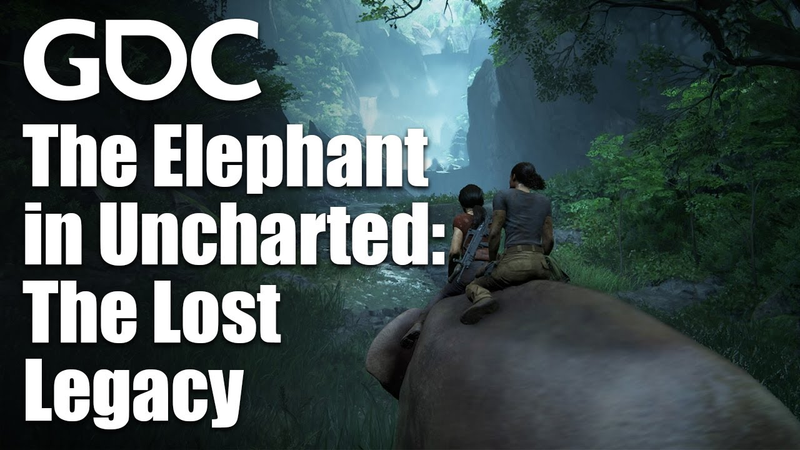
Design vs. Story: How Uncharted: The Lost Legacy Addressed the Elephant in the Room
The development of the elephant-riding sequence in Uncharted: The Lost Legacy serves as a case study in the iterative collaboration between design and narrative teams at Naughty Dog.
- Naughty Dog successfully transformed a static background asset into a core gameplay sequence in 'Uncharted: The Lost Legacy' by responding to playtester feedback requesting interaction with elephants.
- The development team operated under a constrained production timeline of less than one year to deliver a ten-hour game, necessitating a streamlined, cross-departmental workflow.
- To maintain narrative grounding, the team restricted player control to specific splines and replaced standard combat mechanics with subtle interactions like feeding the elephant.

Prepping to launch my next game after ~3 years of work... (Launch Diary #1)
The transition from development to commercial release represents one of the most complex and anxiety-inducing phases in the independent game development lifecycle.
- The developer is finalizing a narrative-driven adventure game after a three-year development cycle, acting as a spiritual successor to a decade-old browser title.
- The project utilizes a collaborative development structure involving a publisher and a secondary developer to manage the complexities of a polished commercial release.
- Final-stage focus testing is conducted with a sample group of approximately 50 testers to evaluate narrative, gameplay loops, and user experience.
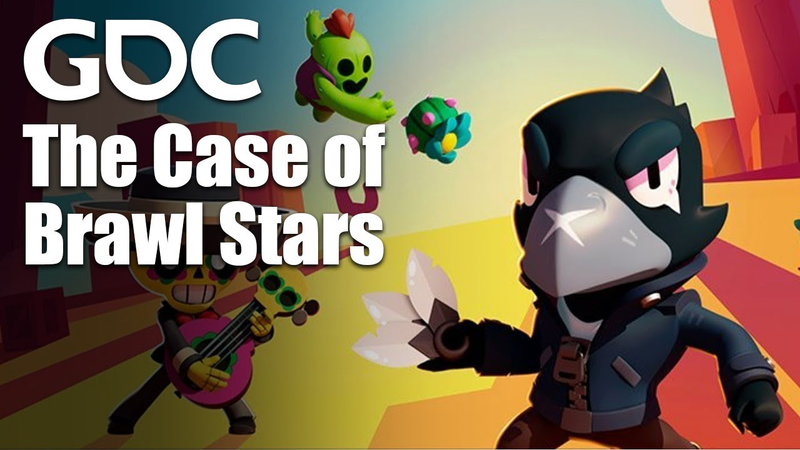
Designing Two Tasty Cores Three Times Over: The Case of Brawl Stars
The development of Brawl Stars serves as a definitive case study in the necessity of iterative design and the strategic value of extended soft launches.
- Supercell transitioned Brawl Stars from portrait to landscape orientation to accommodate a dual-joystick control scheme, which provided better ergonomics and more precise combat feedback than the original single-joystick portrait design.
- The development team iterated through multiple progression systems during the beta phase, eventually replacing an elixir-based model that caused player confusion with a 'Power Points' system similar to Clash Royale to improve clarity and satisfaction.
- Internal playtesting at Supercell involves a wide cross-section of company employees—from finance to legal—to gather diverse feedback before testing with real players.
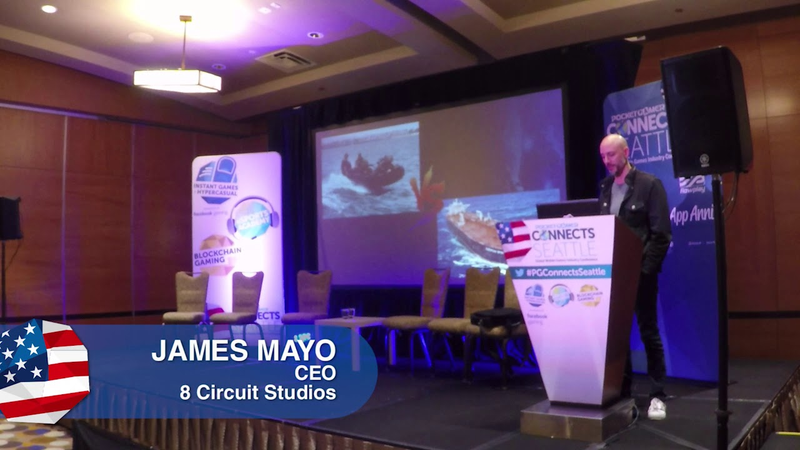
Lessons from triple-A game development applied to blockchain games
The integration of triple-A development methodologies into the blockchain gaming sector offers a strategic framework for smaller, agile studios to navigate the complexities of emerging technology.
- Keep core game logic within the game engine to ensure performance, using the blockchain exclusively as a specialized ledger for digital assets to avoid high latency and transaction costs.
- Adopt an 'open kitchen' community-first development model to replace traditional secretive marketing, allowing for cost-effective, continuous market research and playtesting.
- Prioritize rapid prototyping to identify the core engagement 'hook' early, enabling teams to 'fail fast' and validate technical architecture before scaling.

Glenn Scholfield's New Game Studio | Games ReCAP Episode 013
The establishment of Striking Distance, a new studio led by industry veteran Glen Schofield under the PUBG Corporation banner, marks a significant shift in the San Francisco game development landscape.
- Glen Schofield has established a new studio, Striking Distance, under the PUBG Corporation banner to develop horror-influenced experiences within the PUBG universe.
- The studio aims to expand the PUBG franchise by introducing a robust narrative identity and a dedicated single-player component.
- Striking Distance is utilizing Unreal Engine instead of proprietary technology to streamline development and support a sustainable games-as-a-service model.
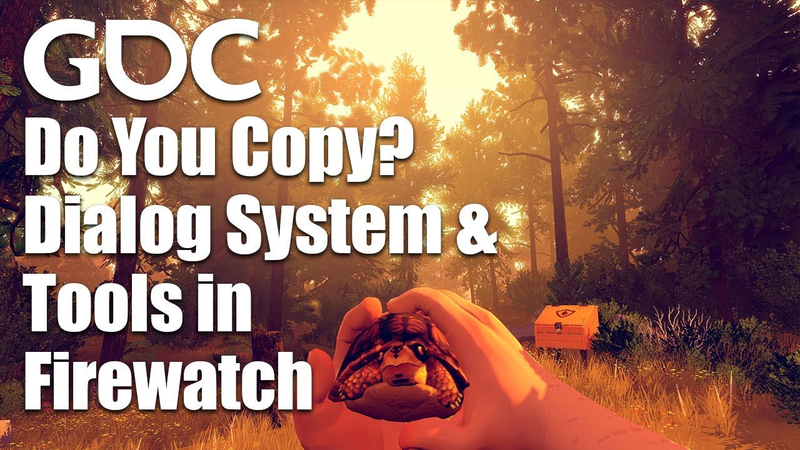
Do You Copy? Dialog System and Tools in Firewatch
The development of Firewatch centered on creating a highly responsive, non-linear narrative experience through a lightweight, event-driven dialogue architecture.
- The Firewatch dialog system utilized a lean, event-driven architecture where game state was interrogated via boolean tests on floating-point values rather than complex string parsing.
- Dialogue choices were generated on-demand at runtime rather than being pre-compiled, allowing the system to dynamically match responses based on specific player history, such as naming a pet.
- To manage non-linear, branching narrative complexity, the team built a custom tool called Magpie that provided full-text search, free-form tagging, and a unified ID system to track dialogue lines from development through to final recording.

How To Design a Decision | Game Design
Effective game design relies on the construction of engaging, meaningful decisions. A successful decision-making framework consists of five core pillars: options, impact, understanding, future consequence, and challenge.
- Effective game design relies on a five-pillar framework consisting of options, impact, understanding, future consequence, and challenge.
- Meaningful player agency requires providing multiple options that lead to distinct, tangible outcomes rather than singular paths.
- Players must have a clear understanding of the cause-and-effect relationship between their actions and game results to facilitate learning and progression.
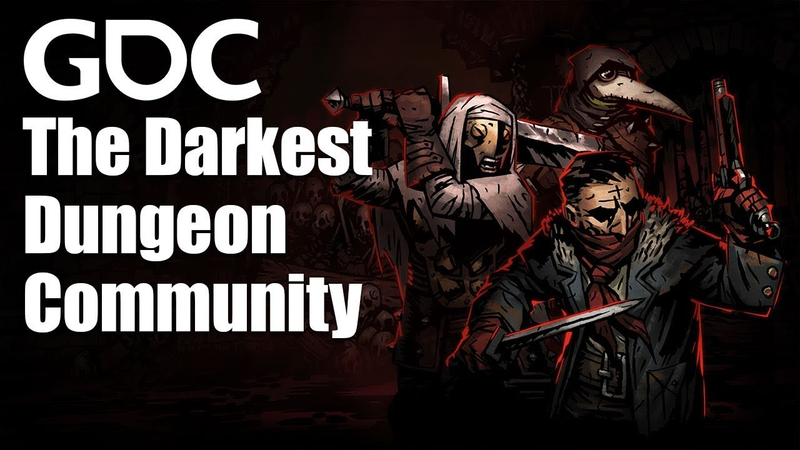
Circle in the Dark: The Darkest Dungeon Community
The community management strategy for the single-player game Darkest Dungeon centers on a "camp counselor" philosophy, which rejects the traditional, hierarchical "manager" role in favor of a horizontal, collaborative dialogue between developers and players.
- Red Hook Studios employs a 'camp counselor' community management philosophy that prioritizes horizontal, collaborative dialogue over hierarchical developer-player relationships.
- To mitigate unproductive feedback, the studio uses a tier-based survey system that forces players to evaluate character utility holistically, creating a shared vernacular for more nuanced design discussions.
- The studio manages the 'endowment effect'—where players value a game based on its state at purchase—by utilizing a public beta system to separate iterative development for long-term fans from stable experiences for new players.

Call of Duty Kills Game Dev Work/Life Balance | Games ReCAP Episode 011
The annual release cycle of the Call of Duty franchise creates a systemic culture of burnout, characterized by prolonged periods of mandatory overtime and poor project management.
- The annual release cycle of the Call of Duty franchise forces development teams at studios like Treyarch into 18-month stretches of seven-day work weeks.
- Systemic reliance on mandatory overtime and poor project management has led to significant failures, such as the late-stage cancellation of the Black Ops 4 single-player campaign.
- High employee turnover caused by burnout results in a critical loss of institutional knowledge within major development studios.
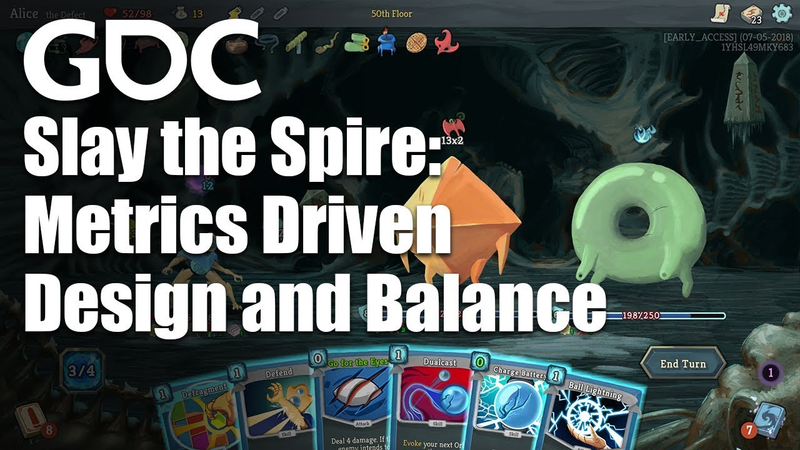
Slay the Spire: Metrics Driven Design and Balance
Strategic balance in Slay the Spire prioritizes meaningful diversity over mathematical equality, ensuring that every card serves a distinct purpose while avoiding mechanics that warp the core gameplay loop.
- Strategic balance in Slay the Spire prioritizes meaningful diversity over mathematical equality, ensuring every card serves a distinct purpose without warping the core gameplay loop.
- The development team utilized a dual-layered feedback mechanism that combined large-scale automated metric collection with qualitative insights from community channels, streamers, and direct player discourse.
- The Early Access model facilitated rapid iteration, using a stable beta branch to test major overhauls like the intent system and Ascension levels.
Writers
Games and companies
Games