Game Development reports and market data
Documents
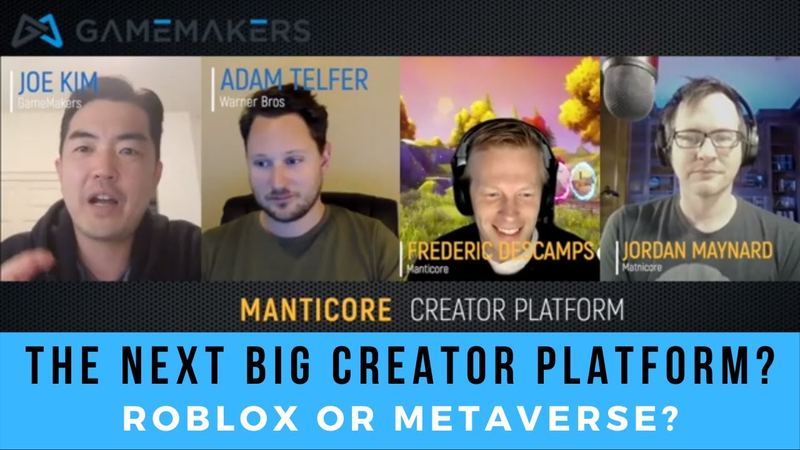
Manticore: The Next Big Game Creator Platform?
Core functions as a comprehensive, two-sided marketplace designed to democratize game development by abstracting the technical complexities of multiplayer infrastructure, live operations, and server management.
- Manticore functions as a two-sided marketplace built on the Unreal Engine 4 runtime that abstracts multiplayer infrastructure, live operations, and server management to democratize game development.
- The platform utilizes a drag-and-drop interface, pre-built assets, and Lua scripting to allow creators to build and publish real-time multiplayer games without traditional, labor-intensive development pipelines.
- A proprietary, cloud-agnostic infrastructure facilitates automatic server deployment and enables seamless, web-like navigation between different game experiences within the ecosystem.
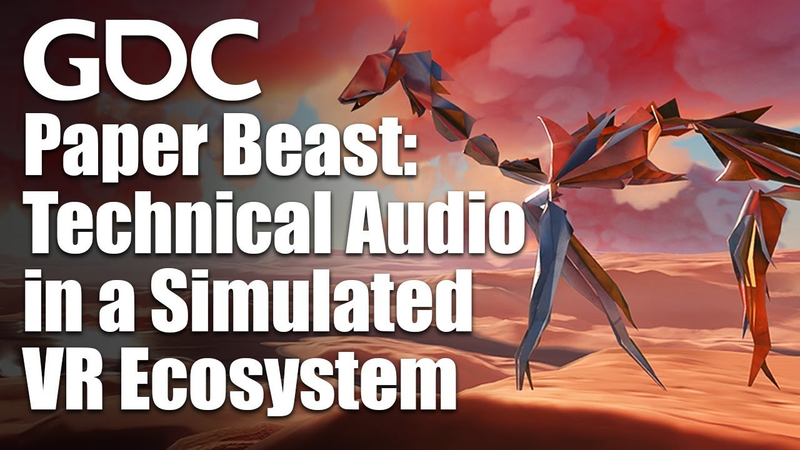
Game VR/AR: Paper Beast: Technical Audio in a Simulated VR Ecosystem
The development of the VR adventure game Paper Beast required a sophisticated audio strategy to support a world defined by procedural physics, fluid simulations, and dynamic ecosystems.
- The Paper Beast audio system utilizes a modular architecture in Unity and Wwise to translate real-time physics data—such as velocity, acceleration, and collision—into discrete sound events for procedural creature locomotion.
- To prevent audio clutter from unpredictable physics, the team implemented specialized sound sources on creature limbs that use hysteresis and temporal thresholds to filter noisy data streams.
- The developers pioneered a bidirectional workflow where offline audio analysis generates movement curves, creating an intuitive synchronization between creature vocalizations and physical behavior.
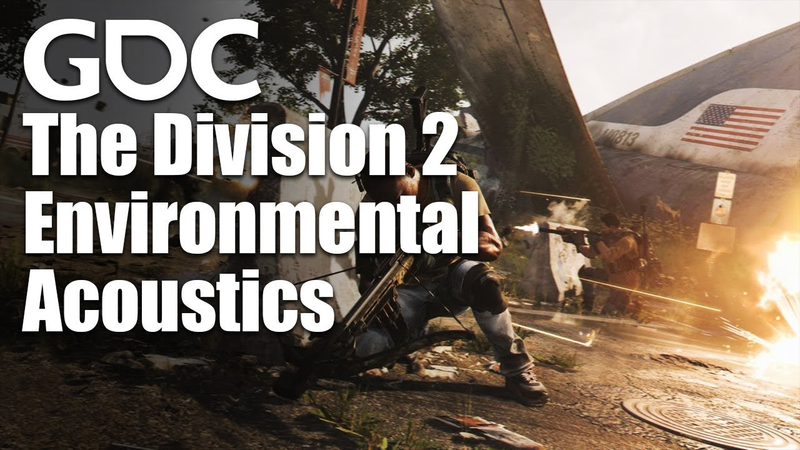
Finding Space For Sound: Environmental Acoustics in Tom Clancy's The Division 2
The development of Tom Clancy’s The Division 2 prioritized a sophisticated approach to environmental acoustics, leveraging the Snowdrop engine to create a dynamic, responsive soundscape.
- The Division 2 utilizes a real-time, raycast-based acoustic system within the Snowdrop engine to replace resource-heavy, material-filtered audio processes.
- This streamlined collision model enabled the procedural generation of impulse responses and ambient room tones across more than 2,500 distinct interior spaces.
- The system employs 'bubble space' metrics, using rotating raycast patterns and a double-buffered broadcast module to adjust weapon audio and reverb based on horizontal and vertical clearance.
A Cost-Benefit Analysis: Is That New Tech Worth It?
A cost-benefit analysis (CBA) serves as a critical decision-making framework for game developers and technical artists to determine the financial and operational viability of implementing new technology.
- A cost-benefit analysis (CBA) provides a data-driven framework to evaluate new technology by comparing it against the baseline of existing workflows to ensure ROI and productivity gains exceed implementation costs.
- Direct costs for new technology must include hardware, software licenses, and labor hours, while indirect costs must account for overhead such as workstation maintenance and administrative support.
- Risk assessment should be integrated into the analysis using techniques like the Monte Carlo method to account for uncertainty, inflation, and opportunity costs.

CoVID 19 Updates, Magic Leap Scam, Stadia, VR, PS5, Valorant CS GO | Game Dev Unchained Episode 223
The global game industry is currently navigating a period of significant transition, characterized by the normalization of remote work environments and a critical re-evaluation of high-profile technological ventures.
- The industry is shifting away from speculative, hype-driven hardware models toward sustainable, content-led growth, as evidenced by Magic Leap’s failure to meet consumer expectations and its subsequent pivot to enterprise applications.
- High-quality, first-party exclusive content is now the primary driver for platform adoption, superseding artificial marketing hype in securing long-term consumer engagement.
- Virtual reality is reaching a maturation point, with titles like Half-Life: Alyx successfully driving hardware adoption for platforms such as the Valve Index and Oculus Quest.
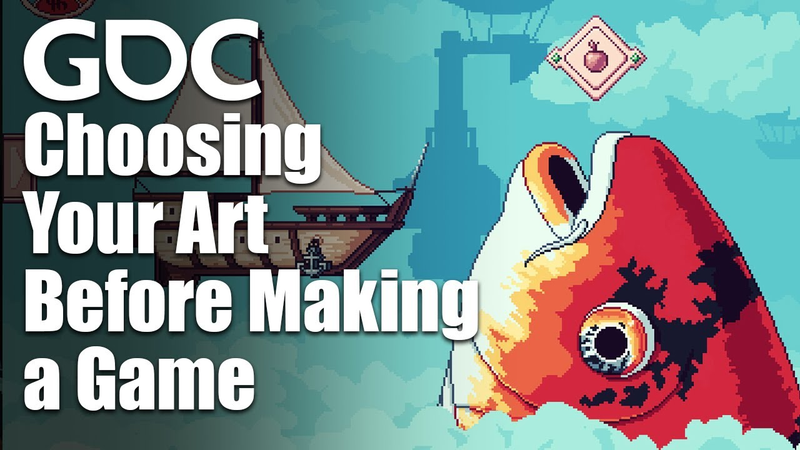
Aesthetic Driven Development: Choosing Your Art Before Making a Game
Aesthetic-driven development prioritizes the creation of visual assets and audience validation before formalizing gameplay mechanics.
- Aesthetic-driven development uses visual assets as primary market research to validate audience interest before committing to full-scale gameplay production.
- A two-person Latvian studio successfully validated their game's art style through a 40-day visual testing phase, resulting in 10,000 copies sold within seven months of early access.
- Developers can gauge market appeal by posting daily visual concepts on social media, using metrics like likes and shares to filter ideas based on audience engagement.

Cultural Intelligence: Skills to Thrive in a Global Industry
Cultural intelligence serves as a critical competency for professionals operating within the global gaming industry, where the ability to navigate diverse environments directly correlates with innovative output.
- Teams with high cultural intelligence generate up to three times more innovative solutions than those lacking this competency.
- Cultural intelligence is defined by four measurable dimensions: drive, knowledge, strategy, and action, which should be assessed against global norms rather than static benchmarks.
- Misunderstandings in global game development often stem from the friction between high-context and low-context communication styles.
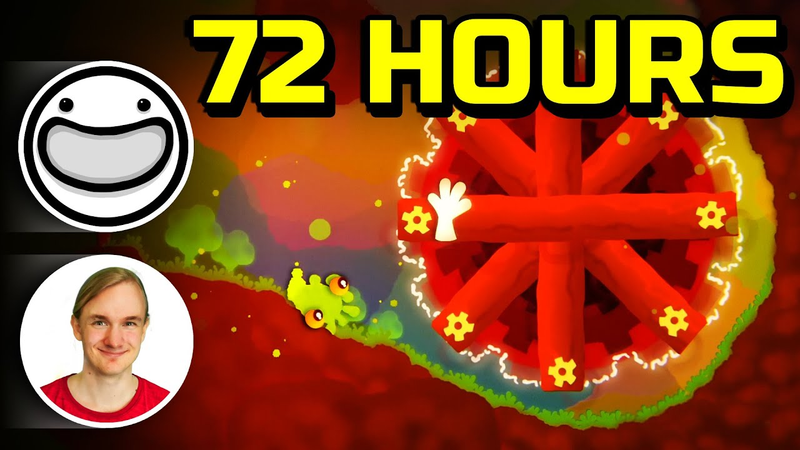
Making a 72 Hour Game Together
The collaborative development of the game Egdar’s Blobs during the Ludum Dare 46 game jam serves as a case study in rapid prototyping and the logistical challenges of remote game development.
- External playtesting is essential even in 72-hour development cycles, as developers lose perspective and often misjudge the intended difficulty curve compared to actual player behavior.
- The project demonstrated that a minimalist concept—where players manipulate the environment to protect a character—is highly effective for managing scope and ensuring a polished result within tight timeframes.
- Technical failures in version control, specifically a Unity Collab malfunction, resulted in a loss of four hours of productivity on the second day of development.

6 Secrets To Great Game Ideas
Creative professionals often struggle to generate compelling game concepts as they achieve personal and financial stability.
- Creative stagnation often stems from personal and financial comfort, requiring developers to intentionally embrace emotional vulnerability and discomfort to maintain depth in their work.
- Changing your physical environment, such as visiting new locations, forces the brain out of its default state and stimulates new patterns of thinking.
- Authenticity in game concepts is best preserved by abandoning rigid external pressures, such as catering to specific publishers or platforms, in favor of a creator's personal vision.
BIG INDIE PITCH: MOBILE WINNERS | PGC Digital #1
The Big Indie Pitch, held during the inaugural Pocket Gamer Connects Digital conference in April, served as a global platform for mobile game developers to showcase their latest projects to industry experts.
- The Big Indie Pitch at the April Pocket Gamer Connects Digital conference featured 24 global developers presenting projects to 15 industry judges in a speed-dating format.
- The top honor was awarded to Paper Game, a platformer that utilizes a custom engine to allow users to generate levels by drawing on paper or photographing household objects.
- Rek Out was recognized for its potential as a couch multiplayer experience by blending mechanics from air hockey, breakout, and Rocket League.
Pulling It All Together: Production in These Changing Times
The modern game production landscape has evolved into a highly specialized field, necessitating a shift from generalist project management toward discipline-focused expertise.
- Modern game production has shifted from generalist project management toward specialized roles that require discipline-focused expertise in areas like art outsourcing, localization, and live-service revenue management.
- Effective production requires a hybrid methodology that blends Agile and Waterfall frameworks to accommodate the specific operational needs of different products.
- Producers must possess both technical and creative literacy to act as a bridge between engineering teams and creative departments.
Improving an Iterative Physics Solver Using a Direct Method
Physics engines often struggle with stability when managing complex mechanical linkages and high-mass-ratio interactions, as standard iterative methods like Projective Gauss-Seidel frequently fail to converge under these conditions.
- A hybrid physics solver improves stability in complex mechanical linkages and high-mass-ratio interactions by integrating a direct sparse LDL matrix decomposition with traditional iterative methods like Projective Gauss-Seidel.
- The solver utilizes body shattering to decompose dense constraint matrices into smaller sub-matrices, reducing computational complexity from cubic to linear for medium-sized mechanical systems.
- To maintain matrix sparsity and minimize fill-in during decomposition, the system maps constraint matrices to graphs and employs a minimum edge creation heuristic for optimal pivot ordering.
Writers
Games and companies
Games