1 free read left. Create a free account for unlimited reading + AI research.
Create free account
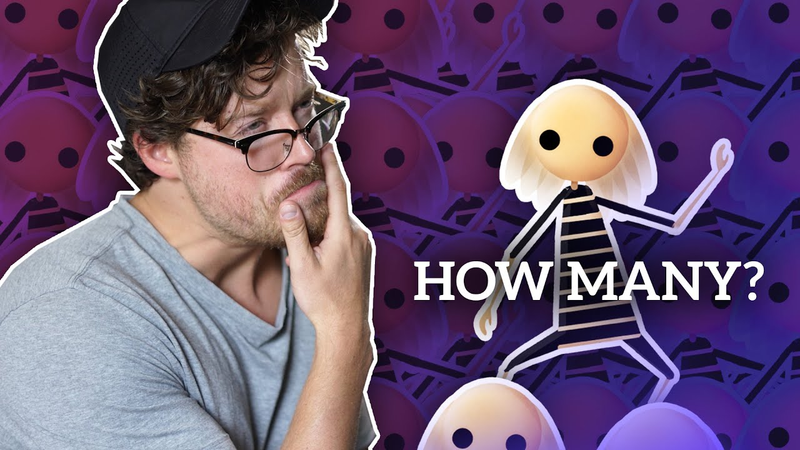
How many game objects are in my Steam game? | Let's Play Neversong Episode 5
Key insights
6 takeaways- 01A single forest level in Neversong contains approximately 2,400 total game objects, with roughly 1,200 objects actively loaded into memory at any given time.
- 02The game utilizes a scene management strategy where a significant portion of the 2,400 objects remain disabled in the Unity hierarchy until triggered by specific gameplay events.
- 03The project's architecture relies on a complex hierarchy of prefabs, static objects, and parent-child relationships to manage the density of assets within individual screen boxes.
- 04The development process integrated practical testing tools, such as cheat codes, alongside collaborative workflows for sound design and voice acting.
- 05Development of boss encounters required the implementation of complex animator controllers to handle character movement and interaction logic.
- 06The team incorporated narrative elements into boss characters during the late stages of development to enhance player engagement.
Ask AI about this video
Transcript
Parkour. Parkour. Parkour. Parkour. Hey guys, how's it going? My name is Thomas Brush. I'm the creator of a game called Pinstripe, also a game called NeverSong. Please wish list that game, NeverSong. It's coming out May 20th on Steam. I'm trying to hit 50,000 wish list. If we can hit 50,000, that would be cool. We're about at about 20,000 right now. So, it'd be really cool if you guys could wish list. So, today I want to actually continue a series of me playing my own game, NeverSong, inside of Unity, which is the software I use to make the game. I think it's really fun cuz you guys can actually see behind the curtain um or under the hood what this game looks like inside of Unity. And specifically today, we're actually going to focus on how many game objects are in a certain level. So, in particular, we're going to be playing through the forest level. And we're going to see how many game objects are actually loaded into this. It can get pretty overwhelming how many game objects are loaded into a particular scene. And this is just a small indie game. I can't imagine what it's like in AAA games. So, let's play through NeverSong. Guys, this is actually a
series of episodes of me playing the game, NeverSong. If you guys want to see previous episodes, click the link in the description, and you guys can see me play the game in previous episodes. All right, let's go ahead and jump into Unity and get started. Welcome to episode four, or is this five? I think it's It's four, right? No, it's five. Episode five of Let's Play NeverSong. Um and Anyways, I won't be much help to you this time around. Have some fun. All right, in this episode, what I want to do is play through this level and show you all the various game objects um that are associated with this level, and we're going to count them all up. So, there's a lot going on, as you can see. Um definitely not as much as you would expect um or as you would see from a much bigger AAA game, but there's still a lot going on. Whoa. Okay. So, our little grown-up here in a
cage just uh woke up one eye. One eye of the monster. He's in a coma and his intestines smell fast. Whose voice do you think that is? So, I'm really good at this game, obviously, because I made it. So, that So, that probably would have taken you a couple tries if you're playing the game, but I've played it a lot. So, there you go. I got parkour skills, just like our boy say here. Parkour! Parkour! Parkour! Parkour! Parkour! Parkour! All right, so let's go ahead and take a look at all of the game objects in this scene. So, let's make our way up to the treetops and then break down all of the different Oh, we got to kill him first. So, now you guys kind of have an idea of all of the the different what we're calling screen boxes in the scene. So, how many total do we have? So, let's go to a smaller window here and let's
break down everything. Okay, so, we're going to do a nice big full-screen hierarchy and I'm going to show you guys all of the game objects we have in a single loaded scene. And this was a really good question that I used to ask. I would Google it and I could never find an answer. What's the appropriate appropriate amount of game objects in a scene? Um some people would say like 100 and I would think, "How is that even possible to have that little when you have all of this content going on?" So, I can't tell you guys the optimal number or what's appropriate, but what I can tell you is we're about to launch a Steam game on May 20th. Please wish wish list below. And this is what my game has in a certain scene that's loaded. So, this is the forest scene, um which is this right here. Now, everything is disabled, right? So, that's that's the important part. Everything is disabled except for this one screen box here. But, we have 1 2 3 4 5 6 7 8 9 10 11 12
13 14 screen boxes um associated with this scene. And each screen box has a ton of game objects. So, let's go ahead and count. Let's get counting. That's 200 game objects in this portion here. So, I'm just going to do some simple math here. I bet you there's a better way to count game objects. But, here's what we're going to do. We're going to take this screen here. And this little piece here is 200 game objects, okay? That is 200 game objects. That is what we're going to do. This is probably a terrible way to do this. So, we have 24 game 2400 game objects in this scene. 2,000 400 game objects
in this scene. Now, obviously, a lot of these are parents of children. There's plenty of prefabs. There's plenty of static objects as well. But, there are 1,200 game objects that are are loaded into the memory. They're not shown, though. They're not activated. But, that's for my 2D game, that's how many game objects we have. I don't know if that's a lot. It seems like a lot. But, that's how many we have. All right, let's get to um beating this level. This level's taking a while. Let's go into Gum Girl's Hut. All righty. And let's do a little fun thing here. I you you guys know I like to do this. I like to show various green boxes while we play. So, let's go see Gum Girl say here. Hi, Pete. Want to be able to cut those
vines at the X point? Yes, please. bad ears won't really cut it. Uh, get it? Cut it? Oh, yeah, I do. Anyways, if you go find me my box of nails, I can make your bat spiky and awesome. Please. Oh, no. We're in a bug here. On item at I know why. I think it's the bird F8. There she is. Okay. able to cut those All right. So, I just gave myself the bird with a cheat code F8 in the editor. Guys drop eggs and eggs explode. Get it? Yes, I do. Thank you very much. So, yeah, so that's actually something that Eric put together. Thank you, Eric. You just saved the stream. Um, basically you see this a lot in games where in order to test a game, you have to be able to have secrets, uh, secret little codes that you can type into the
keyboard, but only in the editor and uh, give yourself various items to be able to test the game. Otherwise, you have to start from the very beginning every time you test the game and that's just definitely not fun. Oh my goodness. Watch how good I am. So, as you can see, these have trails as well and also that the bird has a trail here and also the little bombs they're farting out of their orifices have a trail as well. So, they all move at a random speed. You can see that. Otherwise, they would all sync up eventually and be perfectly on top of one another. I'm going to die. That's not good. All righty. Here we go. Awesome. Okay, we just opened up a gate.
Yeah. Poor Red. We've got to get her back. Aw. Is that bad of yours sharp enough to cut that vine at the X point and get that bomb? Tiffany Grant did a really good job. Thank you, Tiffany. All righty, we got the spiky slugger. Your red wind slugger just got super spiky. Slash the X's on chains to drop bombs. Okay dokey. All righty. How many particles can I emit? Ow. Oops, I didn't get that card. Oh, well. All right, let's go wake up this guy here. Watch how fast I can do this. Thomas, how are you so good at video
games? This just comes naturally. All right, let's wake this guy up and then we have one more to wake up. And then we can play the boss. Shh. He's going to wake up the monster. So that's all my voice. The screaming, this was hilarious. So I had an intern named Trip. He did a really good job. Thank you, Trip, for everything you did. Trip actually came in and worked with me in my studio and at the time my studio was in a garage and I said, "Trip, listen, man, I got to do voice acting for this game and it's going to be embarrassing." He was like, "Okay." And so I just started recording myself screaming. And I think it was I think it was his
like second week. I think he thought, "Man, this was a bad idea." These things are awesome. I'm really proud of these enemies. I like them a lot. I like the sounds. Those are all my voices well, even the the insect sounds that I did that as well. Woah! I need to remove this trail from the character. Woah! There we go. All right, last guy. So yeah, I was recording these voice acting lines while Trip was sitting with me. Just minding his own business, doing his
work as an intern. Did a great job. And I was sitting over next to him as his boss screaming into the microphone. Thank you, Trip, for all your hard work. You did a great job, man. All right, let's go play the boss. I think we woke up the monster. This song was written uh one of the last songs written for the game actually. All right, let's go. Whose voice do you think that is? I'm Pete. I'm not John. Mr. Toyne
Boo! Wait. What? I think we're in a glitch. There he goes. Boo! Yeah, don't lose your temper, Mr. Toyne. You need to weight your Toyne, Mr. Toyne. All right, let me show you really quickly the boss structure for the jelly. Well, his name is It was originally called the jelly boss, and his name is actually Mr. Toyne.
Um so, there is the jelly boss here. I believe his animator There his Oh my goodness. I'm about to have a seizure looking at this animator controller. But, this is the animator controller for the boss. Currently, he's in the pound state. Man. Looking at this makes me If someone told me and said, "Thomas, you've got to make Never Song Again." Like they said you have to relive this point in your life and make make this game again. I would think I was in hell. Because this is insane. It's And you know, it's not like it's it's not like it's anything different from any other game. It's just looking back on it is very uh stressful. So yeah, let me show you all the states. So let's go to game view here and then go to the animator view. Here's the animator view.
And you can see all of the parameters and the various states that will be occurring. So let's hit play. There we go. So where are we? Yeah, you can see him looping. There he goes. He's in the shock state. And dodge this. Now he's back in the float state. Woah. So he did just did a shake state. Now he's in a shock state. Yep. Woah. Oh, I love how it moves. I didn't know it did that. There he goes. Cool. The animator window moves.
Get out of here. Woah, something's freezing. Woah. So I used a baby's voice for a lot of the sound effects for this guy. All right, let's maximize it. I think you guys are done seeing the window. So, as you can see the bosses slowly shed their skin revealing the controllers inside, the adults. And that was a decision that was made. Woah! Um that was a decision that was made very late in the development of the game. That was for my brother. He was like, "I don't know if I like the bosses cuz they don't really have any purpose." And so we decided that we were going to make them shed their skin and reveal a story element.
There we go. One more. There we go. Yay! Good job, Thomas. Thank you. You learned a new song. Yay! B B D E A the never would prelude. Mr. Toyne screamed this at you as you sliced his weird orb thing. Awesome. Let's go home. Great work, Pete. But What? Don't you feel a little bad about John's dad?
I do, actually. what's done is done. Okay. Let's head back to Ren's house and play that song. Woo! Woo! Yahoo! What was her name? Stephanie Ryatkin? Stephanie I I I'm saying your name right, Stephanie Reartekin? Um was the voice actress for Bird. And she is very talented. She's got um a really nice portfolio, too. She's She's She's really good at what she does. But thank you, Stephanie, for your hard work in the voice acting of Bird. Okay, let's make our way back to the piano. Um I will do that in the next episode, guys. Thanks for watching. Please, please, please wish list Never Song. It's coming out May 20th. We're trying to hit 50,000 wish lists. Currently, we have about 20,000. It would really mean a lot to me if you wish list the game. If you guys want to see previous episodes where I rip apart this game in the Unity editor, they're all listed below. Thank you guys for watching. I'll talk to you later.
Summary
This analysis examines the technical architecture and development process of the 2D indie game Neversong, specifically focusing on scene management and object hierarchy within the Unity engine. The primary objective is to provide transparency into the game's underlying structure, illustrating the complexity involved in managing game objects within a single level. By navigating the forest scene, the developer demonstrates how individual levels are composed of multiple screen boxes, each containing a significant number of discrete game objects.
The analysis reveals that a single forest scene contains approximately 2,400 game objects, with roughly 1,200 loaded into memory at any given time. While many of these objects remain disabled until triggered, the sheer volume highlights the intricate organizational requirements for even a small-scale indie production. The developer emphasizes that these figures are not necessarily optimal or standard, but rather represent the specific requirements of this project. The methodology involves a manual audit of the Unity hierarchy, showcasing how prefabs, static objects, and parent-child relationships contribute to the total count.
Beyond technical object management, the discussion touches upon the practicalities of game development, including the use of cheat codes for testing, the implementation of complex animator controllers for boss encounters, and the collaborative nature of sound design and voice acting. The development process involved iterative design decisions, such as the late-stage addition of narrative elements to boss characters to improve player engagement. These insights underscore the challenges of balancing technical performance with creative storytelling, providing a practical look at the realities of independent game development leading up to a commercial release.



















Comments