Game Development reports and market data
Documents

Secrets to Sustainable Success on Roblox with Andrew Rose, CPO at Voldex
The Roblox ecosystem represents a unique paradigm for game development, characterized by high organic discovery and a creator-led culture that prioritizes community engagement over traditional marketing.
- Roblox enables sustainable profitability by leveraging organic discovery and social graphs, which effectively eliminates the need for traditional paid user acquisition.
- Firms like Voldex achieve scale by acquiring successful user-generated content titles and applying professional live-operations strategies rather than developing new, high-risk games.
- Operational success requires a hybrid model that balances nimble, community-driven development with structured, data-informed processes like A/B testing and roadmap planning.

Game Narrative Summit: It's Not in the Writer's Manual: A Q&A Session for New Writers
Transitioning into professional game writing requires a fundamental shift from traditional prose to a facilitator-based mindset, where the writer serves as an architect of the player’s experience rather than the sole narrator.
- Game writing requires a shift from traditional prose to a facilitator mindset, where the writer acts as an architect of player experience rather than a sole narrator.
- Narrative must prioritize gameplay mechanics and environmental design as the primary vectors for storytelling, ensuring the script supports rather than dictates player agency.
- Professional writers must master technical narrative management tools such as Twine, Ink, and spreadsheet-based systems to handle complex branching structures.

Stuff They Don't Tell You About Game Development
Game development is a complex, iterative process that often defies conventional industry advice.
- The first 20 minutes of gameplay are the most critical factor for player retention, review scores, and the success of marketing demos or publisher pitches.
- Projects often lack a cohesive identity until the final month of development, as the urgency of a deadline forces the culmination of years of iterative trial and error.
- UI design and cross-platform input optimization represent the most significant technical hurdles for developers, alongside the necessity of light mapping for hardware with limited processing power like the Nintendo Switch.
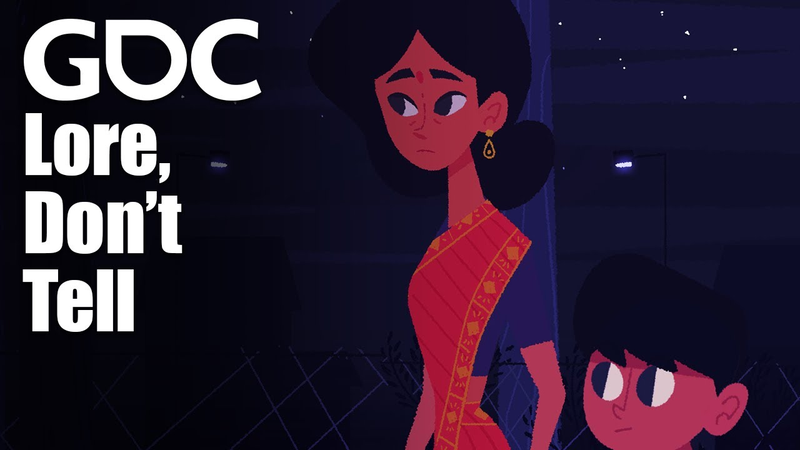
Lore, Don't Tell: A Guide for Telling Culturally Rooted Stories Like 'Venba'
Effective cultural storytelling in video games relies on a "lore, don't tell" philosophy that prioritizes lived-in authenticity over didactic exposition.
- Avoid the 'educational' trap by refusing to explain cultural elements that characters would naturally understand, as forcing characters to explain their own culture creates narrative dissonance and weakens storytelling.
- Lean into the 'Lore, don't tell' approach by presenting cultural details as existing facts rather than exposition, which encourages players to engage with the material organically and conduct their own research.
- Maintain linguistic authenticity by writing dialogue in the native language first and then translating it, rather than writing in English and attempting to simulate a non-native thought process.

Brackeys Is Back (And I Have Some Things To Say)
The return of the prominent game development educator Brackeys after a three-year hiatus serves as a focal point for discussing the evolving landscape of game engine technology and the importance of creator consistency.
- Commercial engines like Unity and Unreal remain the industry standard for professional, multi-platform studio projects due to their established infrastructure and console-porting capabilities.
- Open-source alternatives such as Godot have matured significantly, with the release of Godot 4 marking a milestone that makes it a viable, community-funded competitor to commercial software.
- The adoption of open-source tools is driven by the removal of financial burdens like subscription fees and revenue sharing, though professional studios still face 'growing pains' when transitioning away from established commercial engines.
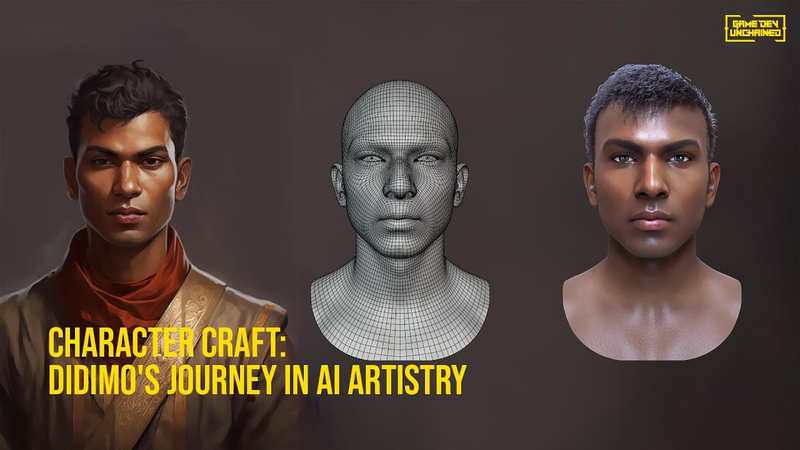
AI Character in Games: Didimo's Journey with Veronica Orvalho | 343
The gaming industry faces a persistent bottleneck in the labor-intensive production of high-quality, diverse digital characters.
- Didimo has secured 17 million euros in funding to develop an AI-driven pipeline that automates 3D character creation for complex game genres like RPGs, MMOs, and simulators.
- The company’s technology integrates directly into existing game engine workflows to streamline character reconstruction while maintaining technical precision and artistic control.
- Didimo has established strategic partnerships with major industry entities, including Amazon, Sony, and Colossal Order, to validate its deep-tech solutions.
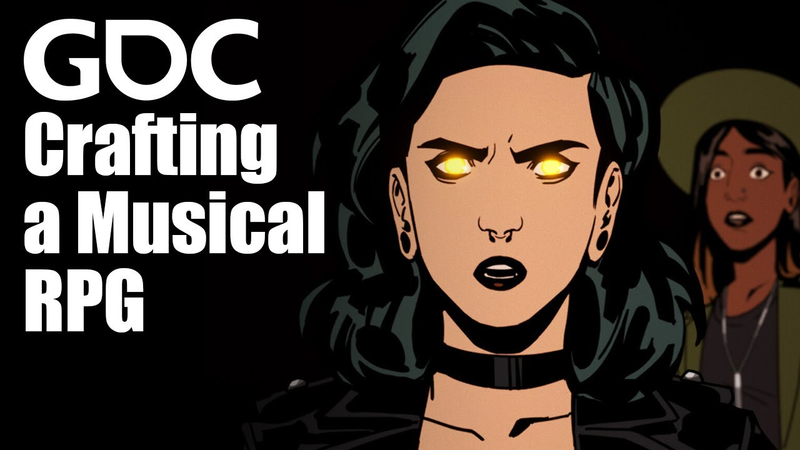
'Stray Gods': The Challenges of Creating an Interactive Musical
Stray Gods represents a pioneering effort in the interactive musical RPG genre, aiming to bridge the gap between traditional narrative-driven roleplaying and dynamic, player-influenced musical performance.
- Creating an interactive musical requires balancing branching narrative choices with traditional song structures, resulting in a production ratio where every five minutes of finished music requires 35 to 40 minutes of recorded material.
- The development of 'Stray Gods' spanned five years and involved nearly 100 recording sessions with actors, totaling six months of studio time to capture the game's five hours of interactive musical numbers.
- To maintain musicality while offering player agency, the developers utilized a 'randomized' choice system for certain segments, concluding that forcing specific narrative paths undermined the structural integrity of the songs.

TWIG #278 The AAA Studio Model is Dead??? And who are the BIG Gaming VC Funds good for?
The modern gaming industry is currently navigating a period of structural tension between traditional AAA development and the evolving demands of venture capital and transmedia integration.
- Despite industry speculation, high-budget AAA titles remain the primary drivers of revenue and player engagement according to data from Newzoo and Circana.
- The pursuit of Hollywood-style transmedia adaptations often fails to yield significant incremental revenue relative to high production costs, indicating a lack of strategic alignment for long-term growth.
- Venture capital firms like a16z and Bitkraft are creating market instability by pressuring portfolio studios to pursue high-risk, unicorn-style returns that conflict with sustainable development.
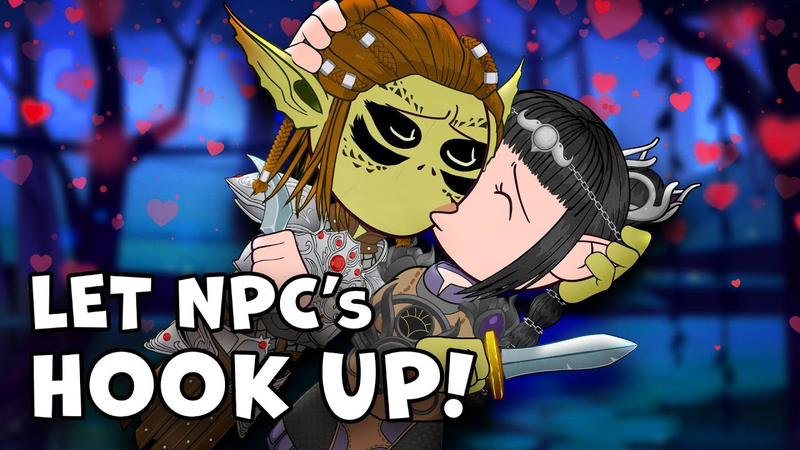
Can NPCs Fall In Love? | Extra Credits Gaming
The current landscape of video game design frequently isolates the player character as the sole romantic protagonist, a convention that limits narrative depth and character agency.
- Current game design often treats NPCs as static trophies by restricting romantic agency exclusively to the player, which limits narrative depth and creates an artificial world.
- Allowing NPCs to form independent relationships transforms the game world from a static stage into a dynamic, evolving environment with greater emotional resonance.
- NPC-to-NPC romances make player-initiated relationships feel more earned and significant, as the partner is choosing the player over other available options.
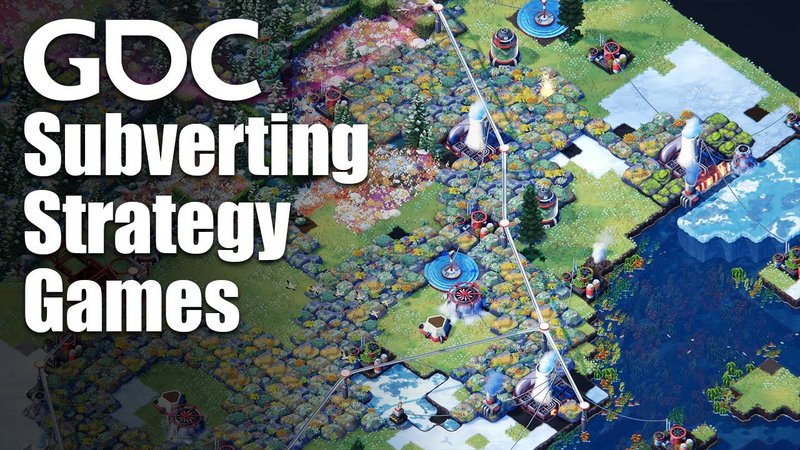
Developing 'Terra Nil': A Strategy Game About Nature, Not Expansion
Terra Nil represents a fundamental shift in strategy game design by replacing traditional mechanics of resource exploitation, colonization, and infinite expansion with a core loop centered on environmental restoration.
- Designers can dictate player priorities by linking core game mechanics to specific goals; in Terra Nil, replacing traditional metrics like gold or population with environmental restoration successfully shifted player focus to ecological balance.
- The game’s core loop is built on the principle of finite resources and equilibrium, where players must manage specific ecosystems—such as wetlands and forests—without the option to infinitely expand territory, reinforcing the theme of nature over industrial growth.
- Terra Nil originated from a 48-hour Ludum Dare game jam prototype, which gained traction despite using placeholder program art because players were emotionally engaged by the act of restoring a wasteland.

Live Q&A for Inside2024
The current landscape for independent game development is defined by a transition away from the era of cheap credit and zero-interest rates, which previously sustained an artificial bubble of over-hiring and speculative investment.
- Steam Next Fest is a critical marketing milestone that requires a minimum of 7,000 wishlists to effectively leverage platform algorithms and secure a position on the Popular Upcoming ladder.
- Developers should treat Steam Next Fest as a final marketing event rather than a debut, ensuring demos are fully polished and supported by a sustained six-month marketing cycle.
- Cursor-based genres like city builders, crafting, and strategy games consistently outperform character-driven titles on Steam, with the exception of horror games that can achieve visibility through viral social media.
Plan Strategiczny 2023-2027
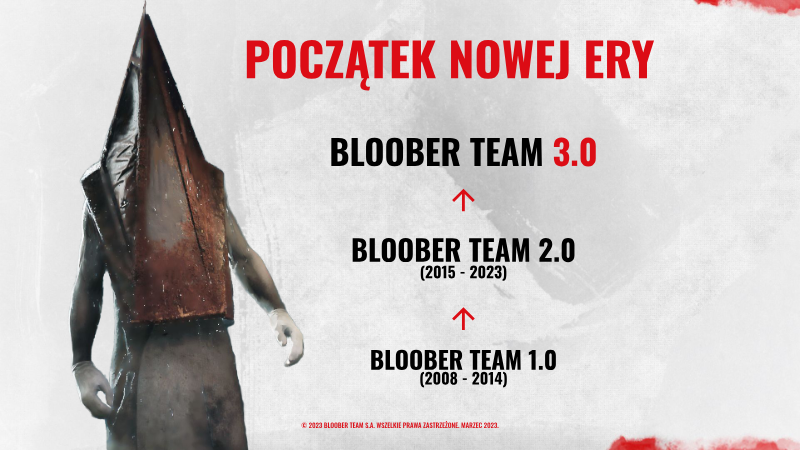
Bloober Team S.A., a game studio based in Kraków, published a Strategic Plan covering 2023-2027.
- The studio's early period (2008-2014) is described as lacking concrete strategy and specialization, with a small, inexperienced team that often worked as a subcontractor on many products.
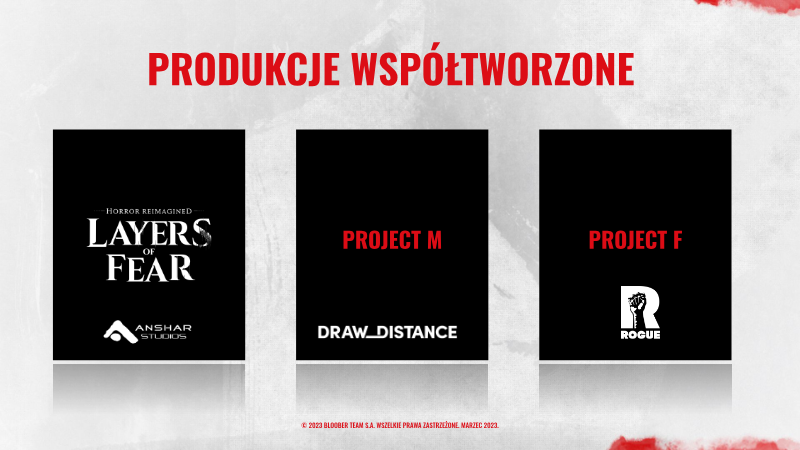
- The plan rests on three strategic pillars: psychological survival horror, expansion through cooperation, and creative freedom of the team.
- The plan contrasts sales potential by genre: psychological horror is shown with a ceiling of about 2 million copies, while horror combined with action is shown with about 10 million copies.
Writers
Games and companies
Games