Game Culture reports and market data
Documents
A Historical Perspective on Speedrunning: Evolution and Impact of the Informational Aspect
This paper traces the history of speedrunning, the practice of completing video games as quickly as possible, with a focus on how it has shifted from a purely performative activity into one centered on the production and circulation of information.
- Speedrunning is argued to be centered on the production and circulation of information rather than on performance alone, with the informational dimension treated as the heart of any speedrunning community.
- The paper traces speedrunning through three phases: 1980s–1990s proto-speedrunning, where performances were transcribed into magazines and newsletters; the web era, where a performance itself became a shareable file or video; and the contemporary period, where platforms like Twitch and Discord act as infrastructures for sharing knowledge.
- The author frames speedrunning as a community of practice in which learning is a form of participation and belonging, and extends this to viewers, for whom watching speedrun videos or charity marathons is an entry point requiring active investment.
From Replay to Revisit
"From Replay to Revisit" argues that the existing vocabulary of replaying games, borrowed largely from the rereading of books, fails to capture the full range of ways players return to games they have already encountered.
- The paper argues that the existing language of game replay, borrowed from rereading books, fails to capture the varied ways players return to games, and proposes 'revisiting' as a complementary concept drawing on its dual meaning of reconsidering something and going back to a place.
- The authors aim to broaden earlier re-experiencing research, which focused on linear single-outcome games, to include branching narratives, open-world games, multiplayer contexts, and paratexts such as adaptations, making-of books, strategy guides, and video content.
- The central case study is Assassin's Creed, examining how completion mechanics such as marking locations as 'complete' frame revisits as a challenge to the game's intended endpoint.
Commercial, Hobbyist, and In-between: Understanding the DAI Personal Computer Associative Game Library
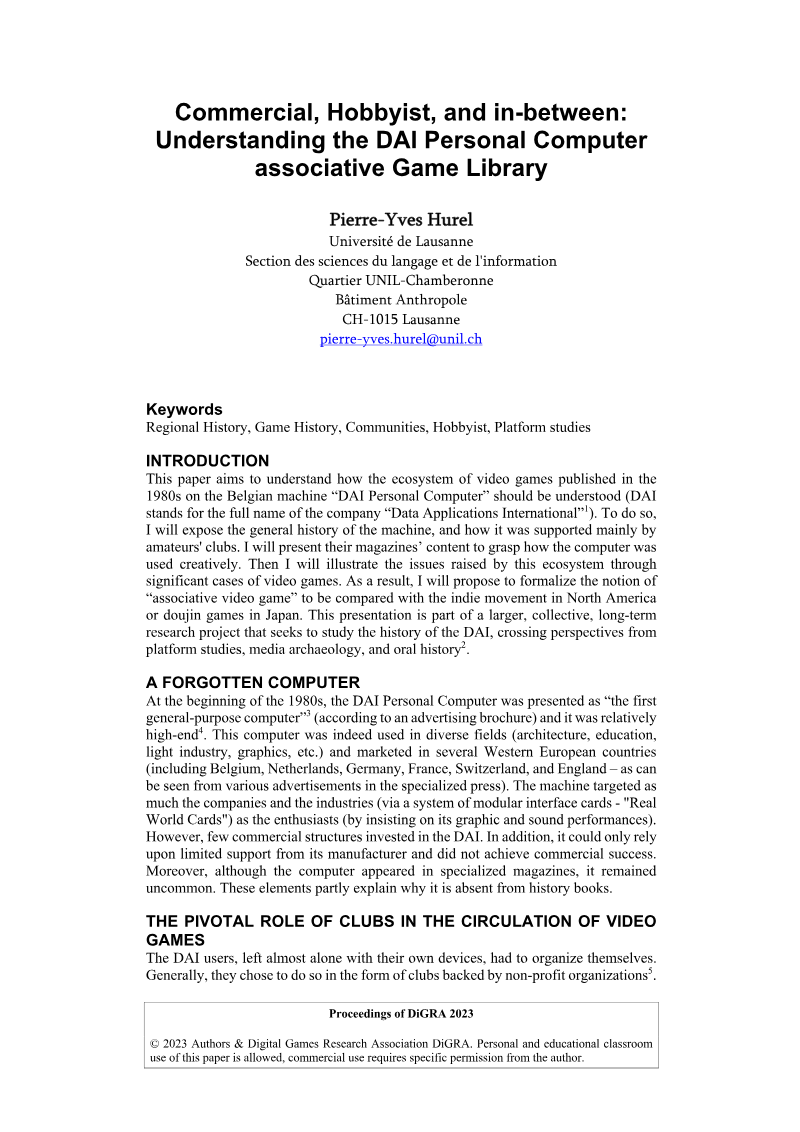
Pierre-Yves Hurel's paper examines the ecosystem of video games produced in the 1980s for the DAI Personal Computer, a Western European machine whose manufacturer went bankrupt in 1982.
- The DAI Personal Computer, a Western European machine whose manufacturer went bankrupt in 1982, received little commercial support, so its users formed non-profit clubs that handled distribution, evaluation, publication, and promotion of games.
- Hurel argues the DAI's game library cannot be understood through the binary of amateur versus commercial production, and proposes the term "associative video game" for works made by individuals or teams, circulated through clubs, and intended for peer audiences.
- The paper's four case studies cover distinct circulation models: Phoenix, a user-made shoot 'em up distributed on cassette; twelve Dainamic Software "game collections" of bundled cassettes with minimal descriptions; Le Pigeon Agile, distributed as BASIC listings in the magazine Tilt; and Puzzly, a commercial Dialog Software product promoted heavily through club networks.

Towards Understanding Game Data Work
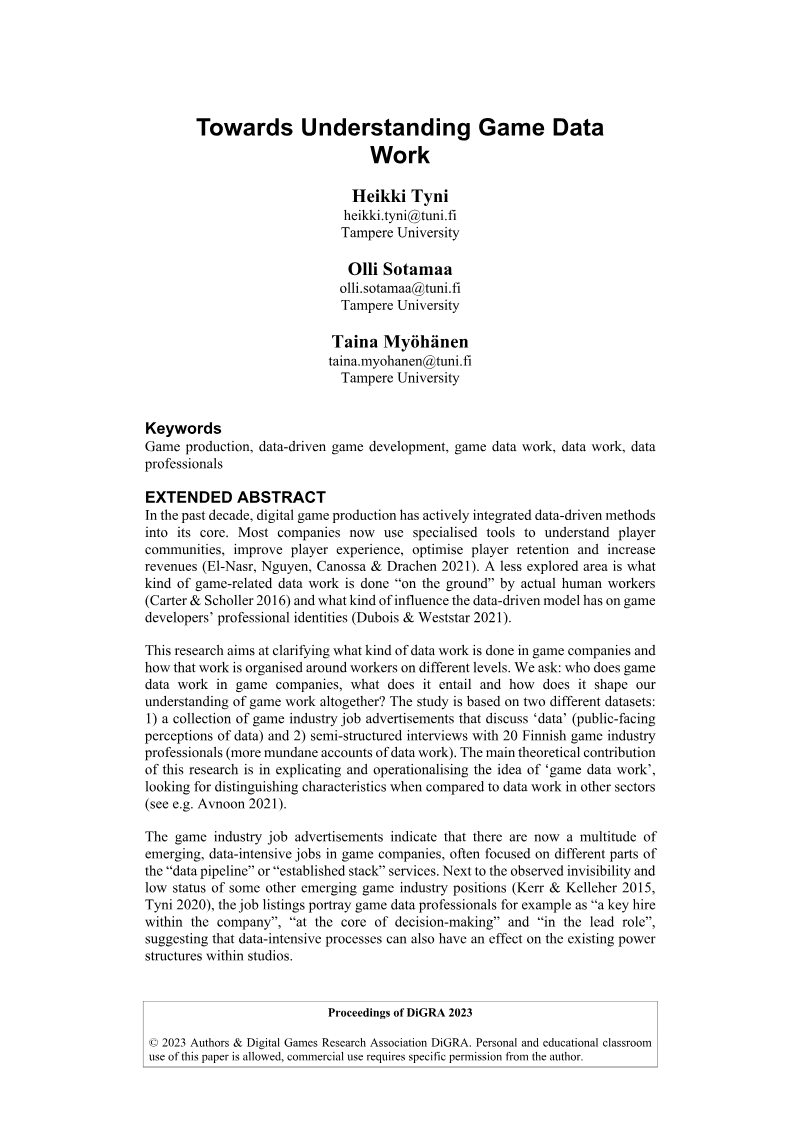
This study examines how data work is organized within game companies, asking who performs it, what it involves, and how it reshapes understanding of game work more broadly.
- The study combines two datasets: a collection of game industry job advertisements mentioning data, and semi-structured interviews with 20 Finnish game industry professionals.
- Job advertisements show a growing number of data-intensive positions, often covering parts of the data pipeline or analytics stack, and frame data professionals as key hires, central to decision-making, and in lead roles, suggesting data processes may be shifting power structures within studios.
- The authors propose a three-part typology of game data workers: dedicated data professionals (data scientists, analysts, engineers), 'product people' (management, producers, designers, marketing) who monitor the 'health of the product,' and 'everyday game data workers' in wider development roles saturated with analytics and 'data talk.'
Toward an Agential Realist Account of Digital Games: Revisiting Gamic Agency and Materiality
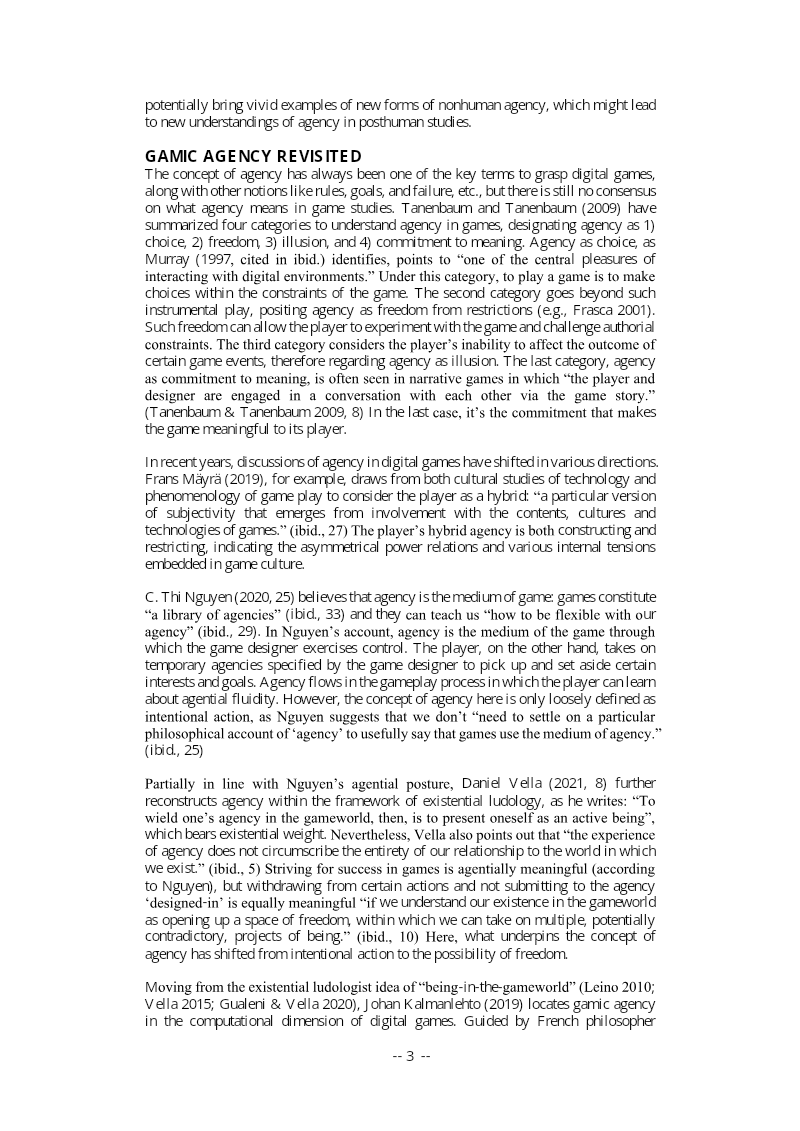
This paper proposes an agential realist and posthumanist reconceptualization of agency in digital games, drawing on Karen Barad's agential realism and Rosi Braidotti's affirmative ethics.
- The paper argues that gamic agency should be understood not as an attribute owned by players or machines but as an enactment arising through "intra-action," with players and games co-constituted as posthuman subjects, drawing on Karen Barad's agential realism and Rosi Braidotti's affirmative ethics.
- It proposes a "relational materiality" of digital games, marked by inherent indeterminacy, as an alternative to substance-based views, and critiques prevailing humanist accounts of gaming.
- The analysis of The Elder Scrolls IV: Oblivion is central: its uncanny, autonomously behaving non-player characters rupture the seamlessness mainstream games prize, exposing gamic agency and fostering relational co-generation between game and player.
Saving the Planet One Game at a Time
Video games are examined here as a potential vehicle for ecological awareness, with the central claim that they can make abstract environmental threats concrete through several design strategies.
- Effective eco-games share four design features: accurate ecosystem replication, meaningful player agency, changes of scale, and emotional engagement.
- The analysis warns of common pitfalls in eco-games, including over-reliance on technological fixes, idealization of nature-based labor, reproduction of orientalism and speciesism, and rewarding the resource exploitation they aim to critique. In the Solutions board game, only 8 of its 76 solution cards propose sociocultural rather than technological change.
- The main empirical evidence, a reception study of Abzû based on 2,421 player comments across 14 platforms, found that only a minority of players discussed the game's environmental message and none identified perpetual growth under petrocapitalism as a driver of ecosystem devastation.
Allegorithmic Politics of Game Exchange: Subversion, Ideology, and Capitalism in Strategy Games
This paper examines how the strategy games Civilization VI and Age of Empires II: Definitive Edition encode ideologies of capitalist exchange within their core mechanics.
- The paper argues that Civilization VI and Age of Empires II: Definitive Edition encode capitalist exchange ideology in their core mechanics, mapping player labour onto progress through accumulation and meritocratic reward, which limits emancipatory or speculative play.
- Civilization VI is read as reducing culture, science, and the map itself to interchangeable abstract value, with its "utopian exchange" interpreted as an allegory of capitalist accumulation and labour-value theory.
- Civilization VI's diplomatic victory condition is interpreted as preserving power hegemony rather than enabling genuine cooperation.
Farming a Cosy Utopia: A Regenerative Escape to Simpler Times
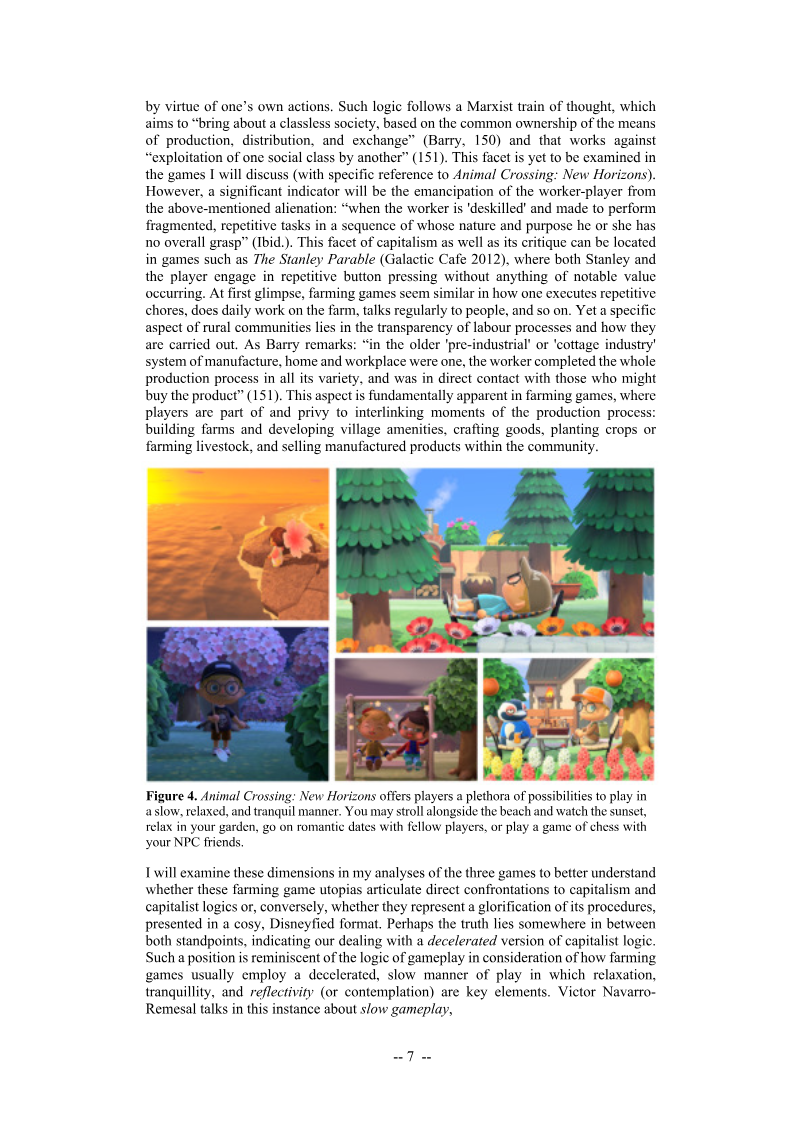
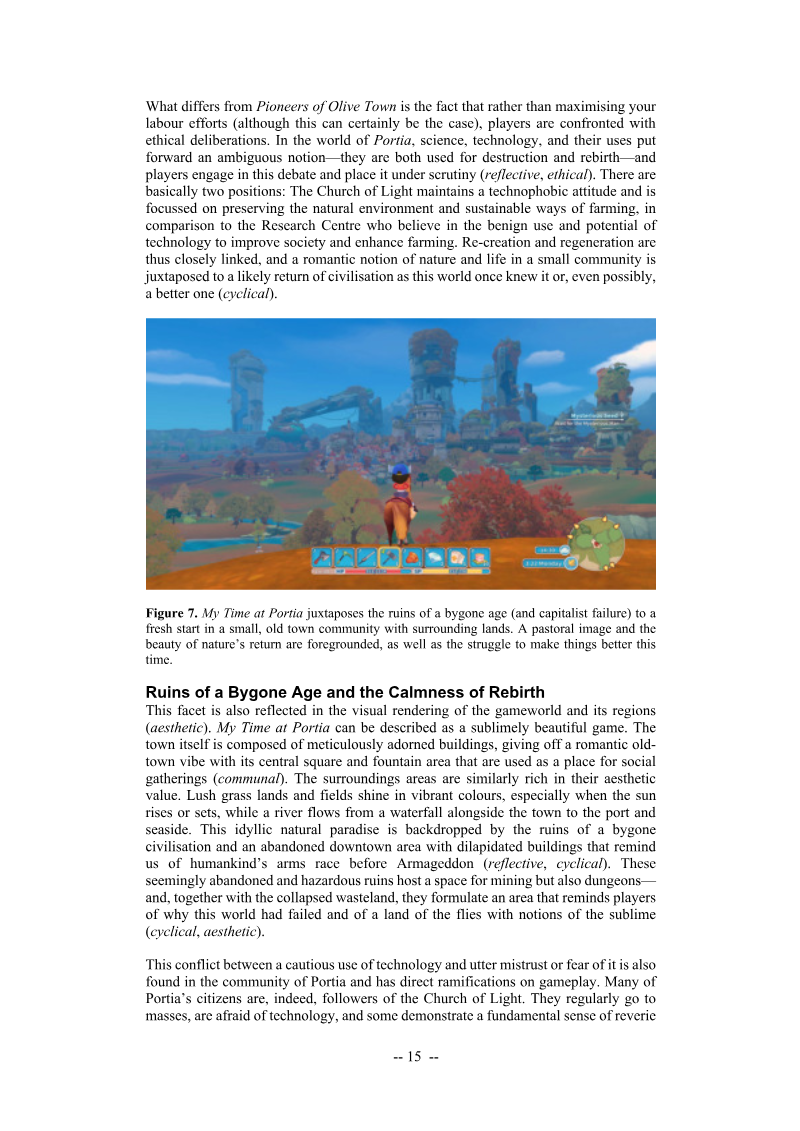
Farming games such as Animal Crossing: New Horizons, Story of Seasons: Pioneers of Olive Town, and My Time at Portia are presented here as a form of utopian narrative and "regenerative play," capable of fostering ecological awareness and emotional well-being.
- The report argues that farming games such as Animal Crossing: New Horizons, Story of Seasons: Pioneers of Olive Town, and My Time at Portia function as "regenerative play," using Eden-style nostalgia to offer a calm, community-centred alternative to capitalist and urban pressures.
- The analysis is qualitative, built on close readings of gameplay design and narrative structure rather than empirical measurement, and it draws on the utopian tradition beginning with Thomas More's Utopia (1516).
- Olive Town is read as a double-edged ecological critique: its pastoral utopia culminates in a luxury cruise liner docking at the port, exposing capitalist tourism as a corrupting force that players themselves enable.
Xeno-ludens: Deformativism and Playful Estrangement
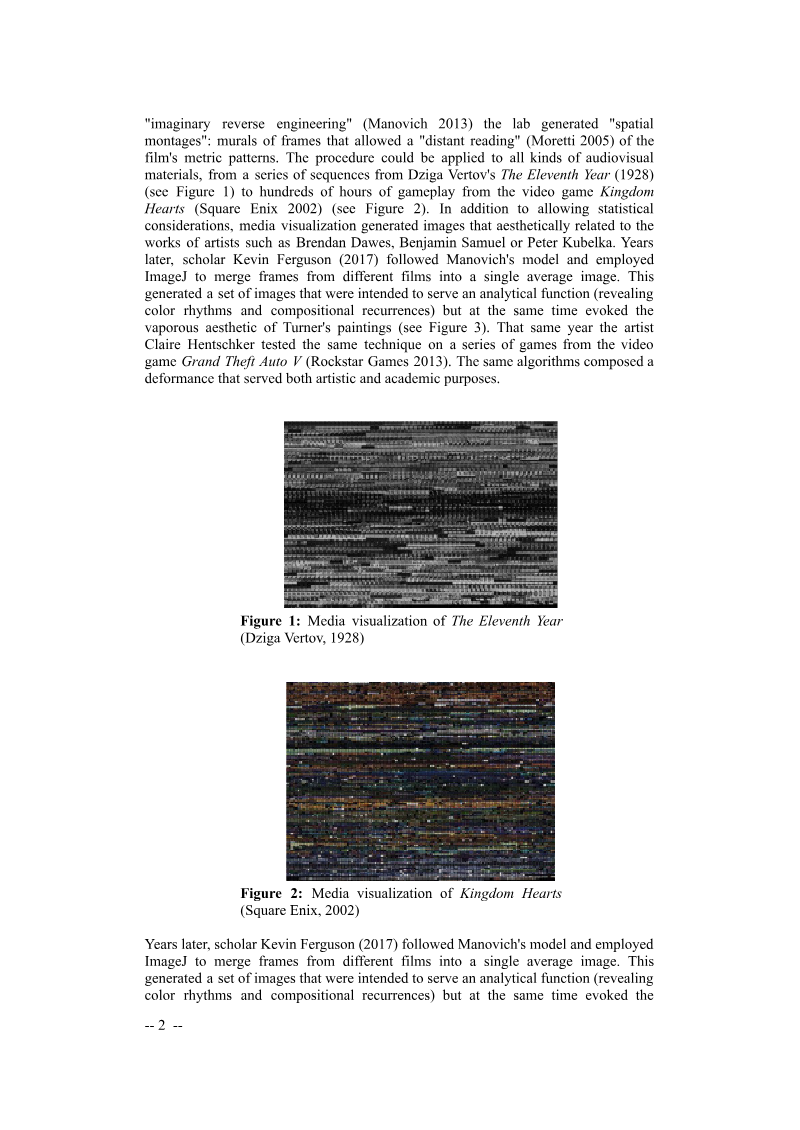
This extended abstract, presented at DiGRA 2023, examines the intersection of video games and deformative criticism, an experimental mode of analysis that applies algorithmic rules or parameters to cultural artifacts such as literary texts, films, and games in order to estrange their forms and surface meanings that conventional…
- Deformative criticism applies algorithmic rules or parameters to cultural artifacts (texts, films, games) to estrange their forms and surface meanings that conventional interpretation might miss.
- The paper argues that the video game is inherently a deformative medium, and that deformative criticism can itself be understood as a form of critical play.
- The author proposes a transmedial ludic estrangement grounded in Gilles Deleuze's concept of the diagram, framed as a 'xeno-play' paradigm in which deformation produces strange forms of playing and strange games.
Other than Text: Media Used in Game Studies Publications
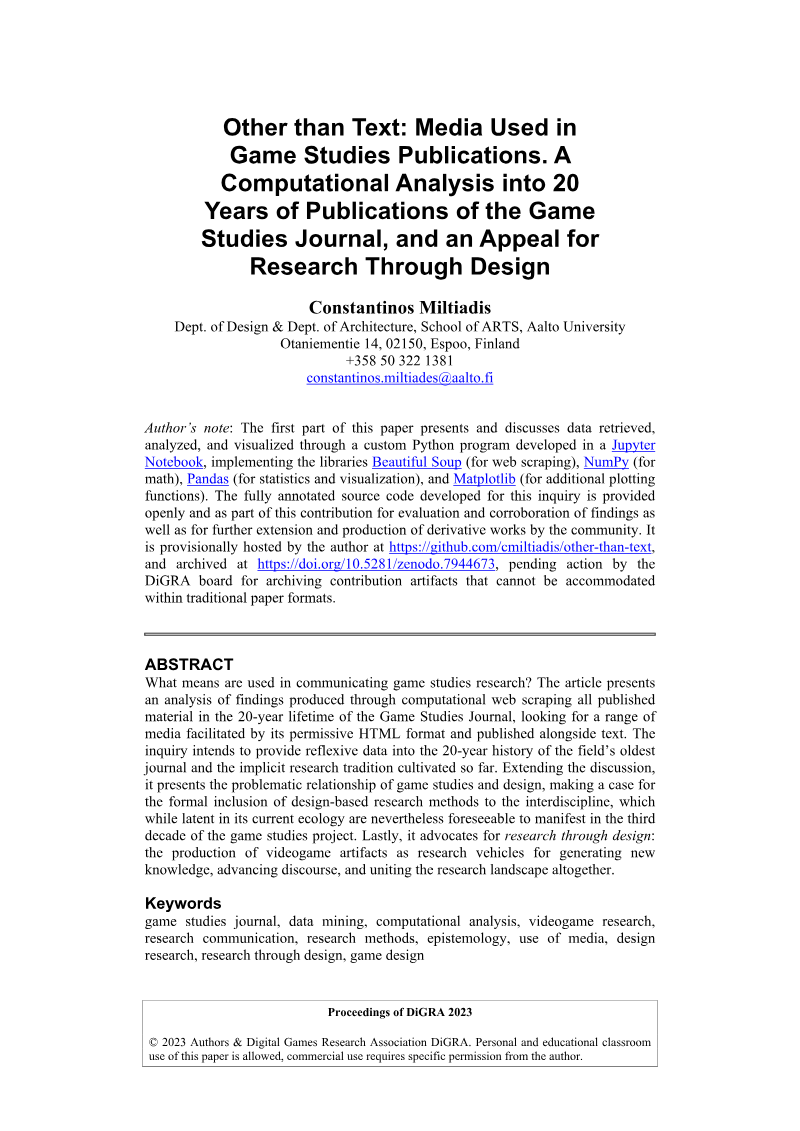
This study examines twenty years of publications in the Game Studies journal (2001–2021) to ask what non-text media researchers use to communicate game scholarship.
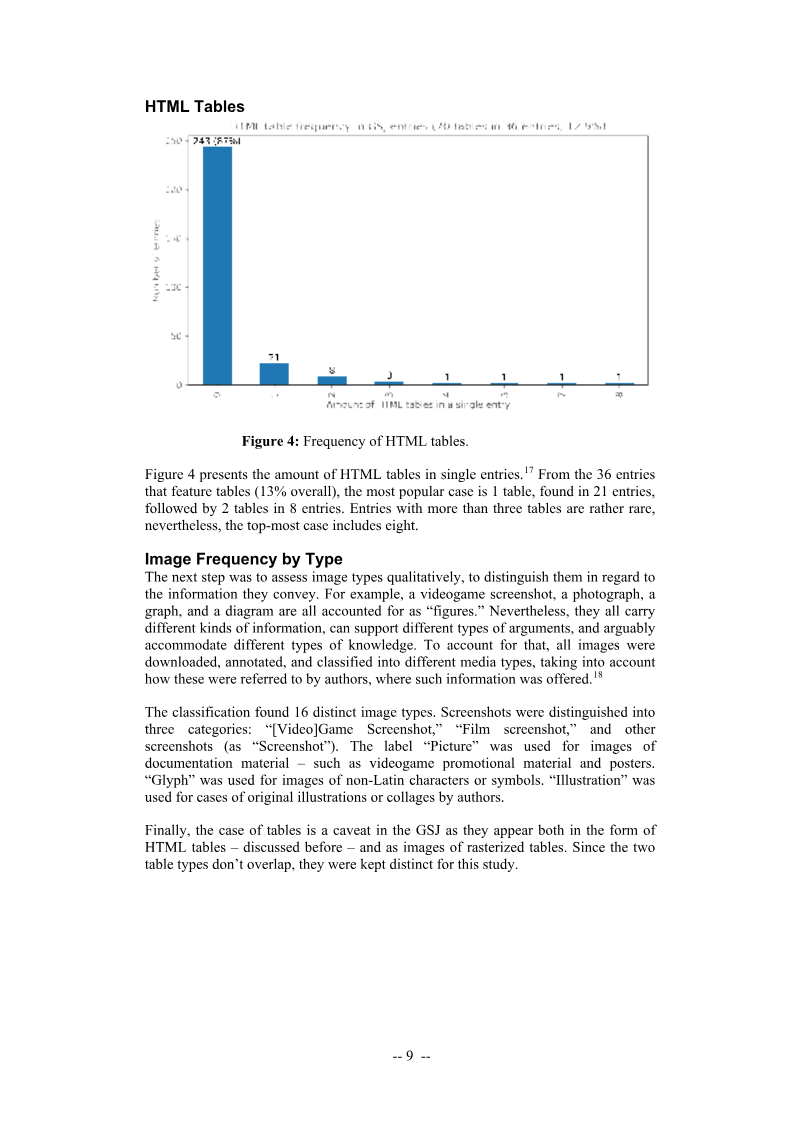
- Across 279 entries in 41 issues of the Game Studies journal (2001–2021), 61% of publications contain no images and 55% contain no media at all, indicating a predominantly text-centric scholarly form.
- Where images appear, videogame screenshots dominate with 44% of 659 images, while other rich media are extremely rare: one embedded iframe, one animated GIF, one sound file, and 93 video links across 29 entries.
- The journal permits multimedia only for figures and tables under tight size constraints, reflecting a submission-guideline environment that does not actively provision for richer media.
The Phenomenon of Popcorn Gaming: Why Do We Watch Games More and More?
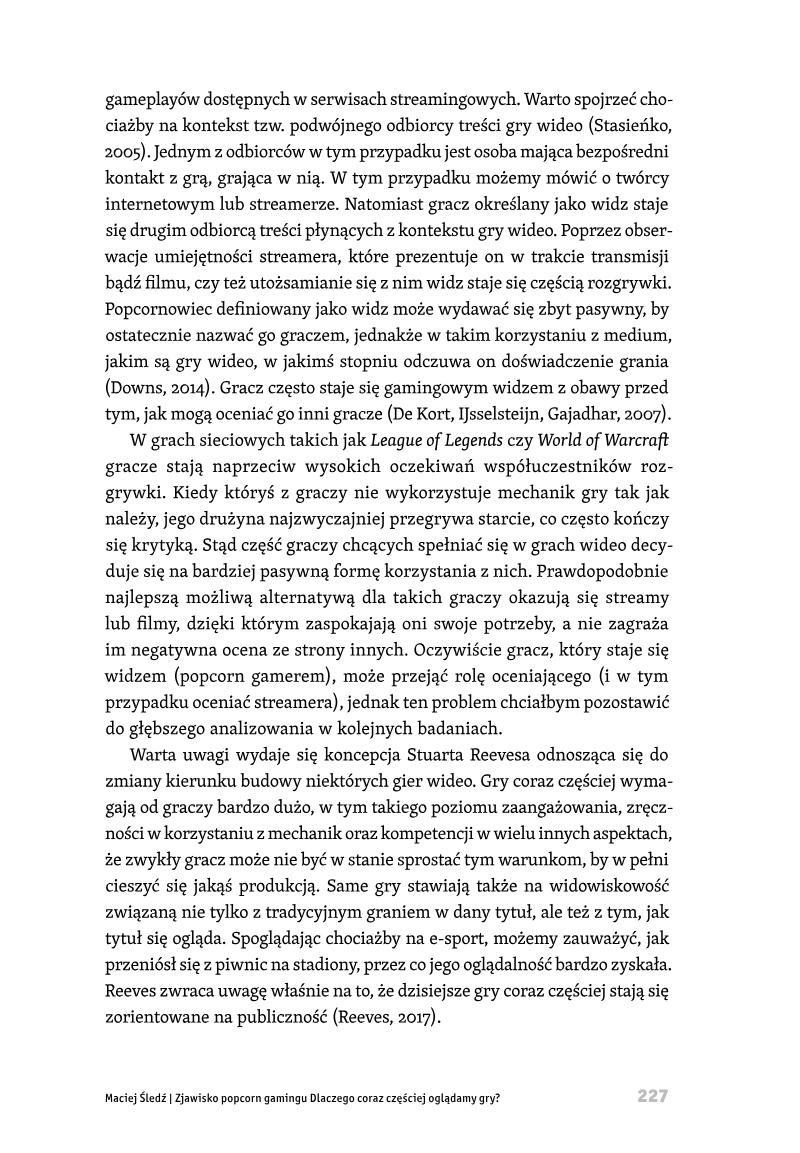
This study, by Maciej Śledź of the University of Wrocław, examines "popcorn gaming," a phenomenon in which players prefer watching video games rather than playing them, and asks why such viewing has grown.
- Popcorn gaming, the preference for watching video games over playing them, is growing rapidly alongside streaming platforms, with over 9 billion hours of game streams watched in 2019, a 20 percent increase on the previous year.
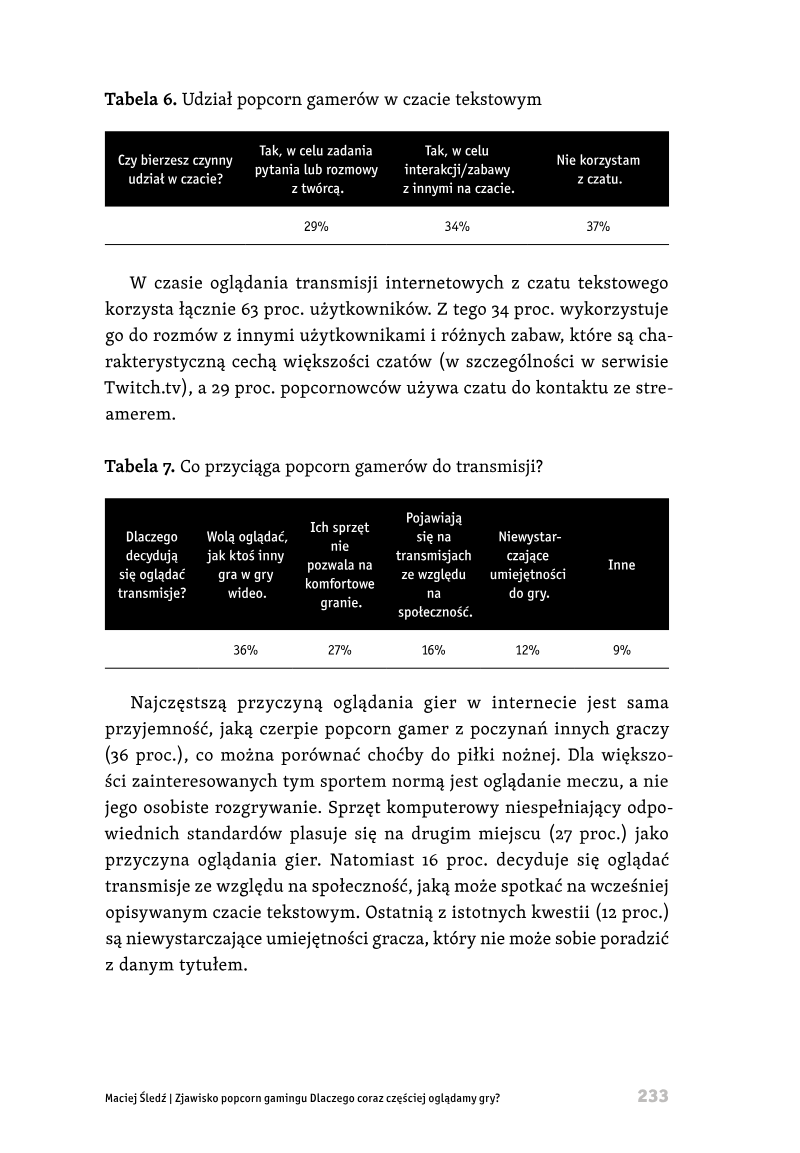
- In an online survey of 376 Polish gamers, 28 percent said they preferred watching games to playing them, and 77 percent named the streamer as their main motive, making the creator more important than the game itself.
- Viewers are also drawn by enjoyment of watching skilled play, fear of negative judgment from teammates in competitive online games, and limited hardware or skill that keeps them from playing.

Linguistic Landscape in Film Works and Video Games
This paper examines how linguistic landscape, the visible language on signs and public displays, functions within fictional works, specifically films and video games.
- The paper argues that linguistic landscape, the visible language on signs and public displays, can be used by filmmakers and game designers to convey politics, economies, and identities in invented worlds, drawing on the established view that it reveals social structure and language hierarchy in real societies.
- The analysis is qualitative and case-based, based on close readings of two films (Blade Runner, 1982) and two video games (Deus Ex, 2000; Fallout 3, 2008) rather than on survey data or statistical sampling.
- In Blade Runner, dense neon advertising and a mix of English, Chinese, Japanese, Russian, and Spanish signage express concerns about corporate capitalism and globalization, tied to Reagan-era economic policy.