1 free read left. Create a free account for unlimited reading + AI research.
Create free accountWhitepaper DiGRA
1 free read left. Create a free account for unlimited reading + AI research.
Create free accountWhitepaperDiGRA
The paper argues that agency in digital games should be understood as an enactment produced in play. Players and games are described as co-constituted posthuman subjects.
This paper proposes an agential realist and posthumanist reconceptualization of agency in digital games, drawing on Karen Barad's agential realism and Rosi Braidotti's affirmative ethics. Its central thesis is that gamic agency should not be treated as an attribute possessed by players or machines, whether understood as choice, freedom, illusion, or commitment to meaning, but as an enactment that arises through "intra-action." On this account, players and games are co-constituted posthuman subjects whose agencies are reconfigured through the practice of play rather than existing as self-contained entities prior to it.
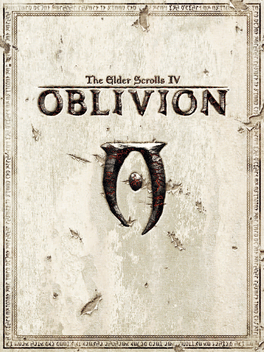
The argument rests on a critique of prevailing humanist accounts of gaming and proposes a "relational materiality" of digital games, marked by inherent indeterminacy, as an alternative to substance-based views. Illustrative cases include Red Dead Redemption 2 and The Elder Scrolls IV: Oblivion. The paper's analysis of Oblivion is especially central: its uncanny, autonomously behaving non-player characters produce a rupture in the seamlessness that mainstream games typically prize, and this rupture exposes gamic agency and fosters relational co-generation between game and player.
The paper's contribution is primarily theoretical and conceptual. It presents no empirical player data, and its framing has not been tested through systematic study of players. Supporting evidence for the cultural significance of Oblivion's characters draws on player commentary, which the paper cites as an indicator of lasting impact rather than as a measured finding.
The concluding portion shifts toward open questions instead of definitive answers. It asks what responsible gameplay practice might entail, how players can be held accountable for in-game actions, and where the boundary lies between game worlds and the real world. These questions are presented as directions for future research within posthuman, agential realist, and game studies scholarship, situating the work as a foundation for further inquiry rather than a closed set of conclusions.
Each row is a game or company this document names, each column a document, oldest first. A mark means that document names it. Select a row to see those documents.

DiGRA · 2026

DiGRA · 2026



DiGRA · 2026
DiGRA · 2026