1 free read left. Create a free account for unlimited reading + AI research.
Create free accountWhitepaper DiGRA
1 free read left. Create a free account for unlimited reading + AI research.
Create free accountWhitepaperDiGRA
The report argues that Civilization VI and Age of Empires II: Definitive Edition map player labour onto in-game progress via accumulation and meritocratic reward. This, it says, limits emancipatory or speculative play.
This paper examines how the strategy games Civilization VI and Age of Empires II: Definitive Edition encode ideologies of capitalist exchange within their core mechanics. Its central argument is that these games map players' labour onto in-game progress through systems of accumulation and meritocratic reward, which in turn limits their capacity for emancipatory or speculative play. By analysing the games' "inner game markets," including utopian exchange as well as negative phenomena such as surplus capital, speculation, and overproduction, the author seeks to expose the ideological assumptions embedded in play and to propose alternative modes of exchange that could support critical gameplay.
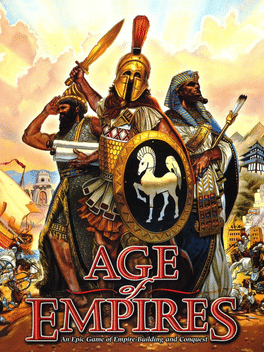
The analysis of Civilization VI argues that the game reduces culture, science, and the map itself to interchangeable abstract value. Its "utopian exchange" is read as an allegory of capitalist accumulation and labour-value theory, and its diplomatic victory condition is interpreted as preserving power hegemony rather than enabling genuine cooperation. Age of Empires II: Definitive Edition is treated as a case where the historical setting functions largely as aesthetic surface, while its mechanics simulate economic optimization and a "negative exchange" in which unit losses are precisely quantified as lost resources and time.
Across both games, the author finds that player labour is framed as the source of abstract value, with conflict serving as the primary mechanism of exchange and accumulation. Age of Empires II's finite, depleting resources and algorithmically paced competition contrast with Civilization VI's long-horizon exchange, yet both reproduce capitalist logics of accumulation, exploitation, and competition. Critical elements within the games remain ambiguous and subordinate to the dominant exchange paradigm, leading the author to call for fundamentally different market rules if games are to offer radically speculative alternatives.
Each row is a game or company this document names, each column a document, oldest first. A mark means that document names it. Select a row to see those documents.

DiGRA · 2026

DiGRA · 2026



DiGRA · 2026
DiGRA · 2020