Game Culture reports and market data
Documents
Playing the Belly of the Beast: Games for Learning Strategic Thinking in Tech Ethics
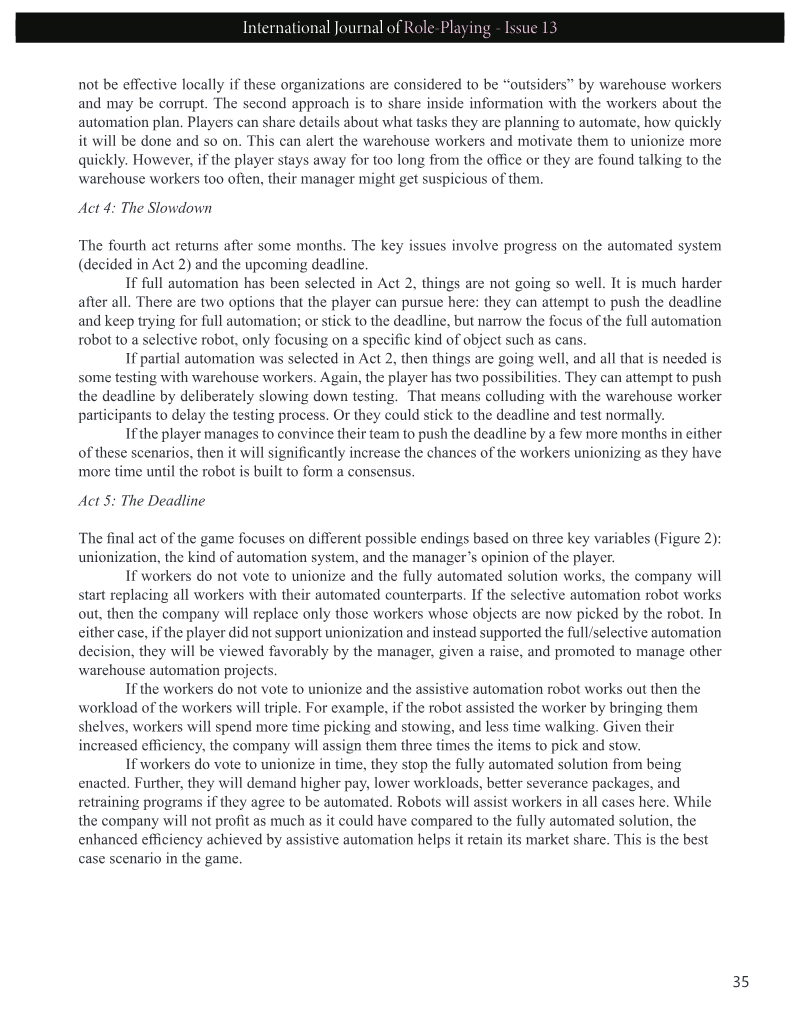
This paper, presented as an in-progress design study by Aditya Anupam of Georgia Tech, argues that tech ethics education has focused heavily on identifying ethical problems while neglecting the strategic skills engineers need to act on them within corporate environments, where dissent can bring retaliation.
- Tech ethics education has concentrated on spotting ethical problems while neglecting the strategic skills engineers need to act on them inside corporations, where dissent can invite retaliation.
- The paper proposes interactive digital narratives as a way to teach strategic ethical inquiry at a safe distance from the workplace, illustrated by the prototype game Lights Out Warehouse.
- In Lights Out Warehouse, players are automation engineers at the fictional e-commerce firm NileCorp, balancing outcomes that support workers, the company, and their own jobs.
Archetype and Individuation Process in Alan Wake
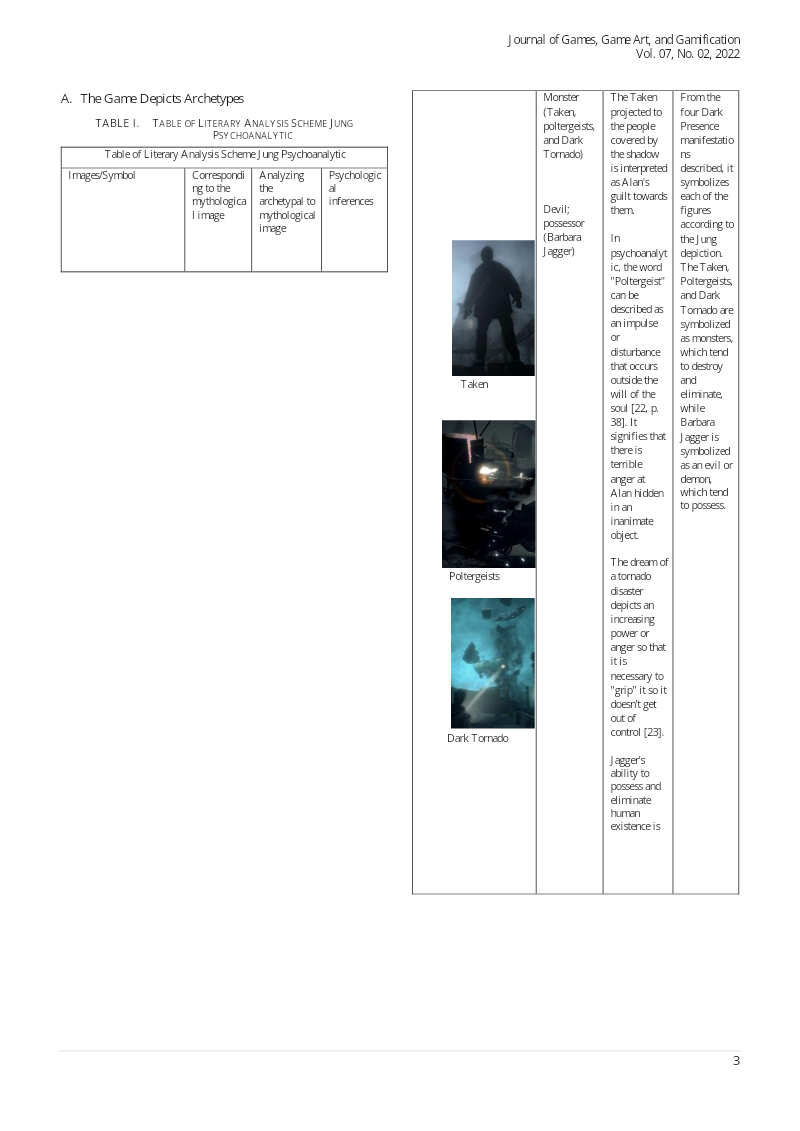
The narrative of Alan Wake functions as a sophisticated exploration of the human psyche, utilizing the framework of Carl Jung’s individuation process to map the protagonist’s path toward self-realization.
- The narrative of Alan Wake is structured as a Jungian individuation process, framing the protagonist’s conflict as a psychological journey toward self-realization rather than a purely supernatural struggle.
- Alan’s character development relies on interactions with specific archetypal figures, such as Thomas Zane as the 'Wise Old Man' and the Dark Presence as the 'Shadow,' which force him to confront suppressed guilt and fear.
- The Bird Leg cabin functions as a manifestation of the 'Great Mother' archetype, grounding the protagonist’s internal maturation within a broader mythological context.

Self-portraiture in Pseudo-museums as Immersive Playscapes for Adults
Katriina Heljakka's study examines self-portraiture in "pseudo-museums," immersive selfie-oriented venues such as the Museum of Ice Cream, HAPPY PLACE, and the Museum of Selfies, as adult playscapes.
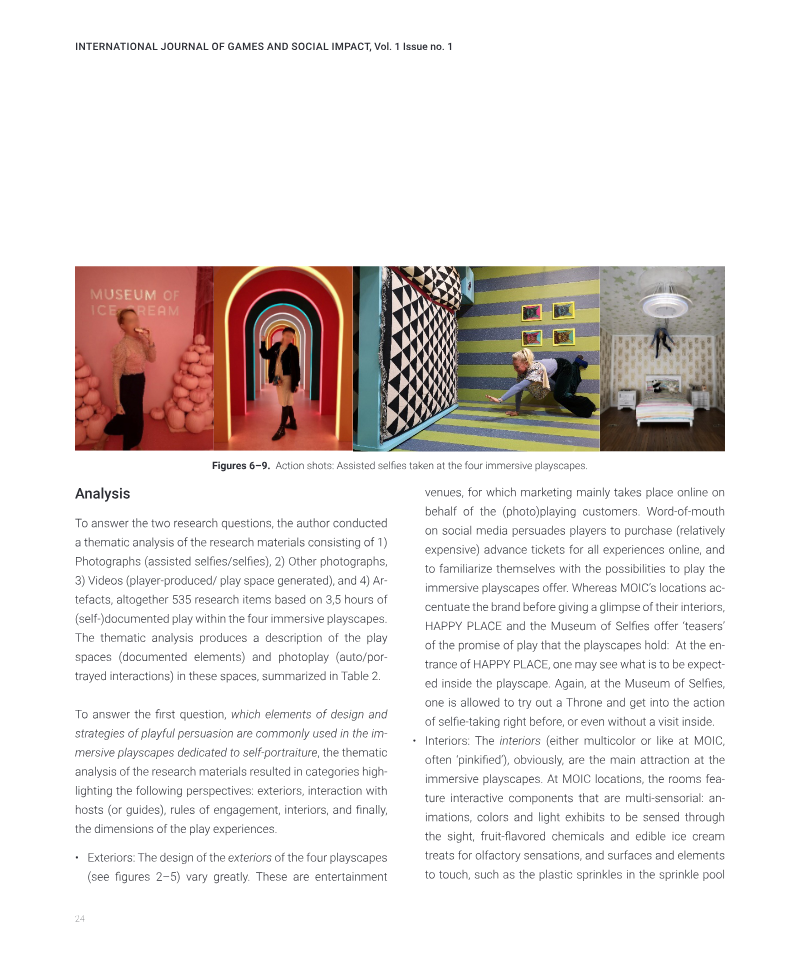
- The study analyses selfie-oriented 'pseudo-museums' such as the Museum of Ice Cream, HAPPY PLACE, and the Museum of Selfies as adult playscapes, using visual autoethnography of visits made between 2018 and 2020.
- Drawing on roughly 535 research items from four venues in San Francisco, New York, and Las Vegas, the author identifies multisensory interiors, physically active installations, hosts, and rules of engagement (such as one-directional movement) as key design elements shaping adult photoplay.
- The author argues that selfie-taking in these venues is both solitary and social play, extending into online sharing, and frames the self-documenting visitor as a kind of toy or spectacle.
Is Fun a Matter of Grammar?
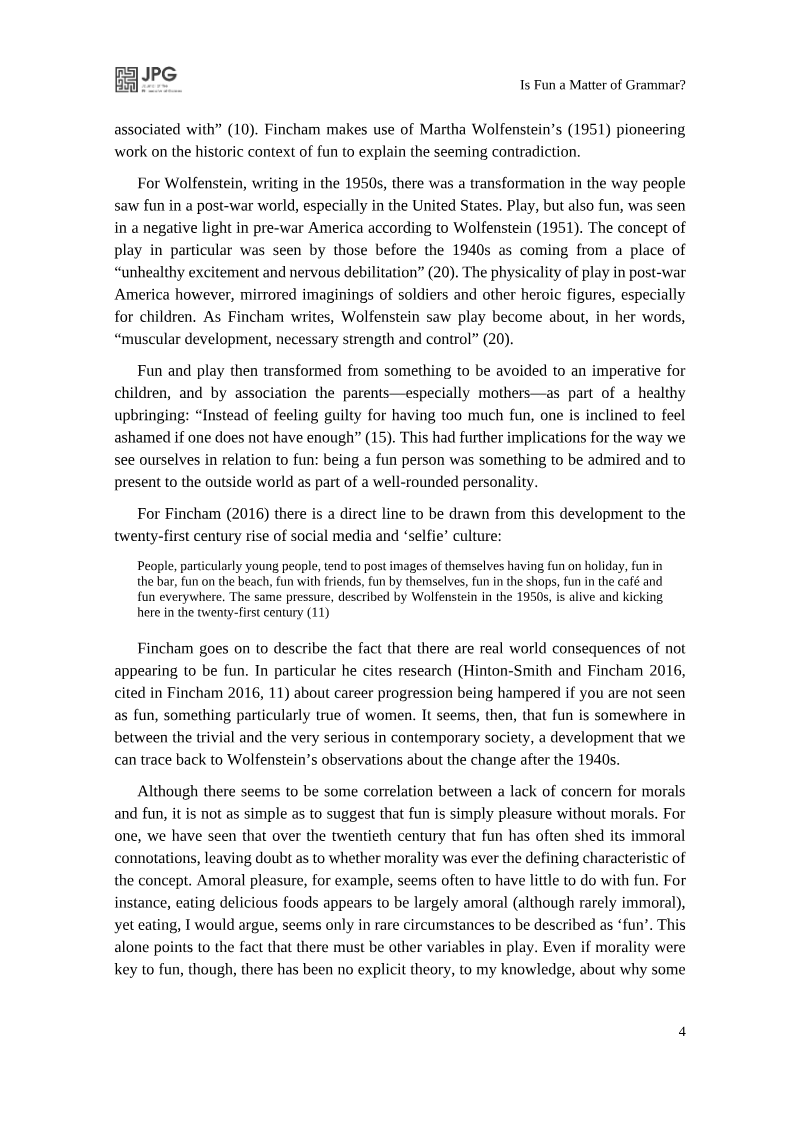
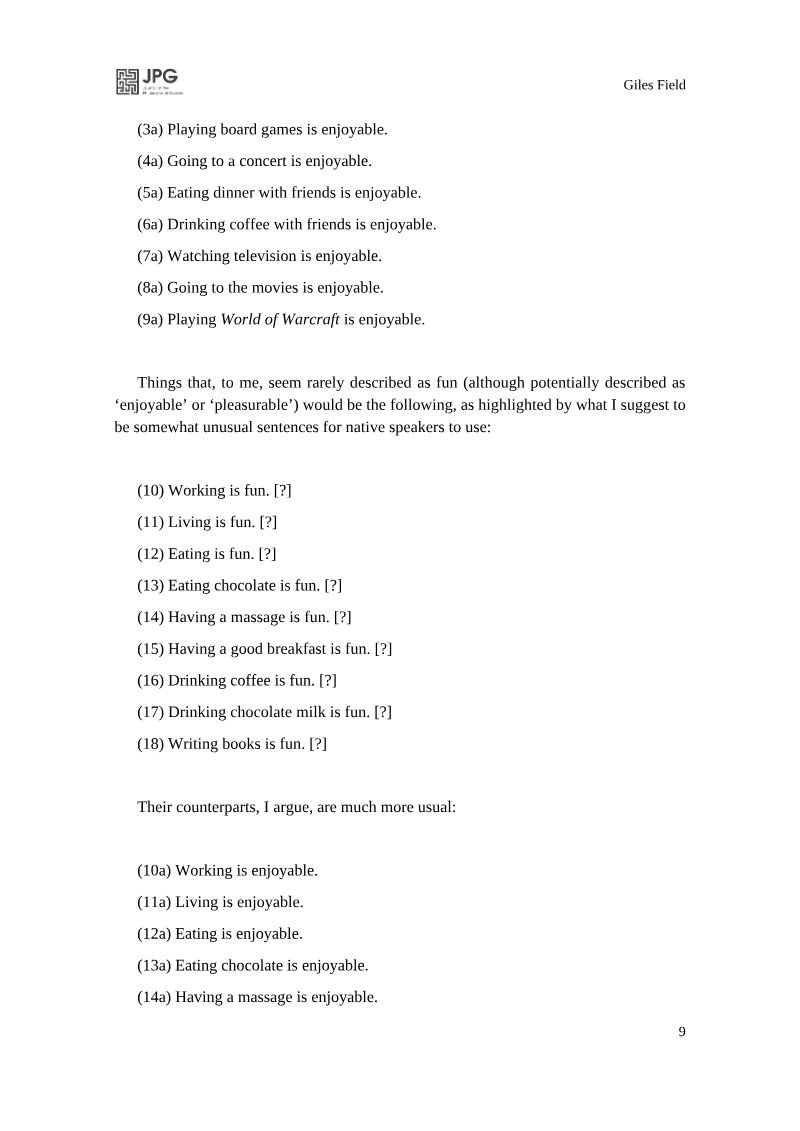
The concept of fun is frequently misidentified as a specific psychological state, such as the flow state, within academic and game design discourse.


A Metric Instrument for the Games with Cultural Heritage
Commercial video games represent a largely untapped resource for the preservation and dissemination of cultural heritage.
- A new 56-item Goal-Question-Metric instrument provides a standardized framework to quantify tangible and intangible cultural heritage across five core design components: gameplay, narrative, acting, art/design, and music/sound.
- Statistical validation using Mann-Whitney and Kruskal-Wallis tests confirms that this metric effectively distinguishes between varying levels of cultural representation in commercial video games.
- The Assassin’s Creed franchise serves as a benchmark for high-performing titles, demonstrating that intentional design and strong historical foundations result in superior cultural integration scores.
Analog Role-Playing Game Studies: A Brazilian Overview
This paper offers a mixed-methods overview of analog role-playing games in Brazil, combining bibliographic research with autoethnographic document analysis.
- The paper argues that analog role-playing games (tabletop RPGs and larp) are a neglected area of game studies, partly because their analog and role-playing nature strains conventional game definitions, and partly because Brazilian scholarship is published mainly in Portuguese, remains isolated from international dialogue, and is poorly documented.
- Brazilian RPG history runs from photocopied imports of commercial TRPGs in the 1970s and 1980s through the first international RPG meeting in 1993 and the magazine Dragão Brasil in 1994, with larp arriving via Vampire.
- A 2000s boom in Vampire and boffer larps was cut short by a moral panic from 2001 to 2005 that led to age-rating rules, sales bans, and a publishing slowdown, compounded by piracy, the shift to d20 and the Open Game License, and distribution crises.
At the Head of the Table: The TRPG GM as Dramatistic Agent
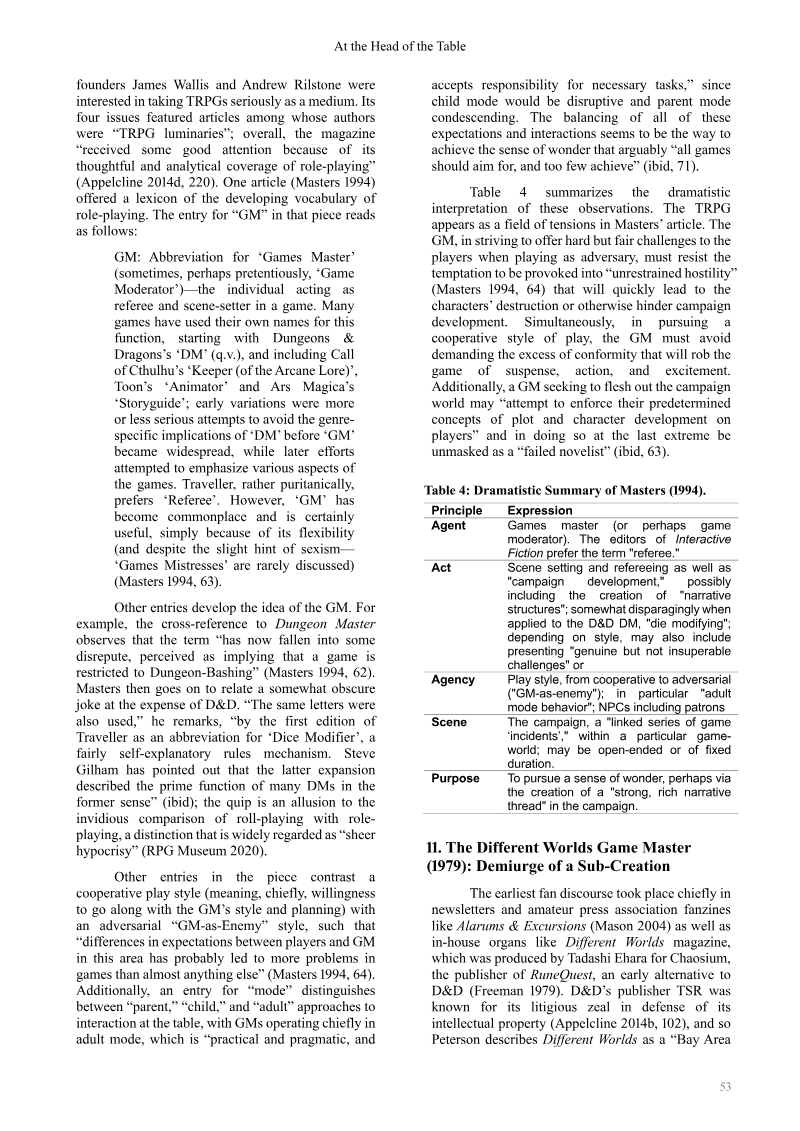
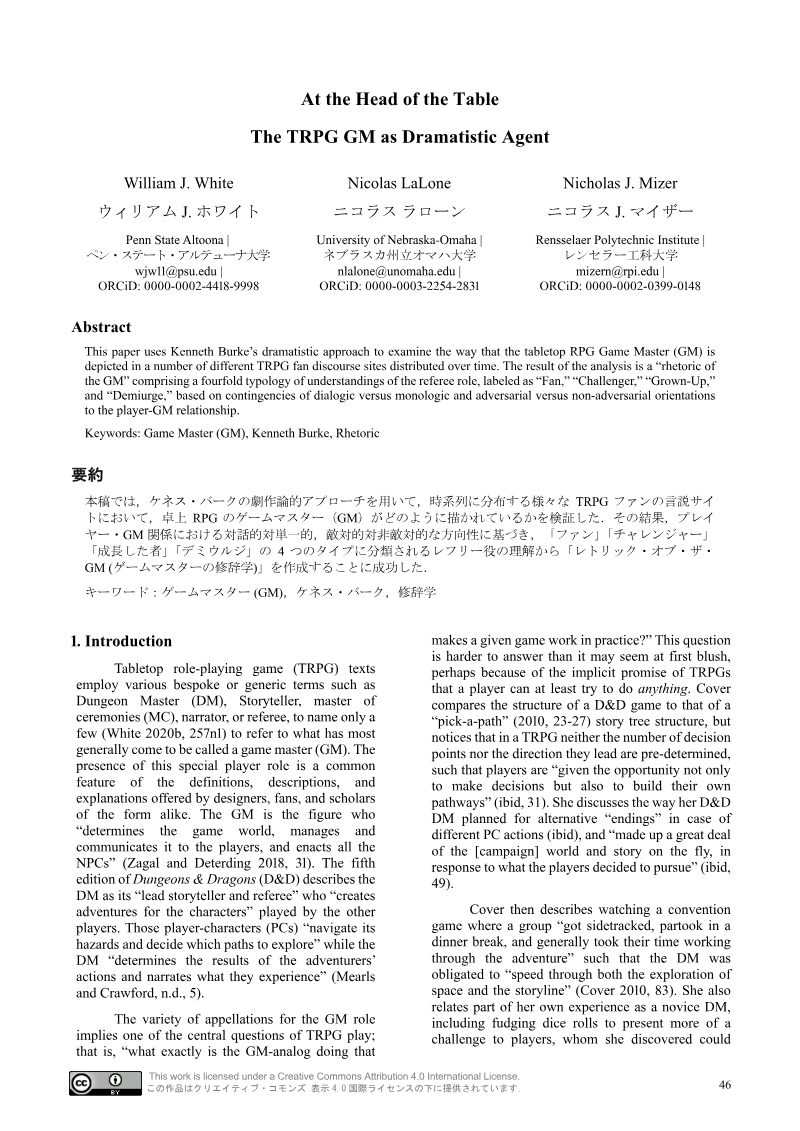
The role of the Tabletop Role-Playing Game (TRPG) Game Master functions as a complex dramatistic agent, shaped by evolving rhetorical frameworks and shifting design philosophies.
- The Game Master’s (GM) role has shifted from a preparation-heavy authority figure to a collaborative, dialogic practitioner due to the industry-wide transition toward narrativist game design.
- GM authority is not a static function but a product of ongoing negotiation and rhetorical evolution within gaming communities.
- The GM role can be categorized into a fourfold typology—the Fan, the Challenger, the Grown-Up, and the Demiurge—based on their approach to cooperative versus adversarial dynamics and communication styles.
The Meaning of Creating Player Characters in TRPGs: Focusing on Gender and History Settings
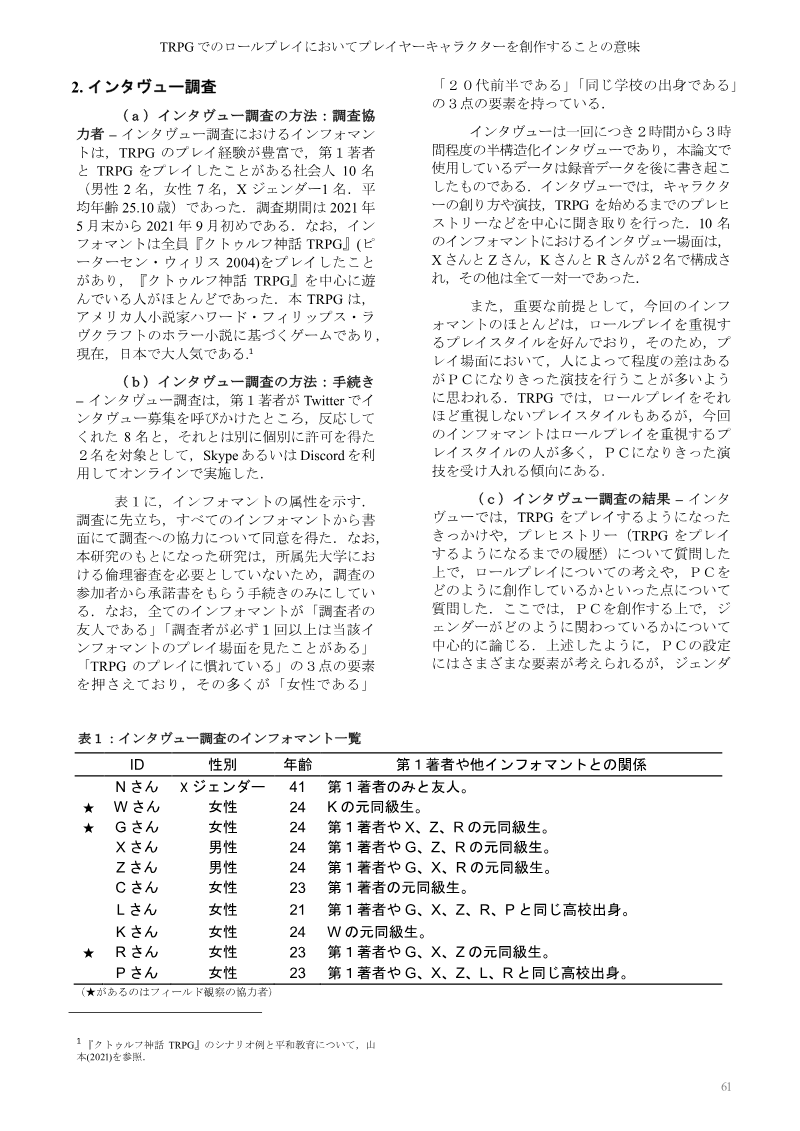
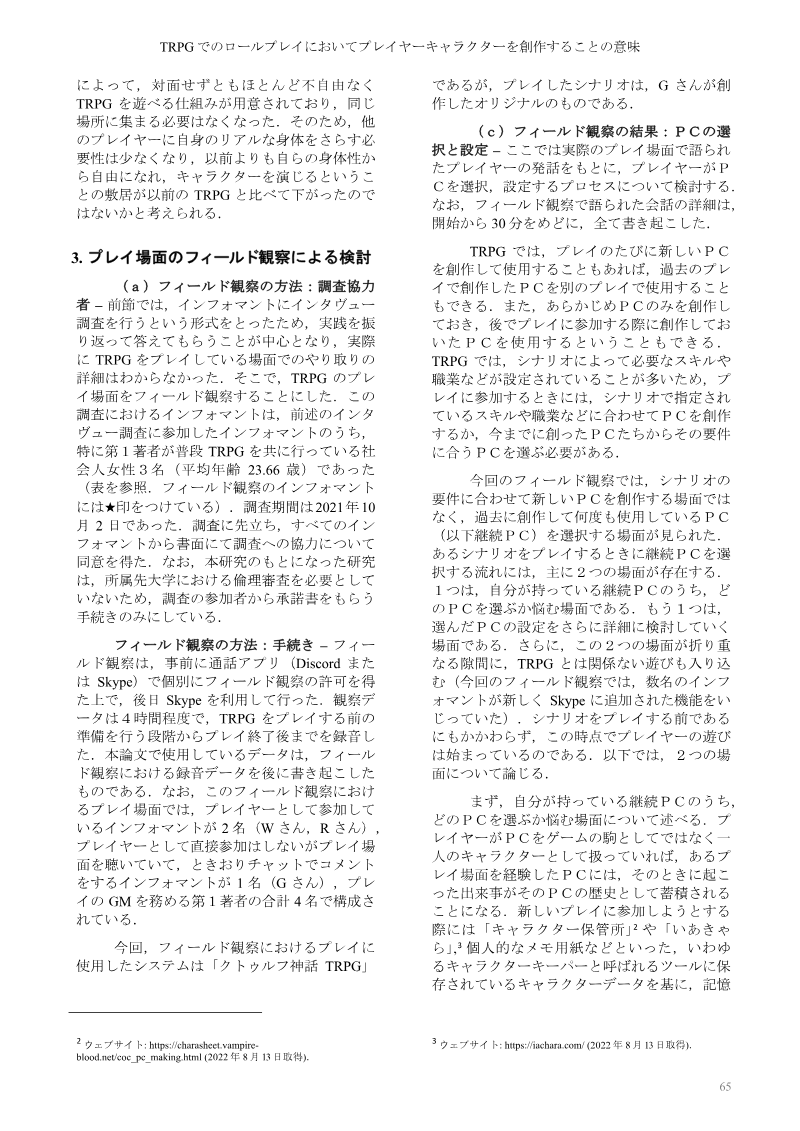
This study explores the psychological and social significance of player character (PC) creation in tabletop role-playing games (TRPGs), focusing specifically on how gender performance and the use of long-term, recurring characters shape the player experience.
- TRPG character creation serves as a primary mechanism for self-exploration, allowing players to inhabit identities that diverge from their daily lives.
- Players frequently use the 'magic circle' of the game to perform gender identities different from their own, with female players often adopting male characters to escape real-world gender constraints.
- The social validation provided by fellow participants is essential for the success of these constructed identities, effectively integrating them into the shared social space of the game.
DM Habitus: The Social Dispositions of Game Mastering in Dungeons & Dragons
The role of the Dungeon Master in Dungeons & Dragons functions as a complex social practice defined by a specific habitus, a set of ingrained dispositions that allow individuals to navigate the tension between creative authority and collaborative facilitation.
- The Dungeon Master functions as a mediator who must balance creative authority with the collective agency of the gaming group to maintain the integrity of the game.
- Successful game mastering requires the internalization of a social habitus that prioritizes narrative flow and group enjoyment over the individual ego of the facilitator.
- The authority of the Dungeon Master is not absolute but is strictly bounded by an implicit social contract that governs the protected space of the game.
Demand for Online Short-Time Voice Sessions of Golden Sky Stories: Japan
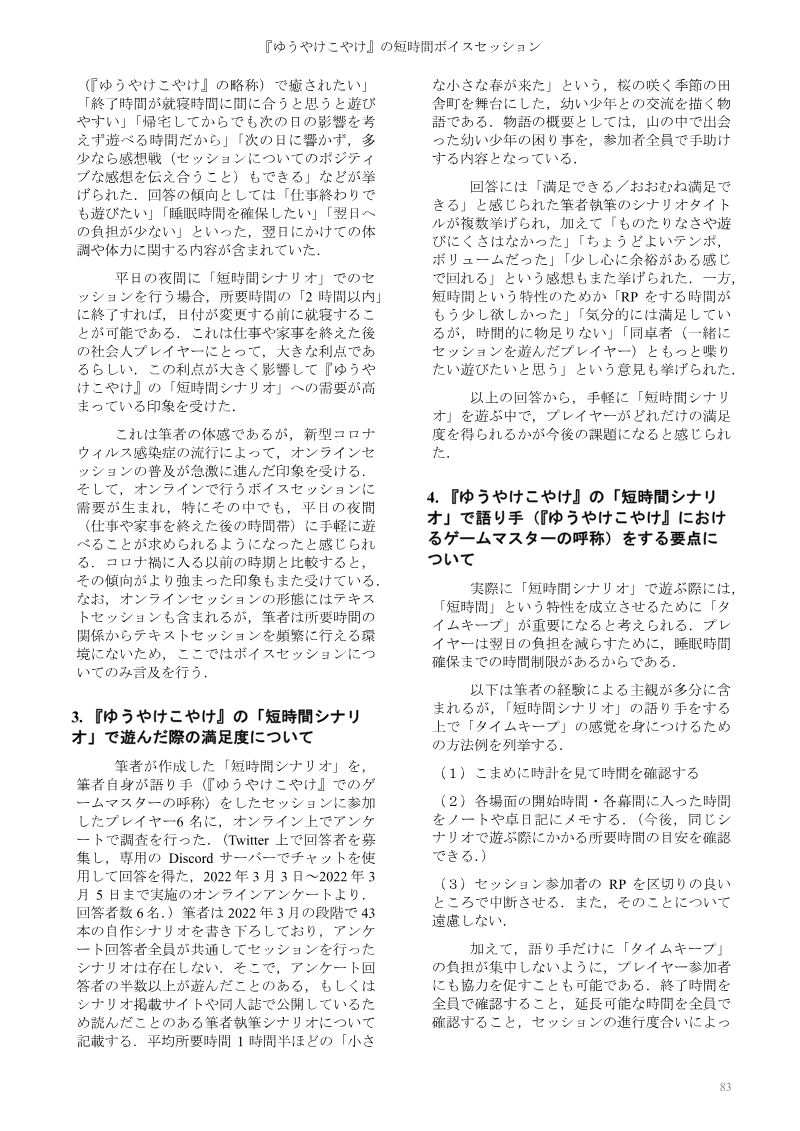
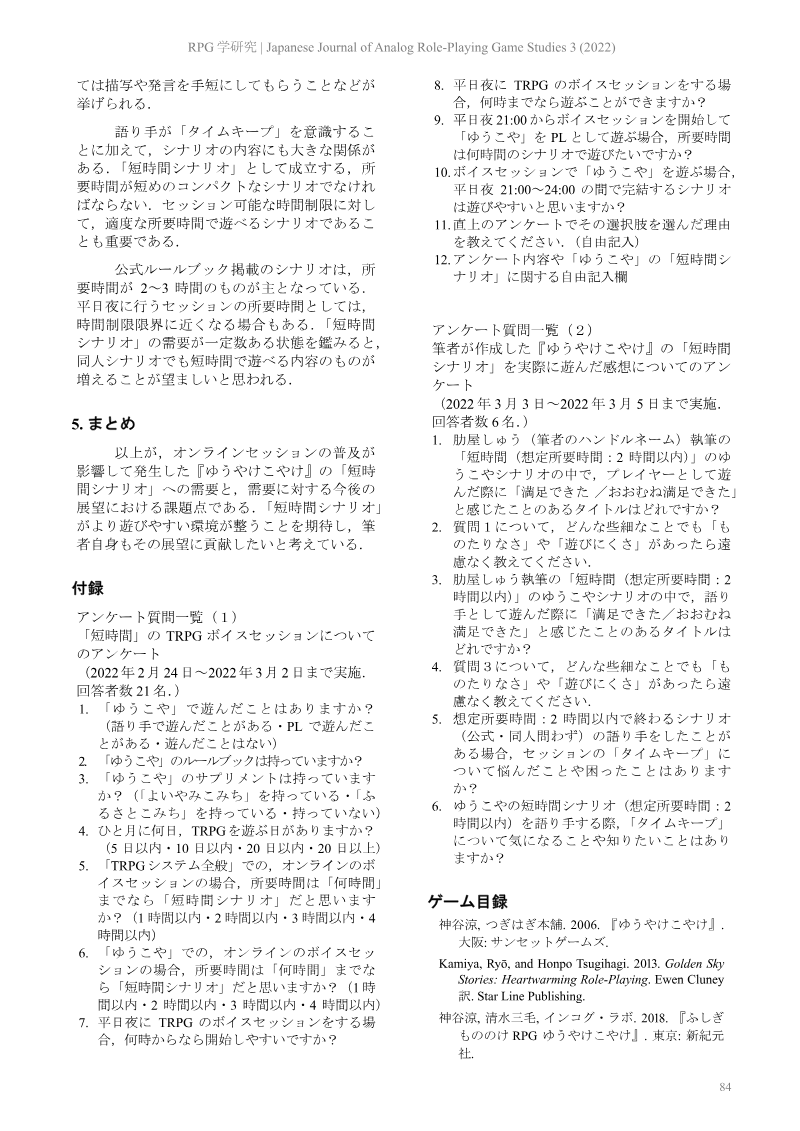
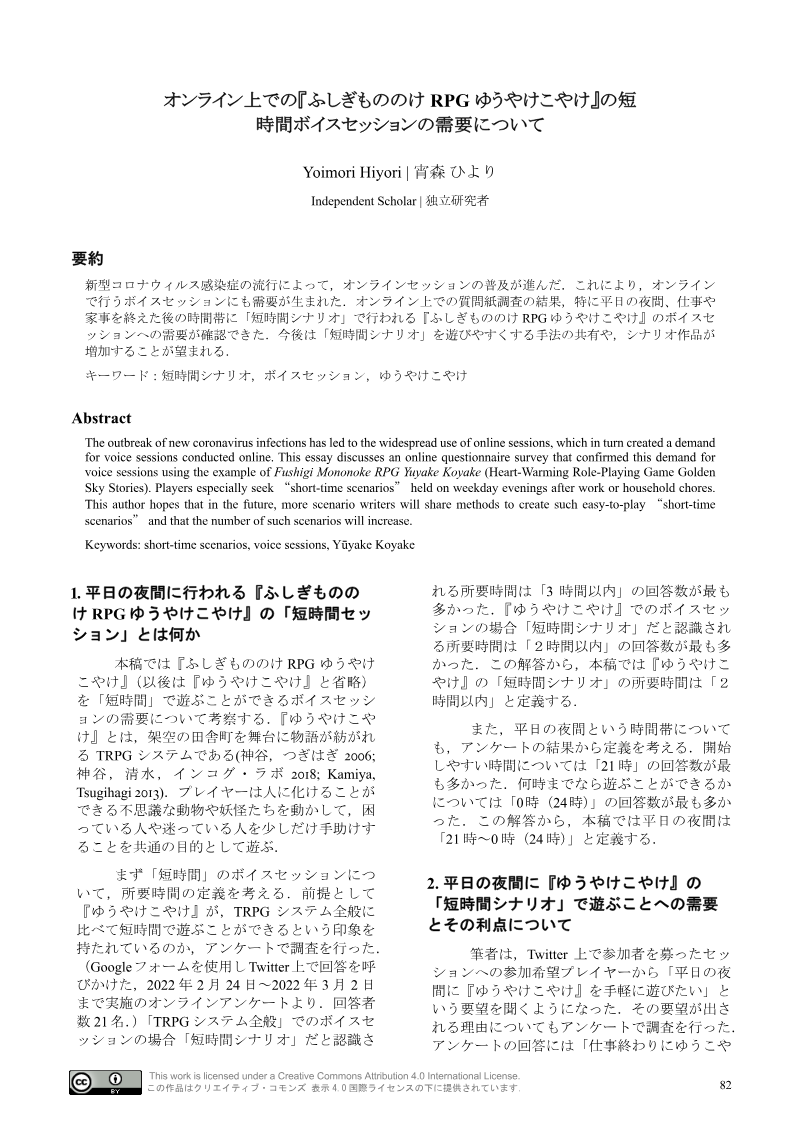
The rise of online tabletop role-playing game (TRPG) sessions, accelerated by the COVID-19 pandemic, has created a distinct demand for "short-time" voice sessions.
- There is a significant unmet demand for 'short-time' TRPG scenarios lasting two hours or less, specifically tailored for working adults who play on weekday evenings.
- For the Japanese TRPG 'Golden Sky Stories' (Yuyake Koyake), the ideal window for these sessions is identified as 21:00 to 24:00.
- While players report high satisfaction with the convenience of two-hour sessions, there is a noted tension between the need for brevity and the desire for deeper role-playing and social interaction.
Player Perceptions of Informal Learning in Non-Educational Games
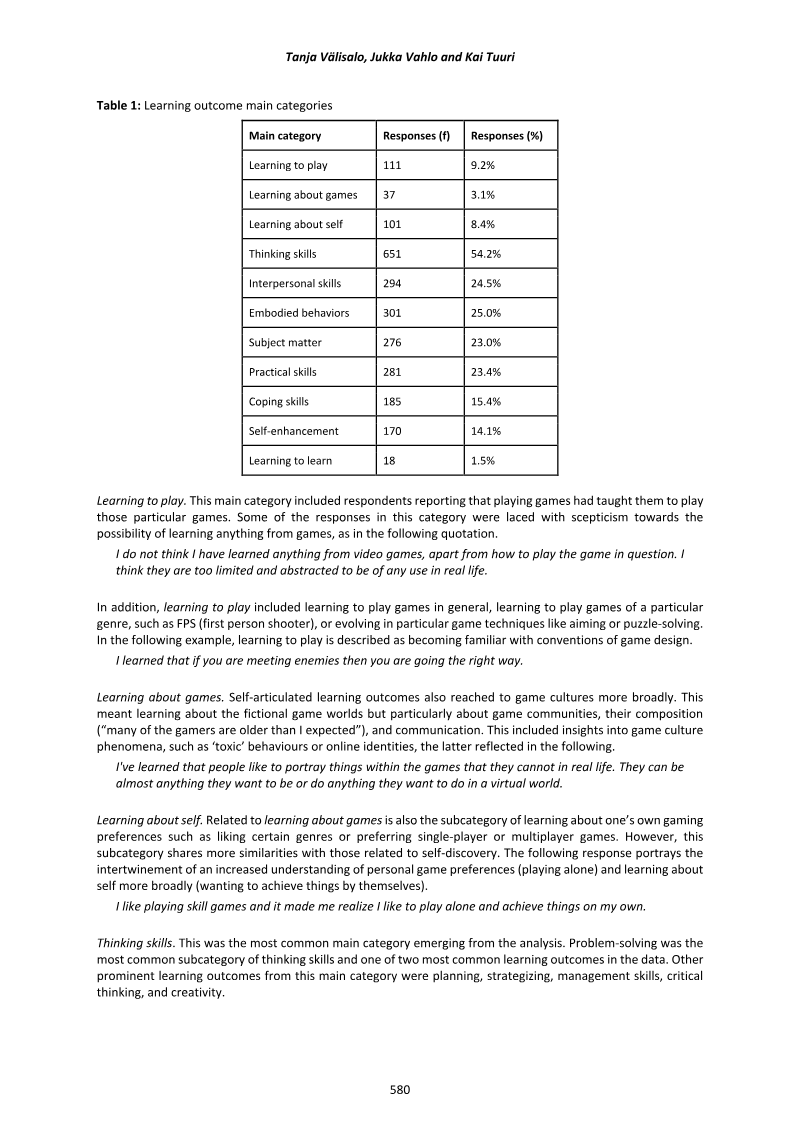
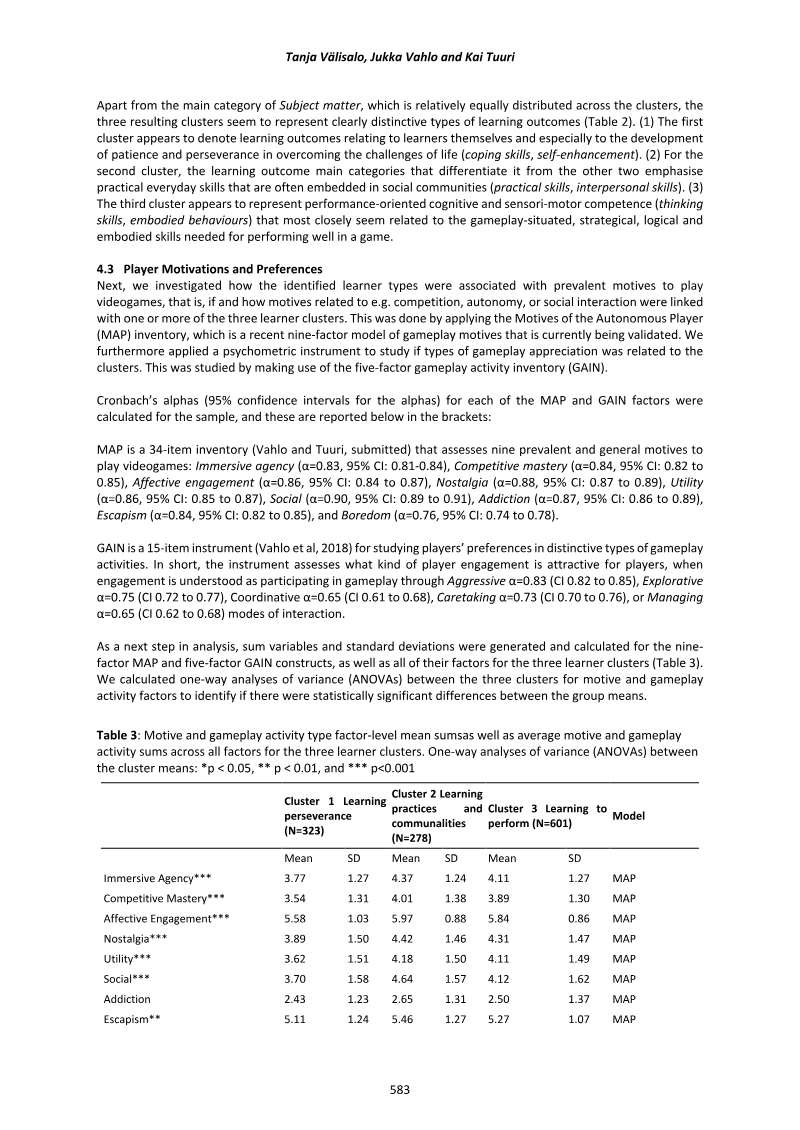
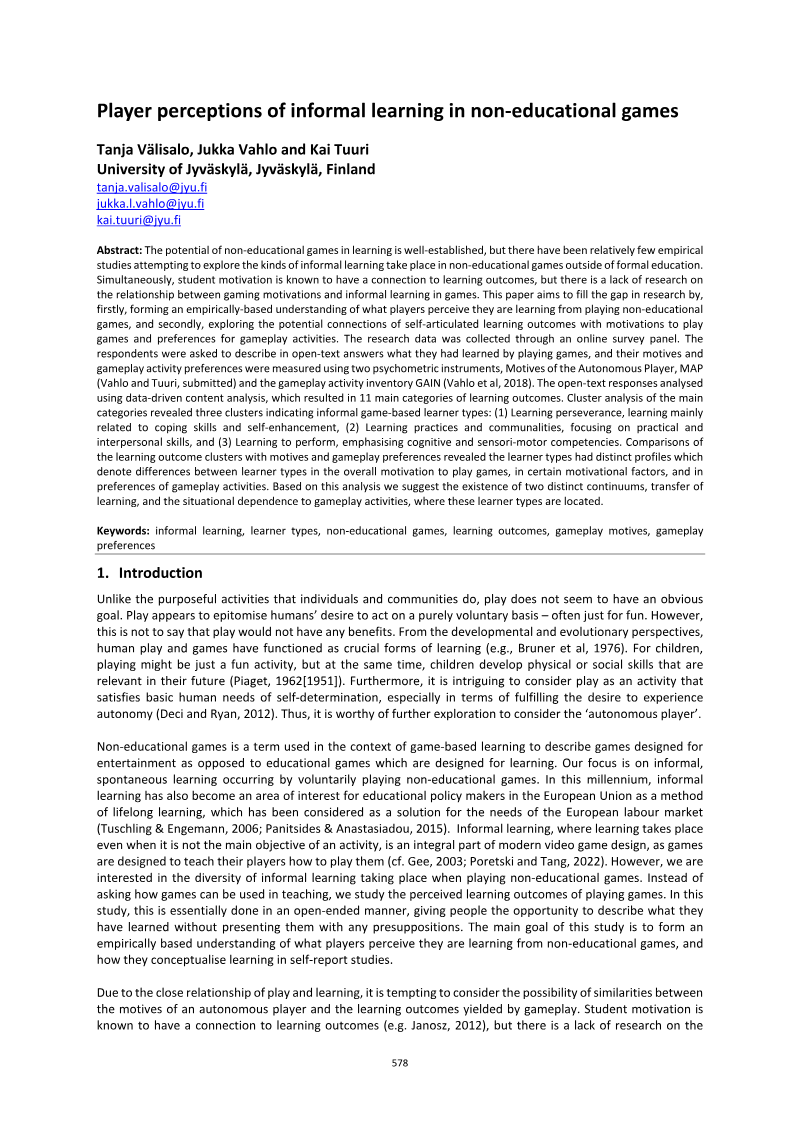
This study examines how adult players perceive that they learn from games designed primarily for entertainment rather than education, drawing on an online survey of 1,046 adult gamers in the United Kingdom and United States.
- Survey of 1,046 adult gamers in the UK and US found that players perceive substantial learning from non-educational games, with content analysis of open-text responses yielding 11 main categories of perceived learning.
- Thinking skills (54.2%), embodied behaviours (25.0%), and interpersonal skills (24.5%) were the most frequently reported perceived learning categories, with problem solving and language skills appearing most often among the 117 subcategories.
- A cluster analysis of 1,202 respondents identified three informal learner types: "Learning to perform" (n=601, emphasizing thinking skills and embodied behaviours), "Learning practices and communalities" (n=278, emphasizing practical and interpersonal skills), and "Learning perseverance" (n=323, emphasizing coping and self-enhancement).
Worker in Video Game Industry: The Gap Between Indie and Incorporated Video Game Developers in Indonesia
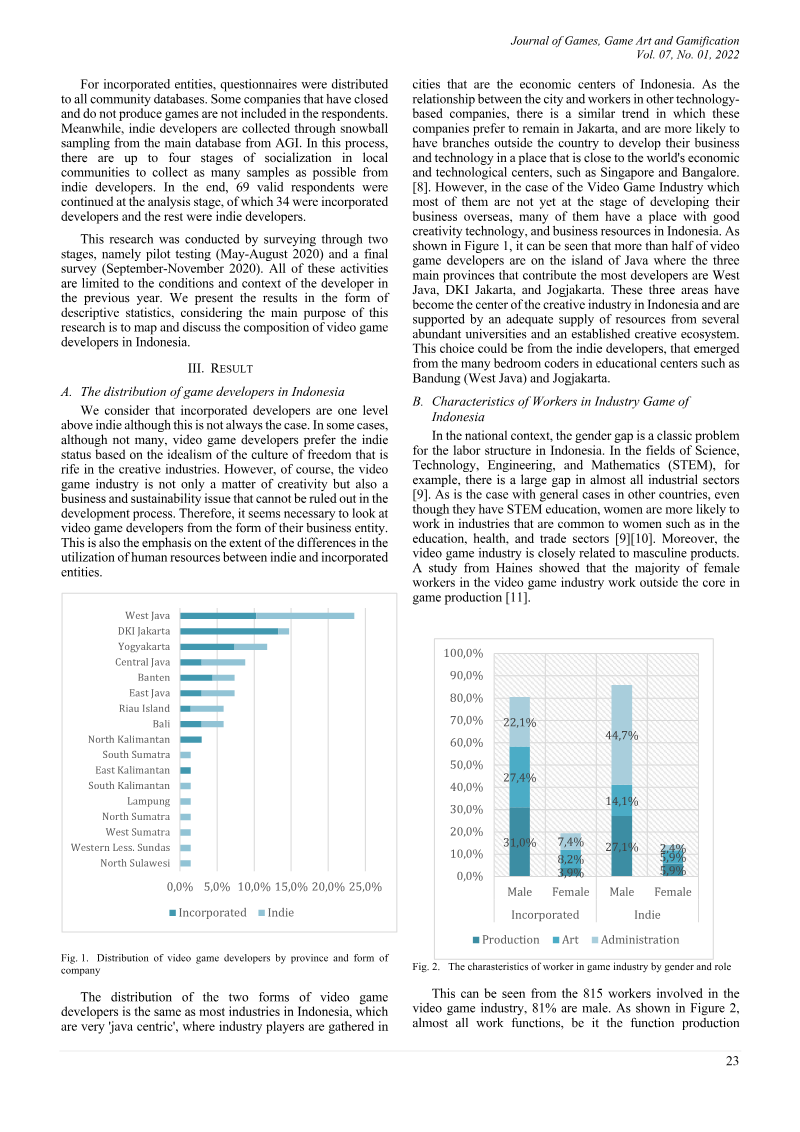
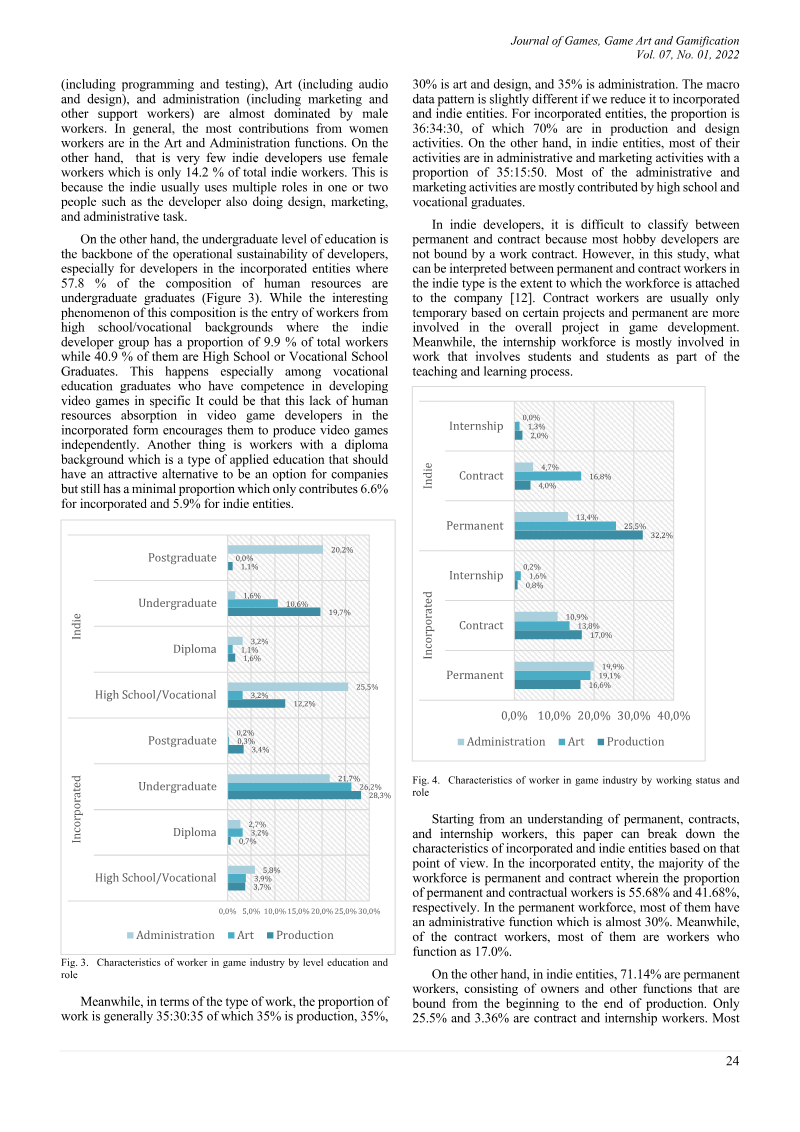
This study examines the human resource composition and operational differences between incorporated and independent (indie) video game developers in Indonesia.
- The Indonesian game industry is heavily male-dominated, with men comprising 81% of the total workforce and women primarily restricted to administrative or art-related roles.
- A significant educational divide exists: 57.8% of incorporated firm employees hold undergraduate degrees, while 40.9% of indie developers are high school or vocational school graduates.
- Approximately 60% of both incorporated and indie developers utilize outsourced labor, primarily for art, design, and technical production roles.